







Question: Exercise 1 Design the Sequence diagram for our Courseware Management System case study application. Because a Sequence diagram represents the dynamic flows in an application,
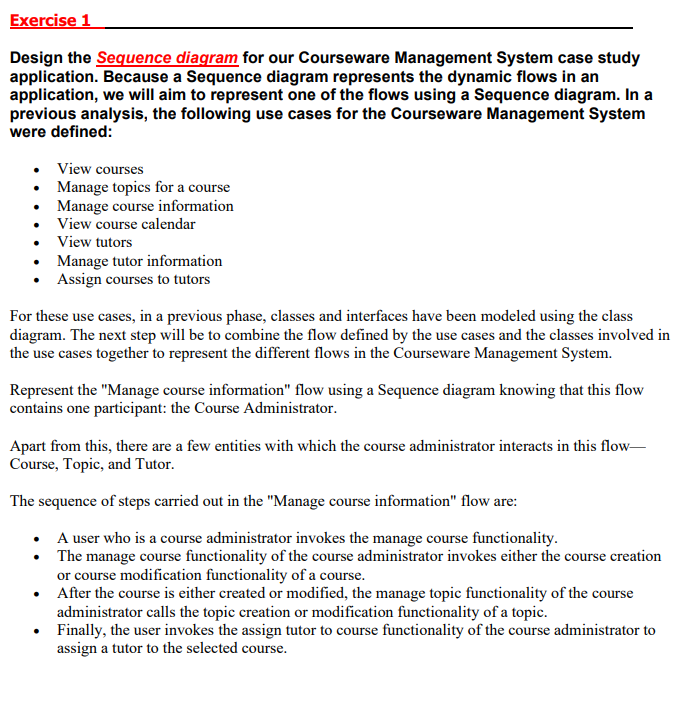
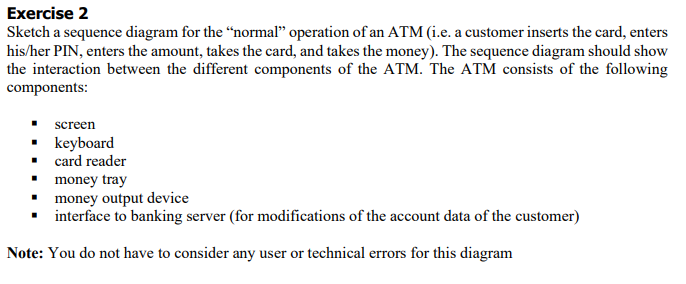
Exercise 1 Design the Sequence diagram for our Courseware Management System case study application. Because a Sequence diagram represents the dynamic flows in an application, we will aim to represent one of the flows using a Sequence diagram. In a previous analysis, the following use cases for the Courseware Management System were defined: View courses Manage topics for a course Manage course information View course calendar View tutors Manage tutor information Assign courses to tutors For these use cases, in a previous phase, classes and interfaces have been modeled using the class diagram. The next step will be to combine the flow defined by the use cases and the classes involved in the use cases together to represent the different flows in the Courseware Management System. Represent the "Manage course information" flow using a Sequence diagram knowing that this flow contains one participant: the Course Administrator. Apart from this, there are a few entities with which the course administrator interacts in this flow- Course, Topic, and Tutor. The sequence of steps carried out in the "Manage course information" flow are: A user who is a course administrator invokes the manage course functionality. The manage course functionality of the course administrator invokes either the course creation or course modification functionality of a course. After the course is either created or modified, the manage topic functionality of the course administrator calls the topic creation or modification functionality of a topic. Finally, the user invokes the assign tutor to course functionality of the course administrator to assign a tutor to the selected course. Exercise 2 Sketch a sequence diagram for the normal operation of an ATM (1.e. a customer inserts the card, enters his/her PIN, enters the amount, takes the card, and takes the money). The sequence diagram should show the interaction between the different components of the ATM. The ATM consists of the following components: Screen keyboard card reader . money tray money output device interface to banking server (for modifications of the account data of the customer) Note: You do not have to consider any user or technical errors for this diagram
Step by Step Solution
There are 3 Steps involved in it

Get step-by-step solutions from verified subject matter experts
 Study Help