







Question: Exercise 6-9A Record transactions using a perpetual system (L06-5) The following information applies to the questions displayed below. Littleton Books has the following transactions during
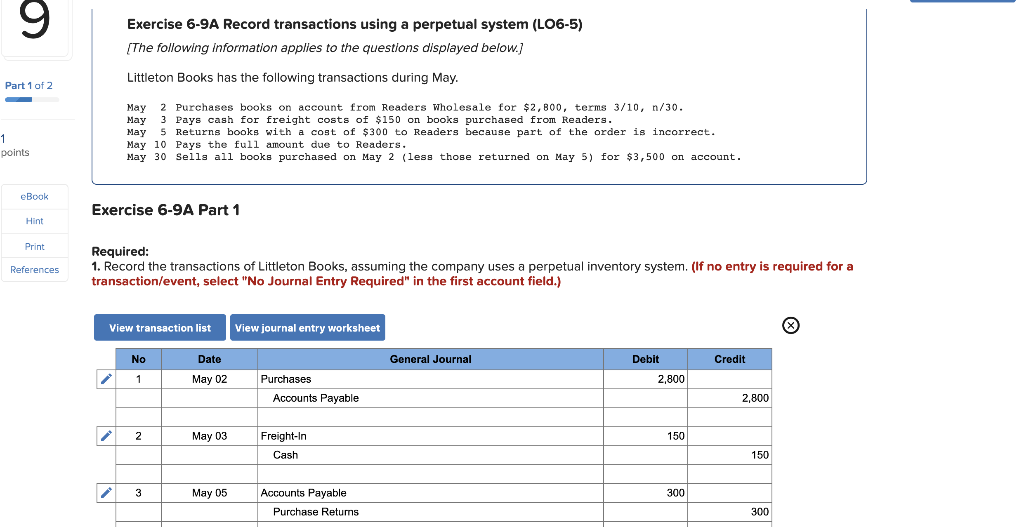
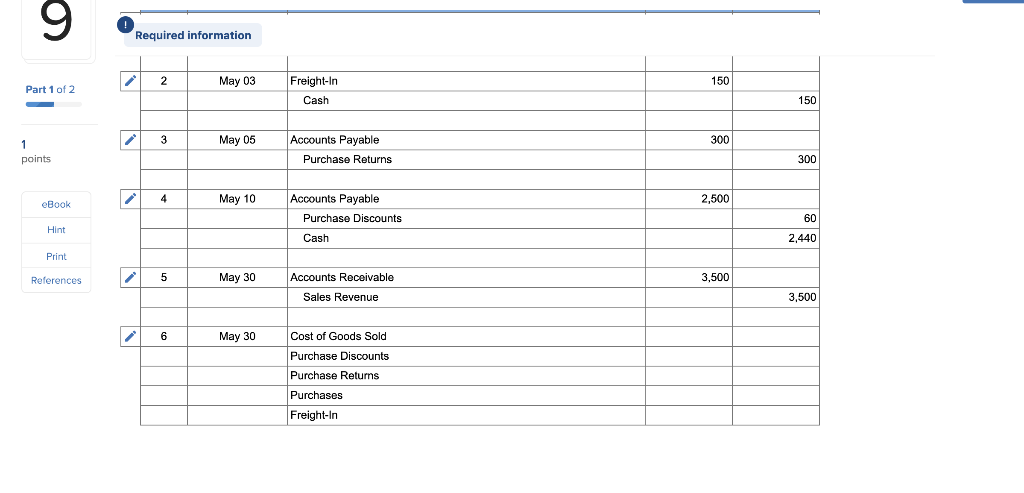
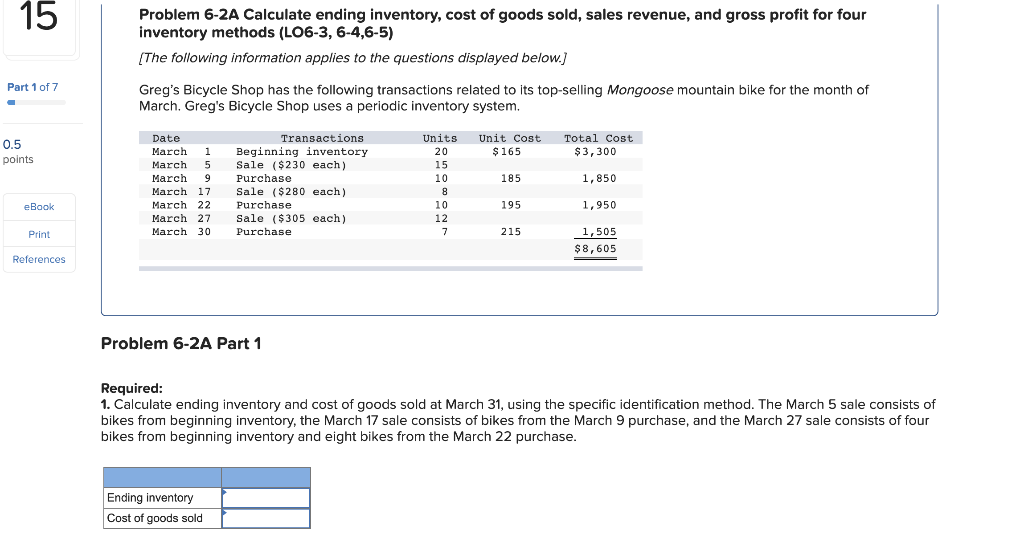
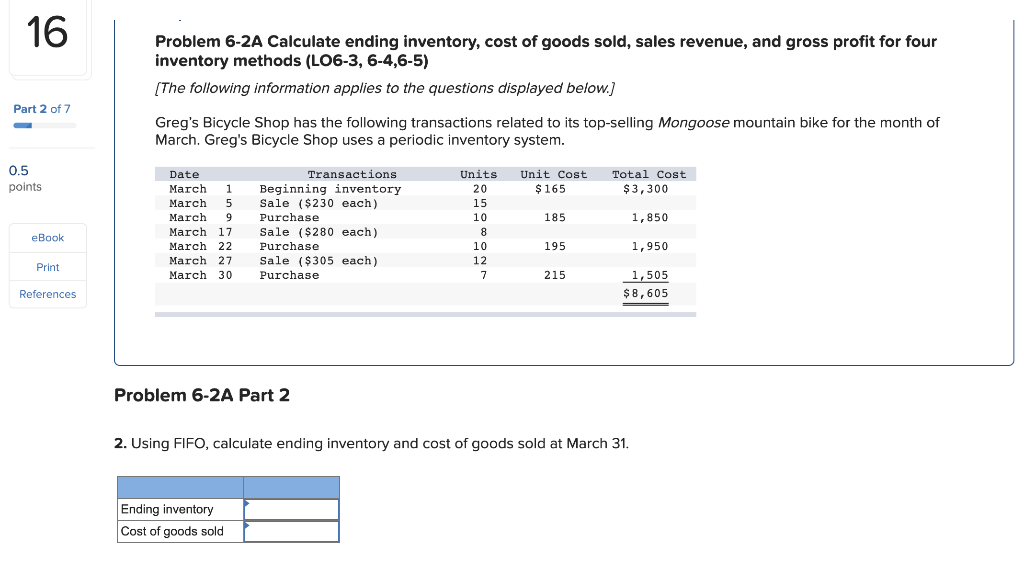
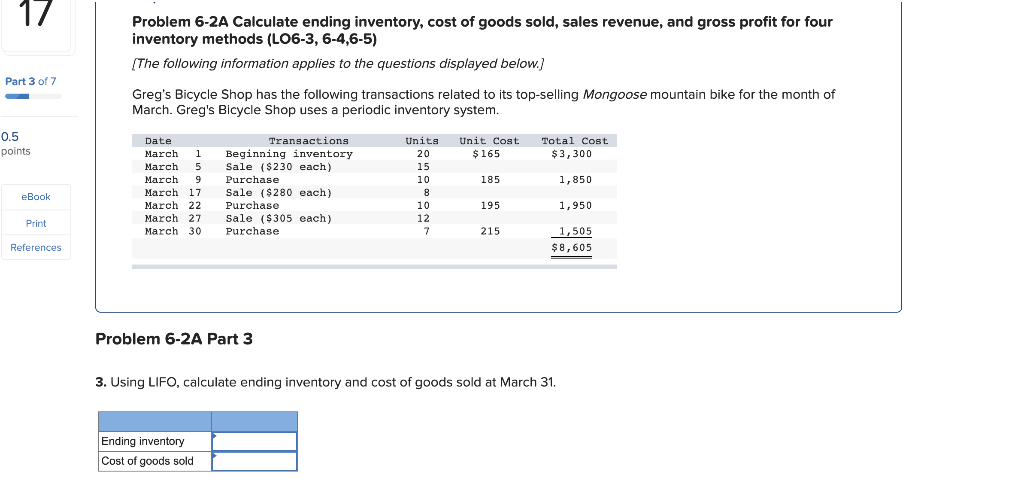
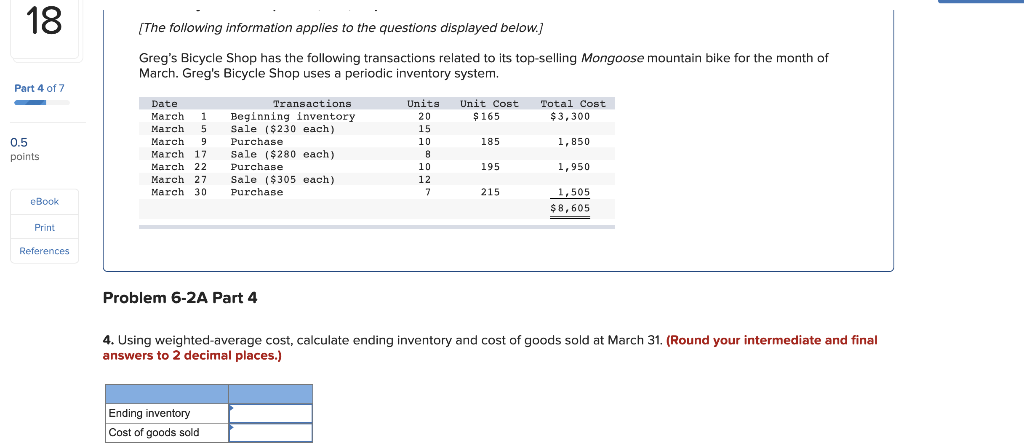
Exercise 6-9A Record transactions using a perpetual system (L06-5) The following information applies to the questions displayed below. Littleton Books has the following transactions during May. Part 1 of 2 May 2 Purchases books on account from Readers Wholesale for $2,800, terms 3/10, n/30. May 3 Pays cash for freight costs of $150 on books purchased from Readers. May 5 Returns books with a cost of $300 to Readers because part of the order is incorrect. May 10 Pays the full amount due to Readers. May 30 Sells all books purchased on May 2 (less those returned on May 5) for $3,500 on account. points eBook Exercise 6-9A Part 1 Hint Print References Required: 1. Record the transactions of Littleton Books, assuming the company uses a perpetual inventory system. (If no entry is required for a transaction/event, select "No Journal Entry Required" in the first account field.) View transaction list View journal entry worksheet No Date General Journal Debit Credit 1 May 02 2,800 Purchases Accounts Payable 2,800 2 May 03 150 Freight-In Cash 150 3 May 05 Accounts Payable Purchase Returns 300 Required information 2 May 03 Freight-In 150 Part 1 of 2 Cash May 05 300 Accounts Payable Purchase Returns points 300 eBook May 10 2,500 Accounts Payable Purchase Discounts Cash Hint 2,440 Print References 5 May 30 3,500 Accounts Receivable Sales Revenue 3,500 6 1 May 30 Cost of Goods Sold Purchase Discounts Purchase Returns Purchases Freight-In Journal entry worksheet Record the cash paid on account. Note: Enter debits before credits. Date General Journal Debit Credit May 24 Record entry Clear entry View general journal Problem 6-2A Calculate ending inventory, cost of goods sold, sales revenue, and gross profit for four inventory methods (LO6-3, 6-4,6-5) [The following information applies to the questions displayed below.) Part 1 of 7 Greg's Bicycle Shop has the following transactions related to its top-selling Mongoose mountain bike for the month of March. Greg's Bicycle Shop uses a periodic inventory system. Units 0.5 points Unit Cost $ 165 Total Cost $3,300 20 185 Transactions Beginning inventory Sale ($ 230 each) Purchase Sale ($280 each) Purchase Sale ($305 each) Purchase Date March 1 March 5 March 9 March 17 March 22 March 27 March 30 1,850 eBook 195 1,950 Print 1,505 $8,605 References Problem 6-2A Part 1 Required: 1. Calculate ending inventory and cost of goods sold at March 31, using the specific identification method. The March 5 sale consists of bikes from beginning inventory, the March 17 sale consists of bikes from the March 9 purchase, and the March 27 sale consists of four bikes from beginning inventory and eight bikes from the March 22 purchase. Ending inventory Cost of goods sold Problem 6-2A Calculate ending inventory, cost of goods sold, sales revenue, and gross profit for four inventory methods (LO6-3, 6-4,6-5) [The following information applies to the questions displayed below.) Part 2 of 7 Greg's Bicycle Shop has the following transactions related to its top-selling Mongoose mountain bike for the month of March. Greg's Bicycle Shop uses a periodic inventory system. 0.5 points Units Unit Cost Total Cost $3,300 185 1,850 Date March 1 March 5 March 9 March 17 March 22 March 27 March 30 Transactions Beginning inventory Sale ($ 230 each) Purchase Sale ($280 each) Purchase Sale ($305 each) Purchase eBook 195 1,950 Print 215 1,505 $8,605 References Problem 6-2A Part 2 2. Using FIFO, calculate ending inventory and cost of goods sold at March 31. Ending inventory Cost of goods sold Problem 6-2A Calculate ending inventory, cost of goods sold, sales revenue, and gross profit for four inventory methods (LO6-3, 6-4,6-5) [The following information applies to the questions displayed below.) Part 3 of 7 Greg's Bicycle Shop has the following transactions related to its top-selling Mongoose mountain bike for the month of March. Greg's Bicycle Shop uses a periodic inventory system. 0.5 points Units 20 15 Unit Cost $165 Total Cost $3,300 10 185 1,850 Date March 1 March 5 March 9 March 17 March 22 March 27 March 30 Transactions Beginning inventory Sale ($ 230 each) Purchase Sale ($280 each) Purchase Sale ($305 each) Purchase eBook 195 1,950 Print 215 1,505 $8,605 References Problem 6-2A Part 3 3. Using LIFO, calculate ending inventory and cost of goods sold at March 31. Ending inventory Cost of goods sold 18 The following information applies to the questions displayed below.) Greg's Bicycle Shop has the following transactions related to its top-selling Mongoose mountain bike for the month of March. Greg's Bicycle Shop uses a periodic inventory system. Part 4 of 7 Units 20 15 10 Unit Cost $ 165 Total Cost $3,300 185 Date March 1 March 5 March 9 March 17 March 22 March 27 March 30 0.5 points Transactions Beginning inventory Sale ($230 each) Purchase Sale ($280 each) Purchase Sale ($305 each) Purchase 1,850 195 1,950 who 215 eBook 1,505 $8,605 Print References Problem 6-2A Part 4 4. Using weighted average cost, calculate ending inventory and cost of goods sold at March 31. (Round your intermediate and final answers to 2 decimal places.) Ending inventory Cost of goods sold
Step by Step Solution
There are 3 Steps involved in it

Get step-by-step solutions from verified subject matter experts
 Study Help