







Question: Exercise Escape from Prison? (Developing a Theory) Orville Bradwyn is charged with the crime of escape from prison. The state's sole witness was Benjamin Tunmeyer,
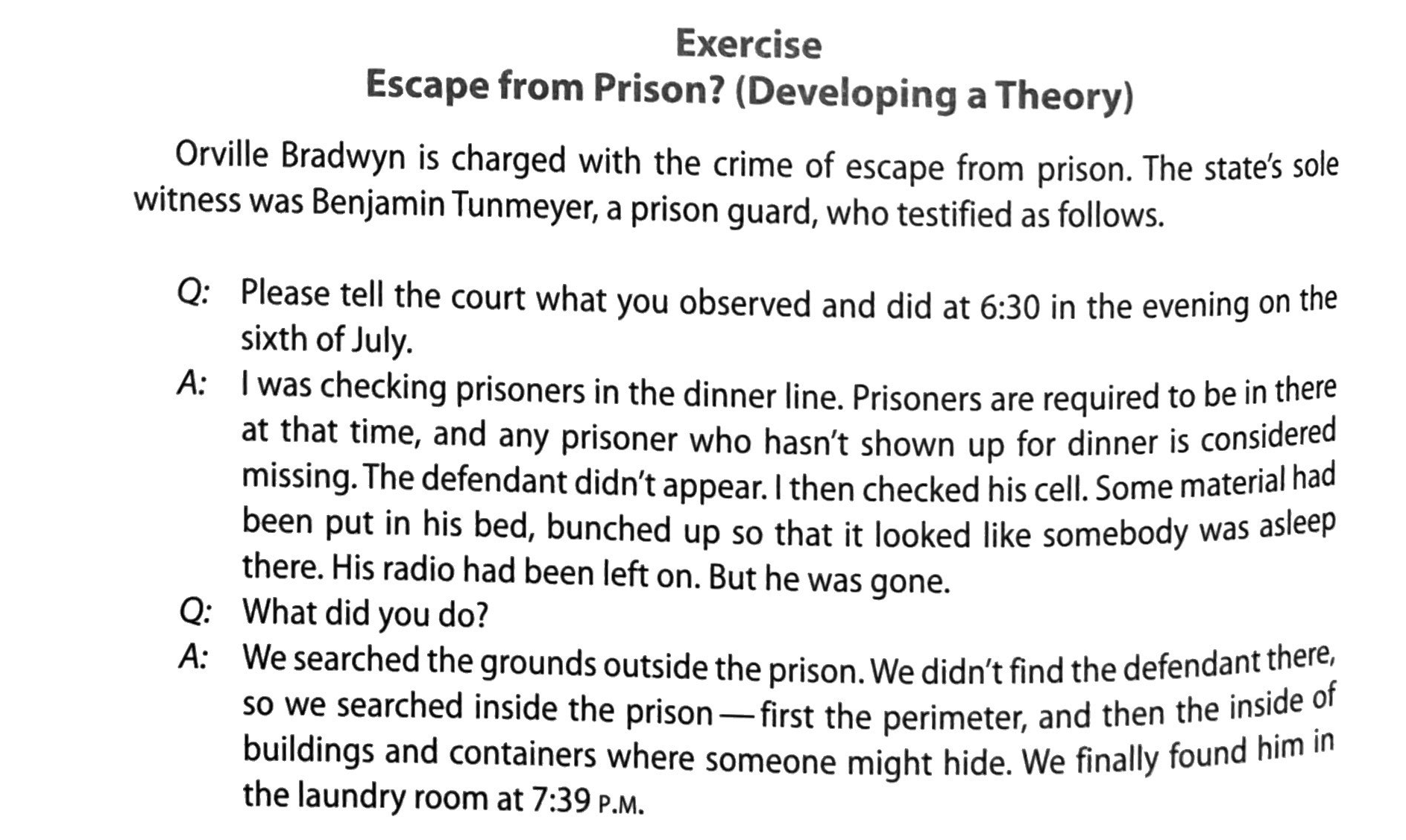
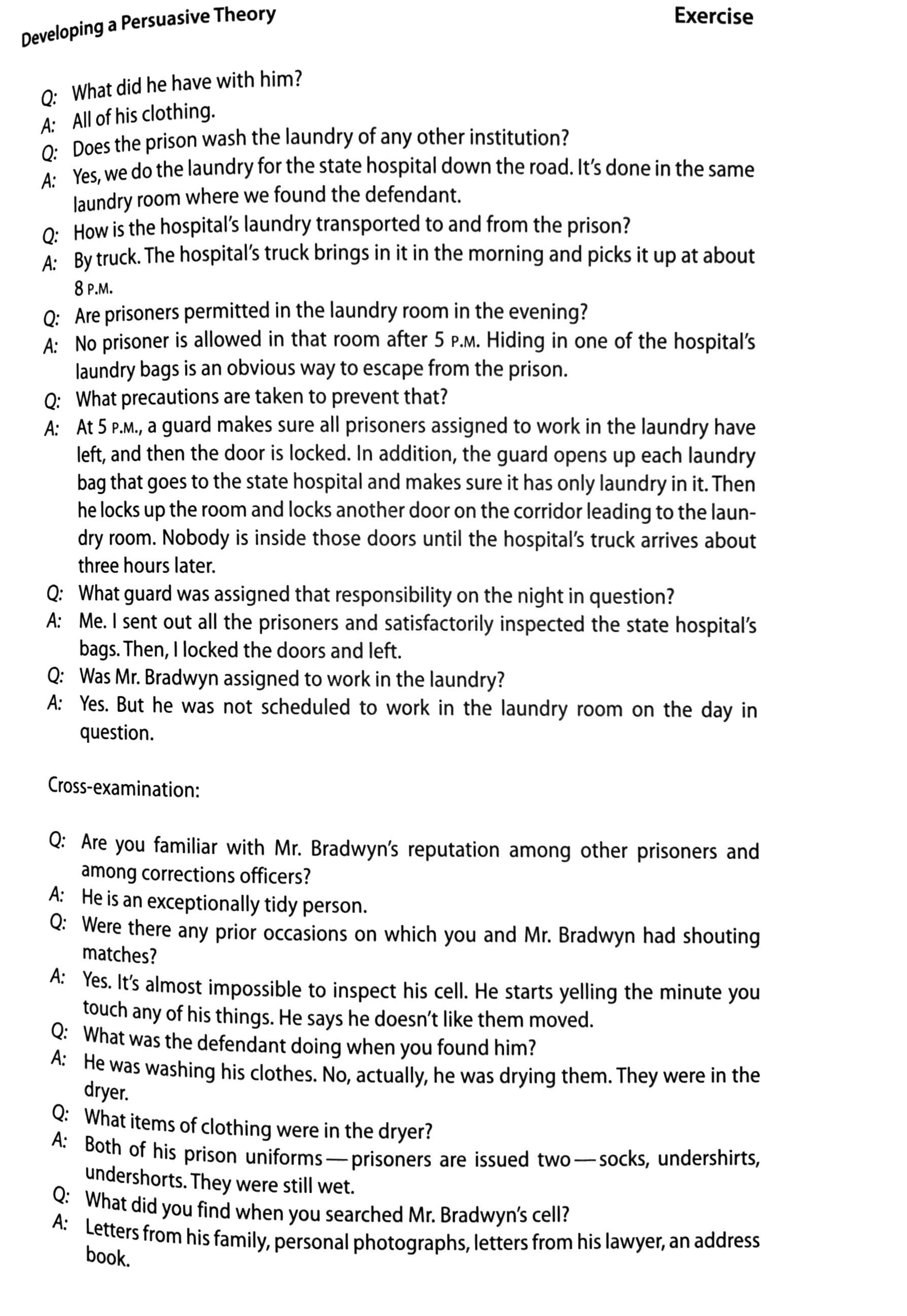
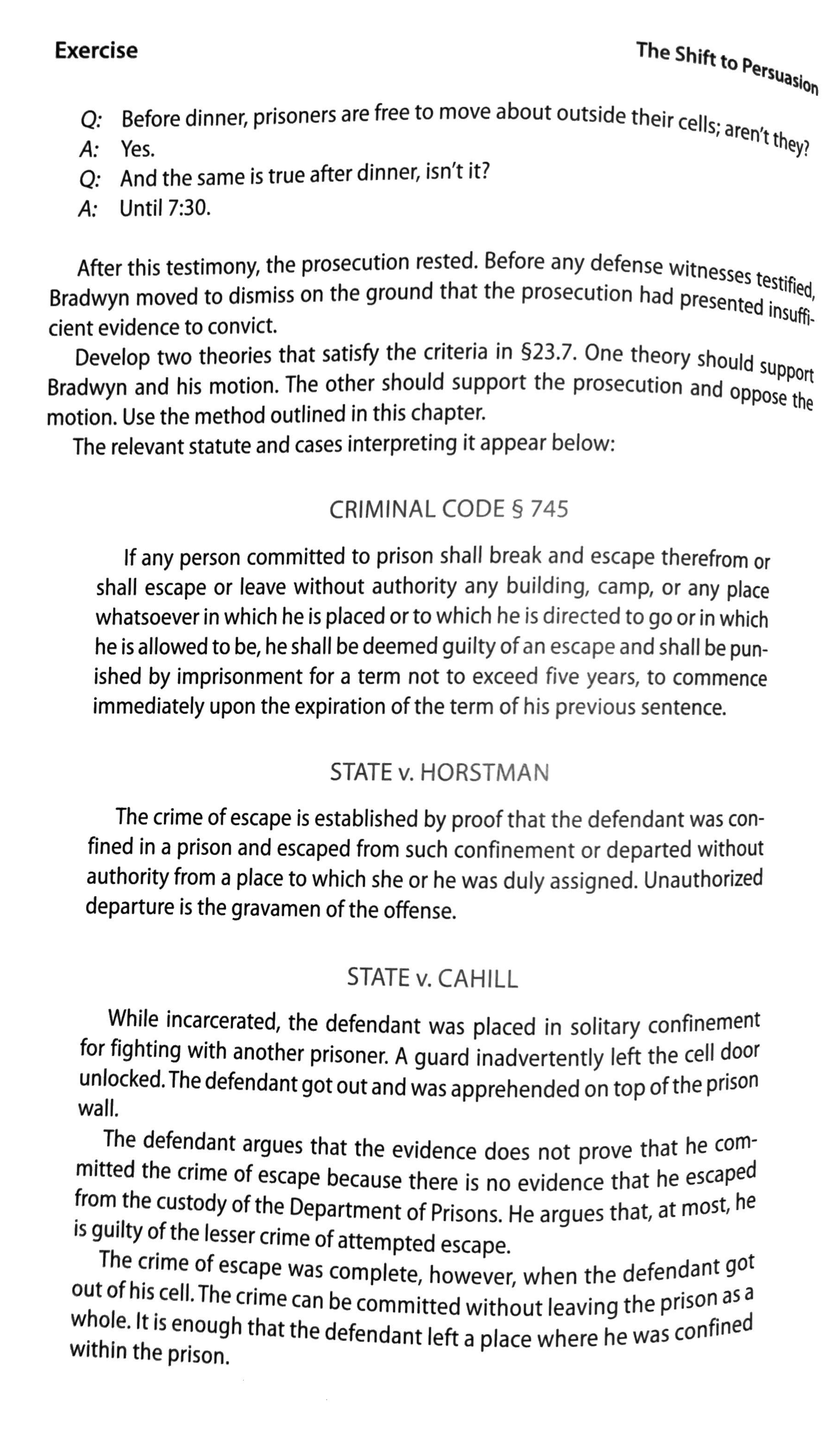
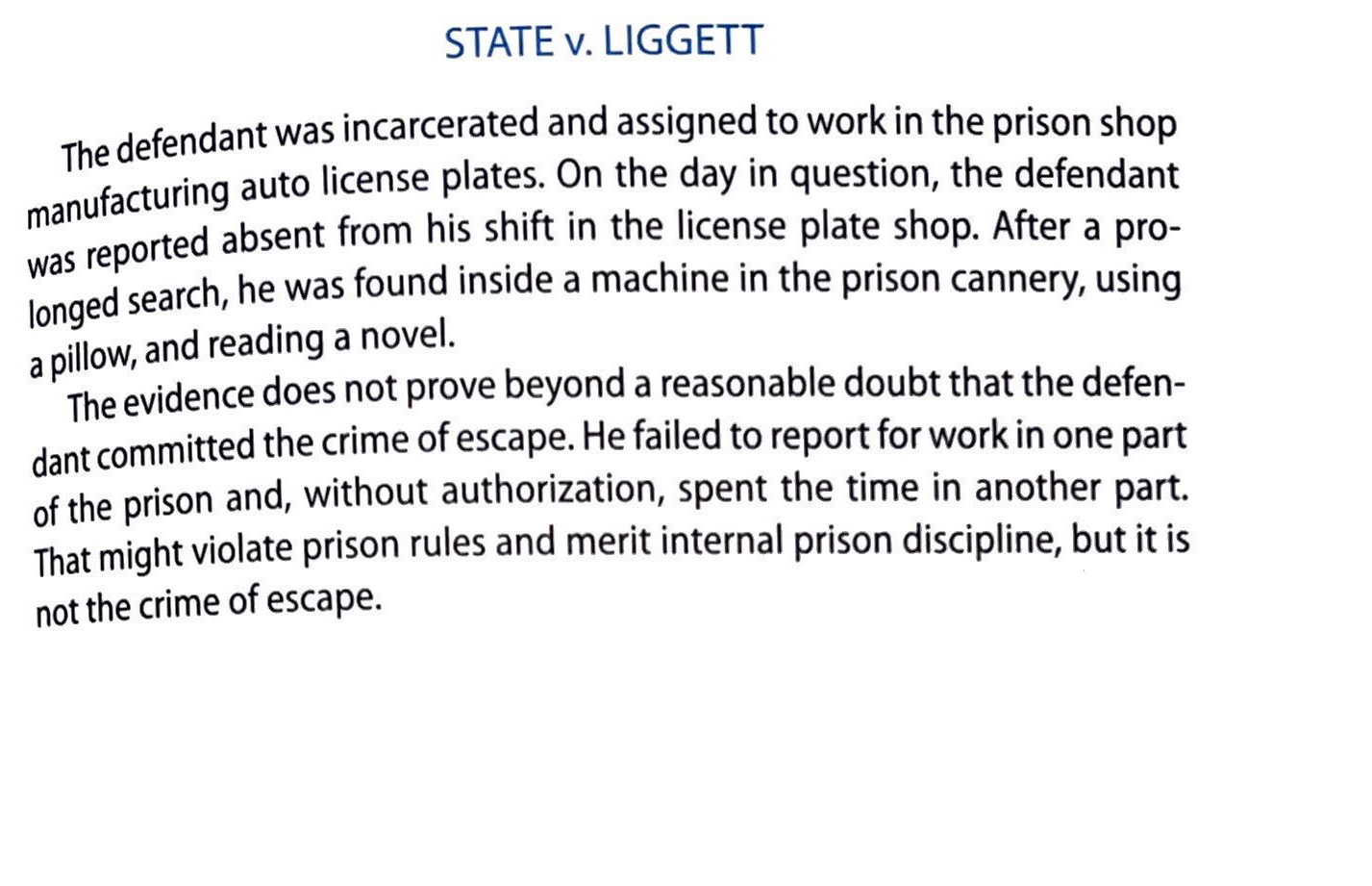
Exercise Escape from Prison? (Developing a Theory) Orville Bradwyn is charged with the crime of escape from prison. The state's sole witness was Benjamin Tunmeyer, a prison guard, who testified as follows. Q: Please tell the court what you observed and did at 6:30 in the evening on the sixth of July. A: I was checking prisoners in the dinner line. Prisoners are required to be in there at that time, and any prisoner who hasn't shown up for dinner is considered missing. The defendant didn't appear. I then checked his cell. Some material had been put in his bed, bunched up so that it looked like somebody was asleep there. His radio had been left on. But he was gone. Q: What did you do? A: We searched the grounds outside the prison. We didn't find the defendant there, so we searched inside the prison - first the perimeter, and then the inside of buildings and containers where someone might hide. We finally found him in the laundry room at 7:39 P.M.eIO ping a persuasive Theory Exercise ev EFF.) P9 .3??? 95-9 . What did he have with him? All of his clothing- _ _ ' Does the prison wash the laundry of any other Institution? Yes we do the laundry for the state hospital down the road. It's done in the same Iauhdry room where we found the defendant. How is the hospital's laundry transported to and from the prison? - By truck. The hospital's truck brings in it in the morning and picks it up at about 8 PM. Are prisoners permitted in the laundry room in the evening? No prisoner is allowed in that room after 5 PM. Hiding in one of the hospital's laundry bags is an obvious way to escape from the prison. What precautions are taken to prevent that? MS P.M., a guard makes sure all prisoners assigned to work in the laundry have left, and then the door is locked. In addition, the guard opens up each laundry bag that goes to the state hospital and makes sure it has only laundry in it. Then he locks up the room and locks another door on the corridor leading to the laun- dry room. Nobody is inside those doors until the hospital's truck arrives about three hours later. What guard was assigned that responsibility on the night in question? Me. I sent out all the prisoners and satisfactorily inspected the state hospital's bags. Then, I locked the doors and left. Was Mr. Bradwyn assigned to work in the laundry? Yes. But he was not scheduled to work in the laundry room on the day in question. Cross-examination: Q: .399 #9 Are you familiar with Mr. Bradwyn's reputation among other prisoners and among corrections ofcers? He is an exceptionally tidy person. Were there any prior occasions on which you and Mr. Bradwyn had shouting matches? Yes. It's almost impossible to inspect his cell. He starts yelling the minute you touch any of his things. He says he doesn't like them moved. What was the defendant doing when you found him? :9 Was washing his clothes. No, actually, he was drying them. They were in the ryer. What items of clothing were in the dryer? Both of his prison uniformsprisoners are issued twosocks, undershirts, undershorts. They were still wet. What did you nd when you searched Mr. Bradwyn's cell? tettirs from his family, personal photographs, letters from his lawyer, an address 00 . Exercise The Shift to Persuasion Q: Before dinner, prisoners are free to move about outside their cells; aren't they? A: Yes. Q: And the same is true after dinner, isn't it? A: Until 7:30. After this testimony, the prosecution rested. Before any defense witnesses testified, Bradwyn moved to dismiss on the ground that the prosecution had presented insuffi cient evidence to convict. Develop two theories that satisfy the criteria in $23.7. One theory should support Bradwyn and his motion. The other should support the prosecution and oppose the motion. Use the method outlined in this chapter. The relevant statute and cases interpreting it appear below: CRIMINAL CODE $ 745 If any person committed to prison shall break and escape therefrom or shall escape or leave without authority any building, camp, or any place whatsoever in which he is placed or to which he is directed to go or in which he is allowed to be, he shall be deemed guilty of an escape and shall be pun- ished by imprisonment for a term not to exceed five years, to commence immediately upon the expiration of the term of his previous sentence. STATE v. HORSTMAN The crime of escape is established by proof that the defendant was con- fined in a prison and escaped from such confinement or departed without authority from a place to which she or he was duly assigned. Unauthorized departure is the gravamen of the offense. STATE v. CAHILL While incarcerated, the defendant was placed in solitary confinement for fighting with another prisoner. A guard inadvertently left the cell door unlocked. The defendant got out and was apprehended on top of the prison wall. The defendant argues that the evidence does not prove that he com- mitted the crime of escape because there is no evidence that he escaped from the custody of the Department of Prisons. He argues that, at most, he is guilty of the lesser crime of attempted escape. The crime of escape was complete, however, when the defendant got out of his cell. The crime can be committed without leaving the prison as a whole. It is enough that the defendant left a place where he was confined within the prison.STATE . LIGGETT The defendant was incarcerated and assigned to work in the prison shop manufacturing auto license plates. On the day in question, the defendant was reported absent from his shift in the license plate shop. After a pro- longed search, he was found inside a machine in the prison cannery, using a pillow, and reading a novel. The evidence does not prove beyond a reasonable doubt that the defen- dant committed the crime of escape. He failed to report for work in one part of the prison and, without authorization, spent the time in another part. That might violate prison rules and merit internal prison discipline, but it is not the crime of escape
Step by Step Solution
There are 3 Steps involved in it

Get step-by-step solutions from verified subject matter experts
 Study Help