



Question: Exercises * 1 0 7 3 . Examine Figure 5 - 1 6 . How would you revise the design of this document to make
Exercises
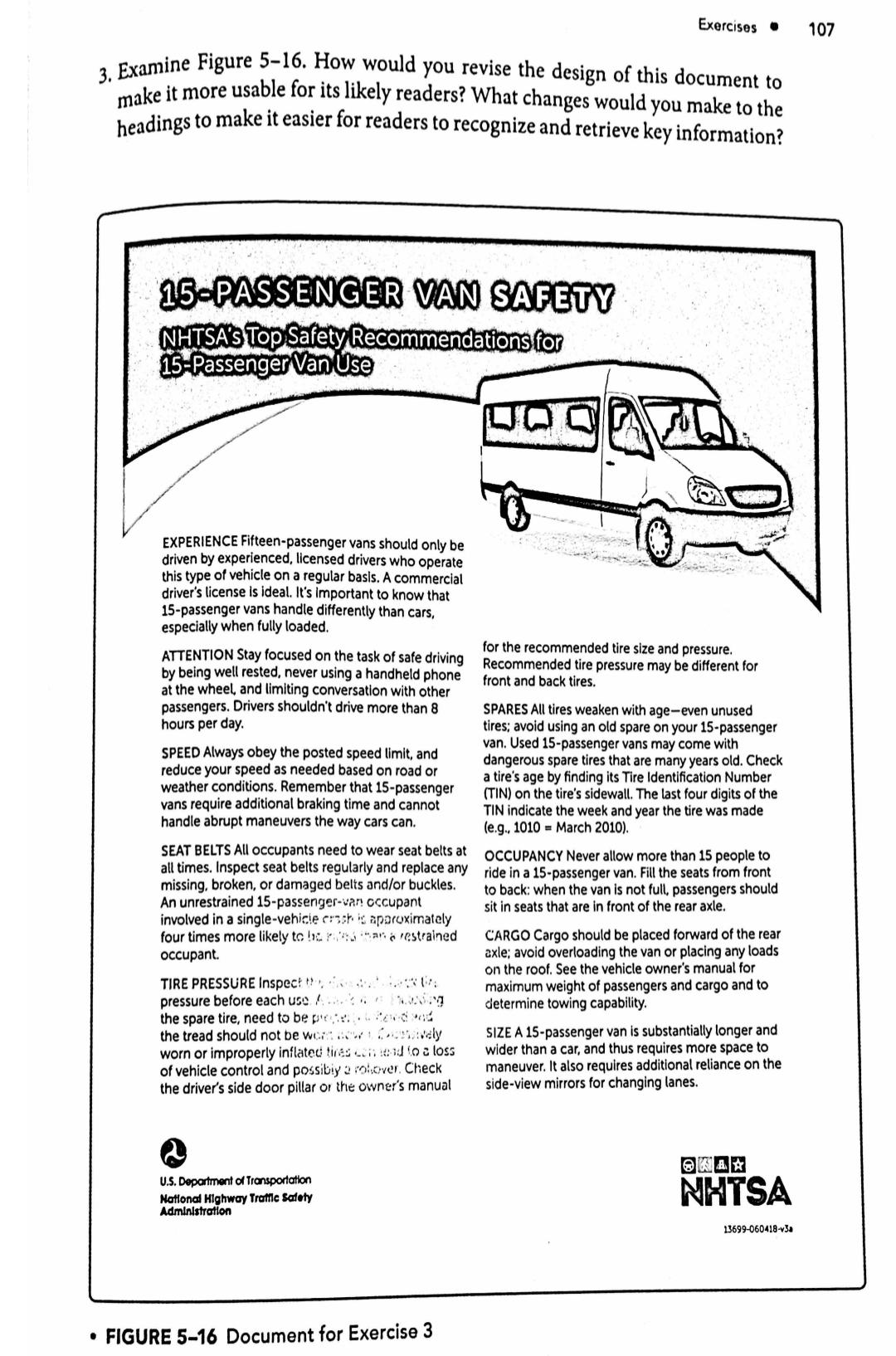
Examine Figure How would you revise the design of this document to make it more usable for its likely readers? What changes would you make to the headings to make it easier for readers to recognize and retrieve key information?
PASSENGER VAN SAFETY NHTSA's TOp Safety Recommendations for Passengervanuse
EXPERIENCE Fifteenpassenger vans should only be driven by experienced, licensed drivers who operate this type of vehicle on a regular basis. A commercial driver's license is ideal. It's important to know that passenger vans handle differently than cars, especially when fully loaded.
ATTENTION Stay focused on the task of safe driving by being well rested, never using a handheld phone at the wheel, and limiting conversation with other passengers. Drivers shouldn't drive more than hours per day.
SPEED Always obey the posted speed limit and reduce your speed as needed based on road or weather conditions. Remember that passenger vans require additional braking time and cannot handle abrupt maneuvers the way cars can.
SEAT BELTS All occupants need to wear seat belts at all times. Inspect seat belts regularly and replace any missing, broken, or damaged belts andor buckles. An unrestrained passengervan! cccupant involved in a singlevehicie c:st is aporoximately four times more likely to occupant. the spare tire, need to be ple. of vehicle control and possibiy solover. Check the driver's side door pillar or the owner's manual
for the recommended tire size and pressure.
Recommended tire pressure may be different for front and back tires.
SPARES All tires weaken with ageeven unused tires; avoid using an old spare on your passenger van. Used passenger vans may come with dangerous spare tires that are many years old. Check a tire's age by finding its Tire Identification Number TIN on the tire's sidewall. The last four digits of the TIN indicate the week and year the tire was made eg March
OCCUPANCY Never allow more than people to ride in a passenger van. Fill the seats from front to back: when the van is not full, passengers should sit in seats that are in front of the rear axle.
CARGO Cargo should be placed forward of the rear axle; avoid overloading the van or placing any loads on the roof. See the vehicle owner's manual for maximum weight of passengers and cargo and to determine towing capability.
SIZE passenger van is substantially longer and wider than a car, and thus requires more space to maneuver. It also requires additional reliance on the sideview mirrors for changing lanes.
US Department a Transportation
Notionad Highwoy Tratile soltoty
Administrotion
NHTSA
FIGURE Document for Exercise
Step by Step Solution
There are 3 Steps involved in it
1 Expert Approved Answer
Step: 1 Unlock

Question Has Been Solved by an Expert!
Get step-by-step solutions from verified subject matter experts
Step: 2 Unlock
Step: 3 Unlock