







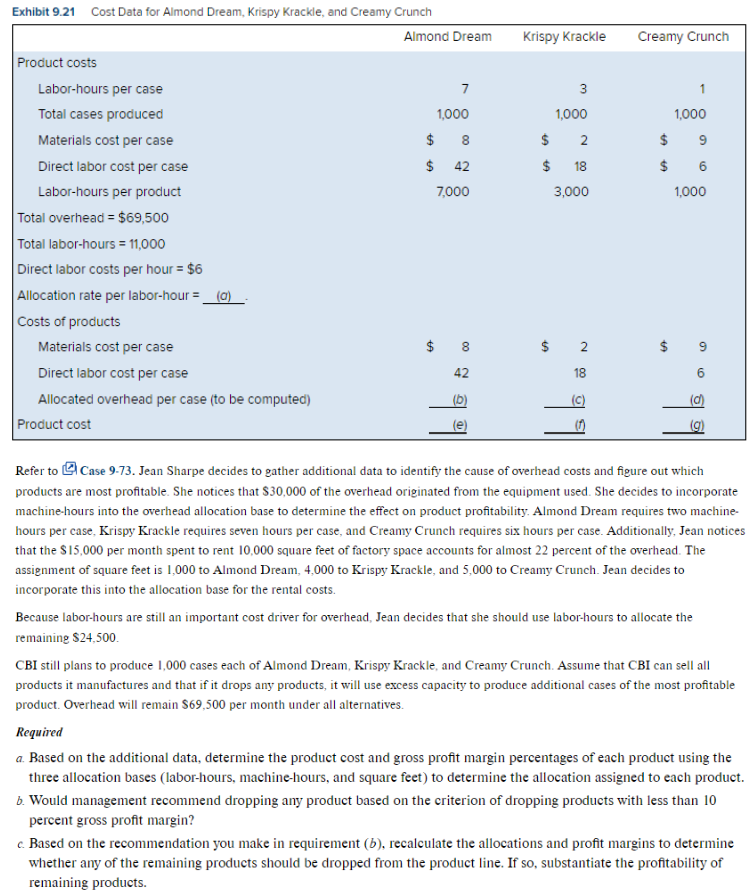
Question: Exhibit 9 . 2 1 Cost Data for Almond Dream, Krispy Krackle, and Creamy Crunch Product costs Labor - hours per case Total overhead =
Exhibit Cost Data for Almond Dream, Krispy Krackle, and Creamy Crunch
Product costs
Laborhours per case
Total overhead $
Total laborhours
Direct labor costs per hour $
Allocation rate per laborhour
Costs of products
Materials cost per case
$
$
Direct labor cost per case
Allocated overhead per case to be computed
Refer to Case Jean Sharpe decides to gather additional data to identify the cause of overhead costs and figure out which
products are most profitable. She notices that $ of the overhead originated from the equipment used. She decides to incorporate
machinehours into the overhead allocation base to determine the effect on product profitability. Almond Dream requires two machine
hours per case, Krispy Krackle requires seven hours per case, and Creamy Crunch requires six hours per case. Additionally, Jean notices
that the $ per month spent to rent square feet of factory space accounts for almost percent of the overhead. The
assignment of square feet is to Almond Dream, to Krispy Krackle, and to Creamy Crunch. Jean decides to
incorporate this into the allocation base for the rental costs.
Because laborhours are still an important cost driver for overhead, Jean decides that she should use laborhours to allocate the
remaining $
CBI still plans to produce cases each of Almond Dream, Krispy Krackle, and Creamy Crunch. Assume that CBI can sell all
products it manufactures and that if it drops any products, it will use excess capacity to produce additional cases of the most profitable
product. Overhead will remain $ per month under all alternatives.
Required
a Based on the additional data, determine the product cost and gross profit margin percentages of each product using the
three allocation bases laborhours, machinehours, and square feet to determine the allocation assigned to each product.
Would management recommend dropping any product based on the criterion of dropping products with less than
percent gross profit margin?
c Based on the recommendation you make in requirement b recalculate the allocations and profit margins to determine
whether any of the remaining products should be dropped from the product line. If so substantiate the profitability of
remaining products.
Step by Step Solution
There are 3 Steps involved in it
1 Expert Approved Answer
Step: 1 Unlock

Question Has Been Solved by an Expert!
Get step-by-step solutions from verified subject matter experts
Step: 2 Unlock
Step: 3 Unlock
 Study Help