







Question: Expectations: 1 . Normalize the data, provide rationale for the tables you create, create the relational tables that you identified as part of the normalization
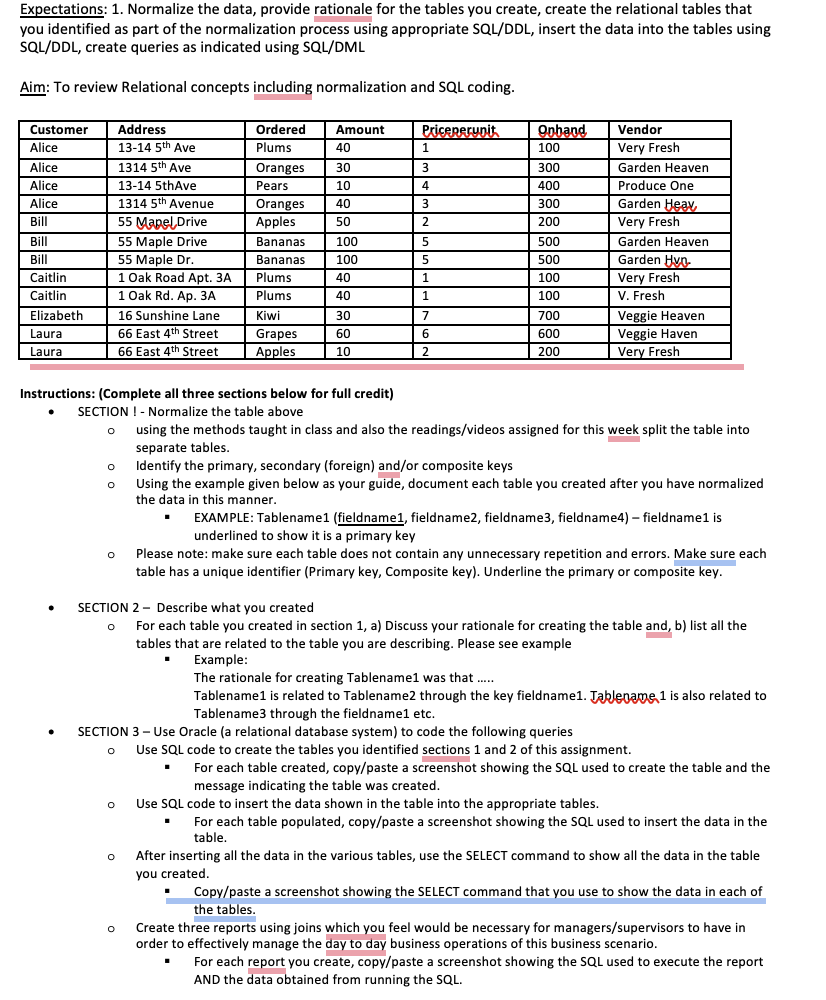
Expectations: 1 . Normalize the data, provide rationale for the tables you create, create the relational tables that you identified as part of the normalization process using appropriate SQL/DDL, insert the data into the tables using SQL/DDL, create queries as indicated using SQL/DML Aim: To review Relational concepts including normalization and SQL coding. Instructions: (Complete all three sections below for full credit) - SECTION I - Normalize the table above - using the methods taught in class and also the readings/videos assigned for this week split the table into separate tables. - Identify the primary, secondary (foreign) and/or composite keys - Using the example given below as your guide, document each table you created after you have normalized the data in this manner. - EXAMPLE: Tablename1 (fieldname1, fieldname2, fieldname3, fieldname4) - fieldname1 is underlined to show it is a primary key - Please note: make sure each table does not contain any unnecessary repetition and errors. Make sure each table has a unique identifier (Primary key, Composite key). Underline the primary or composite key. - SECTION 2 - Describe what you created - For each table you created in section 1, a) Discuss your rationale for creating the table and, b) list all the tables that are related to the table you are describing. Please see example Example: The rationale for creating Tablename1 was that ..... Tablename1 is related to Tablename2 through the key fieldname1. Tablename 1 is also related to Tablename3 through the fieldname1 etc
Step by Step Solution
There are 3 Steps involved in it

Get step-by-step solutions from verified subject matter experts
 Study Help