







Question: Explain Bell's elegant counting argument to test if nature obeys 'common sense,' in that variables or 'elements of reality' have prior existance whether or not
Explain Bell's elegant counting argument to test if nature obeys 'common sense,' in that variables or 'elements of reality' have prior existance whether or not we measure them, or if they obey quantum rules.Simply set up the classical probabilities that Alice (A) and Bob (B) should expect if they use the special three-axis S-G setup. Concluding with arriving at equations (shown in picture)
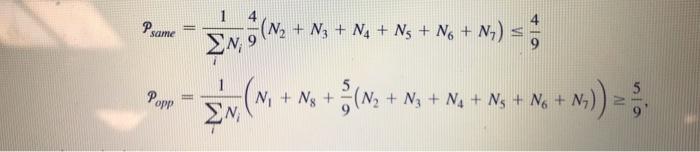
Psame Popp || - H N, (N + N3 + N + N + N6 + N7) 419 N + N + (N + N + N + N + 6 + N) = .
Step by Step Solution
3.51 Rating (151 Votes )
There are 3 Steps involved in it
Let Pab denote the probability that Alice will find spin component a along her chosen axis and Bob w... View full answer

Get step-by-step solutions from verified subject matter experts
 Study Help