







Question: Explain this please! Exercise 3-10 (Static) Applying Overhead; Journal Entries; T-accounts [LO3-1, LO3-2] Dillon Products manufactures various machined parts to customer specifications. The company uses
Explain this please!
![LO3-2] Dillon Products manufactures various machined parts to customer specifications. The company](https://s3.amazonaws.com/si.experts.images/answers/2024/09/66d5ccb669b8a_60566d5ccb5cec45.jpg)
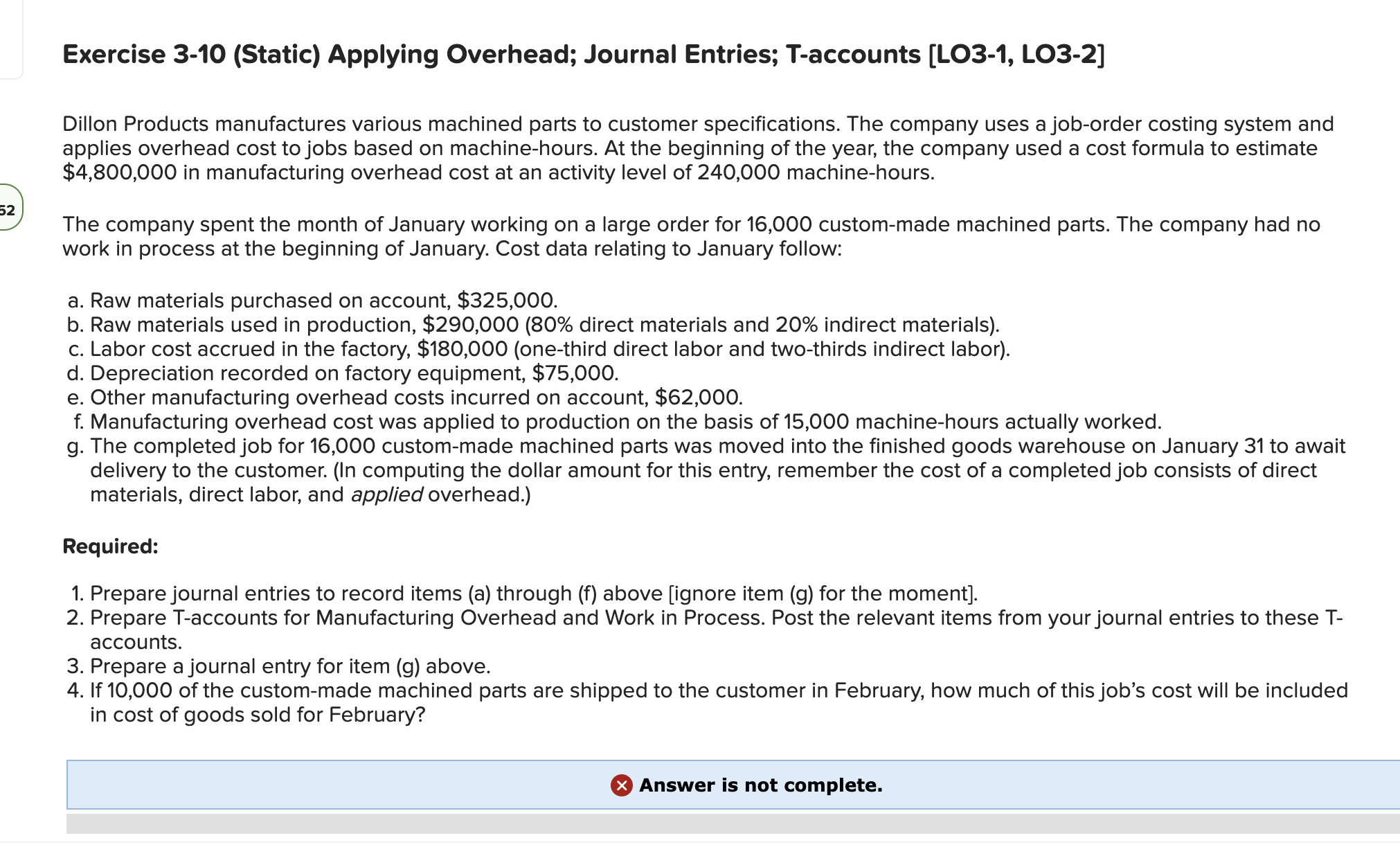
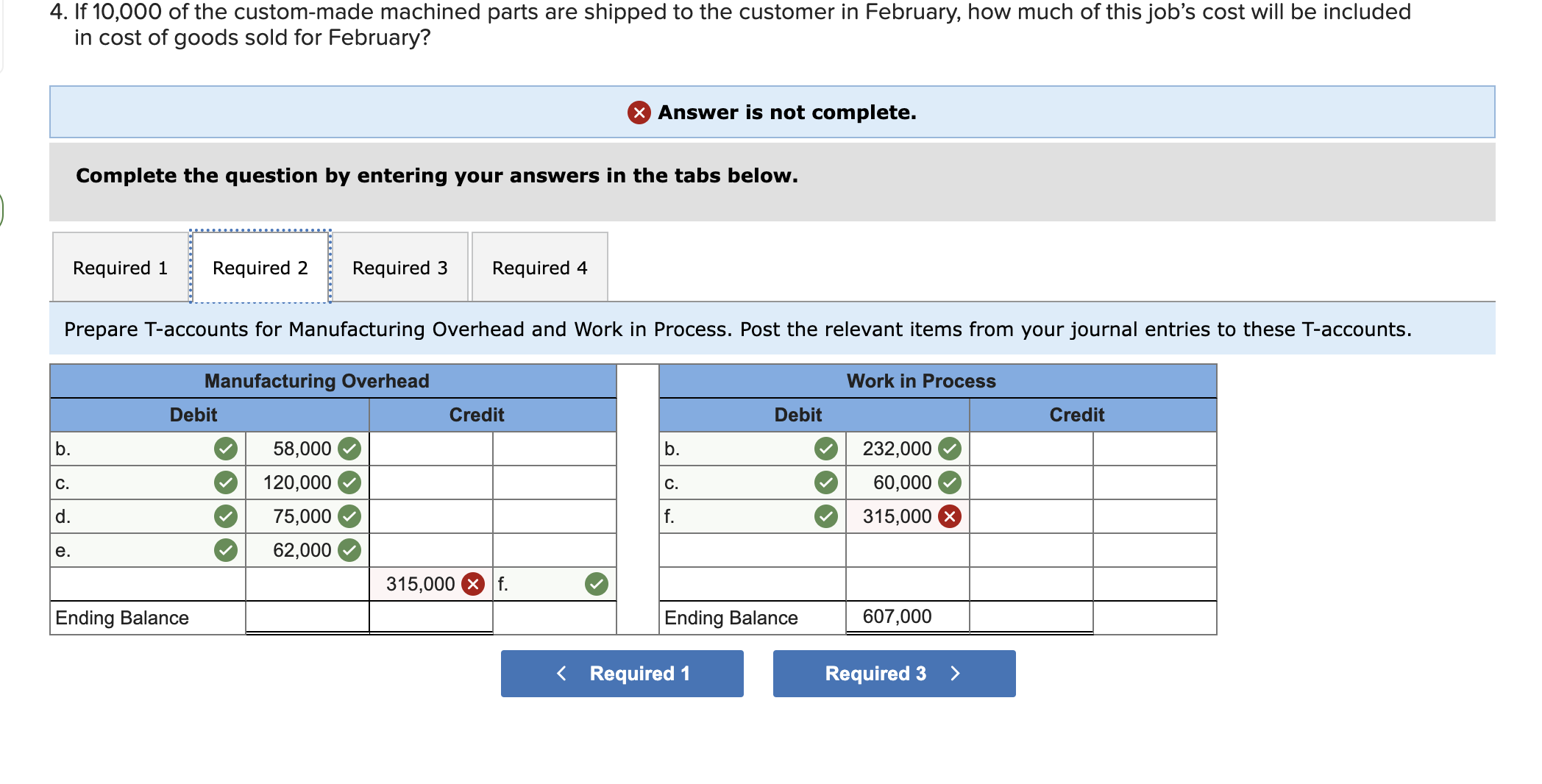
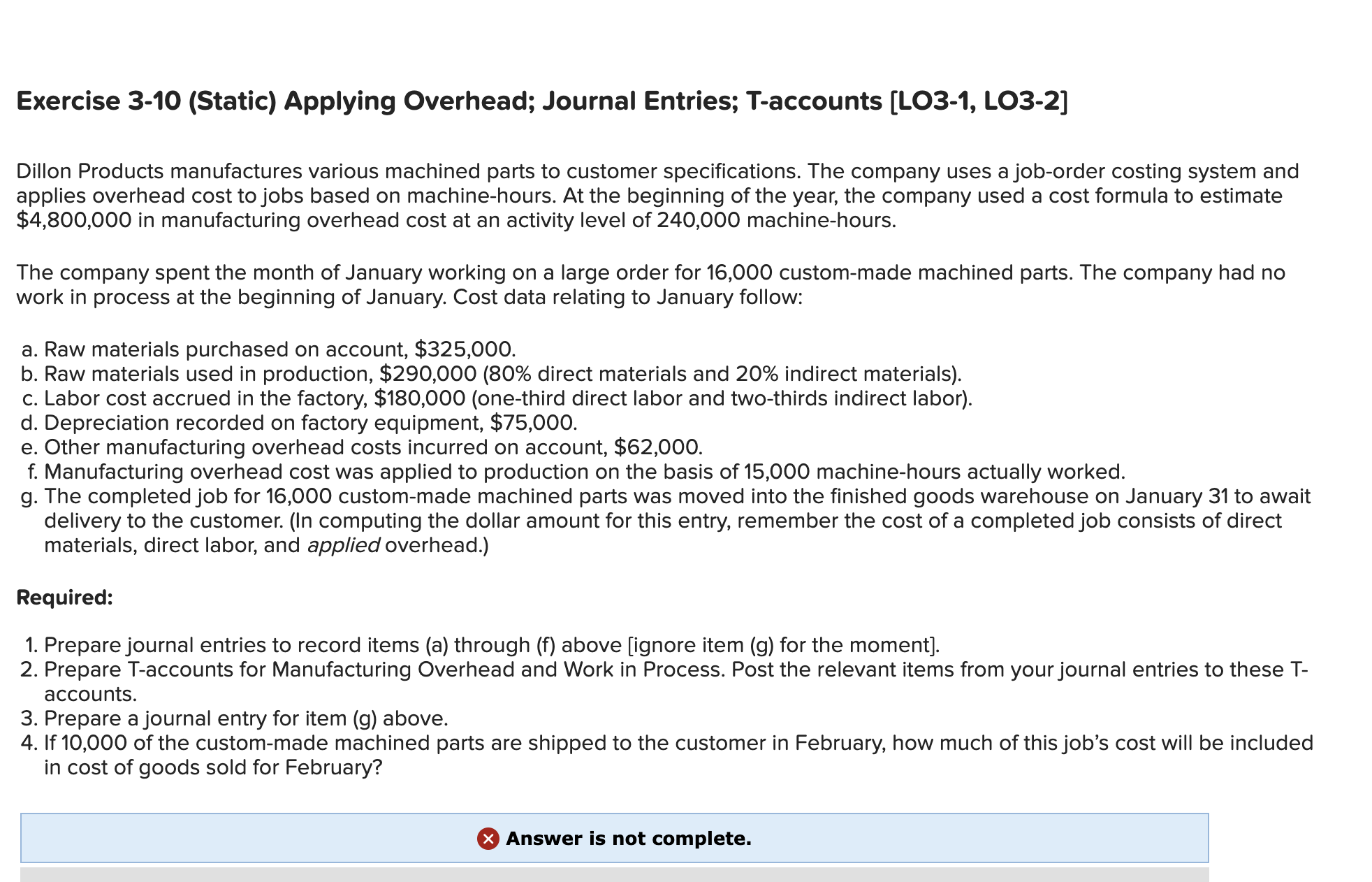
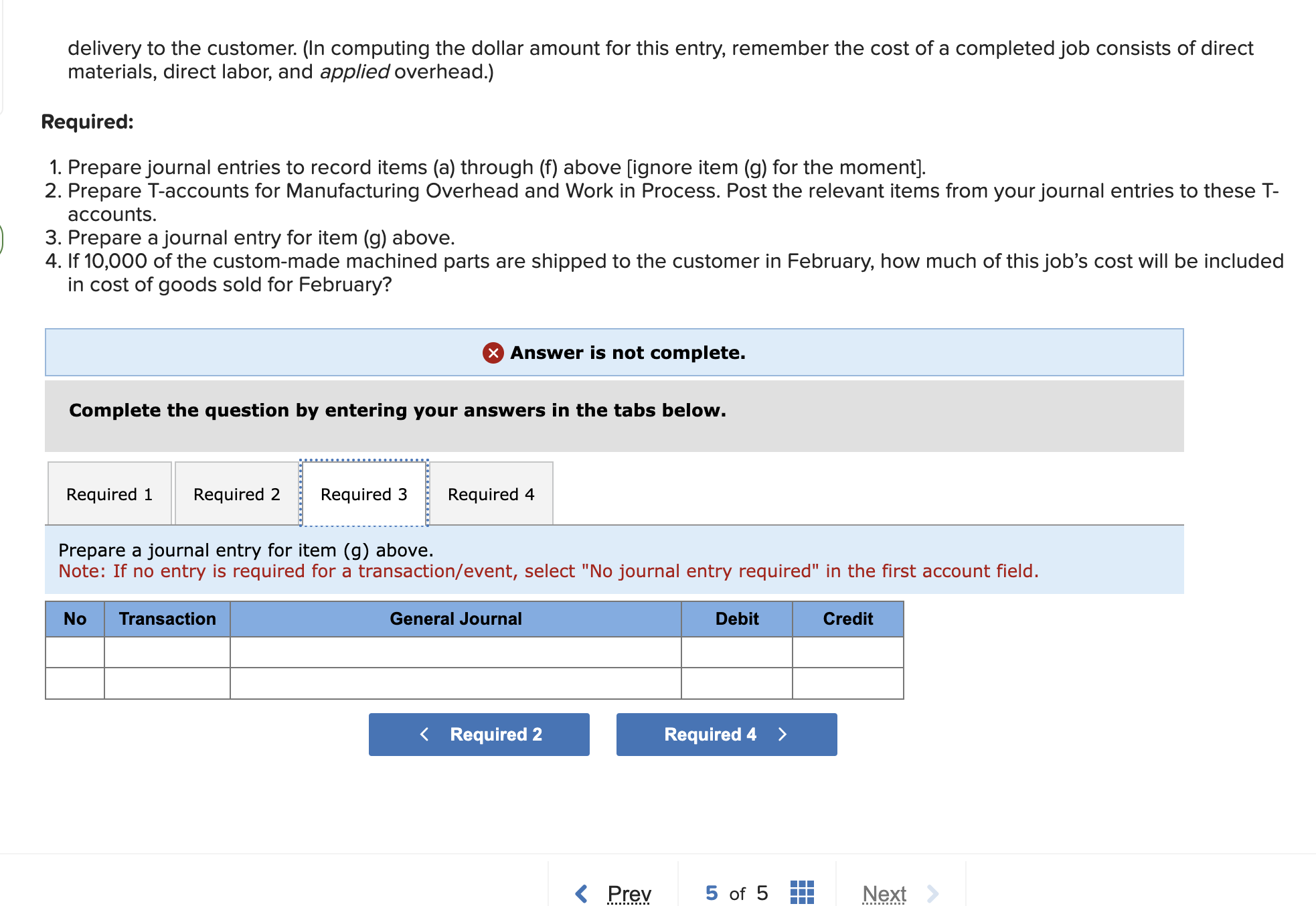
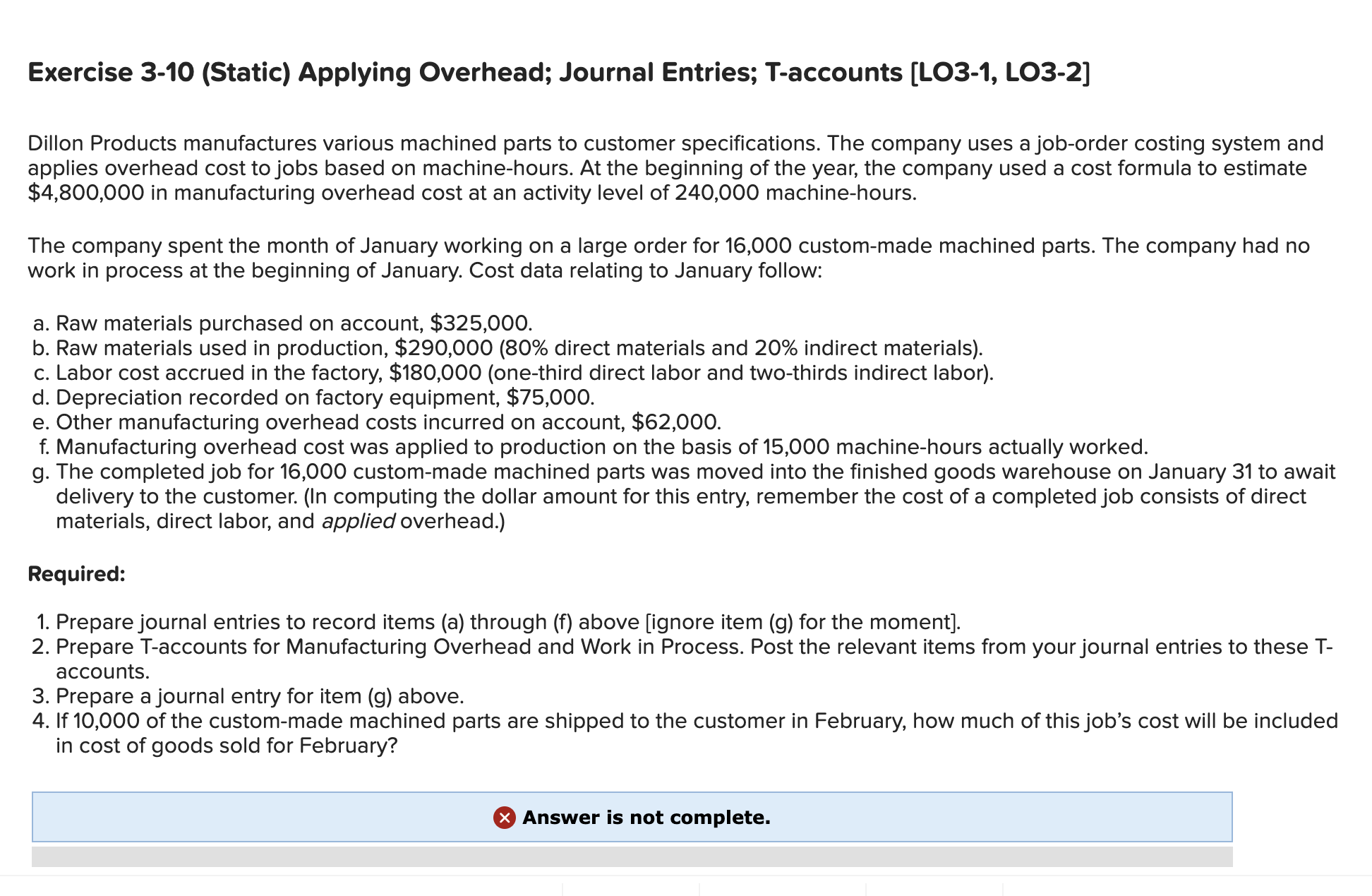
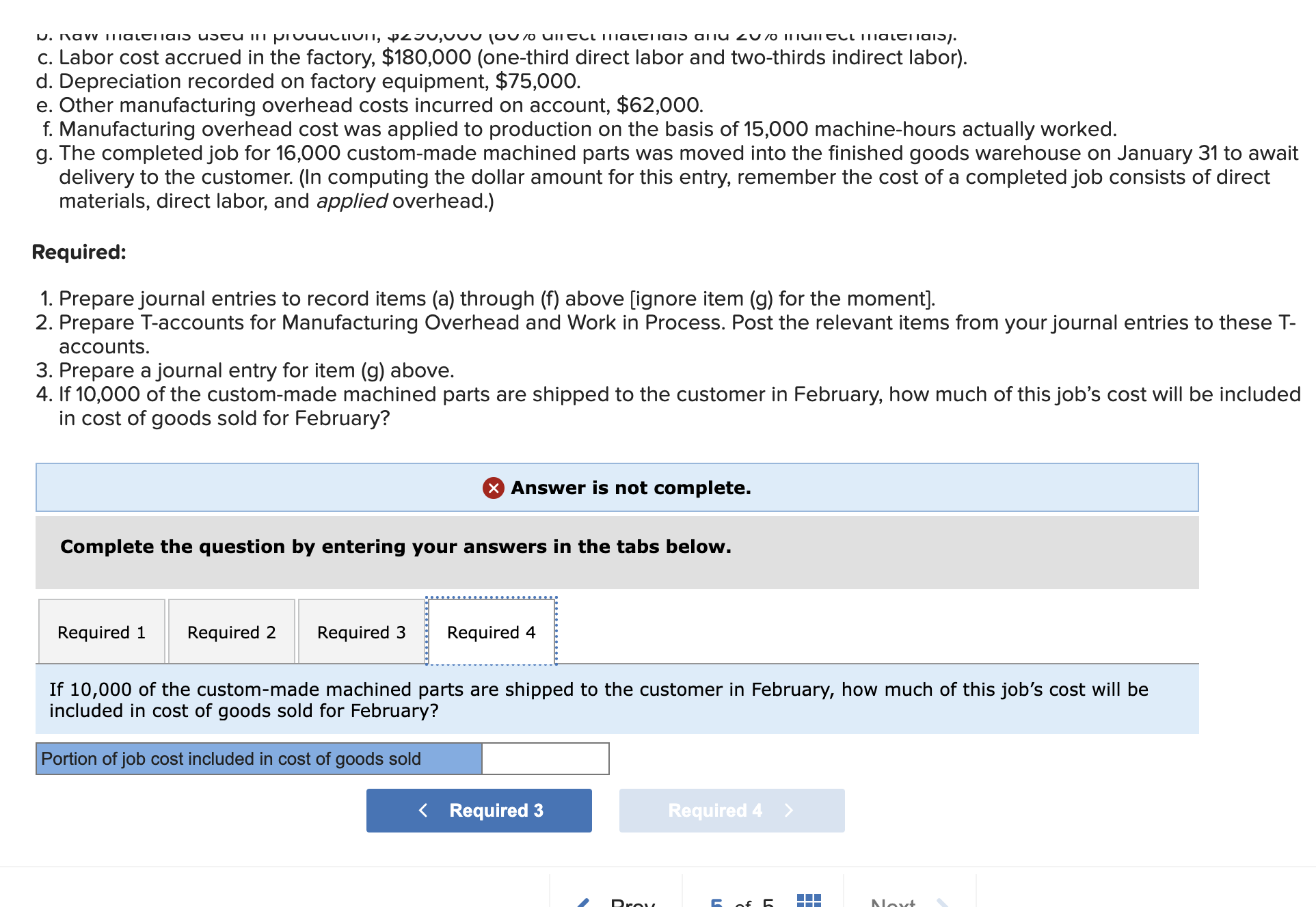
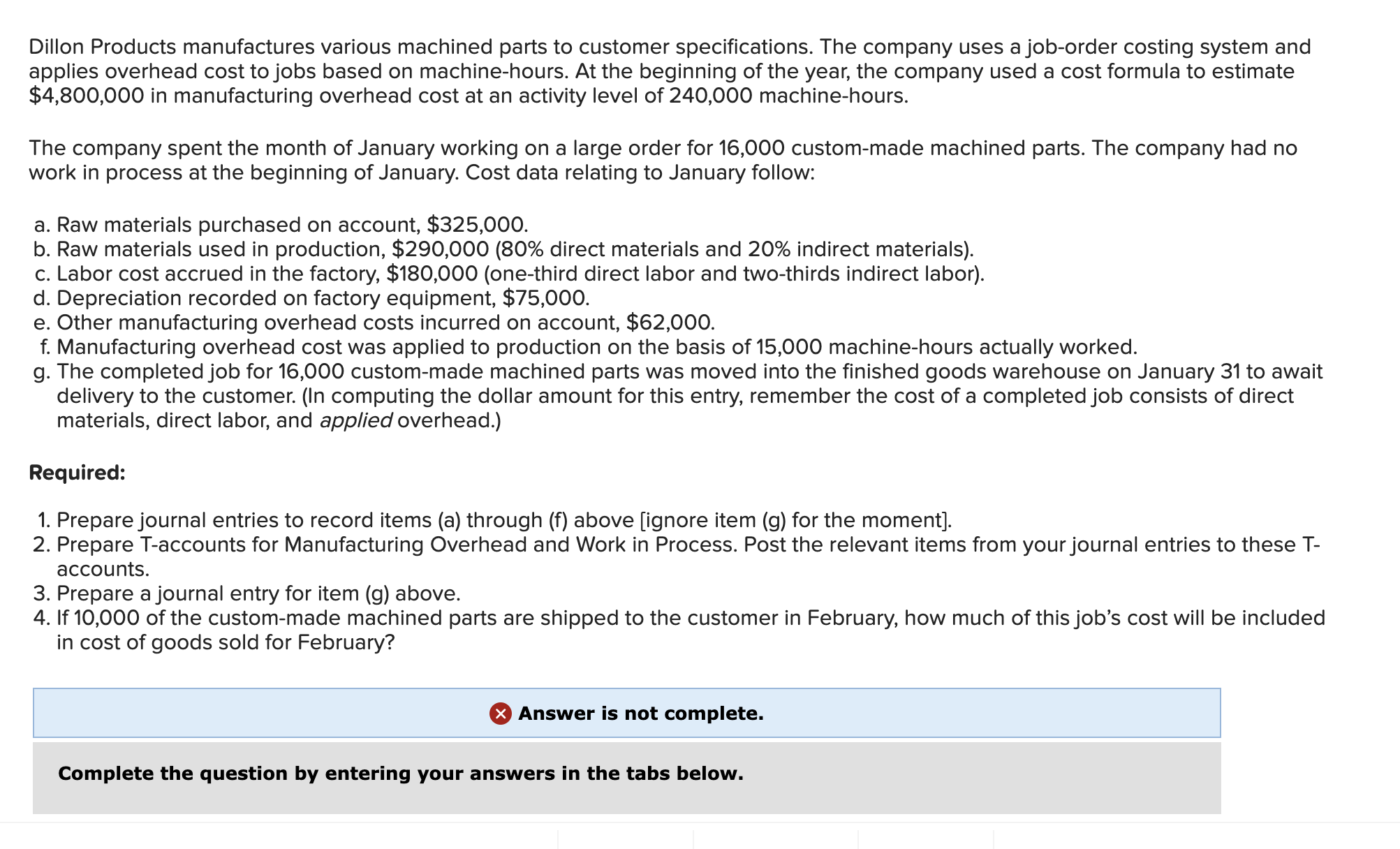
Exercise 3-10 (Static) Applying Overhead; Journal Entries; T-accounts [LO3-1, LO3-2] Dillon Products manufactures various machined parts to customer specifications. The company uses a job-order costing system and applies overhead cost to jobs based on machine-hours. At the beginning of the year, the company used a cost formula to estimate $4,800,000 in manufacturing overhead cost at an activity level of 240,000 machine-hours. The company spent the month of January working on a large order for 16,000 custom-made machined parts. The company had no work in process at the beginning of January. Cost data relating to January follow: a. Raw materials purchased on account, $325,000. b. Raw materials used in production, $290,000 ( 80% direct materials and 20% indirect materials). c. Labor cost accrued in the factory, $180,000 (one-third direct labor and two-thirds indirect labor). d. Depreciation recorded on factory equipment, $75,000. e. Other manufacturing overhead costs incurred on account, $62,000. f. Manufacturing overhead cost was applied to production on the basis of 15,000 machine-hours actually worked. g. The completed job for 16,000 custom-made machined parts was moved into the finished goods warehouse on January 31 to await delivery to the customer. (In computing the dollar amount for this entry, remember the cost of a completed job consists of direct materials, direct labor, and applied overhead.) Required: 1. Prepare journal entries to record items (a) through (f) above [ignore item (g) for the moment]. 2. Prepare T-accounts for Manufacturing Overhead and Work in Process. Post the relevant items from your journal entries to these Taccounts. 3. Prepare a journal entry for item (g) above. 4. If 10,000 of the custom-made machined parts are shipped to the customer in February, how much of this job's cost will be included in cost of goods sold for February? Note: If no entry is required for a transaction/event, select "No journal entry required" in the first account field. delivery to the customer. (In computing the dollar amount for this entry, remember the cost of a completed job consists of direct materials, direct labor, and applied overhead.) Required: 1. Prepare journal entries to record items (a) through (f) above [ignore item (g) for the moment]. 2. Prepare T-accounts for Manufacturing Overhead and Work in Process. Post the relevant items from your journal entries to these Taccounts. 3. Prepare a journal entry for item (g) above. 4. If 10,000 of the custom-made machined parts are shipped to the customer in February, how much of this job's cost will be includec in cost of goods sold for February? Answer is not complete. Complete the question by entering your answers in the tabs below. Prepare a journal entry for item ( g ) above. Note: If no entry is required for a transaction/event, select "No journal entry required" in the first account field. Dillon Products manufactures various machined parts to customer specifications. The company uses a job-order costing system and applies overhead cost to jobs based on machine-hours. At the beginning of the year, the company used a cost formula to estimate $4,800,000 in manufacturing overhead cost at an activity level of 240,000 machine-hours. The company spent the month of January working on a large order for 16,000 custom-made machined parts. The company had no work in process at the beginning of January. Cost data relating to January follow: a. Raw materials purchased on account, $325,000. b. Raw materials used in production, $290,000 (80\% direct materials and 20% indirect materials). c. Labor cost accrued in the factory, $180,000 (one-third direct labor and two-thirds indirect labor). d. Depreciation recorded on factory equipment, $75,000. e. Other manufacturing overhead costs incurred on account, $62,000. f. Manufacturing overhead cost was applied to production on the basis of 15,000 machine-hours actually worked. g. The completed job for 16,000 custom-made machined parts was moved into the finished goods warehouse on January 31 to await delivery to the customer. (In computing the dollar amount for this entry, remember the cost of a completed job consists of direct materials, direct labor, and applied overhead.) Required: 1. Prepare journal entries to record items (a) through (f) above [ignore item (g) for the moment]. 2. Prepare T-accounts for Manufacturing Overhead and Work in Process. Post the relevant items from your journal entries to these Taccounts. 3. Prepare a journal entry for item (g) above. 4. If 10,000 of the custom-made machined parts are shipped to the customer in February, how much of this job's cost will be included in cost of goods sold for February? Exercise 3-10 (Static) Applying Overhead; Journal Entries; T-accounts [LO3-1, LO3-2] Dillon Products manufactures various machined parts to customer specifications. The company uses a job-order costing system and applies overhead cost to jobs based on machine-hours. At the beginning of the year, the company used a cost formula to estimate $4,800,000 in manufacturing overhead cost at an activity level of 240,000 machine-hours. The company spent the month of January working on a large order for 16,000 custom-made machined parts. The company had no work in process at the beginning of January. Cost data relating to January follow: a. Raw materials purchased on account, $325,000. b. Raw materials used in production, $290,000 ( 80% direct materials and 20% indirect materials). c. Labor cost accrued in the factory, $180,000 (one-third direct labor and two-thirds indirect labor). d. Depreciation recorded on factory equipment, $75,000. e. Other manufacturing overhead costs incurred on account, $62,000. f. Manufacturing overhead cost was applied to production on the basis of 15,000 machine-hours actually worked. g. The completed job for 16,000 custom-made machined parts was moved into the finished goods warehouse on January 31 to await delivery to the customer. (In computing the dollar amount for this entry, remember the cost of a completed job consists of direct materials, direct labor, and applied overhead.) Required: 1. Prepare journal entries to record items (a) through (f) above [ignore item (g) for the moment]. 2. Prepare T-accounts for Manufacturing Overhead and Work in Process. Post the relevant items from your journal entries to these Taccounts. 3. Prepare a journal entry for item (g) above. 4. If 10,000 of the custom-made machined parts are shipped to the customer in February, how much of this job's cost will be included in cost of goods sold for February? 4. If 10,000 of the custom-made machined parts are shipped to the customer in February, how much of this job's cost will be included in cost of goods sold for February? Answer is not complete. Complete the question by entering your answers in the tabs below. Dillon Products manufactures various machined parts to customer specifications. The company uses a job-order costing system and applies overhead cost to jobs based on machine-hours. At the beginning of the year, the company used a cost formula to estimate $4,800,000 in manufacturing overhead cost at an activity level of 240,000 machine-hours. The company spent the month of January working on a large order for 16,000 custom-made machined parts. The company had no work in process at the beginning of January. Cost data relating to January follow: a. Raw materials purchased on account, $325,000. b. Raw materials used in production, $290,000 ( 80% direct materials and 20% indirect materials). c. Labor cost accrued in the factory, $180,000 (one-third direct labor and two-thirds indirect labor). d. Depreciation recorded on factory equipment, $75,000. e. Other manufacturing overhead costs incurred on account, $62,000. f. Manufacturing overhead cost was applied to production on the basis of 15,000 machine-hours actually worked. g. The completed job for 16,000 custom-made machined parts was moved into the finished goods warehouse on January 31 to await delivery to the customer. (In computing the dollar amount for this entry, remember the cost of a completed job consists of direct materials, direct labor, and applied overhead.) Required: 1. Prepare journal entries to record items (a) through (f) above [ignore item (g) for the moment]. 2. Prepare T-accounts for Manufacturing Overhead and Work in Process. Post the relevant items from your journal entries to these Taccounts. 3. Prepare a journal entry for item (g) above. 4. If 10,000 of the custom-made machined parts are shipped to the customer in February, how much of this job's cost will be included in cost of goods sold for February? c. Labor cost accrued in the factory, $180,000 (one-third direct labor and two-thirds indirect labor). d. Depreciation recorded on factory equipment, $75,000. e. Other manufacturing overhead costs incurred on account, $62,000. f. Manufacturing overhead cost was applied to production on the basis of 15,000 machine-hours actually worked. g. The completed job for 16,000 custom-made machined parts was moved into the finished goods warehouse on January 31 to await delivery to the customer. (In computing the dollar amount for this entry, remember the cost of a completed job consists of direct materials, direct labor, and applied overhead.) Required: 1. Prepare journal entries to record items (a) through (f) above [ignore item (g) for the moment]. 2. Prepare T-accounts for Manufacturing Overhead and Work in Process. Post the relevant items from your journal entries to these Taccounts. 3. Prepare a journal entry for item (g) above. 4. If 10,000 of the custom-made machined parts are shipped to the customer in February, how much of this job's cost will be included in cost of goods sold for February? Answer is not complete. Complete the question by entering your answers in the tabs below. If 10,000 of the custom-made machined parts are shipped to the customer in February, how much of this job's cost will be included in cost of goods sold for February
Step by Step Solution
There are 3 Steps involved in it

Get step-by-step solutions from verified subject matter experts
 Study Help