







Question: Explanations and answers Suppose a lab is developing a robust new test to look for diabetes in children. If a child actually has diabetes, the
Explanations and answers
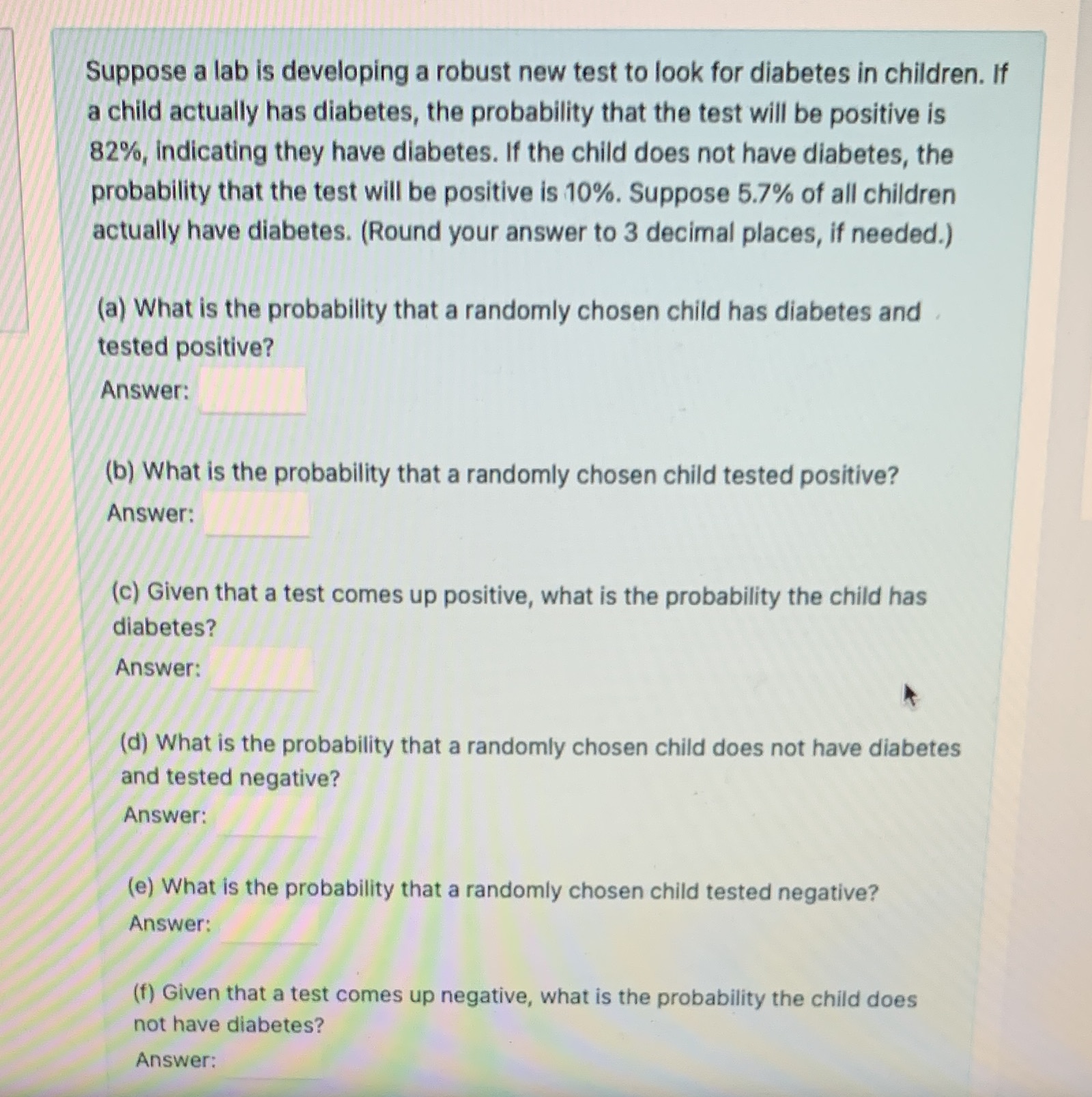
Suppose a lab is developing a robust new test to look for diabetes in children. If a child actually has diabetes, the probability that the test will be positive is 82%, indicating they have diabetes. If the child does not have diabetes, the probability that the test will be positive is 10%. Suppose 5.7% of all children actually have diabetes. (Round your answer to 3 decimal places, if needed.) (a) What is the probability that a randomly chosen child has diabetes and tested positive? Answer: (b) What is the probability that a randomly chosen child tested positive? Answer: (c) Given that a test comes up positive, what is the probability the child has diabetes? Answer: (d) What is the probability that a randomly chosen child does not have diabetes and tested negative? Answer: (e) What is the probability that a randomly chosen child tested negative? Answer: (f) Given that a test comes up negative, what is the probability the child does not have diabetes
Step by Step Solution
There are 3 Steps involved in it

Get step-by-step solutions from verified subject matter experts
 Study Help