







Question: Explore INVESTIGATION B4 3. A node is a point on the wave where the string does not move. An antinode is a point where the
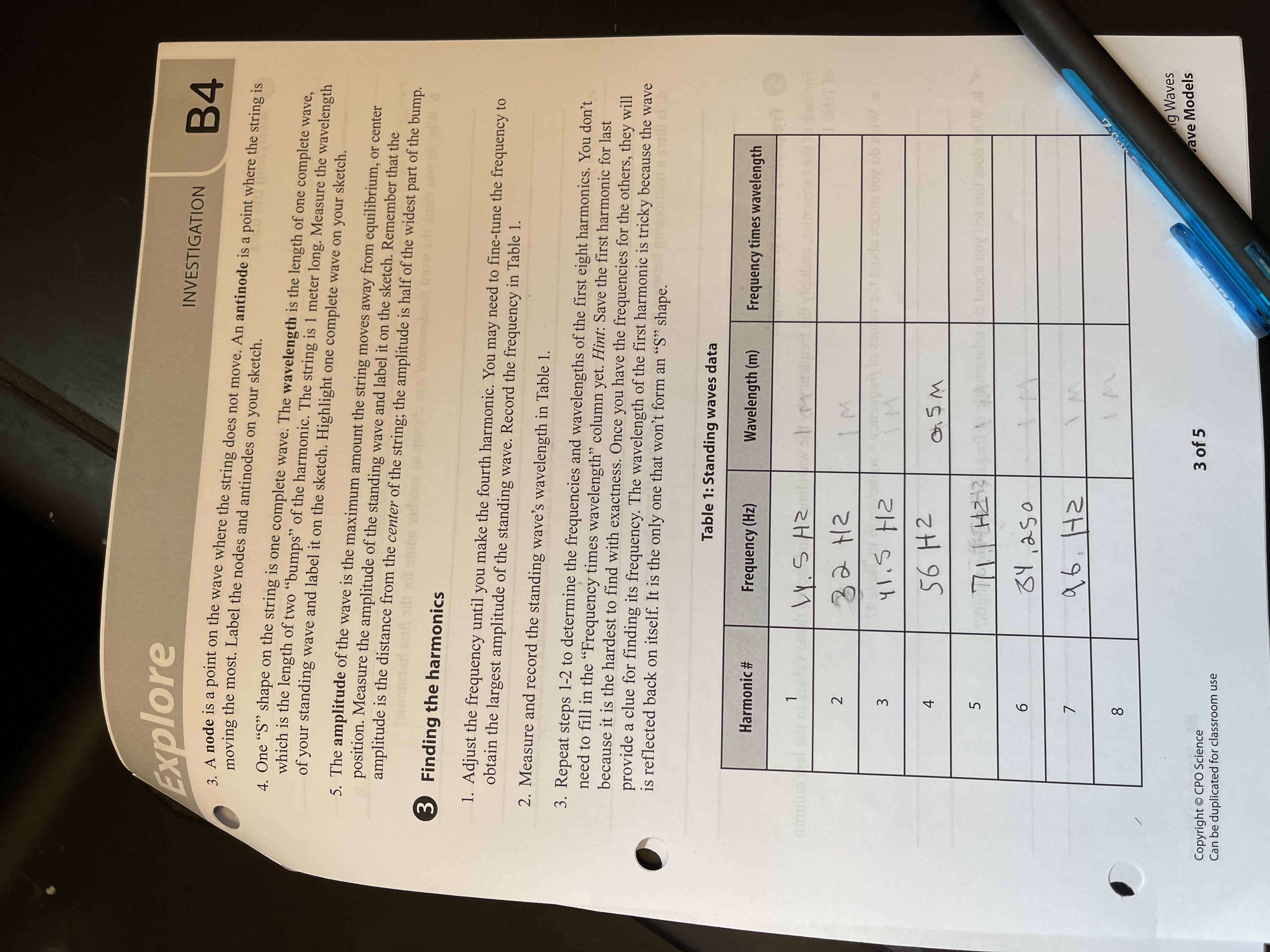
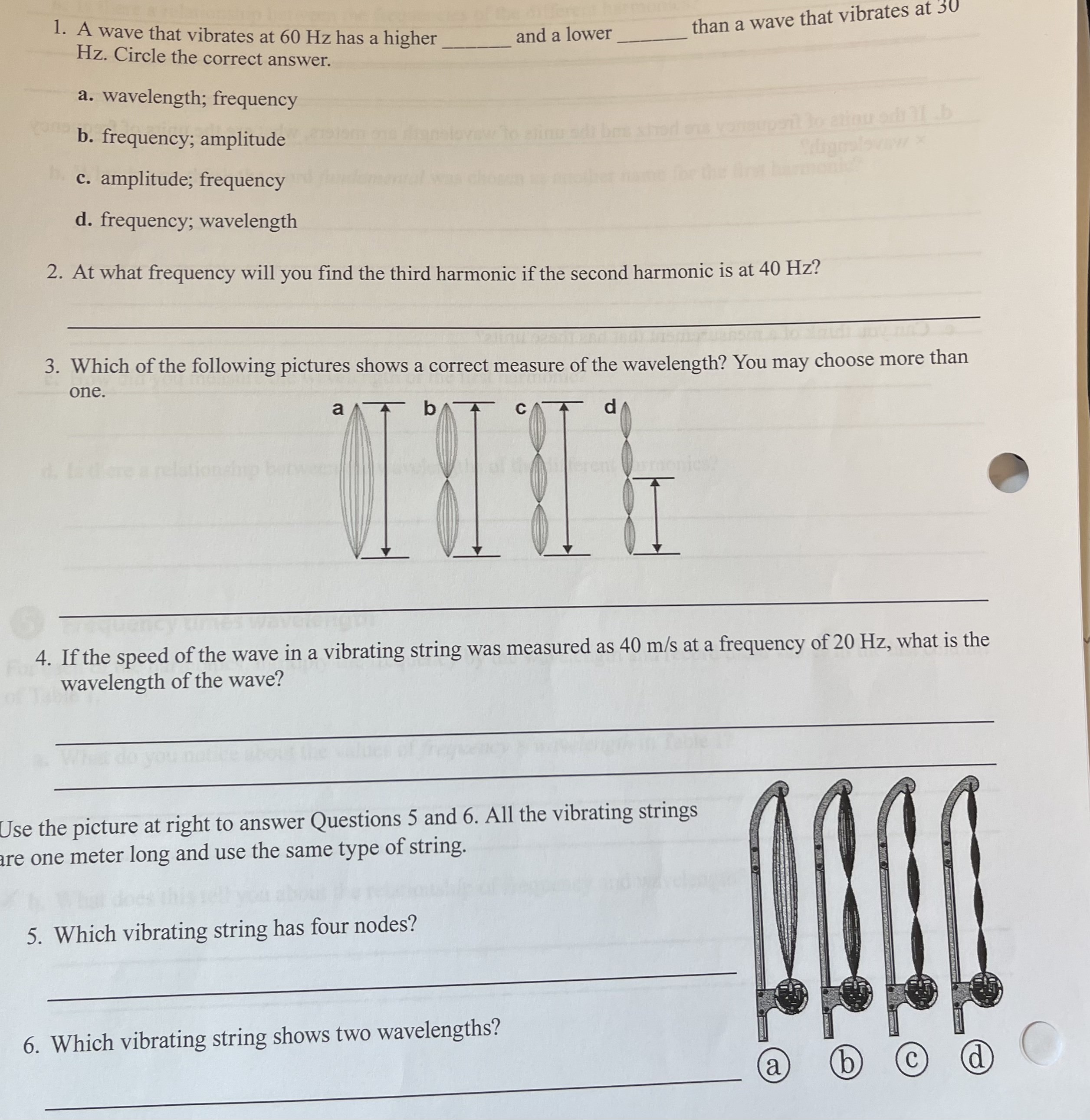
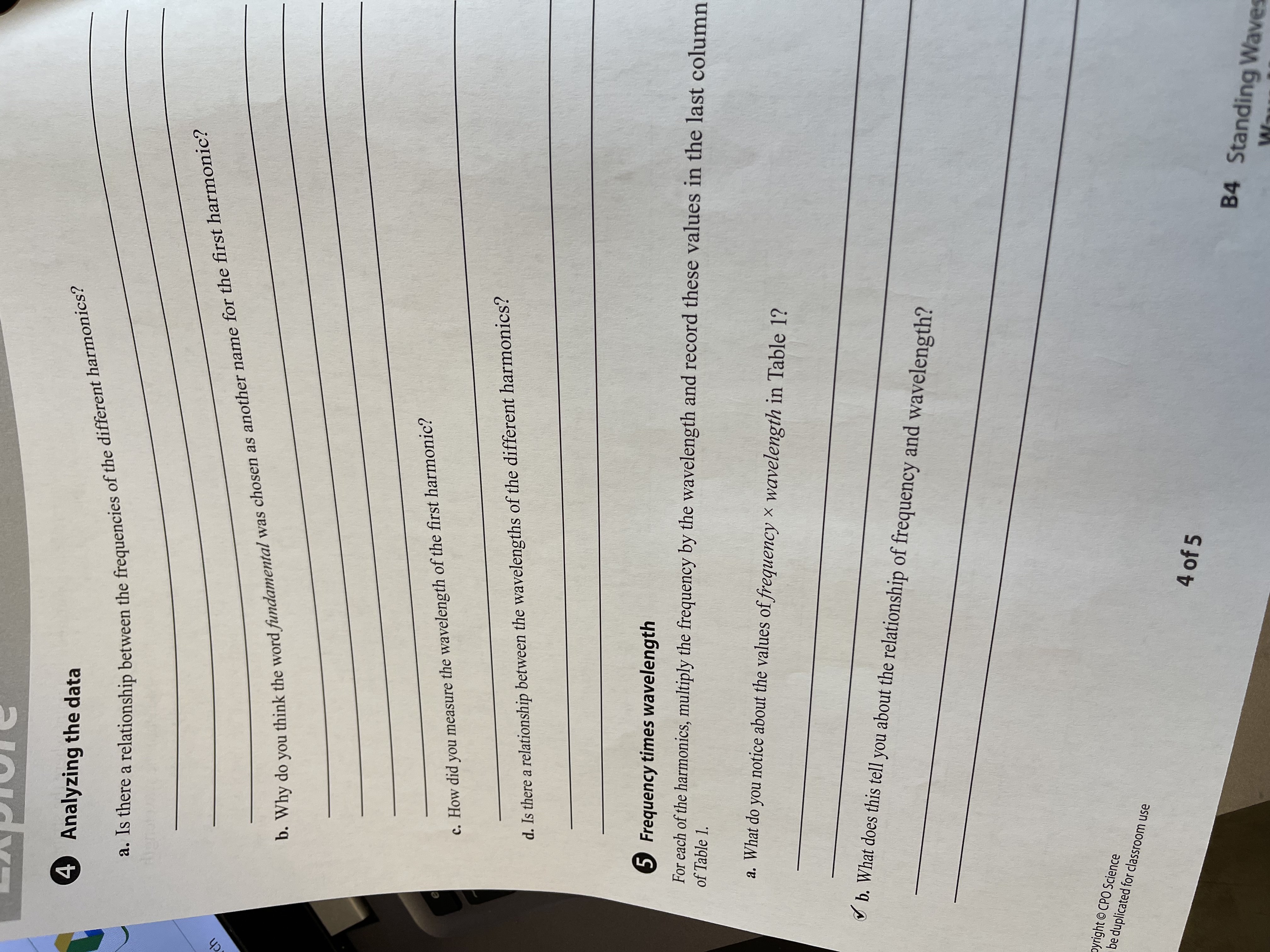
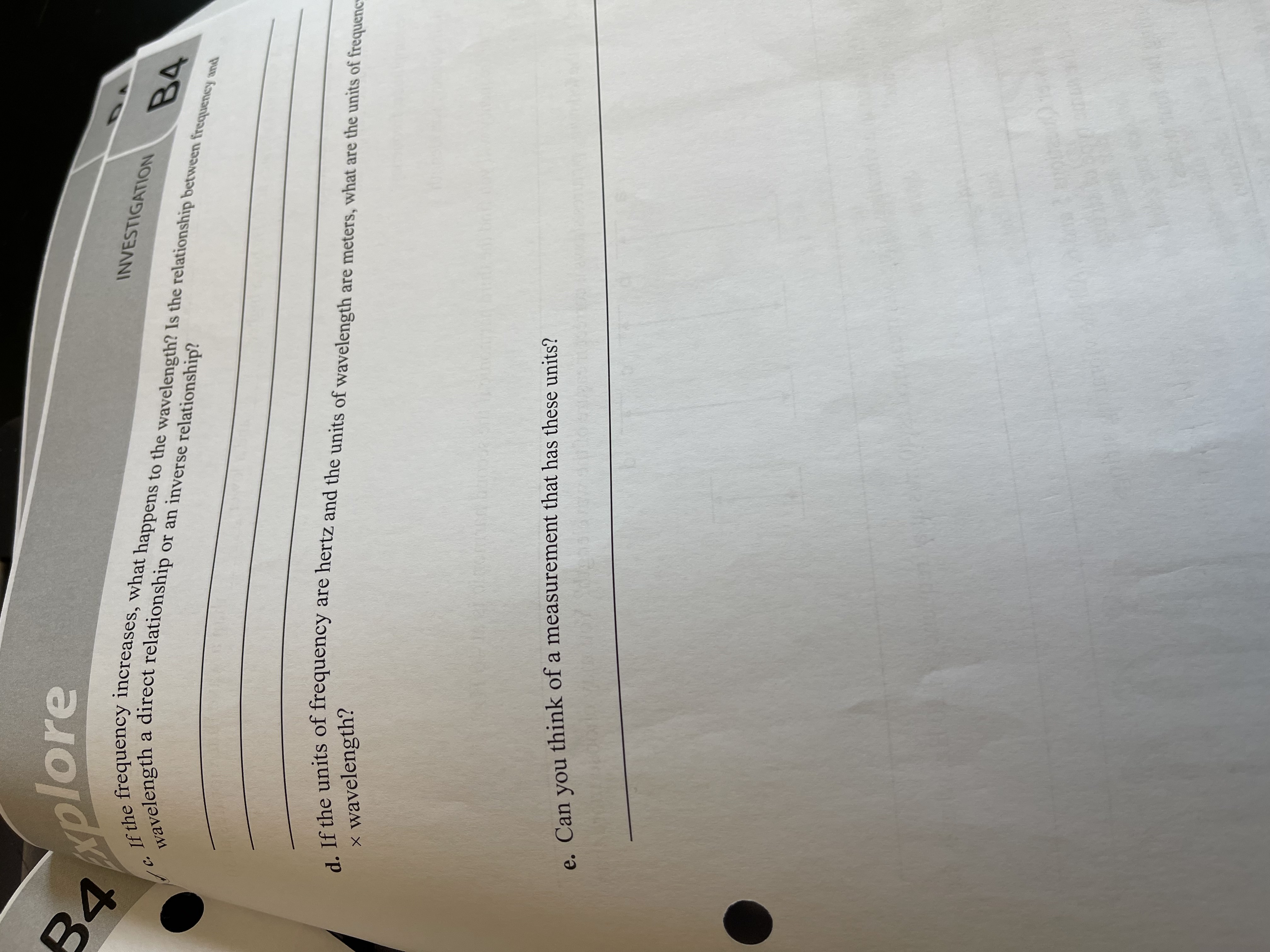
Explore INVESTIGATION B4 3. A node is a point on the wave where the string does not move. An antinode is a point where the string is moving the most. Label the nodes and antinodes on your sketch. 4. One "S" shape on the string is one complete wave. The wavelength is the length of one complete wave, which is the length of two "bumps" of the harmonic. The string is 1 meter long. Measure the wavelength of your standing wave and label it on the sketch. Highlight one complete wave on your sketch. 5. The amplitude of the wave is the maximum amount the string moves away from equilibrium, or center position. Measure the amplitude of the standing wave and label it on the sketch. Remember that the amplitude is the distance from the center of the string; the amplitude is half of the widest part of the bump. Finding the harmonics 1. Adjust the frequency until you make the fourth harmonic. You may need to fine-tune the frequency to obtain the largest amplitude of the standing wave. Record the frequency in Table 1. 2. Measure and record the standing wave's wavelength in Table 1. 3. Repeat steps 1-2 to determine the frequencies and wavelengths of the first eight harmonics. You don't need to fill in the "Frequency times wavelength" column yet. Hint: Save the first harmonic for last because it is the hardest to find with exactness. Once you have the frequencies for the others, they will provide a clue for finding its frequency. The wavelength of the first harmonic is tricky because the wave is reflected back on itself. It is the only one that won't form an "S" shape. Table 1: Standing waves data Harmonic # Frequency (Hz) Wavelength (m) Frequency times wavelength amuloo Ly. S Hz IdeT To 2 32 +12 IM 3 41. 5 H2 -A 56 H2 0 5 M 71 H 2 13 L Juode Boy 6 34, 250 7 16. H2 IM 8 I M g Waves ave Models Copyright @ CPO Science 3 of 5 Can be duplicated for classroom use1. A wave that vibrates at 60 Hz has a higher than a wave that vibrates at 30 and a lower Hz. Circle the correct answer. a. wavelength; frequency b. frequency; amplitude c. amplitude; frequency d. frequency; wavelength 2. At what frequency will you find the third harmonic if the second harmonic is at 40 Hz? 3. Which of the following pictures shows a correct measure of the wavelength? You may choose more than one. 4. If the speed of the wave in a vibrating string was measured as 40 m/s at a frequency of 20 Hz, what is the wavelength of the wave? Use the picture at right to answer Questions 5 and 6. All the vibrating strings re one meter long and use the same type of string. 5. Which vibrating string has four nodes? 6. Which vibrating string shows two wavelengths? a b C4 Analyzing the data a. Is there a relationship between the frequencies of the different harmonics? b. Why do you think the word fundamental was chosen as another name for the first harmonic? c. How did you measure the wavelength of the first harmonic? d. Is there a relationship between the wavelengths of the different harmonics? 5 Frequency times wavelength For each of the harmonics, multiply the frequency by the wavelength and record these values in the last column of Table 1. a. What do you notice about the values of frequency x wavelength in Table 1? b. What does this tell you about the relationship of frequency and wavelength? byright @ CPO Science be duplicated for classroom use 4 of 5 B4 Standing Wavesxplore INVESTIGATION BA If the frequent. thereases, what happens to the wavelength? Is the relationship between frequency and wavelength a direct relationship or an inverse relationship? d. If the units of frequency are hertz and the units of wavelength are meters, what are the units of frequency x wavelength? e. Can you think of a measurement that has these units
Step by Step Solution
There are 3 Steps involved in it

Get step-by-step solutions from verified subject matter experts
 Study Help