



Question: Tax Planning Simulation, Questions 30 and 31 Facts Justin is a single taxpayer who owns IMC, Inc. (a C corporation). Both entities use the
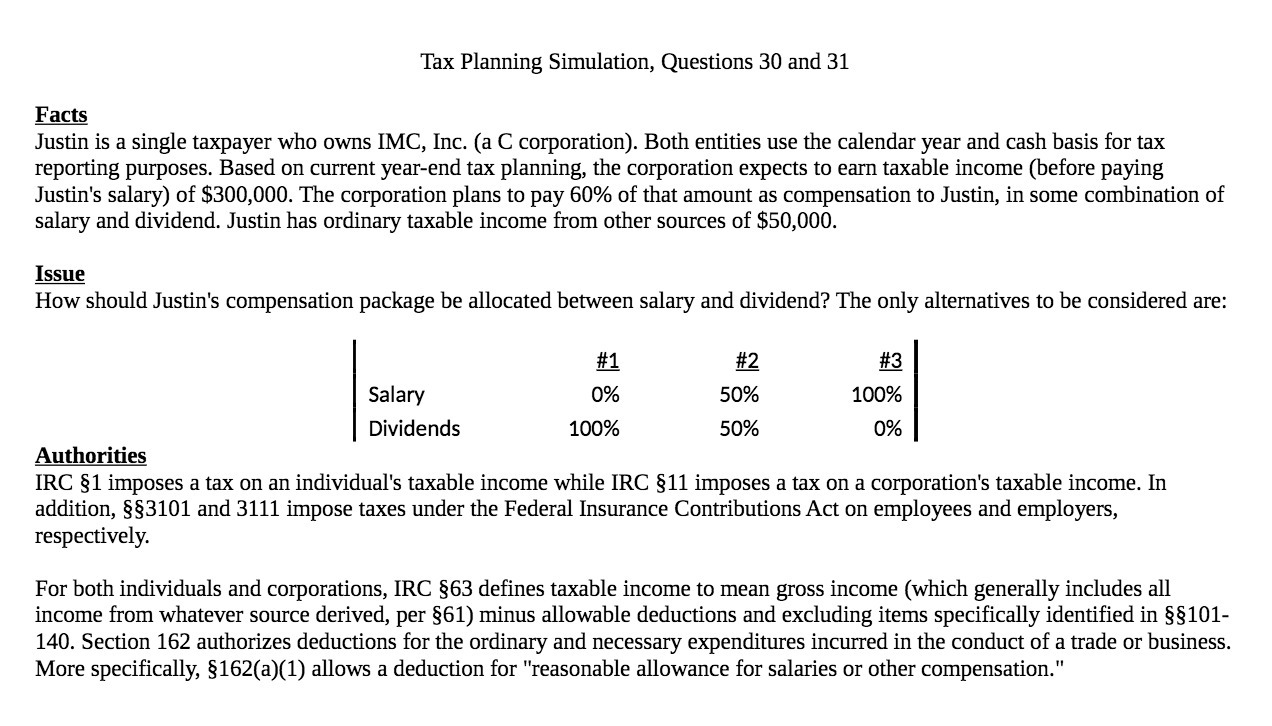
Tax Planning Simulation, Questions 30 and 31 Facts Justin is a single taxpayer who owns IMC, Inc. (a C corporation). Both entities use the calendar year and cash basis for tax reporting purposes. Based on current year-end tax planning, the corporation expects to earn taxable income (before paying Justin's salary) of $300,000. The corporation plans to pay 60% of that amount as compensation to Justin, in some combination of salary and dividend. Justin has ordinary taxable income from other sources of $50,000. Issue How should Justin's compensation package be allocated between salary and dividend? The only alternatives to be considered are: #2 #3 100% Salary Dividends Authorities 100% IRC 51 imposes a tax on an individual's taxable income while IRC 511 imposes a tax on a corporation's taxable income. In addition, #3101 and 3111 impose taxes under the Federal Insurance Contributions Act on employees and employers, respectively. For both individuals and corporations, IRC 563 defines taxable income to mean gross income (which generally includes all income from whatever source derived, per 561) minus allowable deductions and excluding items specifically identified in "101- 140. Section 162 authorizes deductions for the ordinary and necessary expenditures incurred in the conduct of a trade or business. More specifically, allows a deduction for "reasonable allowance for salaries or other compensation."
Step by Step Solution
There are 3 Steps involved in it

Get step-by-step solutions from verified subject matter experts