



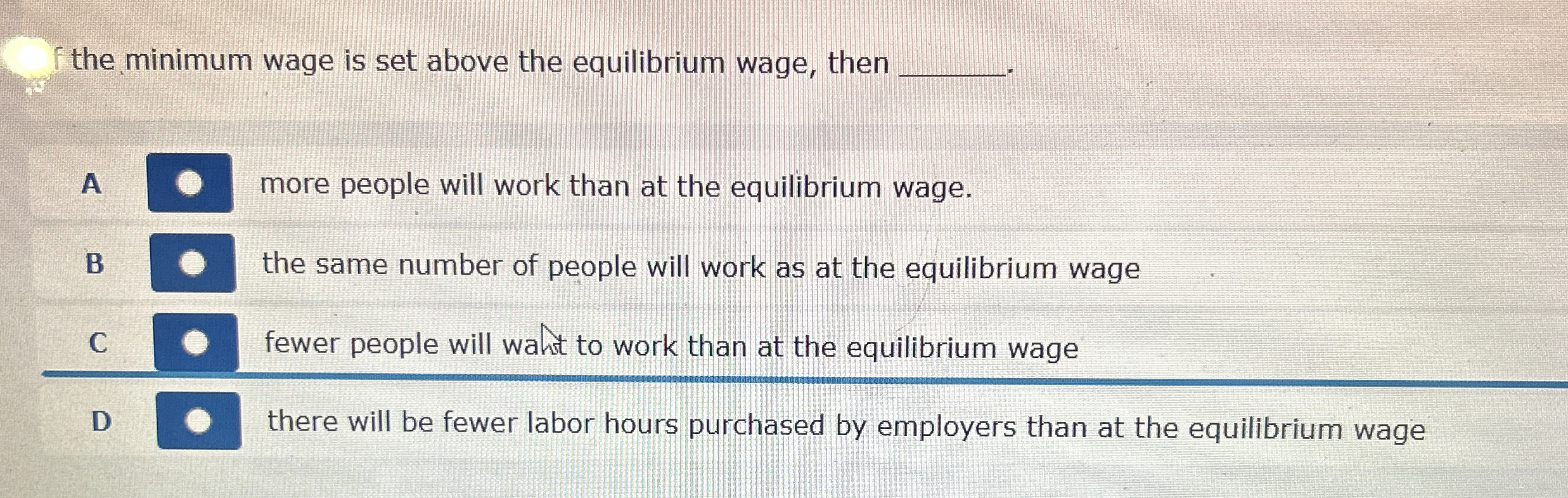
Question: f the minimum wage is set above the equilibrium wage, then q , . A more people will work than at the equilibrium wage. B
f the minimum wage is set above the equilibrium wage, then
A more people will work than at the equilibrium wage.
B the same number of people will work as at the equilibrium wage
C fewer people will waht to work than at the equilibrium wage
D there will be fewer labor hours purchased by employers than at the equilibrium wage
f the minimum wage is set above the equilibrium wage, then
A more people will work than at the equilibrium wage.
B the same number of people will work as at the equilibrium wage
C fewer people will waht to work than at the equilibrium wage
D there will be fewer labor hours purchased by employers than at the equilibrium wage
f the minimum wage is set above the equilibrium wage, then
A more people will work than at the equilibrium wage.
B the same number of people will work as at the equilibrium wage
C fewer people will waht to work than at the equilibrium wage
D there will be fewer labor hours purchased by employers than at the equilibrium wage
f the minimum wage is set above the equilibrium wage, then
A more people will work than at the equilibrium wage.
B the same number of people will work as at the equilibrium wage
C fewer people will waht to work than at the equilibrium wage
D there will be fewer labor hours purchased by employers than at the equilibrium wage
f the minimum wage is set above the equilibrium wage, then
A more people will work than at the equilibrium wage.
B the same number of people will work as at the equilibrium wage
C fewer people will waht to work than at the equilibrium wage
D there will be fewer labor hours purchased by employers than at the equilibrium wage
f the minimum wage is set above the equilibrium wage, then
A more people will work than at the equilibrium wage.
B the same number of people will work as at the equilibrium wage
C fewer people will waht to work than at the equilibrium wage
D there will be fewer labor hours purchased by employers than at the equilibrium wage
f the minimum wage is set above the equilibrium wage, then
A more people will work than at the equilibrium wage.
B the same number of people will work as at the equilibrium wage
C fewer people will waht to work than at the equilibrium wage
D there will be fewer labor hours purchased by employers than at the equilibrium wage
f the minimum wage is set above the equilibrium wage, then
A more people will work than at the equilibrium wage.
B the same number of people will work as at the equilibrium wage
C fewer people will waht to work than at the equilibrium wage
D there will be fewer labor hours purchased by employers than at the equilibrium wage
f the minimum wage is set above the equilibrium wage, then
A more people will work than at the equilibrium wage.
B the same number of people will work as at the equilibrium wage
C fewer people will waht to work than at the equilibrium wage
D there will be fewer labor hours purchased by employers than at the equilibrium wage
f the minimum wage is set above the equilibrium wage, then
A more people will work than at the equilibrium wage.
B the same number of people will work as at the equilibrium wage
C fewer people will waht to work than at the equilibrium wage
D there will be fewer labor hours purchased by employers than at the equilibrium wage
f the minimum wage is set above the equilibrium wage, then
A more people will work than at the equilibrium wage.
B the same number of people will work as at the equilibrium wage
C fewer people will waht to work than at the equilibrium wage
D there will be fewer labor hours purchased by employers than at the equilibrium wage
Step by Step Solution
There are 3 Steps involved in it
1 Expert Approved Answer
Step: 1 Unlock

Question Has Been Solved by an Expert!
Get step-by-step solutions from verified subject matter experts
Step: 2 Unlock
Step: 3 Unlock