



Question: fD Question 1 3 pts Suppose you have a random sample of size 200 from a population with unknown mean, and you wish to perform
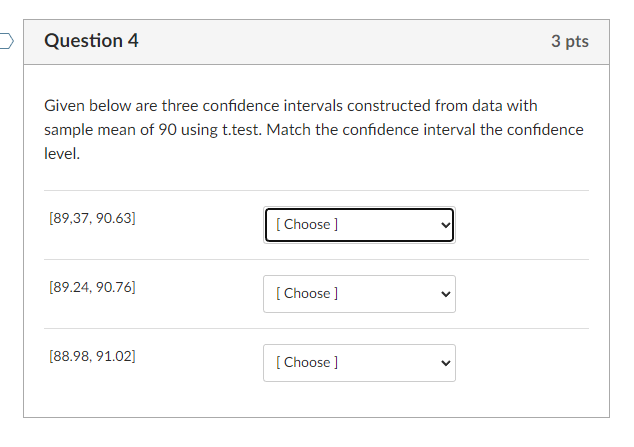
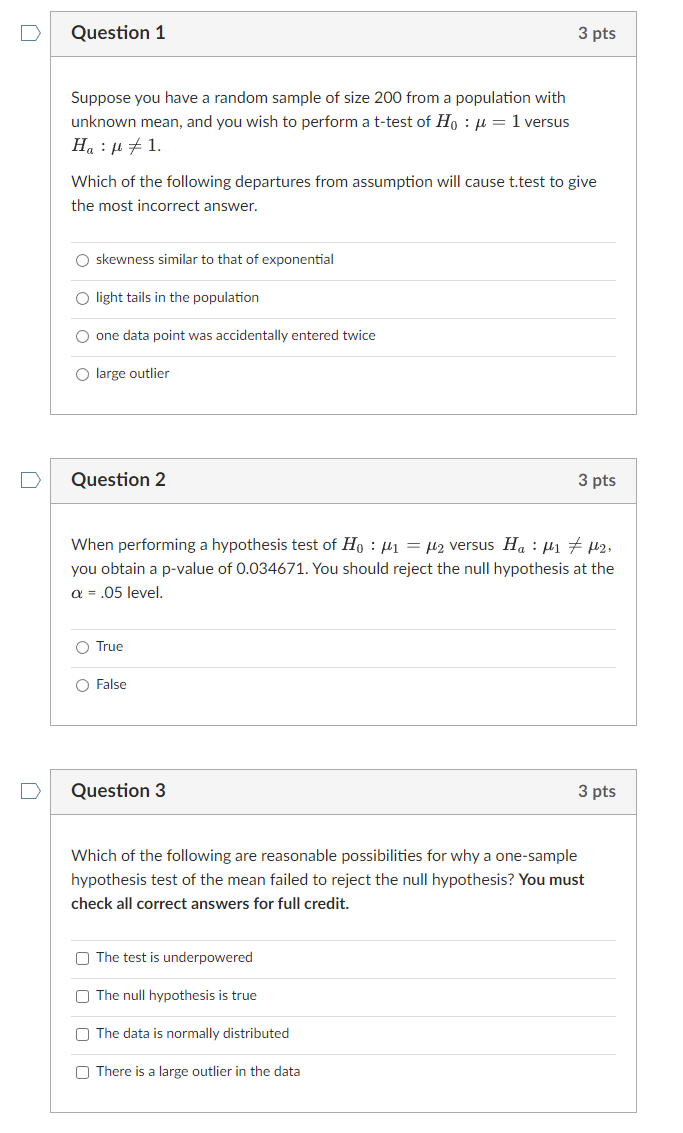
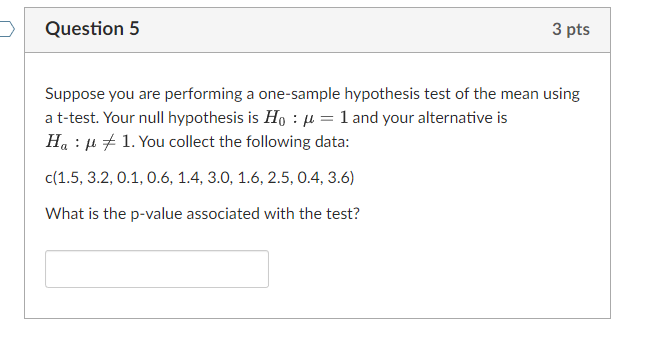
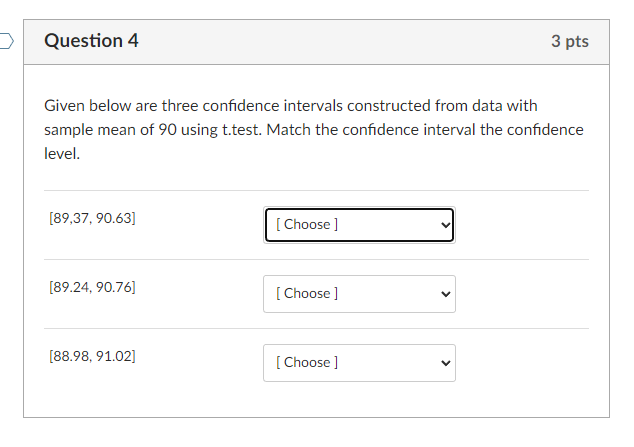
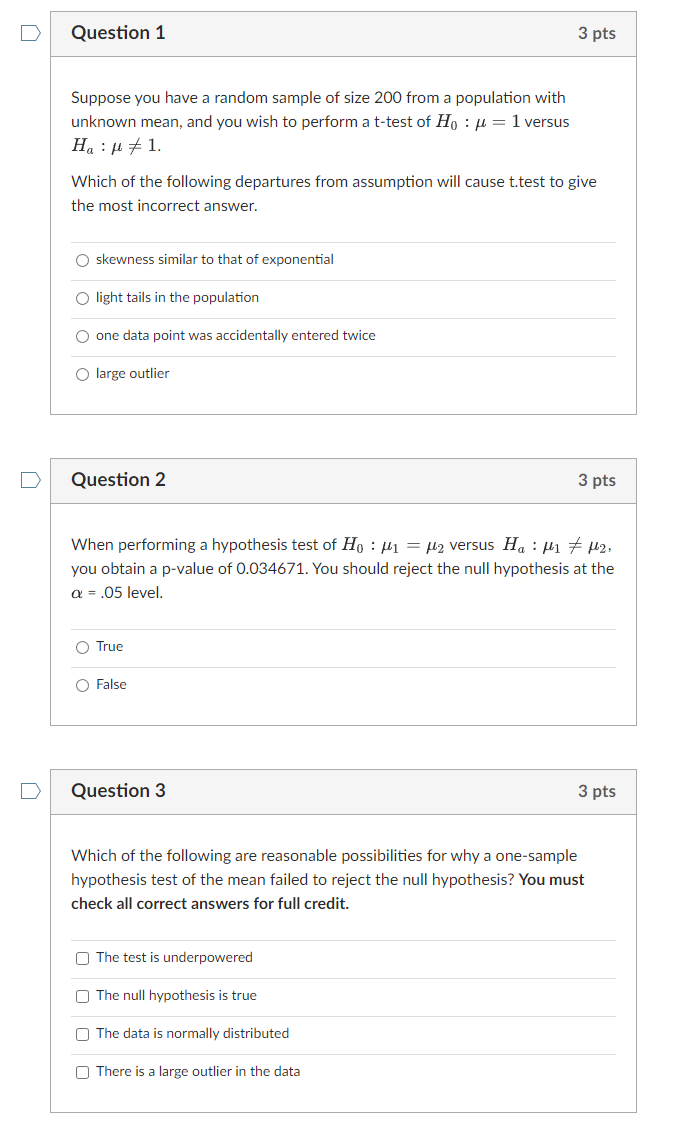
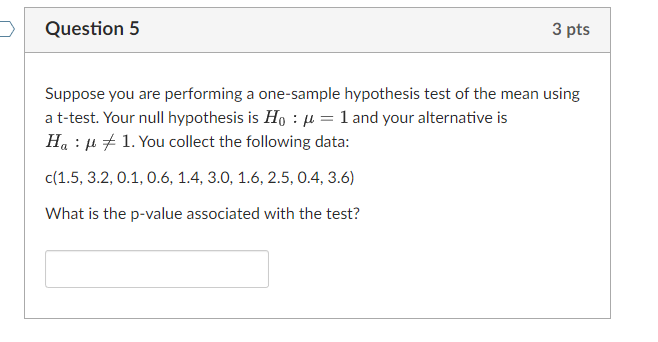
\fD Question 1 3 pts Suppose you have a random sample of size 200 from a population with unknown mean, and you wish to perform a t-test of Hg : p. = 1 versus Hazpyl. Which of the following departures from assumption will cause t.test to give the most incorrect answer. Q skewness similar to that of exponential 0 light tails in the population 0 one data point was accidentally entered twice Q large outlier Question 2 3 pts When performing a hypothesis test of HE. : p1 = #3 versus 1H"1 : e1 75 #2, you obtain a pyalue of 0.0346?1. You should reject the null hypothesis at the ca = .05 level. 0 True Q False Question 3 3 pts Which of the following are reasonable possibilities for why a onesample hypothesis test of the mean failed to reject the null hypothesis? You must check all correct answers for full credit. [3 The test is underpowered D The null hypothesis is true [3 The data is normally distributed [3 There is a large outlier in the data Question 5 3 pts Suppose you are performing a one-sample hypothesis test of the mean using a t-test. Your null hypothesis is Ho : / = 1 and your alternative is Ha : u # 1. You collect the following data: c(1.5, 3.2, 0.1, 0.6, 1.4, 3.0, 1.6, 2.5, 0.4, 3.6) What is the p-value associated with the test
Step by Step Solution
There are 3 Steps involved in it

Get step-by-step solutions from verified subject matter experts