







Question: A decrease in taxes will shift the AO curve to the Select one: while a decrease in government expenditure val shin the curve to
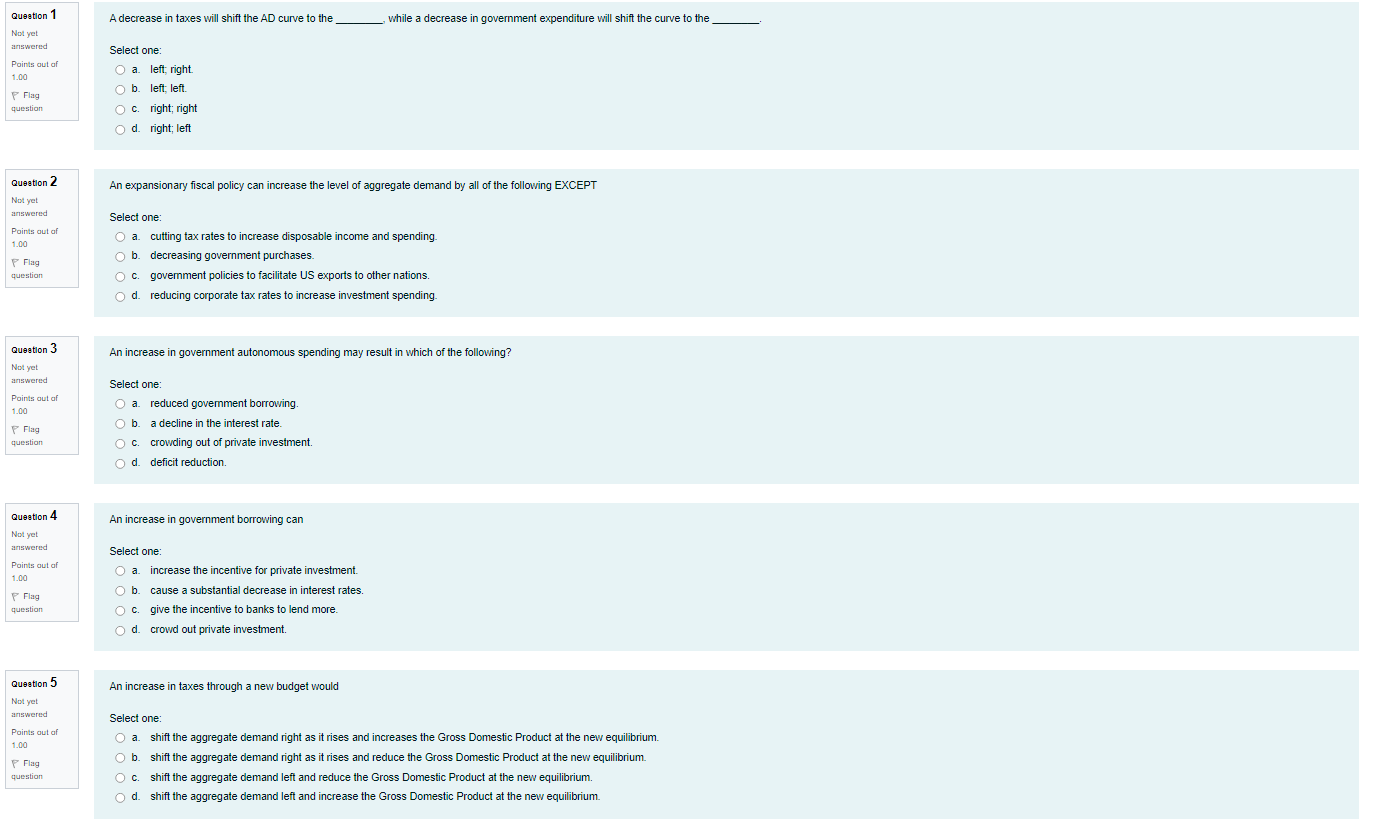











A decrease in taxes will shift the AO curve to the Select one: while a decrease in government expenditure val shin the curve to the o o o o a. left; right left; left. right; right right; lefl An expansionary fiscal policy can increase the level of aggregate demand by all of the follcnving EXCEPT Select one: o o o o cutting tax rates to increase disposable income and spending. decreasing government purchases. guernment policies to facilitate IJS exports to other nations reducing corporate tax rates to increase Investment spending. An increase in government autonomous spending may result in which of the followingo Select one: o o o o reduced government borrcnving a decline in the interest rate. crowding out of private investment deficit reduction An increase in government borrcM'ing can Select one: o o o o increase the incentive for private investment. cause a substantial decrease in interest rates give the incentive to banks to lend more. crowd out private investment An increase in taxes through a new budget veould Select one: o o o o shift the aggregate demand right as it rises and increases the Gross Domestic Product at the new equilibrium. shift the aggregate demand right as it rises and reduce the Gross Domestic Product at the new equilibrium shift the aggregate demand left and reduce the Gross Domestic Product at the new equilibrium shift the aggregate demand left and increase the Gross Domestic Product at the new equilibrium
Step by Step Solution
There are 3 Steps involved in it

Get step-by-step solutions from verified subject matter experts
 Study Help