







Question: fFor the function g(w) = .'L'2 43: 3 do the following: (a) Find the vertex. (b) Find the axis of symmetry. ((3) Determine whether there
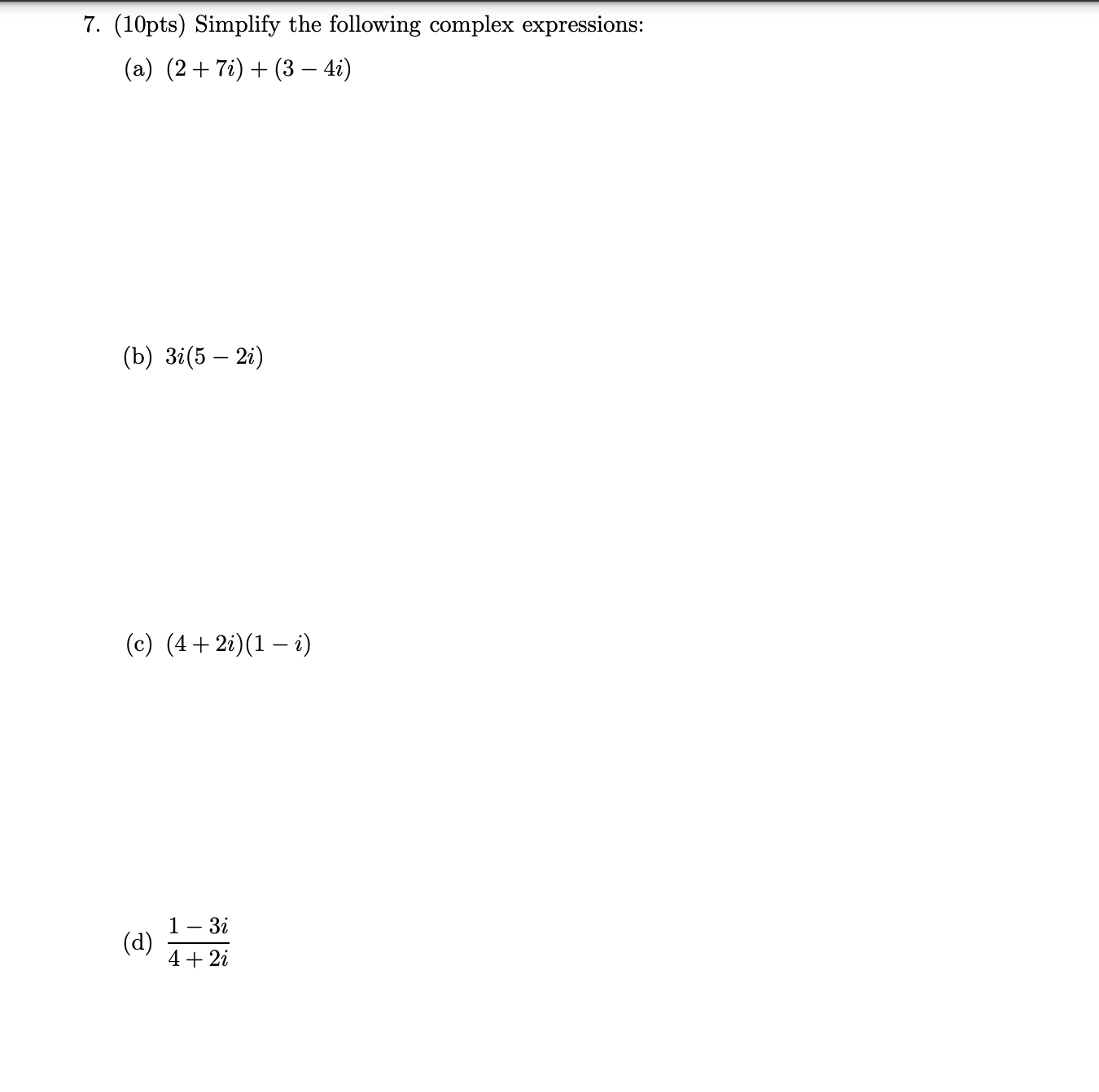
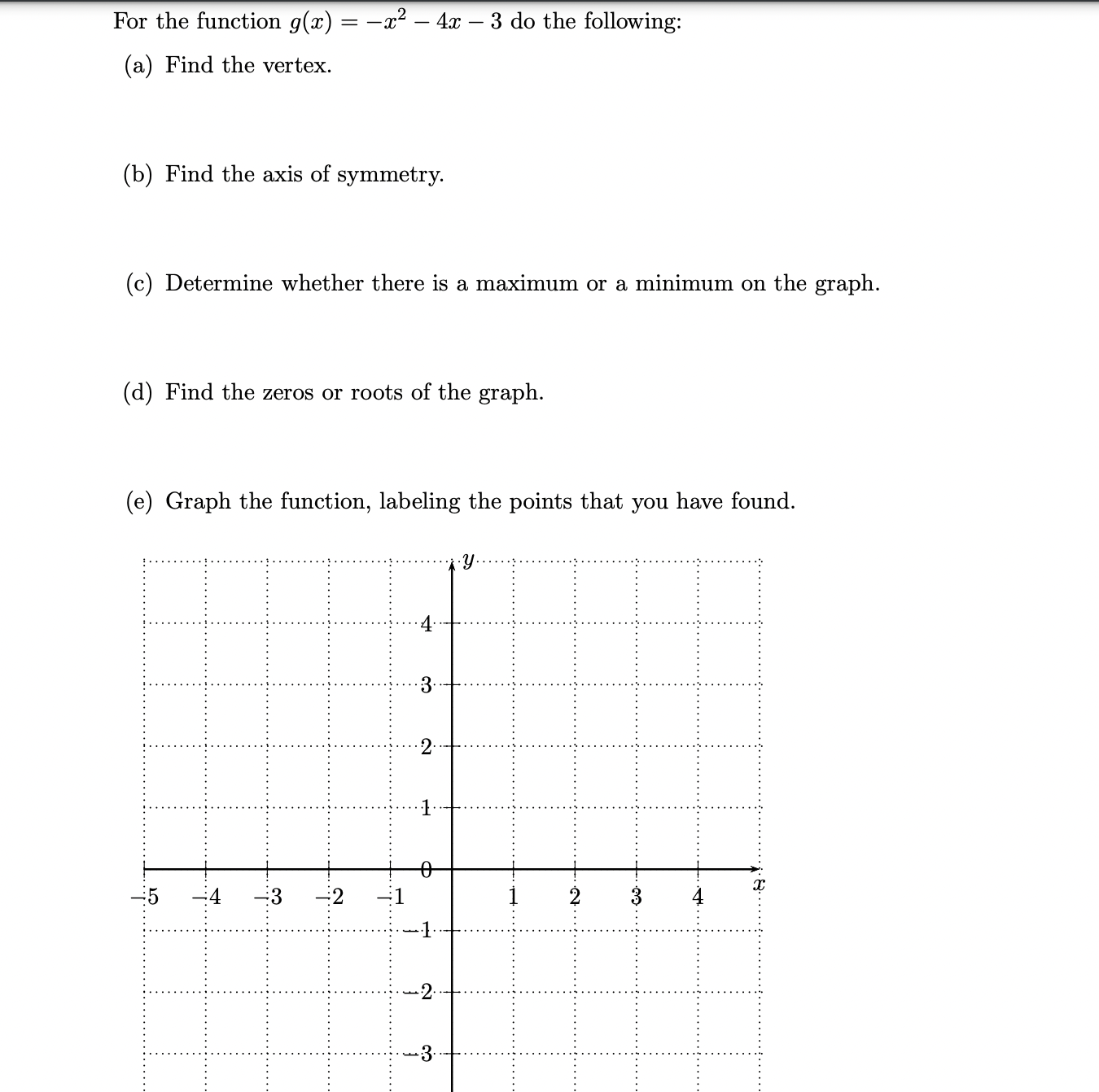
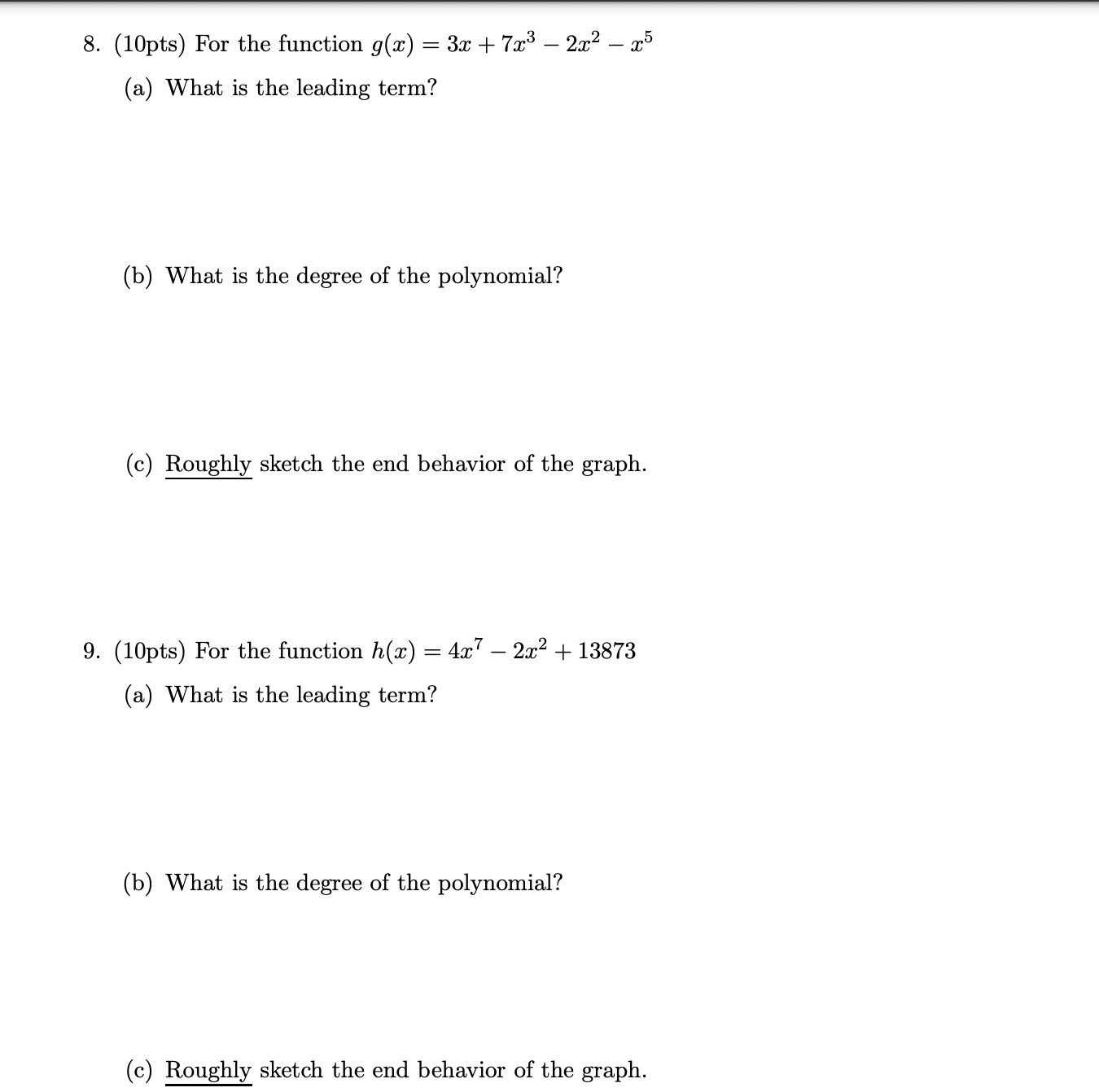
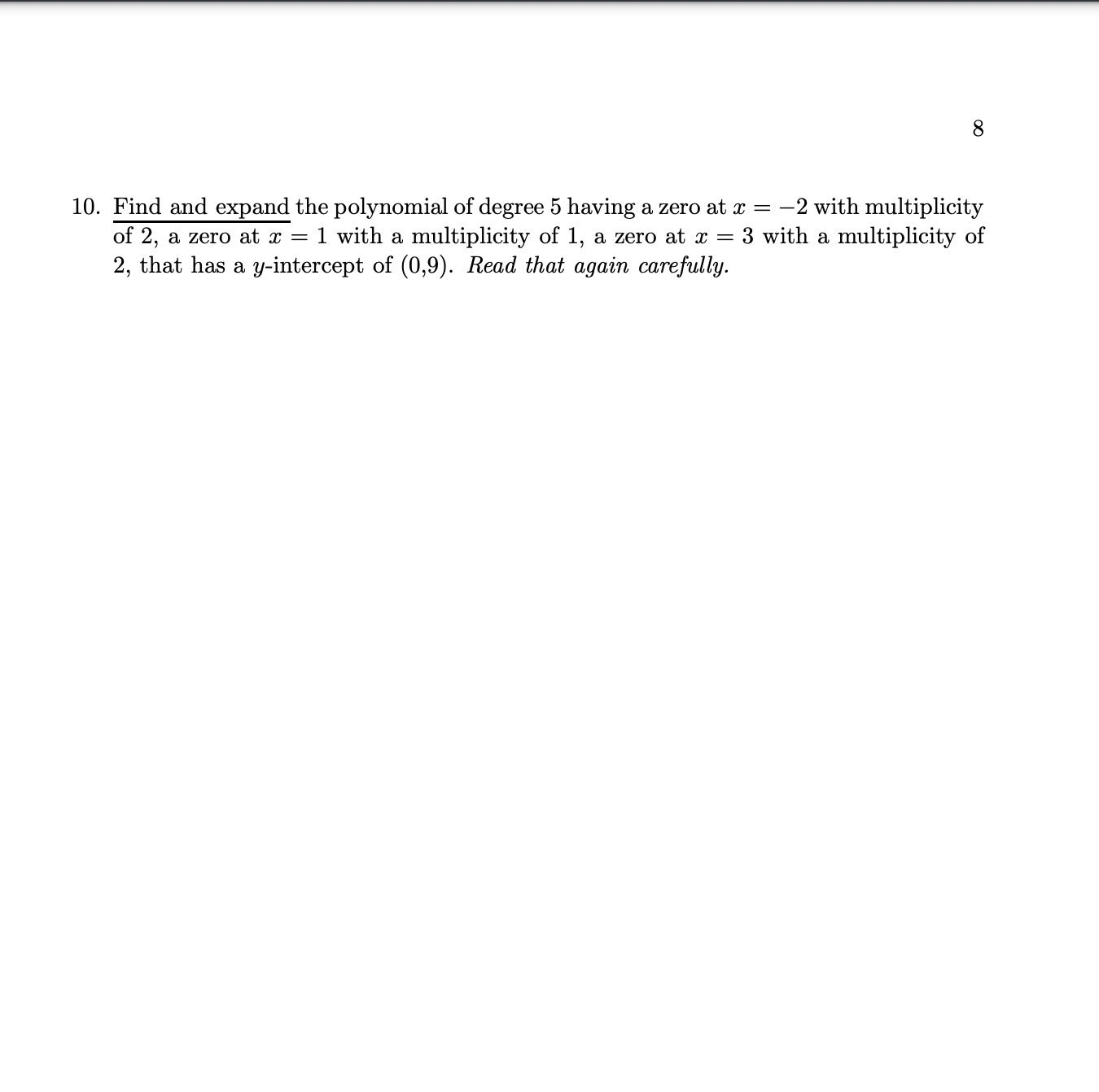
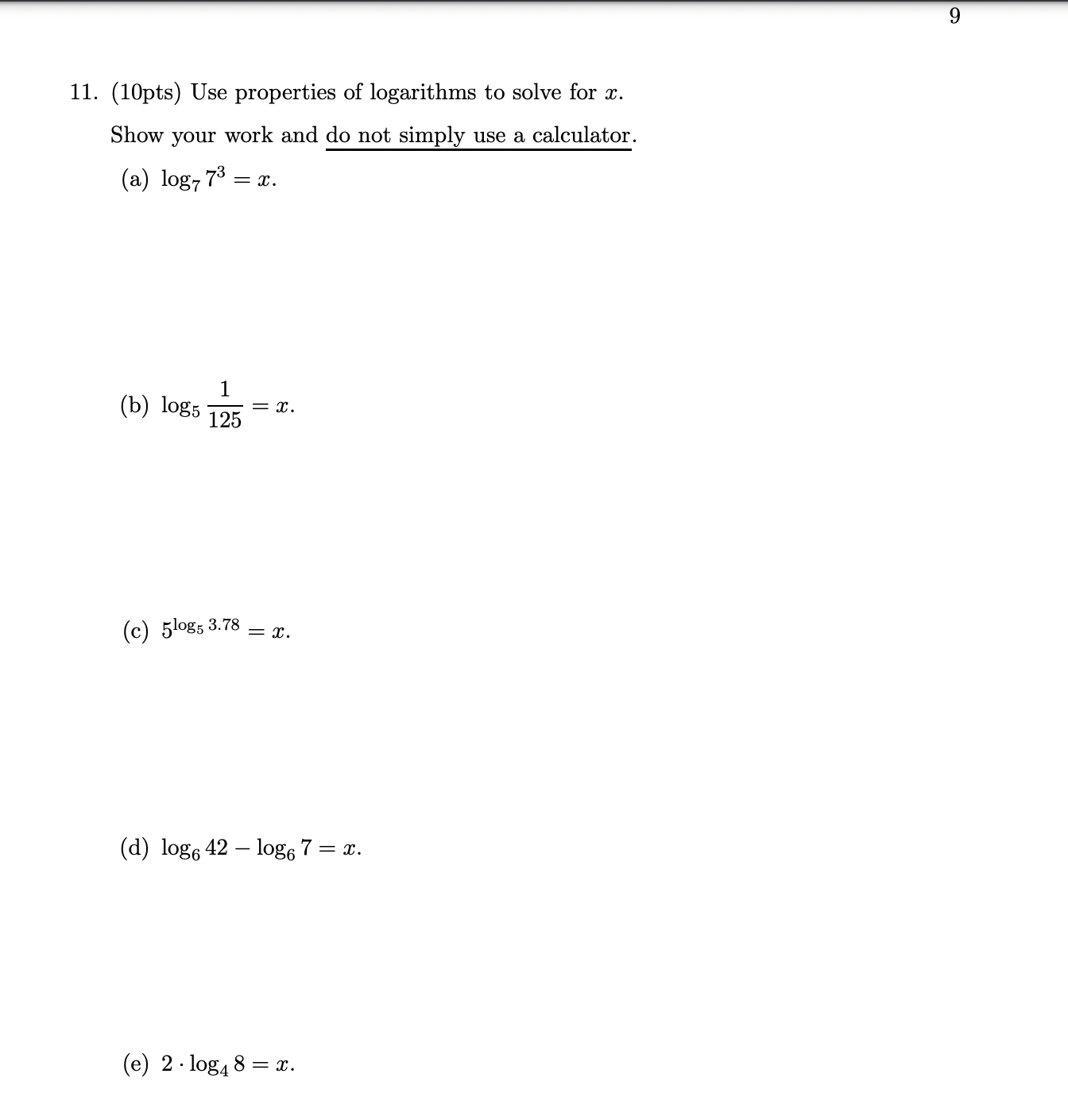
\fFor the function g(w) = .'L'2 43: 3 do the following: (a) Find the vertex. (b) Find the axis of symmetry. ((3) Determine whether there is a maximum or a minimum on the graph. (d) Find the zeros or roots of the graph. (e) Graph the function, labeling the points that you have found. 8. (lOpts) For the function 9(3) = 31:: + 73:3 2mg 3:5 (a) What is the leading term? (b) What is the degree of the polynomial? (c) Roughly sketch the end behavior of the graph. 9. (10pts) For the function M2?) = 41:7 2:62 + 13873 (a) What is the leading term? (b) What is the degree of the polynomial? (c) Roughly sketch the end behavior of the graph. 10. Find and expand the polynomial of degree 5 having a zero at 27 = 2 with multiplicity of 2, a zero at a: = 1 with a multiplicity of 1, a zero at a; = 3 with a multiplicity of 2, that has a y-intercept of (0,9). Read that again carefully. 9 11. (10pts) Use properties of logarithms to solve for x. Show your work and do not simply use a calculator. (a) log7 73 = x. (b) 10g5 125 = X. (c) 51085 3.78 = x. (d) log6 42 - 10g6 7 = x. (e) 2 . log4 8 = x
Step by Step Solution
There are 3 Steps involved in it

Get step-by-step solutions from verified subject matter experts
 Study Help