







Question: file format on Blackboard. Part Two: 1. Hamilton thinks that the profitability of the firm to the owners has been hurt by White's reluctance to
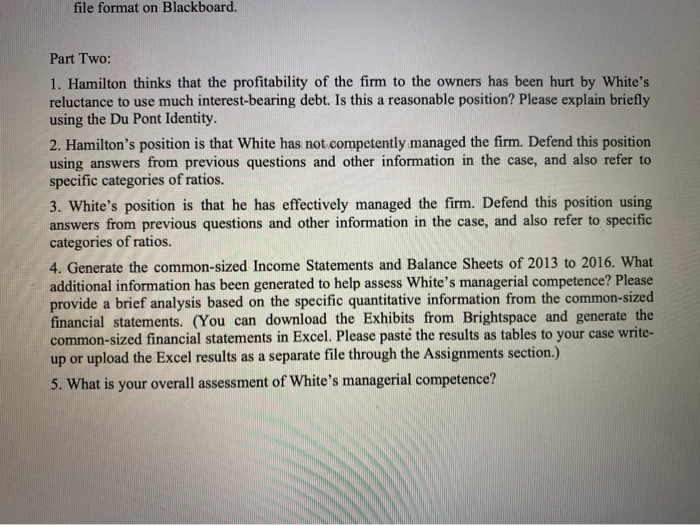
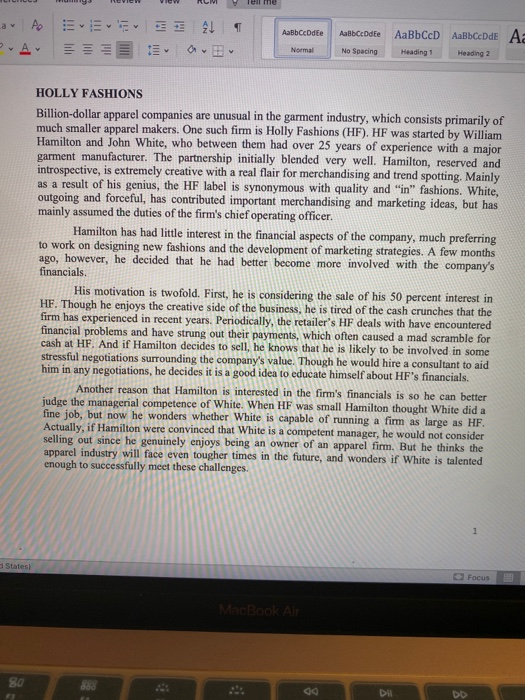
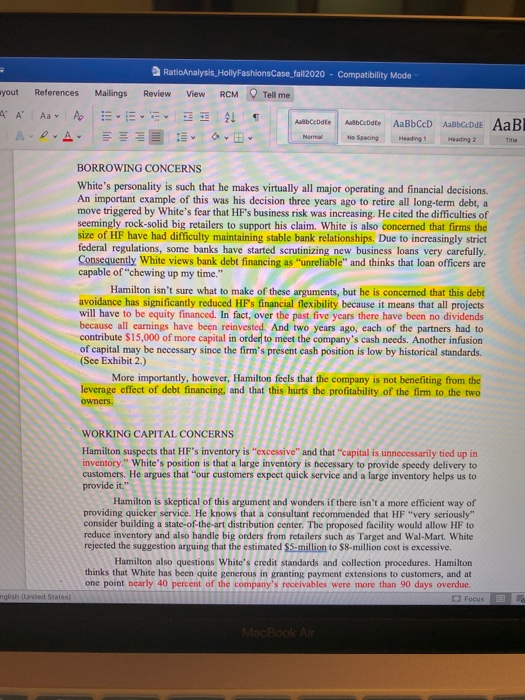
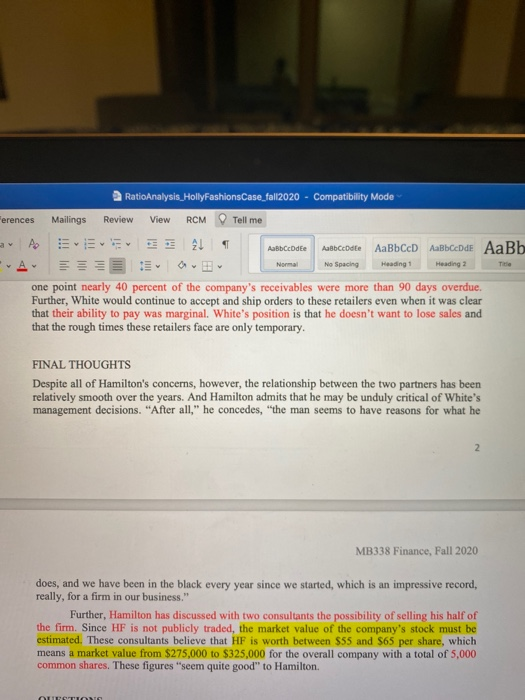
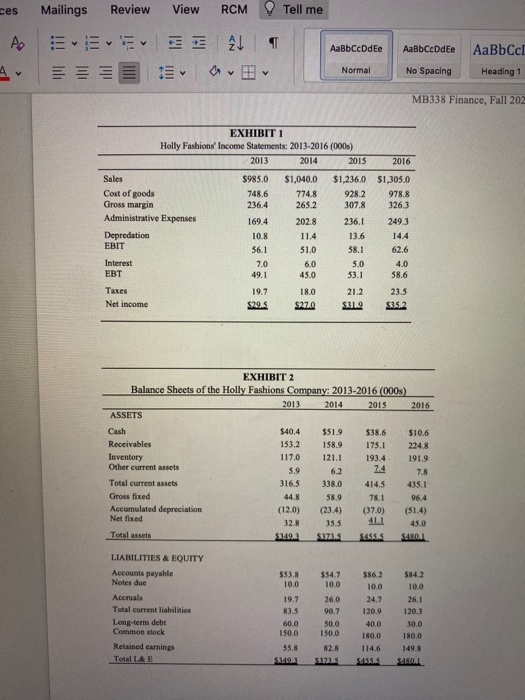
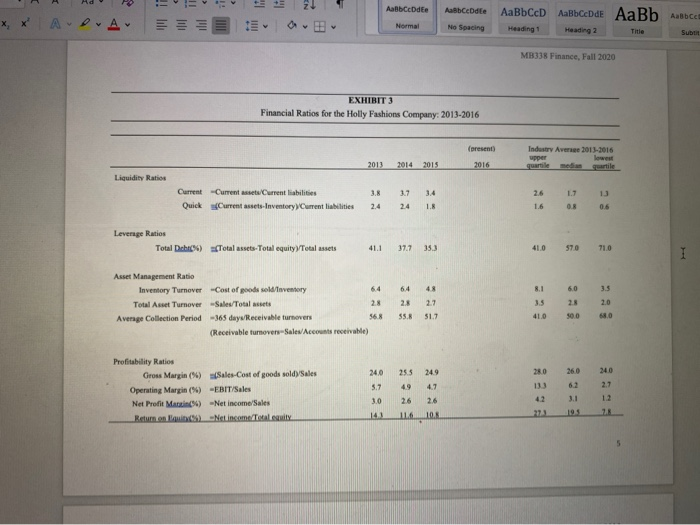
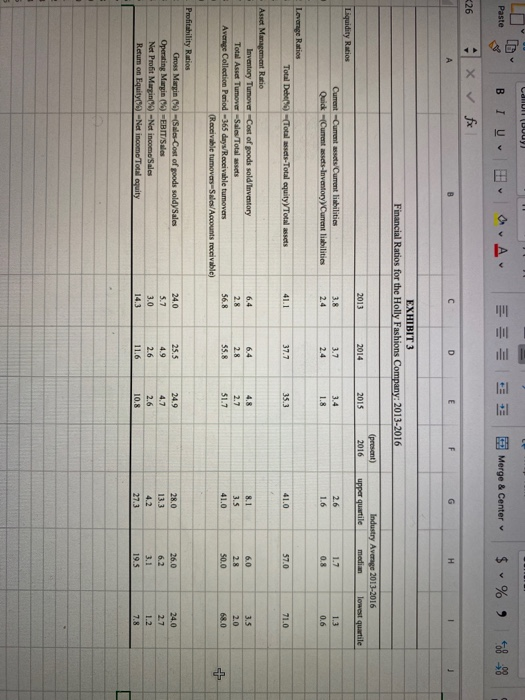
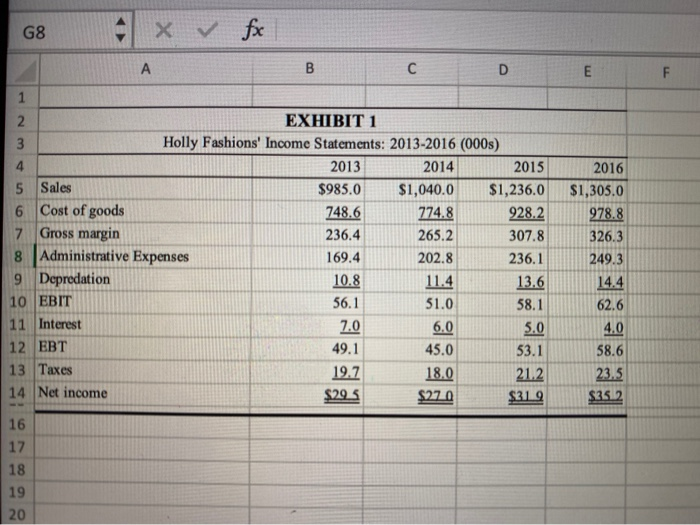
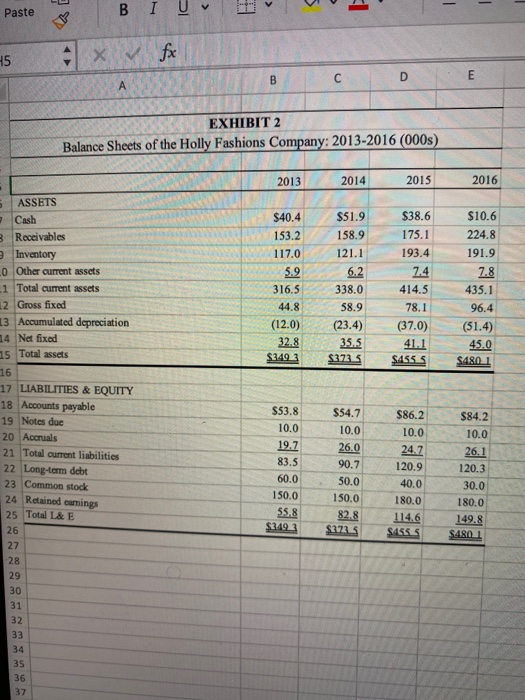
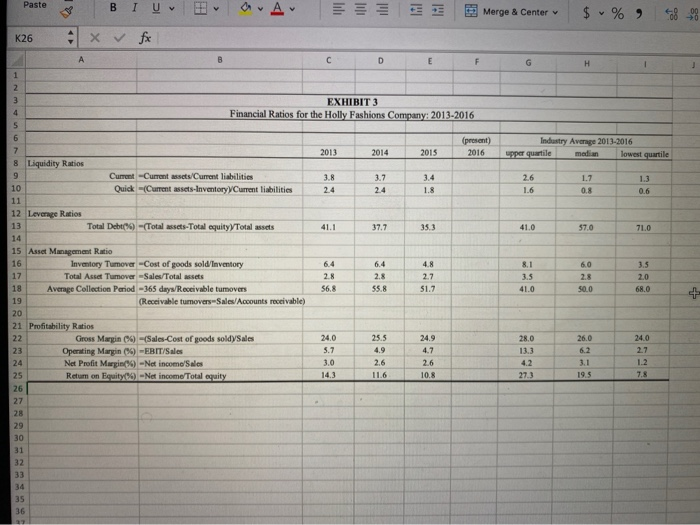
file format on Blackboard. Part Two: 1. Hamilton thinks that the profitability of the firm to the owners has been hurt by White's reluctance to use much interest-bearing debt. Is this a reasonable position? Please explain briefly using the Du Pont Identity. 2. Hamilton's position is that White has not competently managed the firm. Defend this position using answers from previous questions and other information in the case, and also refer to specific categories of ratios. 3. White's position is that he has effectively managed the firm. Defend this position using answers from previous questions and other information in the case, and also refer to specific categories of ratios. 4. Generate the common-sized Income Statements and Balance Sheets of 2013 to 2016. What additional information has been generated to help assess White's managerial competence? Please provide a brief analysis based on the specific quantitative information from the common-sized financial statements. (You can download the Exhibits from Brightspace and generate the common-sized financial statements in Excel. Please paste the results as tables to your case write- up or upload the Excel results as a separate file through the Assignments section.) 5. What is your overall assessment of White's managerial competence? Teme T AaBbceDdte a AOE AL AaBbceOdre AaBbCD AabbCcDde Aa Normal No Spacing Heading Heading 2 HOLLY FASHIONS Billion-dollar apparel companies are unusual in the garment industry, which consists primarily of much smaller apparel makers. One such firm is Holly Fashions (HF). HF was started by William Hamilton and John White, who between them had over 25 years of experience with a major garment manufacturer. The partnership initially blended very well. Hamilton, reserved and introspective, is extremely creative with a real flair for merchandising and trend spotting. Mainly as a result of his genius, the HF label is synonymous with quality and "in" fashions. White, outgoing and forceful, has contributed important merchandising and marketing ideas, but has mainly assumed the duties of the firm's chief operating officer. Hamilton has had little interest in the financial aspects of the company, much preferring to work on designing new fashions and the development of marketing strategies. A few months ago, however, he decided that he had better become more involved with the company's financials. His motivation is twofold. First, he is considering the sale of his 50 percent interest in HF. Though he enjoys the creative side of the business, he is tired of the cash crunches that the firm has experienced in recent years. Periodically, the retailer's HF deals with have encountered financial problems and have strung out their payments, which often caused a mad scramble for cash at HF. And if Hamilton decides to sell, he knows that he is likely to be involved in some stressful negotiations surrounding the company's value. Though he would hire a consultant to aid him in any negotiations, he decides it is a good idea to educate himself about HF's financials. Another reason that Hamilton is interested in the firm's financials is so he can better judge the managerial competence of White. When HF was small Hamilton thought White did a fine job, but now he wonders whether White is capable of running a firm as large as HF. Actually, if Hamilton were convinced that White is a competent manager, he would not consider selling out since he genuinely enjoys being an owner of an apparel firm. But he thinks the apparel industry will face even tougher times in the future, and wonders if White is talented enough to successfully meet these challenges. 1 States) Focus MacBook Air 80 Dll Rationalysis_HollyFashionsCase_fall2020 - Compatibility Mode ayout References Mailings Review View RCM Tell me A Aav A Abedte Abcdte ADA cpd Heading 2 Normal No Spacing Heading 1 Title BORROWING CONCERNS White's personality is such that he makes virtually all major operating and financial decisions. An important example of this was his decision three years ago to retire all long-term debt, a move triggered by White's fear that HF's business risk was increasing. He cited the difficulties of seemingly rock-solid big retailers to support his claim. White is also concerned that firms the size of HF have had difficulty maintaining stable bank relationships. Due to increasingly strict federal regulations, some banks have started scrutinizing new business loans very carefully. Consequently White views bank debt financing as "unreliable and thinks that loan officers are capable of "chewing up my time." Hamilton isn't sure what to make of these arguments, but he is concerned that this debt avoidance has significantly reduced HFs financial flexibility because it means that all projects will have to be equity financed. In fact, over the past five years there have been no dividends because all earnings have been reinvested. And two years ago, each of the partners had to contribute $15,000 of more capital in order to meet the company's cash needs. Another infusion of capital may be necessary since the firm's present cash position is low by historical standards. (See Exhibit 2.) More importantly, however, Hamilton feels that the company is not benefiting from the leverage effect of debt financing, and that this hurts the profitability of the fimm to the two owners. WORKING CAPITAL CONCERNS Hamilton suspects that HF's inventory is "excessive" and that "capital is unnecessarily tied up in inventory." White's position is that a large inventory is necessary to provide speedy delivery to customers. He argues that "our customers expect quick service and a large inventory helps us to provide it." Hamilton is skeptical of this argument and wonders if there isn't a more efficient way of providing quicker service. He knows that a consultant recommended that HF "very seriously" consider building a state-of-the-art distribution center. The proposed facility would allow HF to reduce inventory and also handle big orders from retailers such as Target and Wal-Mart. White rejected the suggestion arguing that the estimated $5-million to $8-million cost is excessive. Hamilton also questions White's credit standards and collection procedures. Hamilton thinks that White has been quite generous in granting payment extensions to customers, and at one point nearly 40 percent of the company's receivables were more than 90 days overdue. Focus nglish (United States) MacBook Air RatioAnalysis_HollyFashionsCase_fall2020 - Compatibility Mode Ferences Mailings Review View RCM Tell me AaBbcode Normal Ti Apr 21 AaBbccdte AaBbCD AaBbceDde AaBb No Spacing Heading Heading 2 one point nearly 40 percent of the company's receivables were more than 90 days overdue. Further, White would continue to accept and ship orders to these retailers even when it was clear that their ability to pay was marginal. White's position is that he doesn't want to lose sales and that the rough times these retailers face are only temporary. FINAL THOUGHTS Despite all of Hamilton's concerns, however, the relationship between the two partners has been relatively smooth over the years. And Hamilton admits that he may be unduly critical of White's management decisions. After all," he concedes, "the man seems to have reasons for what he 2 MB338 Finance, Fall 2020 does, and we have been in the black every year since we started, which is an impressive record, really, for a firm in our business." Further, Hamilton has discussed with two consultants the possibility of selling his half of the firm. Since HF is not publicly traded, the market value of the company's stock must be estimated. These consultants believe that HF is worth between $55 and 565 per share, which means a market value from $275,000 to $325,000 for the overall company with a total of 5,000 common shares. These figures "seem quite good" to Hamilton OTECTION ces Mailings Review View RCM Tell me Po v 21 AaBbCcDdEe AaBbCcDdEe AaBbCcL v Normal No Spacing Heading 1 MB338 Finance, Fall 202 EXHIBIT 1 Holly Fashions' Income Statements: 2013-2016 (000s) 2013 2014 2015 2016 Sales $985.0 $1,040.0 $1,236.0 $1,305.0 Cost of goods 748.6 774.8 928.2 978.8 Gross margin 236.4 265.2 307.8 326,3 Administrative Expenses 169.4 202.8 236.1 249.3 Depredation 10.8 11.4 13.6 14.4 EBIT 56.1 51.0 58.1 62.6 Interest 7.0 6.0 5.0 4.0 EBT 49.1 45.0 53.1 58.6 Taxes 19.7 18.0 21.2 23.5 Net income $29.5 $27.0 $312 S52 EXHIBIT 2 Balance Sheets of the Holly Fashions Company: 2013-2016 (000s) 2013 2014 2015 2016 ASSETS Cash $40.4 $51.9 $18.6 $10.6 Receivables 153.2 158.9 175.1 224.8 Inventory 117.0 121.1 193.4 191.9 Other current assets 5.9 6.2 7.4 7.8 Total current assets 316.5 338.0 414.5 435.1 Gross fixed 44.8 58.9 78.1 96.4 Accumulated depreciation (12.0) (234) (37.0) (51.4) Net fixed 32.8 35.5 45.0 Total assets $149 $273. $455. SARDI LIABILITIES & EQUITY Accounts payable Notes due Accruals Total current liabilities Long-term debe Common stock Retained earnings Total LAB $53.8 10.0 19.7 83.5 60.0 150.0 $54.7 10.0 26,0 90.7 500 150.0 5862 10.0 24.7 120.9 40.0 180.0 114.6 $84.2 100 26.1 120.3 30.0 180.0 149.8 S4801 82.8 55.8 $2492 37 5455. IM Cattpdf AaCeDdle AaBbCD AaBbcede AaBb Aalbce D-A Normal No Spacing Heading 1 Heading 2 Subtit MB338 Finance, Fall 2020 EXHIBIT 3 Financial Ratios for the Holly Fashions Company: 2013-2016 (present) Industry Aven 2011-2016 upper Low quartile 2013 2014 2015 2016 Liquidity Ratios 3.7 1.7 13 Current Current assets Current liabilities Quick Current assets-Inventory Current liabilities 2.4 24 1.8 1.6 08 0.6 Levenge Ratios Total Dicht) Total sets-Total equity/Total assets 41.1 37.7 35.3 41.0 570 71.0 60 3.5 Asset Management Ratio Inventory Turnover -Cost of goods sold/Inventory 64 Total Asset Turnover Sales/Total assets 28 Average Collection Period -365 days Receivable turnovers 568 (Receivable turnover Sales/Accounts receivable) 28 3.5 28 2.0 27 51.7 35.8 41.0 680 240 24.0 5.7 Profitability Ratios Gross Margin () Sales Cost of goods sold) Sales Operating Margin (%) - BIT/Sales Net Profit Maxi) -Net income/Sales Return on Netincome Toalety 253 24.9 49 4.7 276 11.10. 2.7 1.2 3.0 143 CONDIT Luuy) > Paste B TU a. Av Merge & Center $ % ) 26 AX fx D F G H EXHIBIT 3 Financial Ratios for the Holly Fashions Company: 2013-2016 (prosent) 2016 Industry Average 2013-2016 upper quartile median lowest quartile 2013 2014 2015 Liquidity Ratios Current Current assets. Current liabilities Quick Current assets-Inventory Current liabilities 3.7 2.4 2.6 1.6 1.7 0.8 1.3 0.6 2.4 1.8 Leverage Ratios Total Debt/") -(Total assets-Total equity Total assets 41.1 37.7 35.3 41.0 57.0 71.0 Asset Management Ratio Inventory Tumover -Cost of goods sold Inventory Total Asset Tumover -Sales/Total assets Average Collection Period -365 days:/Receivable tumovers (Receivable tumovers-Sales/Accounts receivable) 6.4 2.8 56.8 6.4 2.8 S5.8 2.7 51.7 8.1 3.5 41.0 6.0 2.8 50.0 3.5 2.0 680 + Profitability Ratios Gross Margin(%) -Sales-Cost of goods soldy Sales Operating Margin (%) EBIT/Sales Net Profit Margin("%) -Net income Sales Retum on Equity -Net income Total equity 24.0 5.7 3.0 14.3 25.5 4.9 2.6 11.6 24.9 4.7 2.6 10.8 28.0 13.3 4.2 27.3 26.0 6.2 3.1 19.5 24.0 2.7 1.2 7.8 G8 X & fx A B D E 1 2 EXHIBIT 1 3 Holly Fashions' Income Statements: 2013-2016 (000s) 4 2013 2014 2015 5 Sales $985.0 $1,040.0 $1,236.0 6 Cost of goods 748.6 774.8 928.2 7 Gross margin 236.4 265.2 307.8 8 Administrative Expenses 169.4 202.8 236.1 9 Depredation 10.8 11.4 13.6 10 EBIT 56.1 51.0 58.1 11 Interest 7.0 5.0 12 EBT 49.1 45.0 53.1 13 Taxes 19.7 18.0 21.2 14 Net income $295 $270 $31.9 2016 $1,305.0 978.8 326.3 249.3 14.4 62.6 6.0 4.0 58.6 23.5 $3512 16 17 18 19 20 > 1 Paste B TU a. Av Merge & Center $ % ) 26 AX fx D F G H EXHIBIT 3 Financial Ratios for the Holly Fashions Company: 2013-2016 (prosent) 2016 Industry Average 2013-2016 upper quartile median lowest quartile 2013 2014 2015 Liquidity Ratios Current Current assets. Current liabilities Quick Current assets-Inventory Current liabilities 3.7 2.4 2.6 1.6 1.7 0.8 1.3 0.6 2.4 1.8 Leverage Ratios Total Debt/") -(Total assets-Total equity Total assets 41.1 37.7 35.3 41.0 57.0 71.0 Asset Management Ratio Inventory Tumover -Cost of goods sold Inventory Total Asset Tumover -Sales/Total assets Average Collection Period -365 days:/Receivable tumovers (Receivable tumovers-Sales/Accounts receivable) 6.4 2.8 56.8 6.4 2.8 S5.8 2.7 51.7 8.1 3.5 41.0 6.0 2.8 50.0 3.5 2.0 680 + Profitability Ratios Gross Margin(%) -Sales-Cost of goods soldy Sales Operating Margin (%) EBIT/Sales Net Profit Margin("%) -Net income Sales Retum on Equity -Net income Total equity 24.0 5.7 3.0 14.3 25.5 4.9 2.6 11.6 24.9 4.7 2.6 10.8 28.0 13.3 4.2 27.3 26.0 6.2 3.1 19.5 24.0 2.7 1.2 7.8 G8 X & fx A B D E 1 2 EXHIBIT 1 3 Holly Fashions' Income Statements: 2013-2016 (000s) 4 2013 2014 2015 5 Sales $985.0 $1,040.0 $1,236.0 6 Cost of goods 748.6 774.8 928.2 7 Gross margin 236.4 265.2 307.8 8 Administrative Expenses 169.4 202.8 236.1 9 Depredation 10.8 11.4 13.6 10 EBIT 56.1 51.0 58.1 11 Interest 7.0 5.0 12 EBT 49.1 45.0 53.1 13 Taxes 19.7 18.0 21.2 14 Net income $295 $270 $31.9 2016 $1,305.0 978.8 326.3 249.3 14.4 62.6 6.0 4.0 58.6 23.5 $3512 16 17 18 19 20 > 1
Step by Step Solution
There are 3 Steps involved in it

Get step-by-step solutions from verified subject matter experts
 Study Help