







Question: Files to submit to for grading: . Vehicle java . Car.java, CarTest.java Truck.java, TruckTest.java .SemiTractorTrailer.java, SemiTractorTrailerTest.java Motorcycle.java, MotorcycleTest.java VehiclesPartl java, VehiclesPartITest.java Specifications Overview: This project
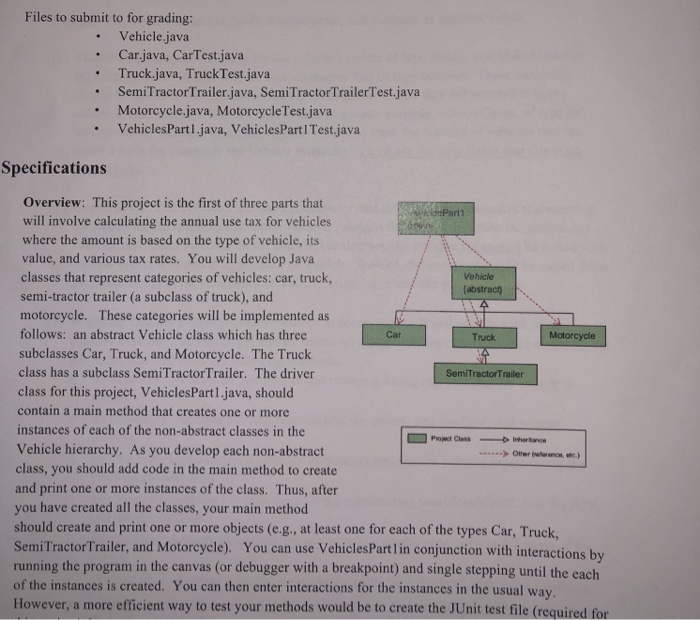
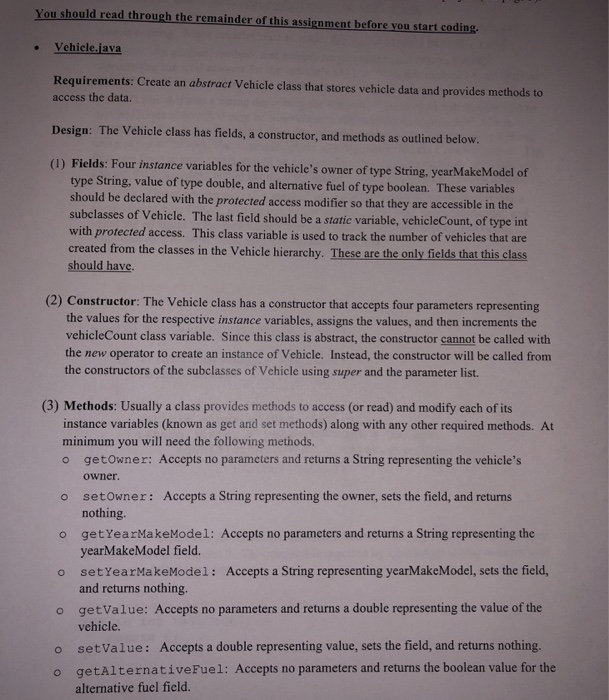
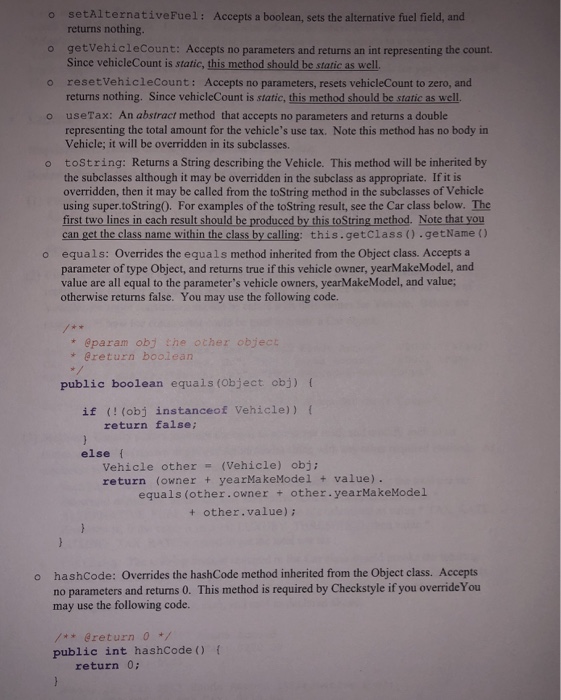
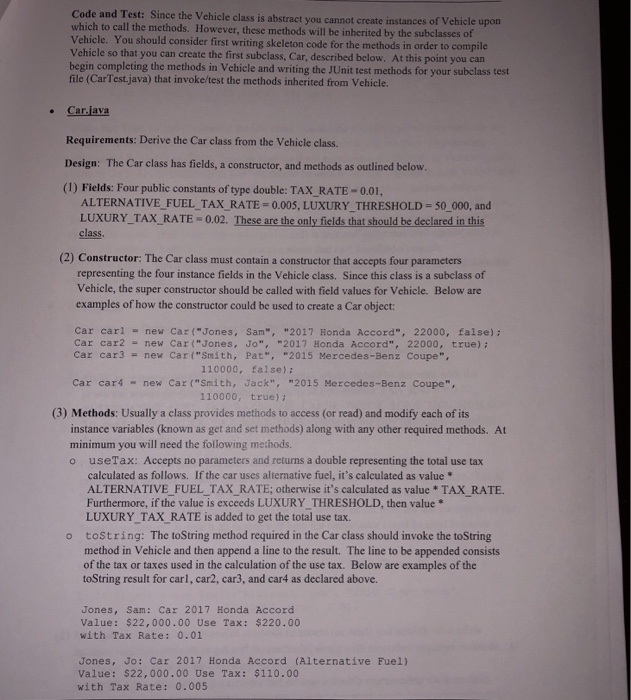
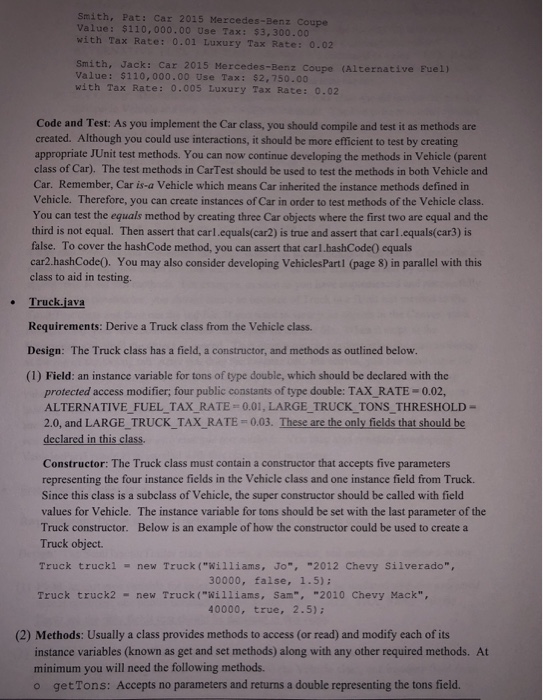
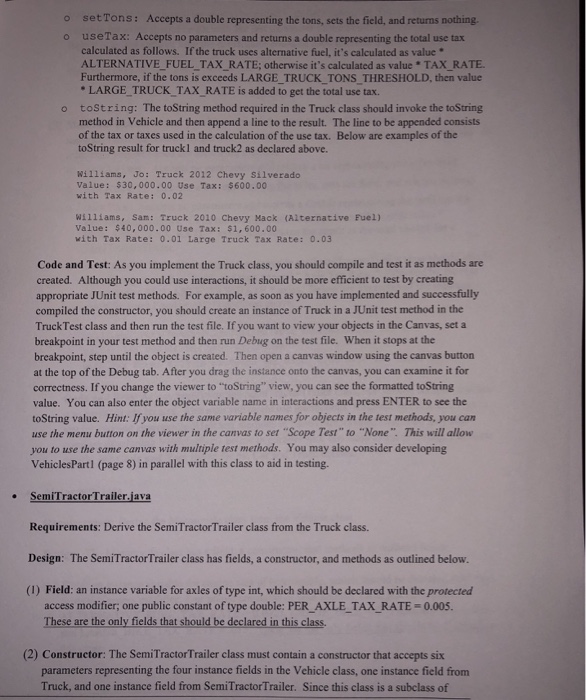
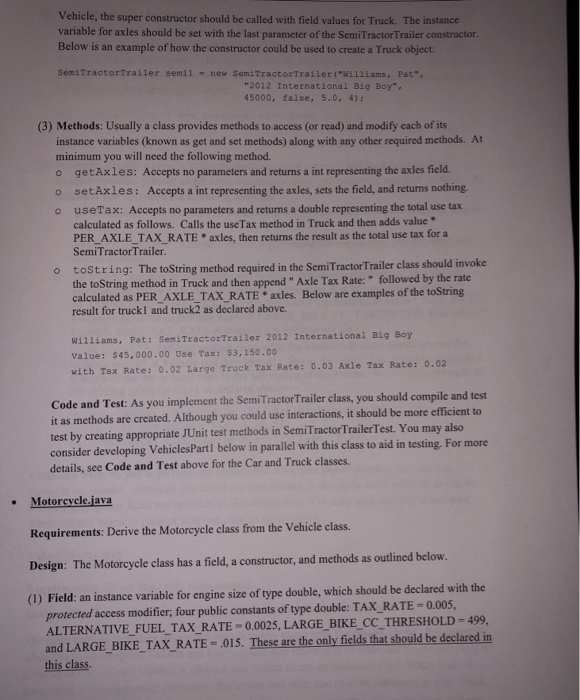
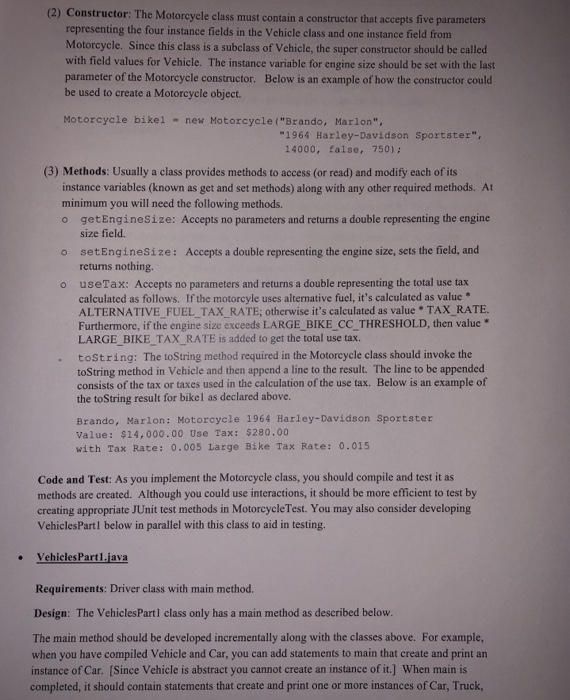
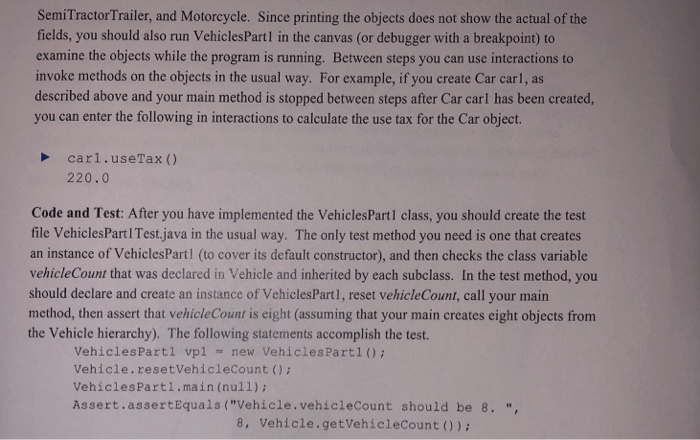
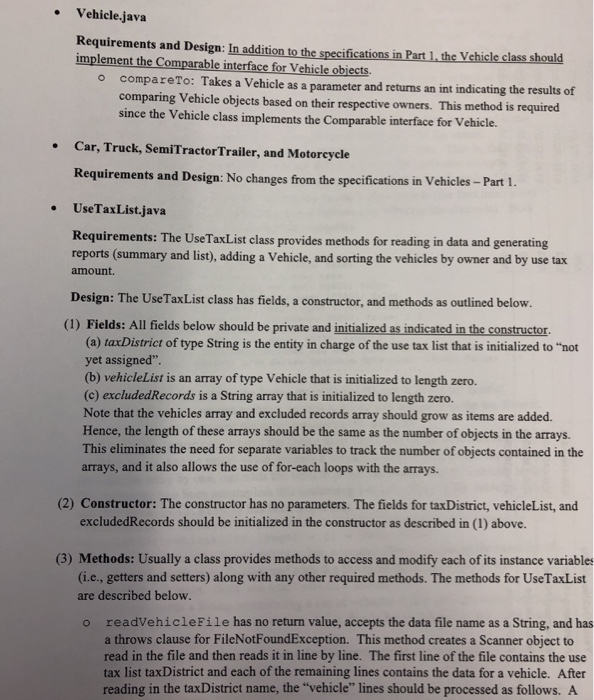
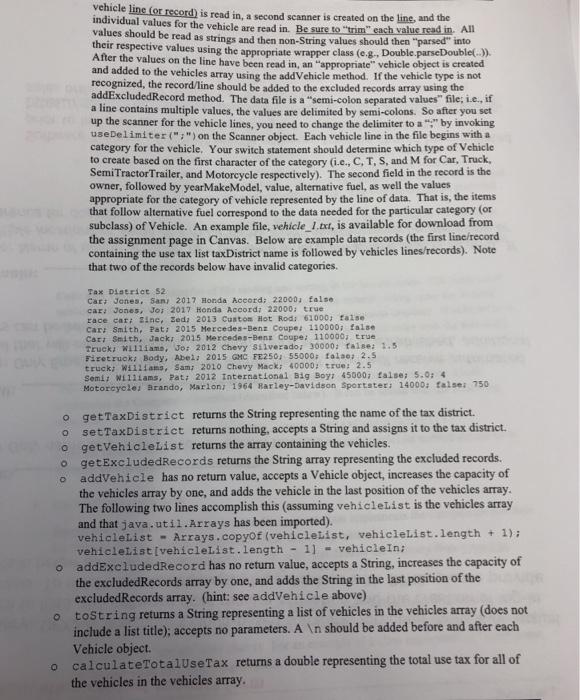
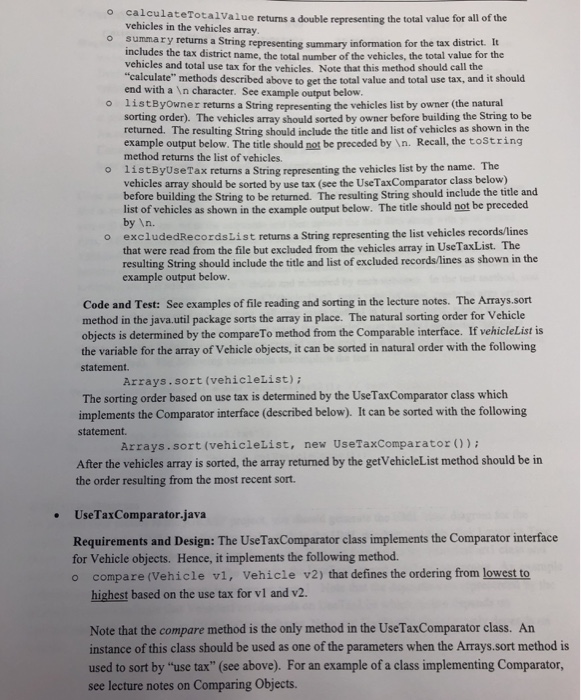
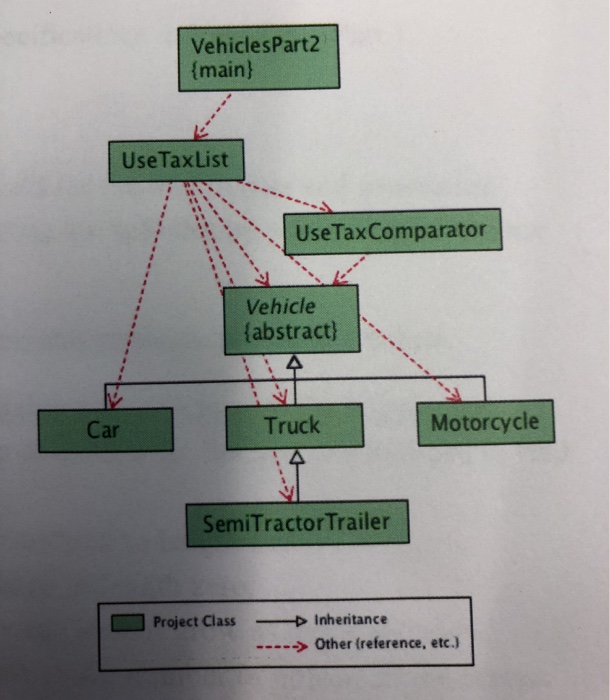
Files to submit to for grading: . Vehicle java . Car.java, CarTest.java Truck.java, TruckTest.java .SemiTractorTrailer.java, SemiTractorTrailerTest.java Motorcycle.java, MotorcycleTest.java VehiclesPartl java, VehiclesPartITest.java Specifications Overview: This project is the first of three parts that will involve calculating the annual use tax for vehicles where the amount is based on the type of vehicle, its value, and various tax rates. You will develop Java classes that represent categories of vehicles: car, truck, semi-tractor trailer (a subclass of truck), and motorcycle. These categories will be implemented as follows: an abstract Vehicle class which has three subclasses Car, Truck, and Motorcycle. The Truck class has a subclass SemiTractorTrailer. The driver class for this project, VehiclesPart1.java, should contain a main method that creates one or more instances of each of the non-abstract classes in the Vehicle hierarchy. As you develop each non-abstract class, you should add code in the main method to create and print one or more instances of the class. Thus, after you have created all the classes, your main method should create and print one or more objects (e.g, at least one for each of the types Car, Truck, SemiTractorTrailer, and Motorcycle). You can use VehiclesPart 1 in conjunction with interactions b running the program in the canvas (or debugger with a breakpoint) and single stepping until the each of the instances is created. You can then enter interactions for the instances in the usual way. However, a more efficient way to test your methods would be to create the JUnit test file (required for Partl Vehicle Car Truck Motorcycle SemiTractorTrailer Projet Class Inhar tance
Step by Step Solution
There are 3 Steps involved in it

Get step-by-step solutions from verified subject matter experts
 Study Help