



Question: Fill in the blanks based on the information provided. Antimicrobic Sensitivity Testing: The Kirby-Bauer Method (continued) 2. Which antimicrobics would be suitable for the control
Fill in the blanks based on the information provided.
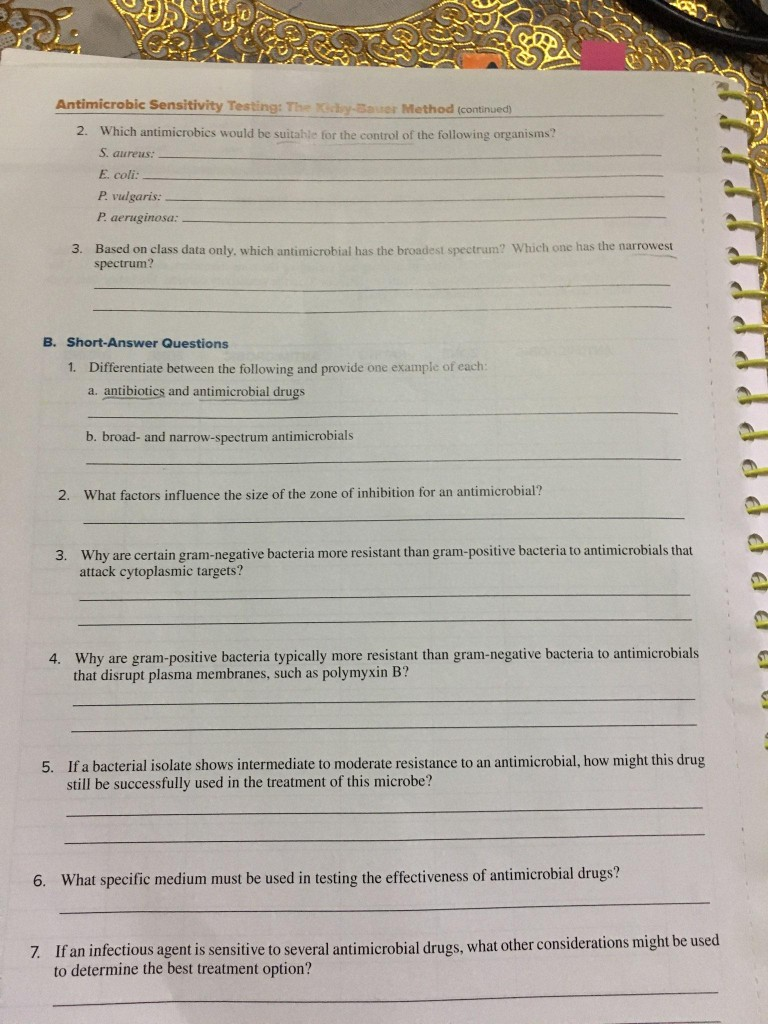
Antimicrobic Sensitivity Testing: The Kirby-Bauer Method (continued) 2. Which antimicrobics would be suitable for the control of the following organisms? S. aureus: E. coli: P. vulgaris: P. aeruginosa: 3. Based on class data only, which antimicrobial has the broadest spectrum? Which one has the narrowest spectrum? B. Short-Answer Questions 1. Differentiate between the following and provide one example of each: a. antibiotics and antimicrobial drugs b. broad- and narrow-spectrum antimicrobials 2. What factors influence the size of the zone of inhibition for an antimicrobial? 3. Why are certain gram-negative bacteria more resistant than gram-positive bacteria to antimicrobials that attack cytoplasmic targets? 4. Why are gram-positive bacteria typically more resistant than gram-negative bacteria to antimicrobials that disrupt plasma membranes, such as polymyxin B? 5. If a bacterial isolate shows intermediate to moderate resistance to an antimicrobial, how might this drug still be successfully used in the treatment of this microbe? 6. What specific medium must be used in testing the effectiveness of antimicrobial drugs? 7. If an infectious agent is sensitive to several antimicrobial drugs, what other considerations might be used to determine the best treatment option? ST Antimicrobic Sensitivity Testing: The Kirby-Bauer Method (continued) 2. Which antimicrobics would be suitable for the control of the following organisms? S. aureus: E. coli: P. vulgaris: P. aeruginosa: 3. Based on class data only, which antimicrobial has the broadest spectrum? Which one has the narrowest spectrum? B. Short-Answer Questions 1. Differentiate between the following and provide one example of each: a. antibiotics and antimicrobial drugs b. broad- and narrow-spectrum antimicrobials 2. What factors influence the size of the zone of inhibition for an antimicrobial? 3. Why are certain gram-negative bacteria more resistant than gram-positive bacteria to antimicrobials that attack cytoplasmic targets? 4. Why are gram-positive bacteria typically more resistant than gram-negative bacteria to antimicrobials that disrupt plasma membranes, such as polymyxin B? 5. If a bacterial isolate shows intermediate to moderate resistance to an antimicrobial, how might this drug still be successfully used in the treatment of this microbe? 6. What specific medium must be used in testing the effectiveness of antimicrobial drugs? 7. If an infectious agent is sensitive to several antimicrobial drugs, what other considerations might be used to determine the best treatment option? ST Antimicrobic Sensitivity Testing: The Kirby-Bauer Method (continued) 2. Which antimicrobics would be suitable for the control of the following organisms? S. aureus: E. coli: P. vulgaris: P. aeruginosa: 3. Based on class data only, which antimicrobial has the broadest spectrum? Which one has the narrowest spectrum? B. Short-Answer Questions 1. Differentiate between the following and provide one example of each: a. antibiotics and antimicrobial drugs b. broad- and narrow-spectrum antimicrobials 2. What factors influence the size of the zone of inhibition for an antimicrobial? 3. Why are certain gram-negative bacteria more resistant than gram-positive bacteria to antimicrobials that attack cytoplasmic targets? 4. Why are gram-positive bacteria typically more resistant than gram-negative bacteria to antimicrobials that disrupt plasma membranes, such as polymyxin B? 5. If a bacterial isolate shows intermediate to moderate resistance to an antimicrobial, how might this drug still be successfully used in the treatment of this microbe? 6. What specific medium must be used in testing the effectiveness of antimicrobial drugs? 7. If an infectious agent is sensitive to several antimicrobial drugs, what other considerations might be used to determine the best treatment option? ST Antimicrobic Sensitivity Testing: The Kirby-Bauer Method (continued) 2. Which antimicrobics would be suitable for the control of the following organisms? S. aureus: E. coli: P. vulgaris: P. aeruginosa: 3. Based on class data only, which antimicrobial has the broadest spectrum? Which one has the narrowest spectrum? B. Short-Answer Questions 1. Differentiate between the following and provide one example of each: a. antibiotics and antimicrobial drugs b. broad- and narrow-spectrum antimicrobials 2. What factors influence the size of the zone of inhibition for an antimicrobial? 3. Why are certain gram-negative bacteria more resistant than gram-positive bacteria to antimicrobials that attack cytoplasmic targets? 4. Why are gram-positive bacteria typically more resistant than gram-negative bacteria to antimicrobials that disrupt plasma membranes, such as polymyxin B? 5. If a bacterial isolate shows intermediate to moderate resistance to an antimicrobial, how might this drug still be successfully used in the treatment of this microbe? 6. What specific medium must be used in testing the effectiveness of antimicrobial drugs? 7. If an infectious agent is sensitive to several antimicrobial drugs, what other considerations might be used to determine the best treatment option? ST Antimicrobic Sensitivity Testing: The Kirby-Bauer Method (continued) 2. Which antimicrobics would be suitable for the control of the following organisms? S. aureus: E. coli: P. vulgaris: P. aeruginosa: 3. Based on class data only, which antimicrobial has the broadest spectrum? Which one has the narrowest spectrum? B. Short-Answer Questions 1. Differentiate between the following and provide one example of each: a. antibiotics and antimicrobial drugs b. broad- and narrow-spectrum antimicrobials 2. What factors influence the size of the zone of inhibition for an antimicrobial? 3. Why are certain gram-negative bacteria more resistant than gram-positive bacteria to antimicrobials that attack cytoplasmic targets? 4. Why are gram-positive bacteria typically more resistant than gram-negative bacteria to antimicrobials that disrupt plasma membranes, such as polymyxin B? 5. If a bacterial isolate shows intermediate to moderate resistance to an antimicrobial, how might this drug still be successfully used in the treatment of this microbe? 6. What specific medium must be used in testing the effectiveness of antimicrobial drugs? 7. If an infectious agent is sensitive to several antimicrobial drugs, what other considerations might be used to determine the best treatment option? ST
Step by Step Solution
3.36 Rating (159 Votes )
There are 3 Steps involved in it
The detailed answer for the above question is provided below For S aureus an antimicrobial such as penicillin oxacillin clindamycin linezolid vancomycin or teicoplanin would be suitable for control Pe... View full answer

Get step-by-step solutions from verified subject matter experts