Question: Financial leverage: I. increases expected ROE but does not affect its variability. II. increases breakeven, like operating leverage, but increases the rate of earnings per

Financial leverage: I. increases expected ROE but does not affect its variability. II. increases breakeven, like operating leverage, but increases the rate of earnings per share growth once breakeven is achieved. III. is a fundamental financial variable affecting sustainable growth. IV. increases expected return and risk to owners.(yes, pg.205) A) I and II only B) I and III only C) II and IV only D) II, III, and IV only E) I, II, III, and IV F) None of the above.
Financial leverage: I. increases expected ROE butFinancial leverage: I. increases expected ROE butFinancial leverage: I. increases expected ROE butFinancial leverage: I. increases expected ROE but
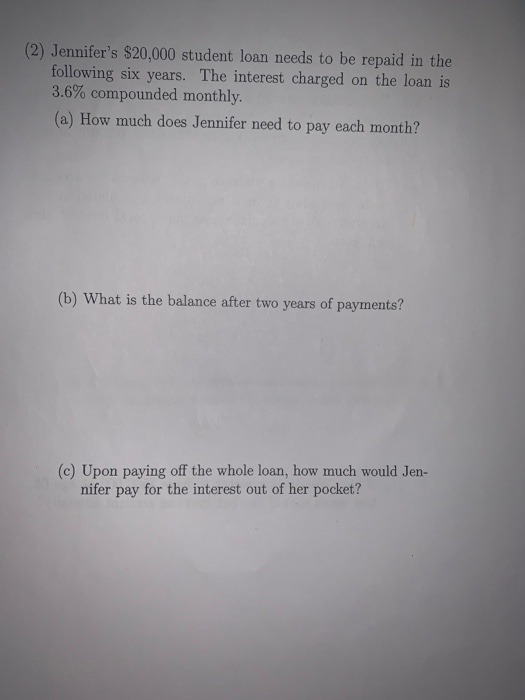
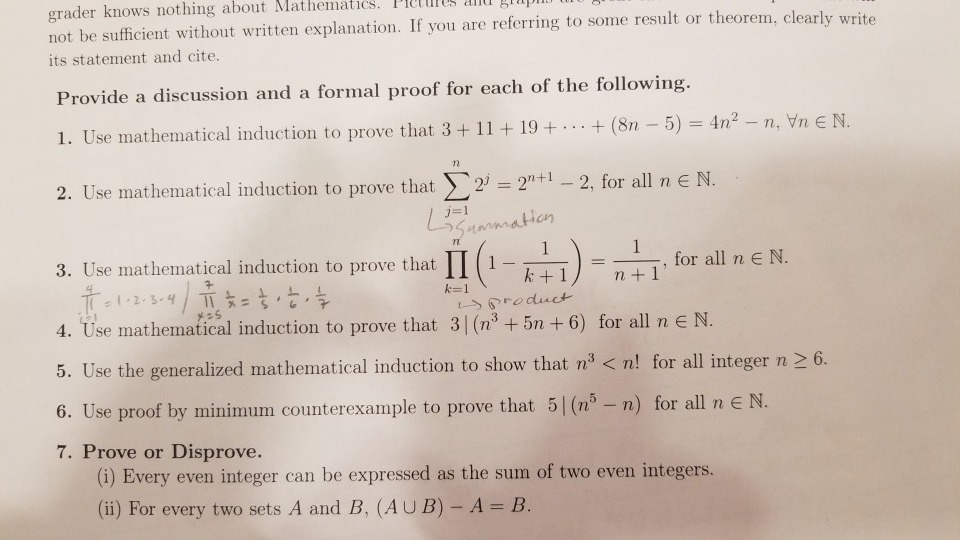
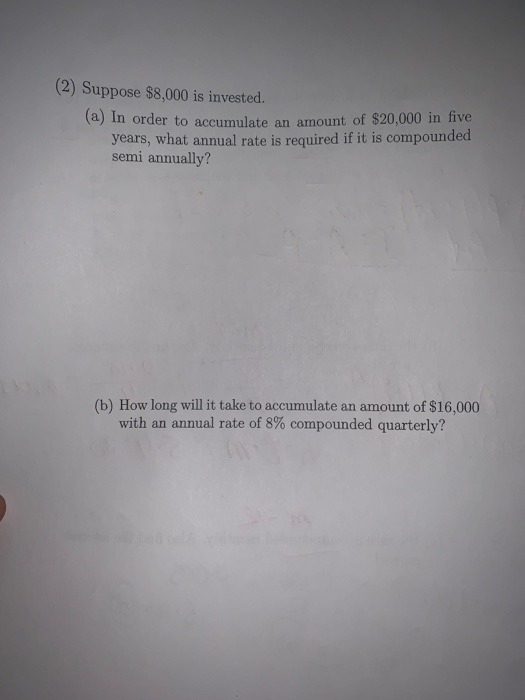
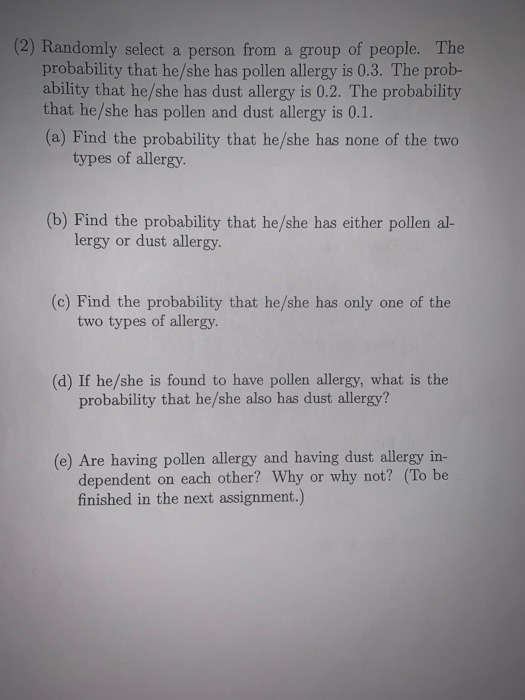
(2) Suppose $8,000 is invested. (a) In order to accumulate an amount of $20,000 in five years, what annual rate is required if it is compounded semi annually? (b) How long will it take to accumulate an amount of $16,000 with an annual rate of 8% compounded quarterly?(2) Randomly select a person from a group of people. The probability that he/she has pollen allergy is 0.3. The prob- ability that he/she has dust allergy is 0.2. The probability that he/she has pollen and dust allergy is 0.1. (a) Find the probability that he/she has none of the two types of allergy. (b) Find the probability that he/she has either pollen al- lergy or dust allergy. (c) Find the probability that he/she has only one of the two types of allergy. (d) If he/she is found to have pollen allergy, what is the probability that he/she also has dust allergy? (e) Are having pollen allergy and having dust allergy in- dependent on each other? Why or why not? (To be finished in the next assignment.)(2) Jennifer's $20,000 student loan needs to be repaid in the following six years. The interest charged on the loan is 3.6% compounded monthly. (a) How much does Jennifer need to pay each month? (b) What is the balance after two years of payments? (c) Upon paying off the whole loan, how much would Jen- nifer pay for the interest out of her pocket?grader knows nothing about Mathematics. Pictures all not be sufficient without written explanation. If you are referring to some result or theorem, clearly write its statement and cite. Provide a discussion and a formal proof for each of the following. 1. Use mathematical induction to prove that 3 + 11 + 19 + . .. + (8n -5) = 4n' - n, Vn EN. 2. Use mathematical induction to prove that 21 = 2n+1 - 2, for all n E N. Lsummation 3. Use mathematical induction to prove that II( 1 1 for all n E N. k+1 n +1 TT = 1.2. 3- 4 / TTX = It. 4 k=1 * = 5 IS product 4. Use mathematical induction to prove that 3 | (n' + 5n + 6) for all n E N. 5. Use the generalized mathematical induction to show that n' 6. 6. Use proof by minimum counterexample to prove that 5 | (n' - n) for all n e N. 7. Prove or Disprove. (i) Every even integer can be expressed as the sum of two even integers. (ii) For every two sets A and B, (A UB) - A = B

Step by Step Solution

There are 3 Steps involved in it

1 Expert Approved Answer
Step: 1 Unlock blur-text-image

Question Has Been Solved by an Expert!

Get step-by-step solutions from verified subject matter experts

Step: 2 Unlock
Step: 3 Unlock

Students Have Also Explored These Related Finance Questions!