







Question: FINC732: Financial Management Case Study #4 Instructions: 1. This assignment is to be completed individually. 2. Read the attached case study entitled Walmart in Mexico.
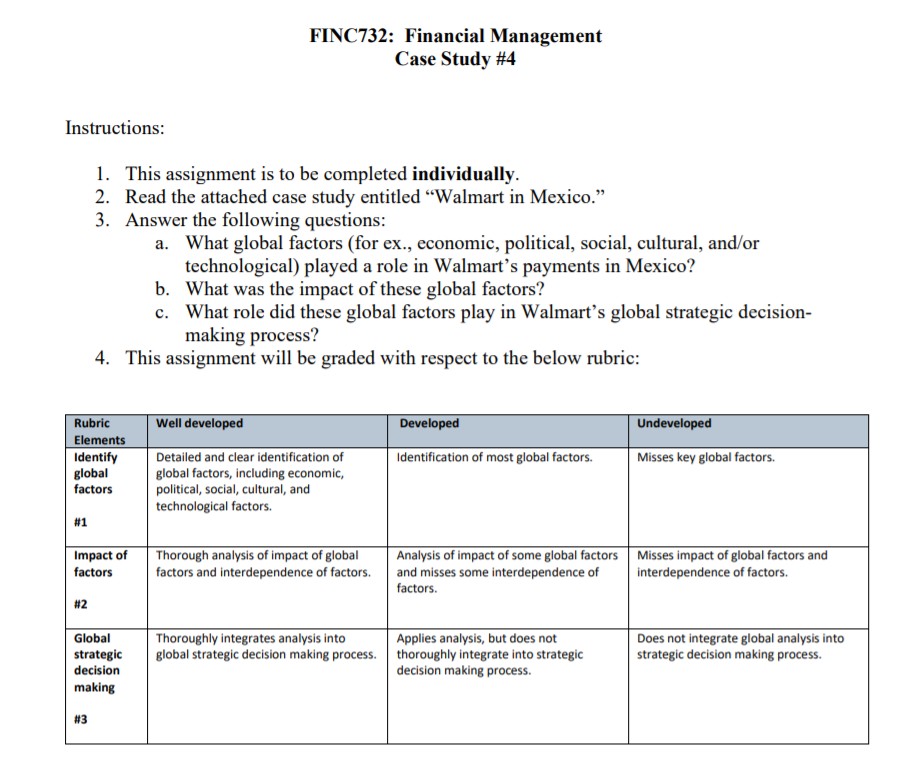
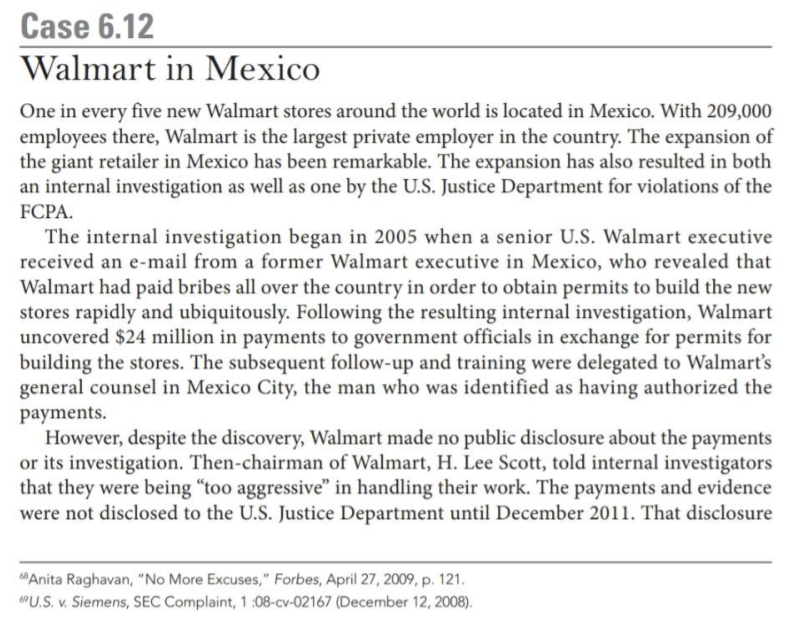
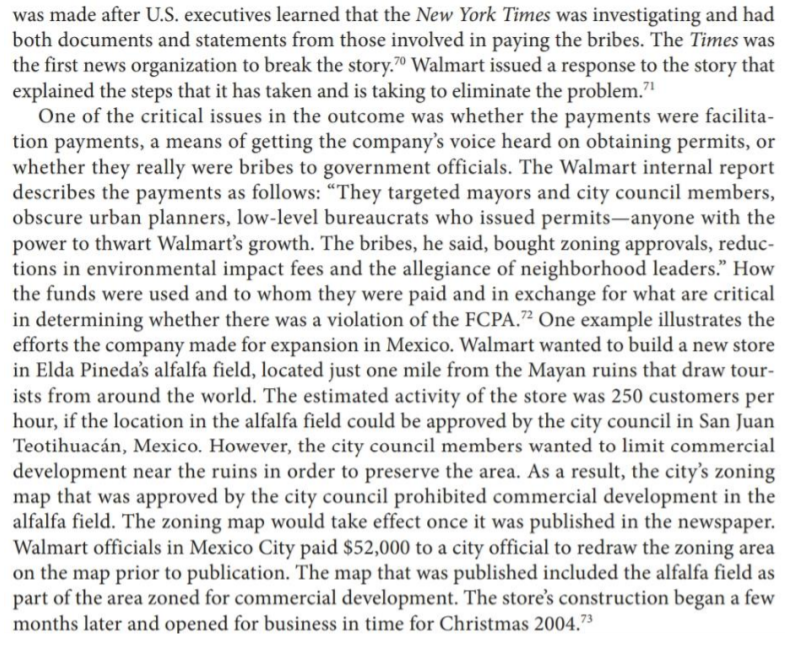
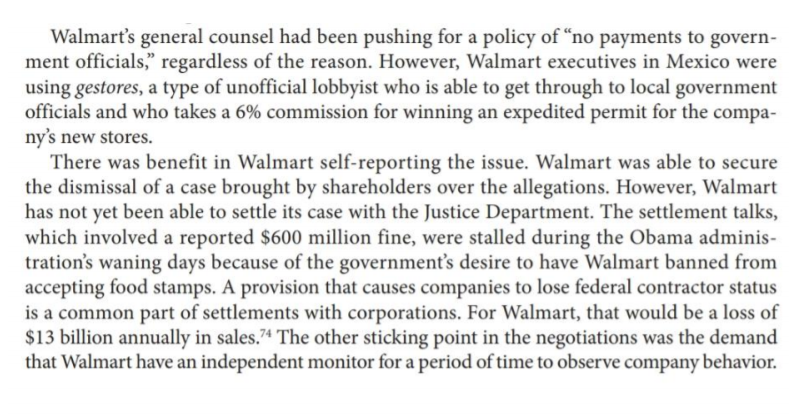
FINC732: Financial Management Case Study #4 Instructions: 1. This assignment is to be completed individually. 2. Read the attached case study entitled Walmart in Mexico. 3. Answer the following questions: a. What global factors (for ex., economic, political, social, cultural, and/or technological) played a role in Walmart's payments in Mexico? b. What was the impact of these global factors? c. What role did these global factors play in Walmart's global strategic decision- making process? 4. This assignment will be graded with respect to the below rubric: Well developed Developed Undeveloped Rubric Elements Identify global factors Identification of most global factors. Misses key global factors. Detailed and clear identification of global factors, including economic, political, social, cultural, and technological factors. #1 Impact of factors Thorough analysis of impact of global factors and interdependence of factors. Analysis of impact of some global factors and misses some interdependence of factors. Misses impact of global factors and interdependence of factors. #2 Global strategic decision making Thoroughly integrates analysis into Applies analysis, but does not global strategic decision making process. thoroughly integrate into strategic decision making process. Does not integrate global analysis into strategic decision making process. #3 Case 6.12 Walmart in Mexico One in every five new Walmart stores around the world is located in Mexico. With 209,000 employees there, Walmart is the largest private employer in the country. The expansion of the giant retailer in Mexico has been remarkable. The expansion has also resulted in both an internal investigation as well as one by the U.S. Justice Department for violations of the FCPA. The internal investigation began in 2005 when a senior U.S. Walmart executive received an e-mail from a former Walmart executive in Mexico, who revealed that Walmart had paid bribes all over the country in order to obtain permits to build the new stores rapidly and ubiquitously. Following the resulting internal investigation, Walmart uncovered $24 million in payments to government officials in exchange for permits for building the stores. The subsequent follow-up and training were delegated to Walmart's general counsel in Mexico City, the man who was identified as having authorized the payments. However, despite the discovery, Walmart made no public disclosure about the payments or its investigation. Then-chairman of Walmart, H. Lee Scott, told internal investigators that they were being too aggressive in handling their work. The payments and evidence were not disclosed to the U.S. Justice Department until December 2011. That disclosure Anita Raghavan, "No More Excuses," Forbes, April 27, 2009, p. 121. U.S. v. Siemens, SEC Complaint, 1:08-cv-02167 (December 12, 2008). was made after U.S. executives learned that the New York Times was investigating and had both documents and statements from those involved in paying the bribes. The Times was the first news organization to break the story." Walmart issued a response to the story that explained the steps that it has taken and is taking to eliminate the problem. One of the critical issues in the outcome was whether the payments were facilita- tion payments, a means of getting the company's voice heard on obtaining permits, or whether they really were bribes to government officials. The Walmart internal report describes the payments as follows: "They targeted mayors and city council members, obscure urban planners, low-level bureaucrats who issued permitsanyone with the power to thwart Walmart's growth. The bribes, he said, bought zoning approvals, reduc- tions in environmental impact fees and the allegiance of neighborhood leaders. How the funds were used and to whom they were paid and in exchange for what are critical in determining whether there was a violation of the FCPA. 72 One example illustrates the efforts the company made for expansion in Mexico. Walmart wanted to build a new store in Elda Pineda's alfalfa field, located just one mile from the Mayan ruins that draw tour- ists from around the world. The estimated activity of the store was 250 customers per hour, if the location in the alfalfa field could be approved by the city council in San Juan Teotihuacn, Mexico. However, the city council members wanted to limit commercial development near the ruins in order to preserve the area. As a result, the city's zoning map that was approved by the city council prohibited commercial development in the alfalfa field. The zoning map would take effect once it was published in the newspaper. Walmart officials in Mexico City paid $52,000 to a city official to redraw the zoning area on the map prior to publication. The map that was published included the alfalfa field as part of the area zoned for commercial development. The store's construction began a few months later and opened for business in time for Christmas 2004.73 Walmart's general counsel had been pushing for a policy of no payments to govern- ment officials," regardless of the reason. However, Walmart executives in Mexico were using gestores, a type of unofficial lobbyist who is able to get through to local government officials and who takes a 6% commission for winning an expedited permit for the compa- ny's new stores. There was benefit in Walmart self-reporting the issue. Walmart was able to secure the dismissal of a case brought by shareholders over the allegations. However, Walmart has not yet been able to settle its case with the Justice Department. The settlement talks, which involved a reported $600 million fine, were stalled during the Obama adminis- tration's waning days because of the government's desire to have Walmart banned from accepting food stamps. A provision that causes companies to lose federal contractor status is a common part of settlements with corporations. For Walmart, that would be a loss of $13 billion annually in sales.74 The other sticking point in the negotiations was the demand that Walmart have an independent monitor for a period of time to observe company behavior. FINC732: Financial Management Case Study #4 Instructions: 1. This assignment is to be completed individually. 2. Read the attached case study entitled Walmart in Mexico. 3. Answer the following questions: a. What global factors (for ex., economic, political, social, cultural, and/or technological) played a role in Walmart's payments in Mexico? b. What was the impact of these global factors? c. What role did these global factors play in Walmart's global strategic decision- making process? 4. This assignment will be graded with respect to the below rubric: Well developed Developed Undeveloped Rubric Elements Identify global factors Identification of most global factors. Misses key global factors. Detailed and clear identification of global factors, including economic, political, social, cultural, and technological factors. #1 Impact of factors Thorough analysis of impact of global factors and interdependence of factors. Analysis of impact of some global factors and misses some interdependence of factors. Misses impact of global factors and interdependence of factors. #2 Global strategic decision making Thoroughly integrates analysis into Applies analysis, but does not global strategic decision making process. thoroughly integrate into strategic decision making process. Does not integrate global analysis into strategic decision making process. #3 Case 6.12 Walmart in Mexico One in every five new Walmart stores around the world is located in Mexico. With 209,000 employees there, Walmart is the largest private employer in the country. The expansion of the giant retailer in Mexico has been remarkable. The expansion has also resulted in both an internal investigation as well as one by the U.S. Justice Department for violations of the FCPA. The internal investigation began in 2005 when a senior U.S. Walmart executive received an e-mail from a former Walmart executive in Mexico, who revealed that Walmart had paid bribes all over the country in order to obtain permits to build the new stores rapidly and ubiquitously. Following the resulting internal investigation, Walmart uncovered $24 million in payments to government officials in exchange for permits for building the stores. The subsequent follow-up and training were delegated to Walmart's general counsel in Mexico City, the man who was identified as having authorized the payments. However, despite the discovery, Walmart made no public disclosure about the payments or its investigation. Then-chairman of Walmart, H. Lee Scott, told internal investigators that they were being too aggressive in handling their work. The payments and evidence were not disclosed to the U.S. Justice Department until December 2011. That disclosure Anita Raghavan, "No More Excuses," Forbes, April 27, 2009, p. 121. U.S. v. Siemens, SEC Complaint, 1:08-cv-02167 (December 12, 2008). was made after U.S. executives learned that the New York Times was investigating and had both documents and statements from those involved in paying the bribes. The Times was the first news organization to break the story." Walmart issued a response to the story that explained the steps that it has taken and is taking to eliminate the problem. One of the critical issues in the outcome was whether the payments were facilita- tion payments, a means of getting the company's voice heard on obtaining permits, or whether they really were bribes to government officials. The Walmart internal report describes the payments as follows: "They targeted mayors and city council members, obscure urban planners, low-level bureaucrats who issued permitsanyone with the power to thwart Walmart's growth. The bribes, he said, bought zoning approvals, reduc- tions in environmental impact fees and the allegiance of neighborhood leaders. How the funds were used and to whom they were paid and in exchange for what are critical in determining whether there was a violation of the FCPA. 72 One example illustrates the efforts the company made for expansion in Mexico. Walmart wanted to build a new store in Elda Pineda's alfalfa field, located just one mile from the Mayan ruins that draw tour- ists from around the world. The estimated activity of the store was 250 customers per hour, if the location in the alfalfa field could be approved by the city council in San Juan Teotihuacn, Mexico. However, the city council members wanted to limit commercial development near the ruins in order to preserve the area. As a result, the city's zoning map that was approved by the city council prohibited commercial development in the alfalfa field. The zoning map would take effect once it was published in the newspaper. Walmart officials in Mexico City paid $52,000 to a city official to redraw the zoning area on the map prior to publication. The map that was published included the alfalfa field as part of the area zoned for commercial development. The store's construction began a few months later and opened for business in time for Christmas 2004.73 Walmart's general counsel had been pushing for a policy of no payments to govern- ment officials," regardless of the reason. However, Walmart executives in Mexico were using gestores, a type of unofficial lobbyist who is able to get through to local government officials and who takes a 6% commission for winning an expedited permit for the compa- ny's new stores. There was benefit in Walmart self-reporting the issue. Walmart was able to secure the dismissal of a case brought by shareholders over the allegations. However, Walmart has not yet been able to settle its case with the Justice Department. The settlement talks, which involved a reported $600 million fine, were stalled during the Obama adminis- tration's waning days because of the government's desire to have Walmart banned from accepting food stamps. A provision that causes companies to lose federal contractor status is a common part of settlements with corporations. For Walmart, that would be a loss of $13 billion annually in sales.74 The other sticking point in the negotiations was the demand that Walmart have an independent monitor for a period of time to observe company behavior
Step by Step Solution
There are 3 Steps involved in it

Get step-by-step solutions from verified subject matter experts
 Study Help