







Question: Find the angle between the vectors. (First find an exact expression and then approximate to the nearest degree.) a = (4, 1,7), b = (3,

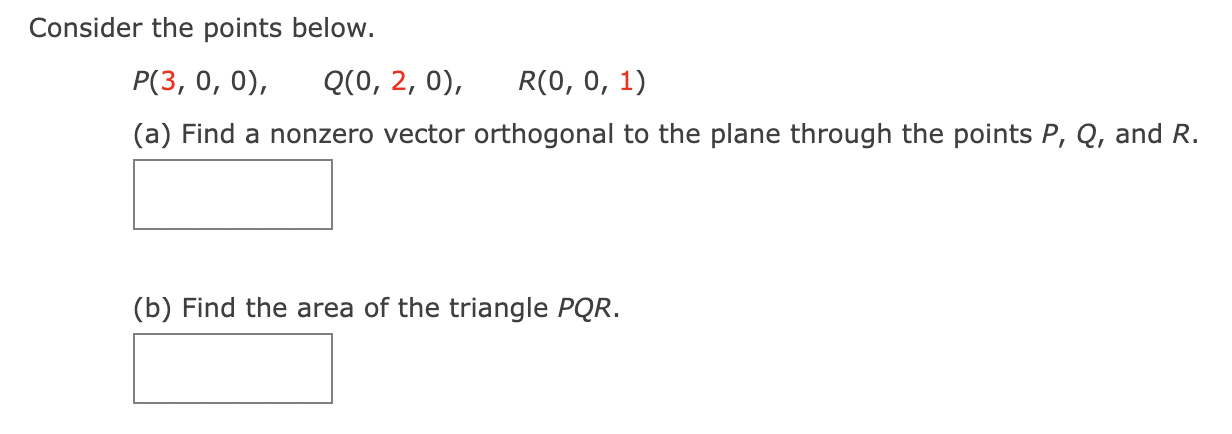
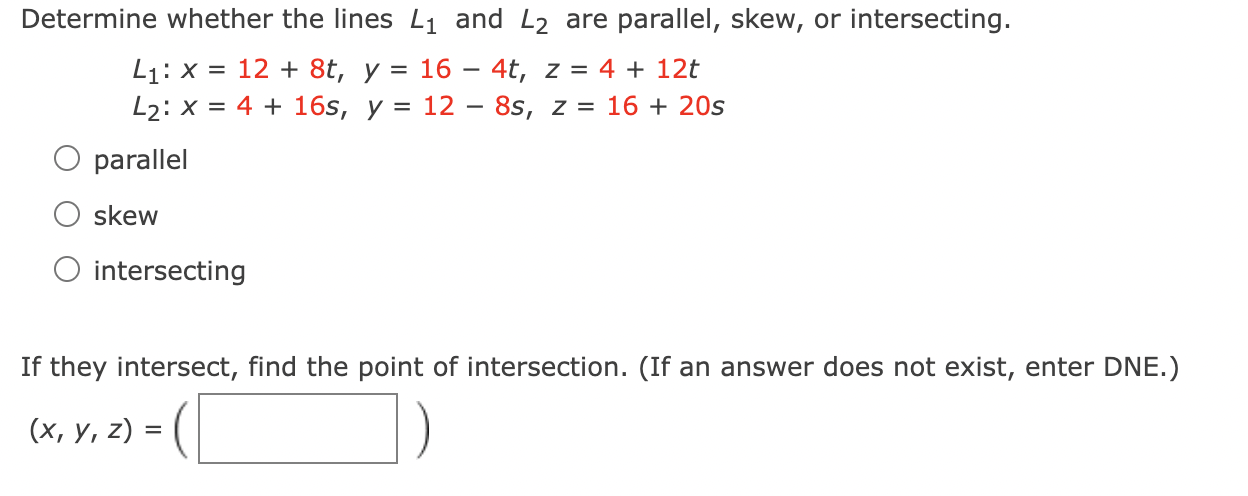


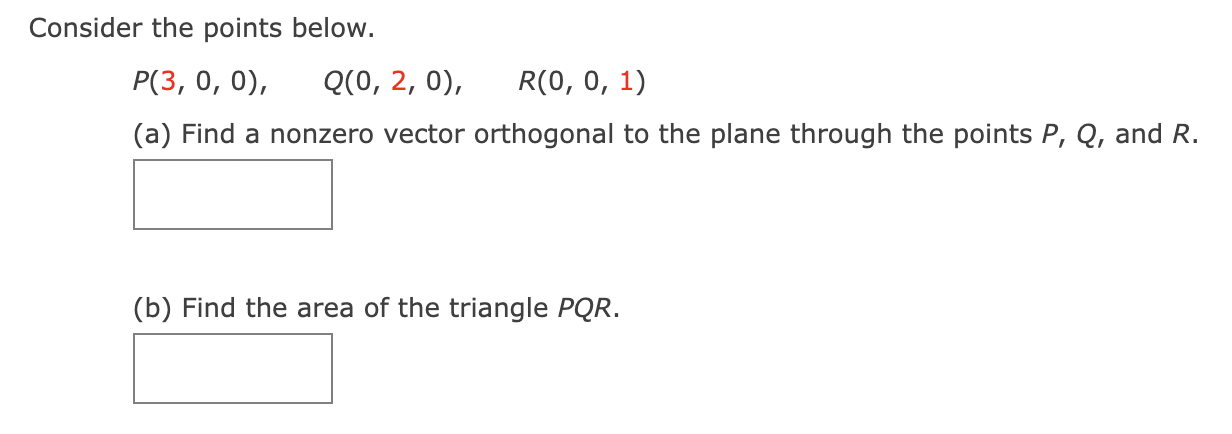
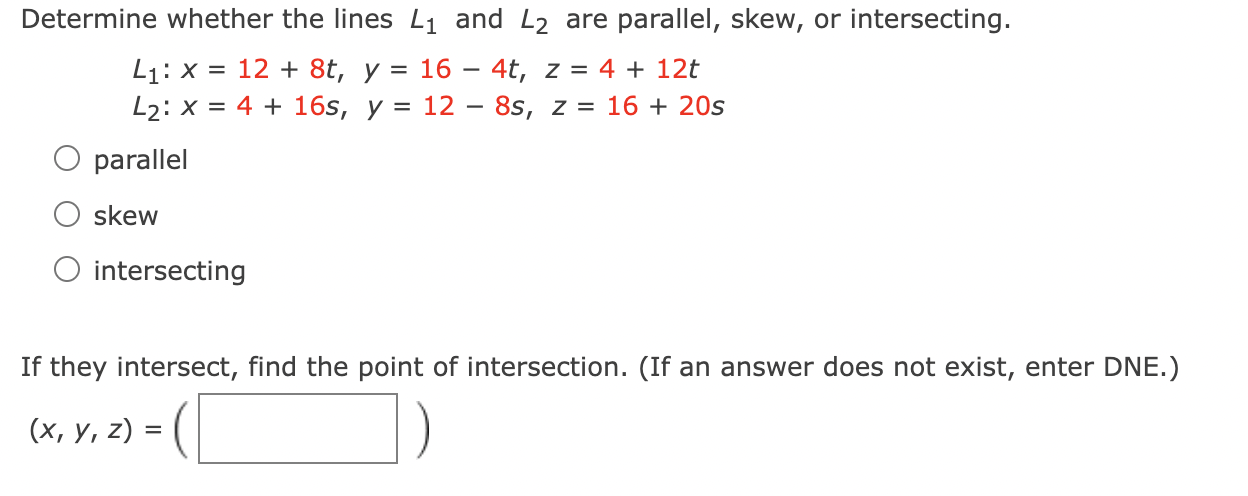

Find the angle between the vectors. (First find an exact expression and then approximate to the nearest degree.) a = (4, 1,7), b = (3, 6, 3) approximate :l Consider the points below. P(3, 0, 0), Q(0, 2, 0), R(0, 0, 1) (a) Find a nonzero vector orthogonal to the plane through the points P, Q, and R. (b) Find the area of the triangle PQR.Determine whether the lines L1 and L2 are parallel, skew, or intersecting. L1: x = 12 + 8t, y = 16 - 4t, z = 4 + 12t L2: X = 4 + 16s, y = 12 - 8s, z = 16 + 20s O parallel O skew O intersecting If they intersect, find the point of intersection. (If an answer does not exist, enter DNE.) ( x, y, Z ) =Find an equation of the plane. The plane through the point (2, 0, 3) and perpendicular to the line x = 51', y = 2 t, z = 7 + 81' E
Step by Step Solution
There are 3 Steps involved in it

Get step-by-step solutions from verified subject matter experts
 Study Help