







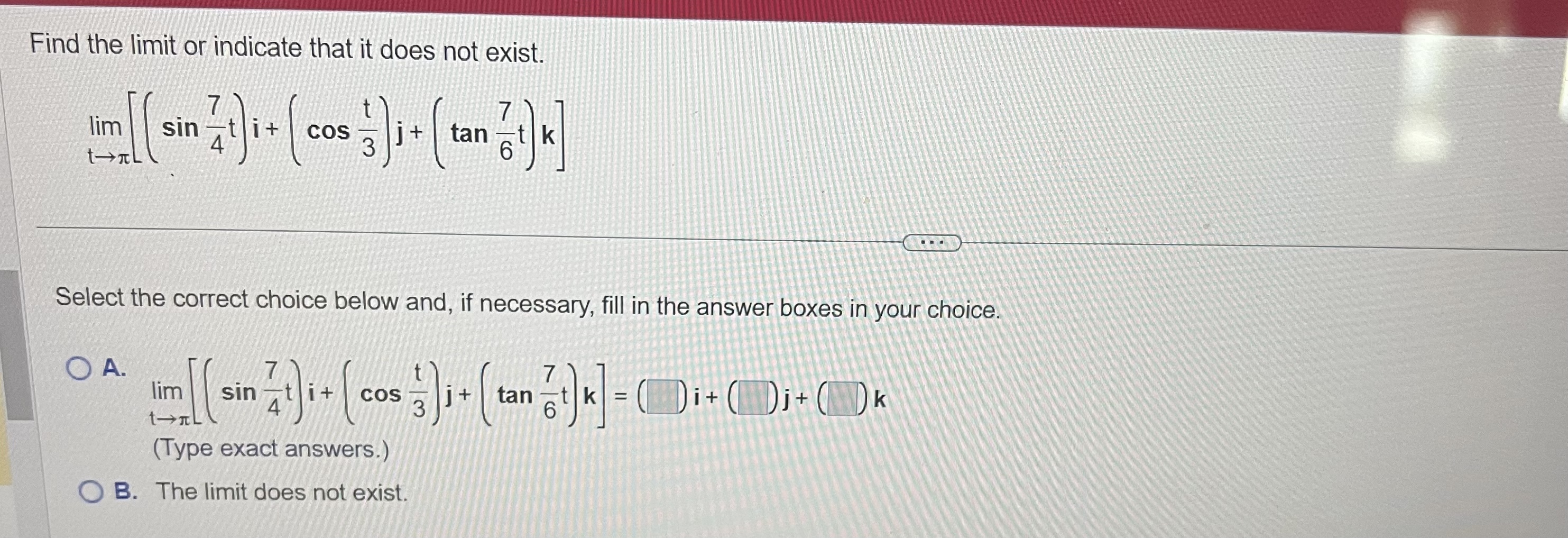
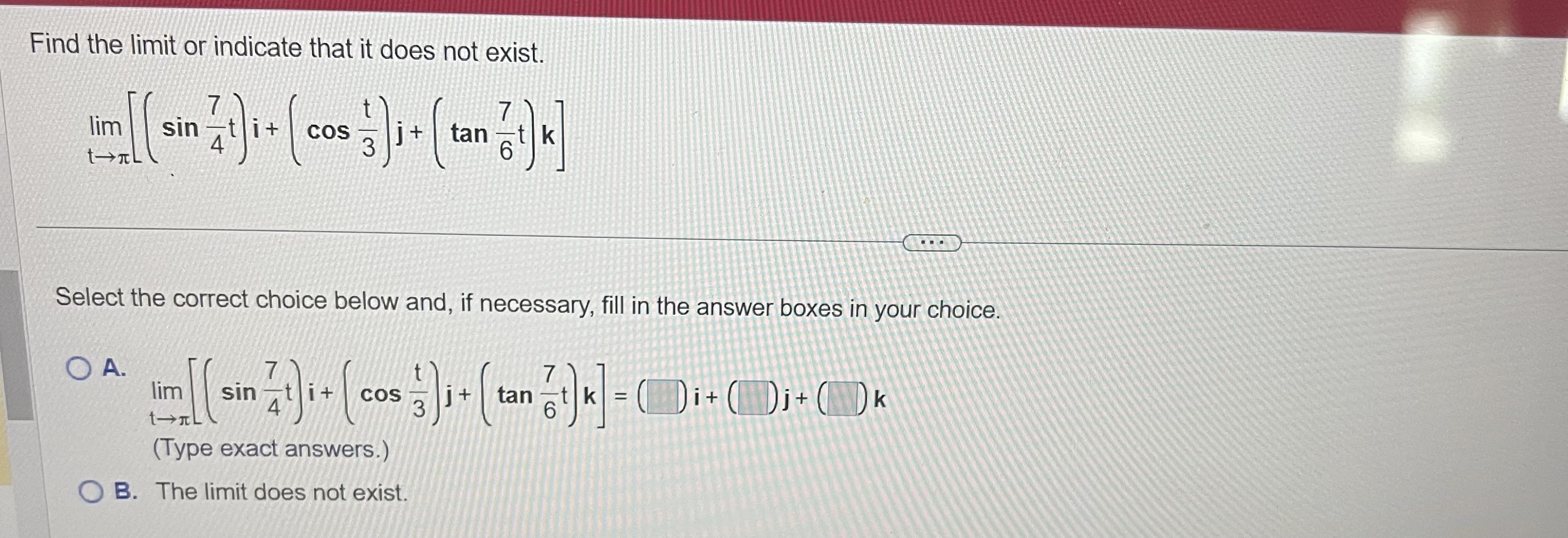
Question: Find the limit or indicate that it does not exist. lim t -> It sin at it cos ? it ( tan of k Select
![? it ( tan ot j k ] - Dit ( Di](https://s3.amazonaws.com/si.experts.images/answers/2024/06/6664641954c14_257666464193773e.jpg)
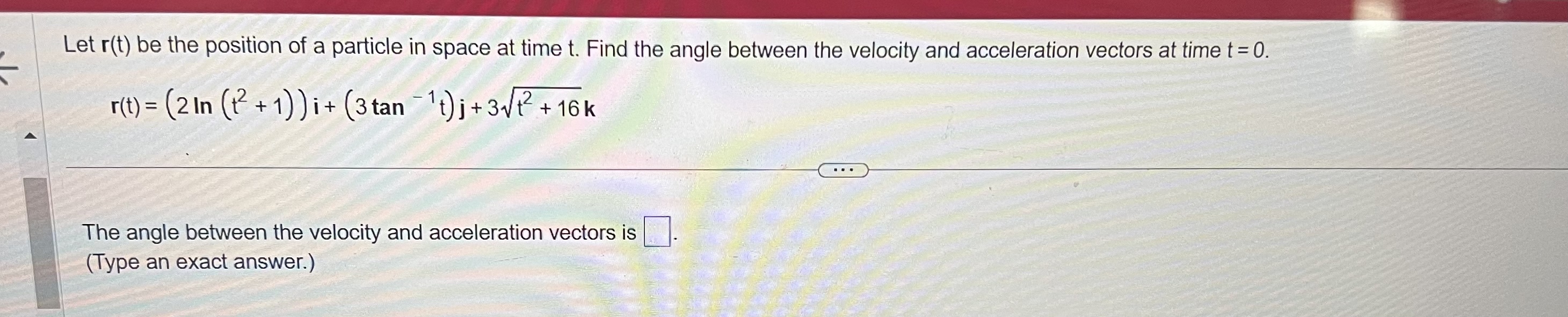
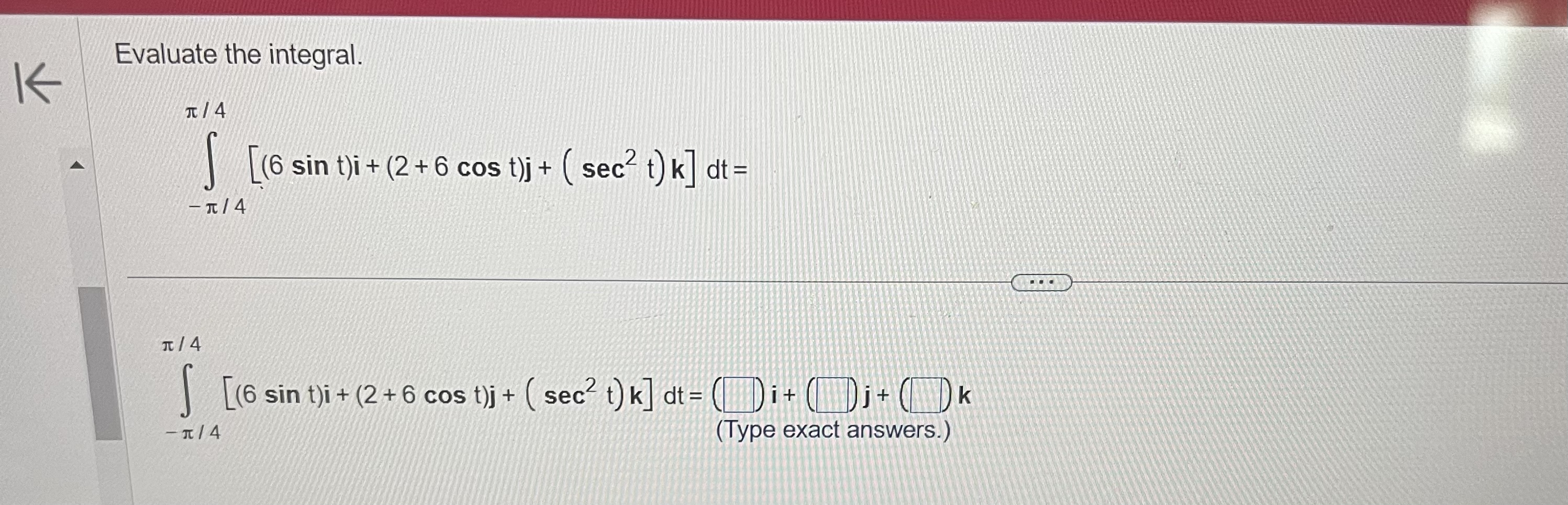
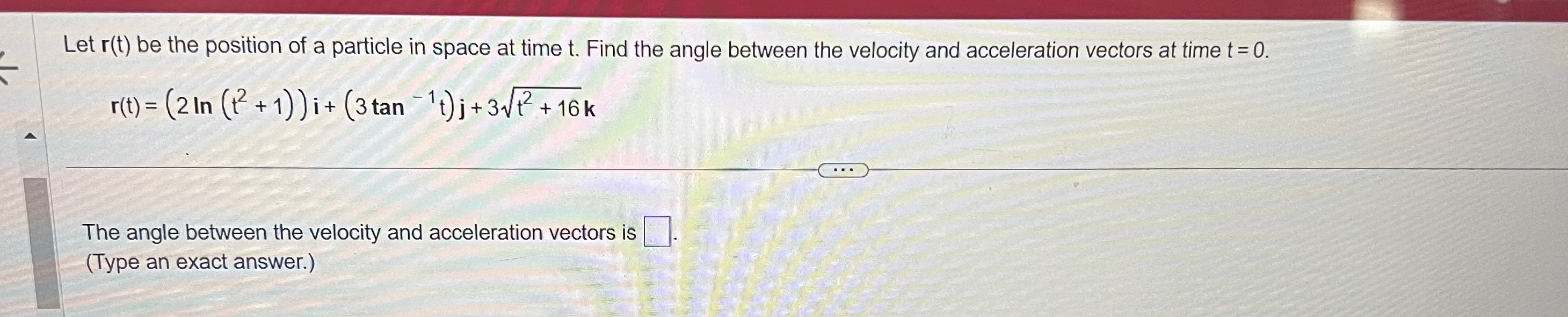
Find the limit or indicate that it does not exist. lim t -> It sin at it cos ? it ( tan of k Select the correct choice below and, if necessary, fill in the answer boxes in your choice. O A. lim sin at it cos ? it ( tan ot j k ] - Dit ( Di + ( ) k (Type exact answers.) B. The limit does not exist.Evaluate the integral. K 1 /4 (6 sin t)i + (2 +6 cos t)j + ( sect) k] at = It / 4 It / 4 [(6 sin t)i + (2 + 6 cos t)j + ( sec t) k] at = ()i + () j + () k - It / 4 (Type exact answers.)Let r(t) be the position of a particle in space at time t. Find the angle between the velocity and acceleration vectors at time t = 0. r(t) = (2In (12 +1) )i+ (3tan 't)i +31+2 + 16 k . . . The angle between the velocity and acceleration vectors is (Type an exact answer.)
Step by Step Solution
There are 3 Steps involved in it

Get step-by-step solutions from verified subject matter experts
 Study Help