







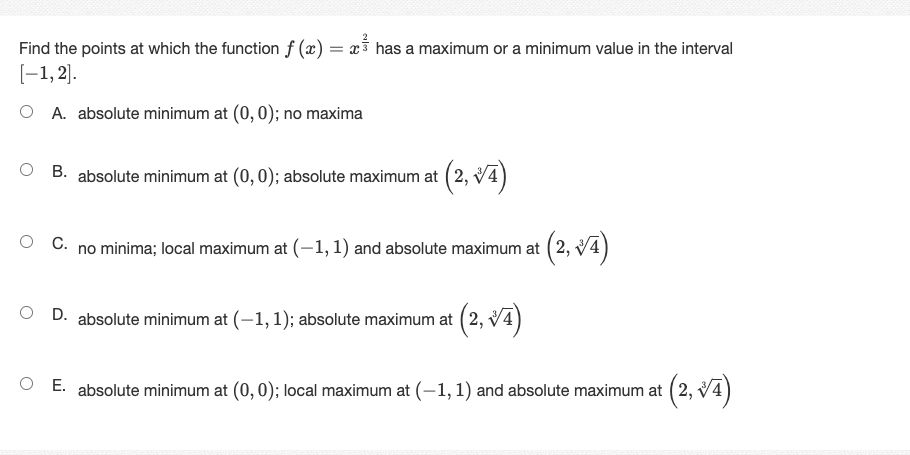
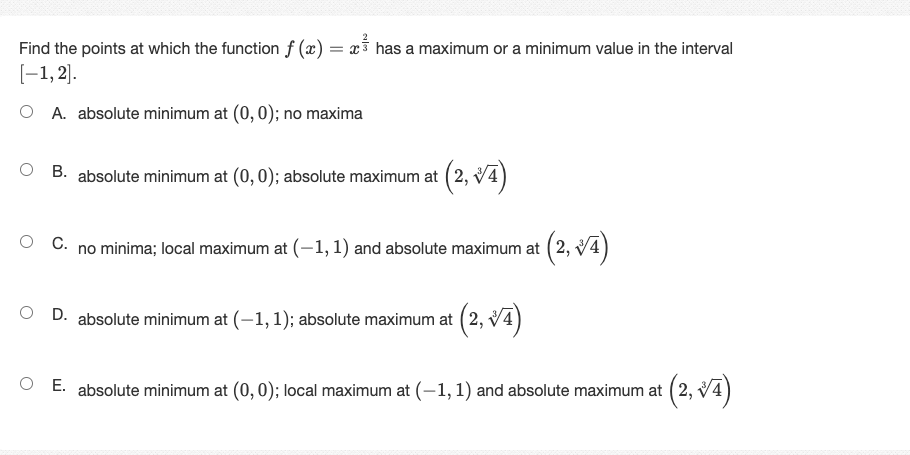
Question: Find the points at which the function f (@) = 3 has a maximum or a minimum value in the interval [-1, 2]. O A.
![has a maximum or a minimum value in the interval [-1, 2].](https://s3.amazonaws.com/si.experts.images/answers/2024/06/6667fd45a811d_0776667fd45936e9.jpg)
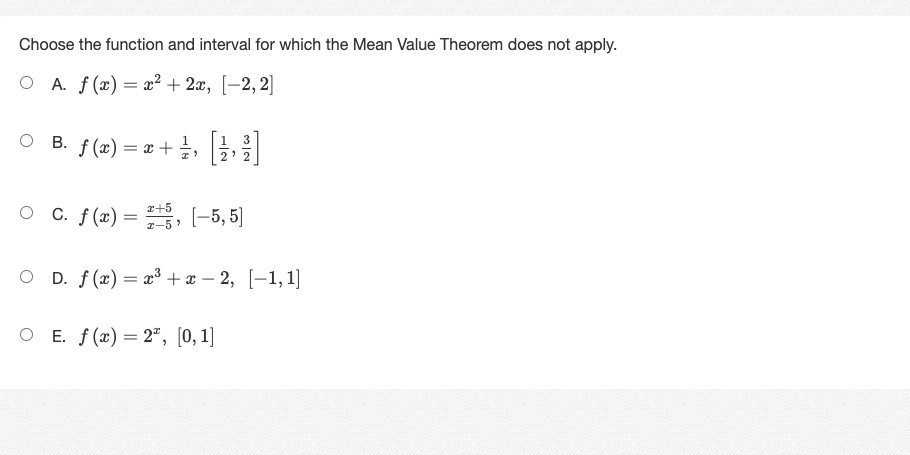
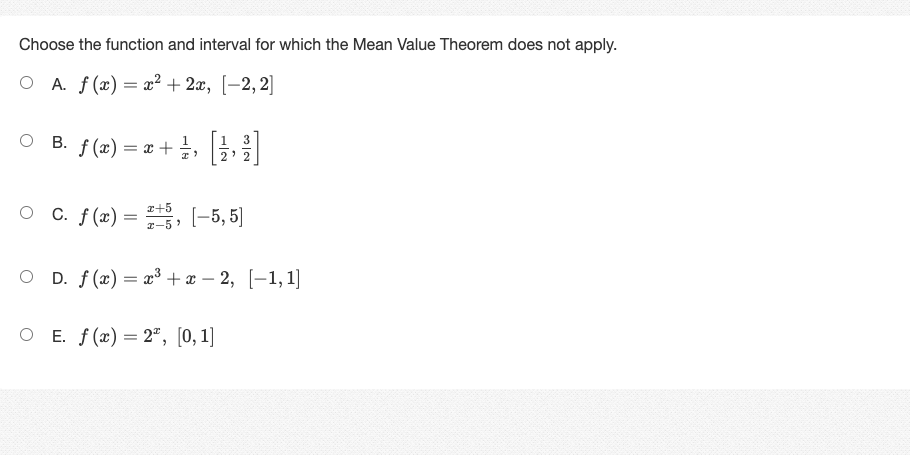
![Value Theorem does not apply. 0 A. f(:::}=:t:2+2a:, [23] O B. f{$}=m+%'](https://s3.amazonaws.com/si.experts.images/answers/2024/06/6667fd49ec13f_0816667fd49de509.jpg)
![[A E] O 3- \"33): E, [515] O D. f{m)=m3+m2, [1,1] 0](https://s3.amazonaws.com/si.experts.images/answers/2024/06/6667fd4a5a207_0826667fd4a45207.jpg)
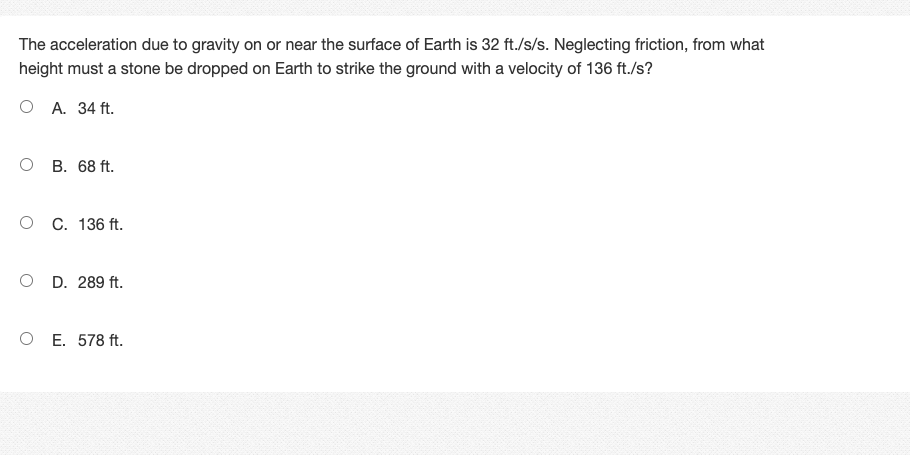
![E. f{m)=2$, [0,1] The acceleration due to gravity on or near the](https://s3.amazonaws.com/si.experts.images/answers/2024/06/6667fd4a9dab3_0826667fd4a8e96f.jpg)
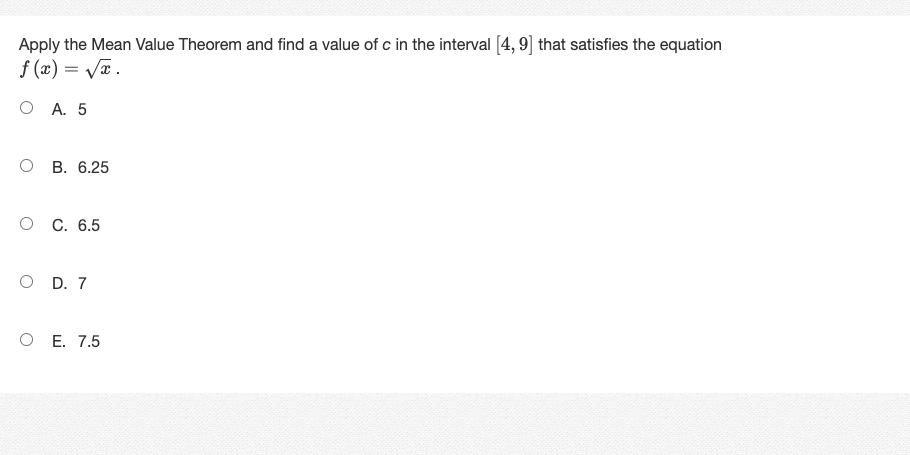
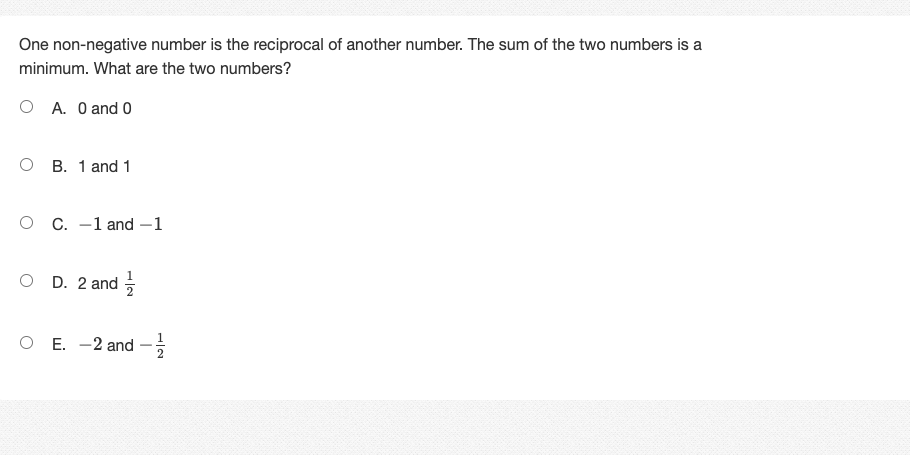
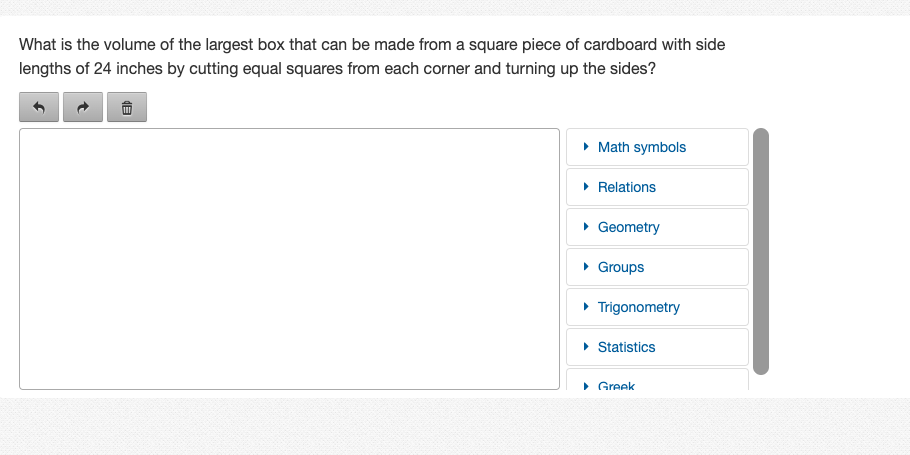
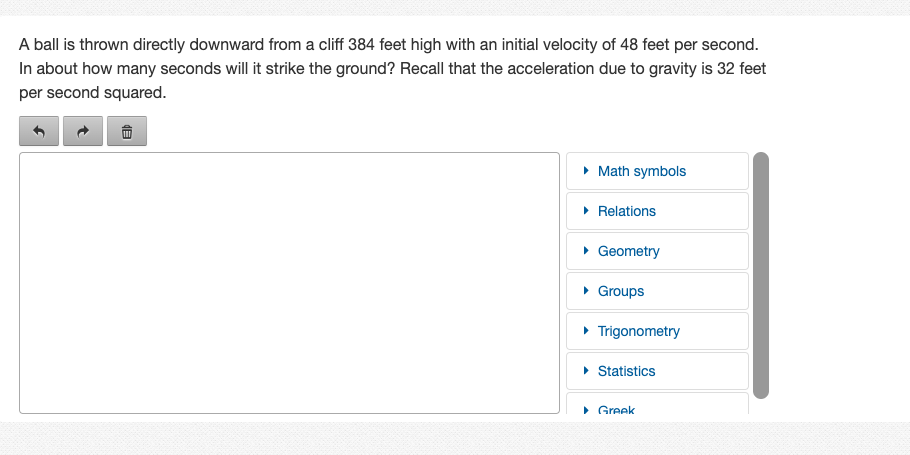
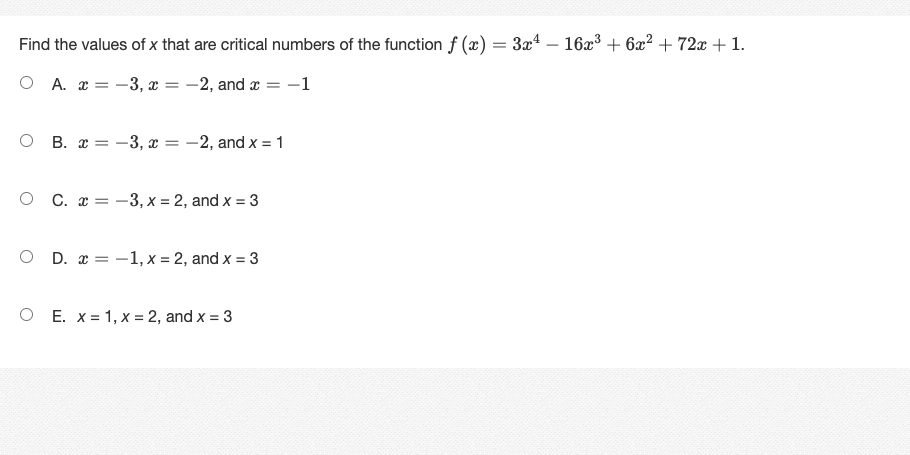
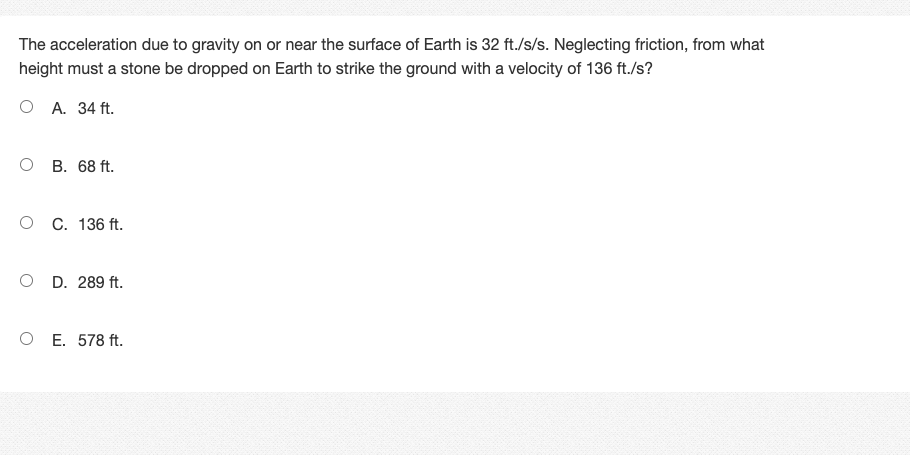
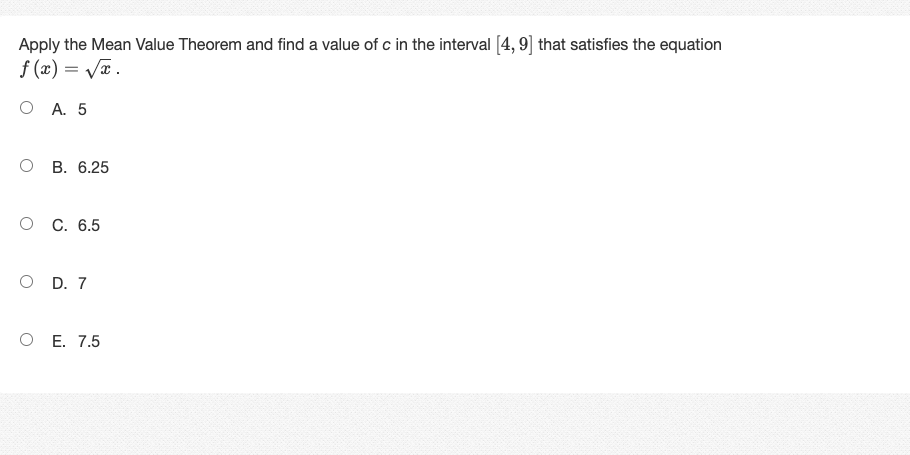
Find the points at which the function f (@) = 3 has a maximum or a minimum value in the interval [-1, 2]. O A. absolute minimum at (0, 0); no maxima O B. absolute minimum at (0, 0); absolute maximum at (2, v/4) O C. no minima; local maximum at (-1, 1) and absolute maximum at ( 2, v/4) O D. absolute minimum at (-1, 1); absolute maximum at (2, v/4) O E. absolute minimum at (0, 0); local maximum at (-1, 1) and absolute maximum at (2, /4)Find the values of x that are critical numbers of the function f (x) = 3x4 - 16x3 + 6x2 + 72x + 1. O A. * = -3, x = -2, and * = -1 O B. x= -3, x = -2, and x = 1 O C. x= -3, x = 2, and x = 3 O D. x = -1, x = 2, and x = 3 O E. x = 1, x = 2, and x = 3Choose the function and interval for which the Mean Value Theorem does not apply. 0 A. f(:::}=:t:2+2a:, [23] O B. f{$}=m+%' [A E] O 3- \"33): E, [515] O D. f{m)=m3+m2, [1,1] 0 E. f{m)=2$, [0,1] The acceleration due to gravity on or near the surface of Earth is 32 ft./s/s. Neglecting friction, from what height must a stone be dropped on Earth to strike the ground with a velocity of 136 ft./s? O A. 34 ft. O B. 68 ft. O C. 136 ft. O D. 289 ft. O E. 578 ft.Apply the Mean Value Theorem and find a value of c in the interval (4, 9) that satisfies the equation f (x) = Vx. O A. 5 O B. 6.25 O C. 6.5 O D. 7 O E. 7.5One non-negative number is the reciprocal of another number. The sum of the two numbers is a minimum. What are the two numbers? O A. 0 and 0 O B. 1 and 1 O C. -1 and -1 O D. 2 and O E. -2 and -What is the volume of the largest box that can be made from a square piece of cardboard with side lengths of 24 inches by cutting equal squares from each corner and turning up the sides? \"E I Math symbols. P Relations > Goon-iota:r i Groups I Trigonometry F Statistics ) Gmnk A ball is thrown directly downward from a cliff 384 feet high with an initial velocity of 48 feet per second. In about how many seconds will it strike the ground? Recall that the acceleration due to gravity is 32 feet per second squared. IIT Math symbols Relations * Geometry Groups * Trigonometry Statistics Greek
Step by Step Solution
There are 3 Steps involved in it

Get step-by-step solutions from verified subject matter experts
 Study Help