



Question: Punnett squares are convenient ways to represent the types and frequencies of gametes and progeny in experimental crosses. This Punnett square shows the results
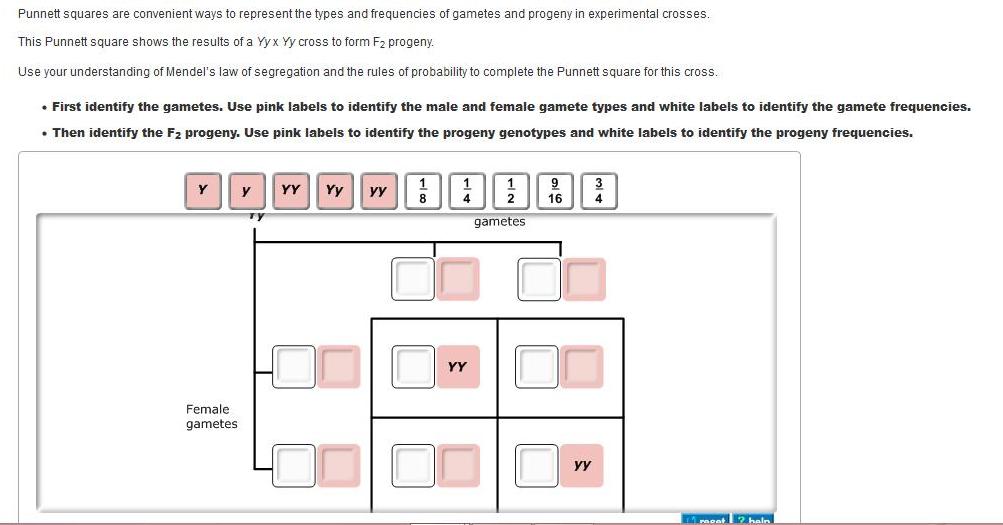

Punnett squares are convenient ways to represent the types and frequencies of gametes and progeny in experimental crosses. This Punnett square shows the results of a Yyx Yy cross to form F2 progeny. Use your understanding of Mendel's law of segregation and the rules of probability to complete the Punnett square for this cross. First identify the gametes. Use pink labels to identify the male and female gamete types and white labels to identify the gamete frequencies. Then identify the F2 progeny. Use pink labels to identify the progeny genotypes and white labels to identify the progeny frequencies. yy | || Y y YY Yy Ty gametes YY Female gametes yy naoat 2 haln Part A - Deducing phenotypes and genotypes of selfed parents Mendel studied pea plants dihybrid for seed shape (round versus wrinkled) and seed color (yellow versus green). Recall that the round allele (R) is dominant to the wrinkled allele () and the yellow allele (Y) is dominant to the green allele (y). The table below shows the F; progeny that result from selfing four different parent pea plants. Use the phenotypes of the F, progeny to deduce the genotype and phenotype of each parent plant. Complete the table by dragging the correct label to the appropriate location. Labels can be used once, more than once, or not at all. RRYY RIYY RRYY Plant 1 Plant 2 Plant 3 Plant 4 RrYy Parent phenotype RRYY Rryy Parent genotype rryy Fi progeny phenotypes from selfed parent reset ? help
Step by Step Solution
3.46 Rating (149 Votes )
There are 3 Steps involved in it

Get step-by-step solutions from verified subject matter experts