







Question: Flow Condition # 1 : When studying uniform flow we learned how to calculate the normal depth, y n for a given combination of discharge
Flow Condition #: When studying uniform flow we learned how to calculate the normal depth, for a given combination of discharge bottom slope channel geometry, and roughness. In the uniform flow lab we saw how the flow tended to become uniform in the foot long flume, for The relatively long prismatic channel determined the depthdischarge relationship, thus "controlling" the flow and producing a subcritical uniform flow with how would you verify that the flow was subcritical?
In this flow condition a sluice gate that controls the flow from the head tank into the flume was introduced, otherwise keeping and constant. This additional "control" produces at the upstream end of the flume a supercritical flow with depth The flow varies rapidly from supercritical to subcritical, forming a hydraulic jump a short distance downstream of the gate. The flow depth upstream of the jump, is practically equal to the opening under the gate.
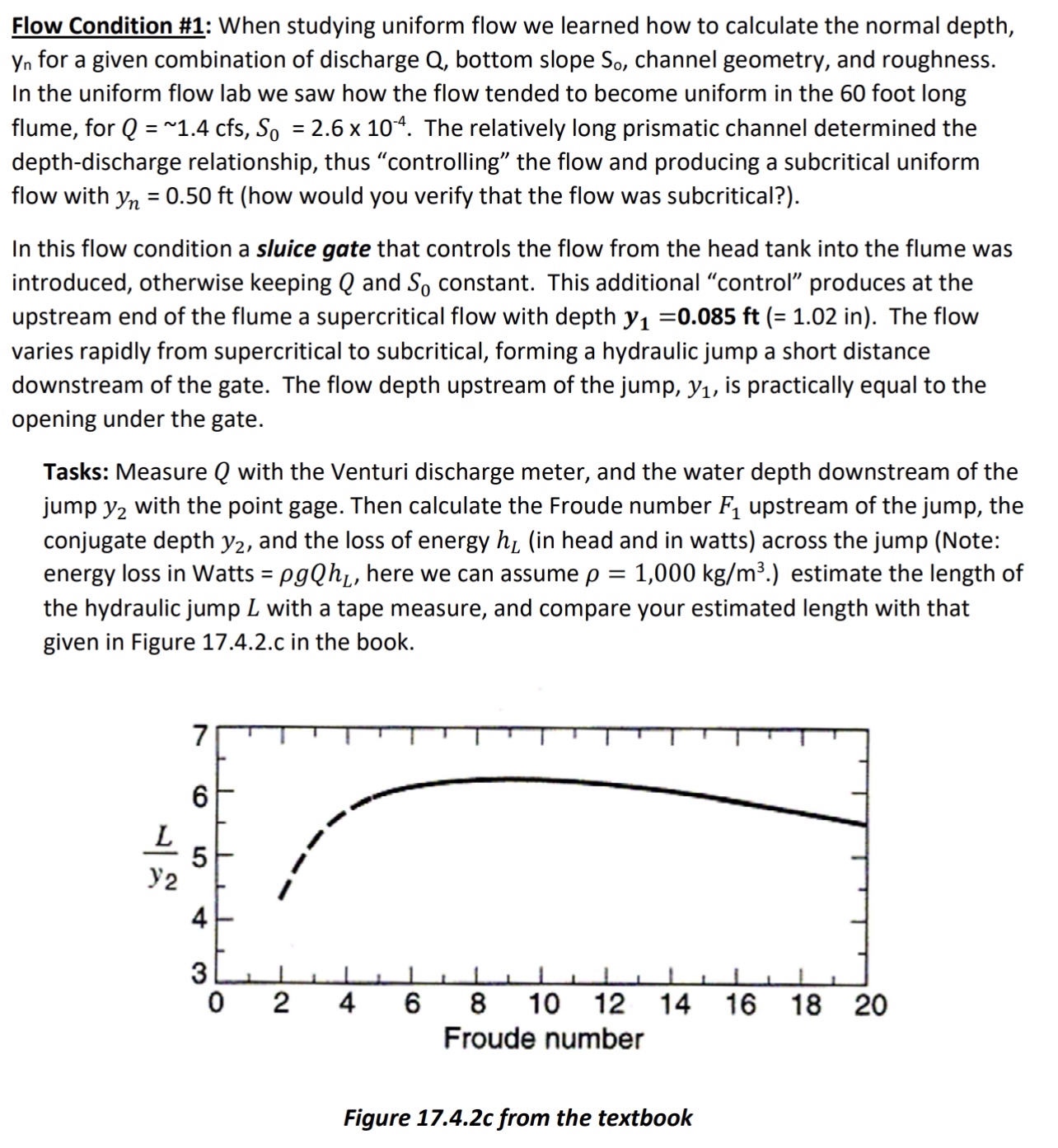
Tasks: Measure with the Venturi discharge meter, and the water depth downstream of the jump with the point gage. Then calculate the Froude number upstream of the jump, the conjugate depth and the loss of energy in head and in watts across the jump Note: energy loss in Watts here we can assume estimate the length of the hydraulic jump with a tape measure, and compare your estimated length with that given in Figure c in the book.
Figure c from the textbook
Step by Step Solution
There are 3 Steps involved in it
1 Expert Approved Answer
Step: 1 Unlock

Question Has Been Solved by an Expert!
Get step-by-step solutions from verified subject matter experts
Step: 2 Unlock
Step: 3 Unlock
 Study Help