







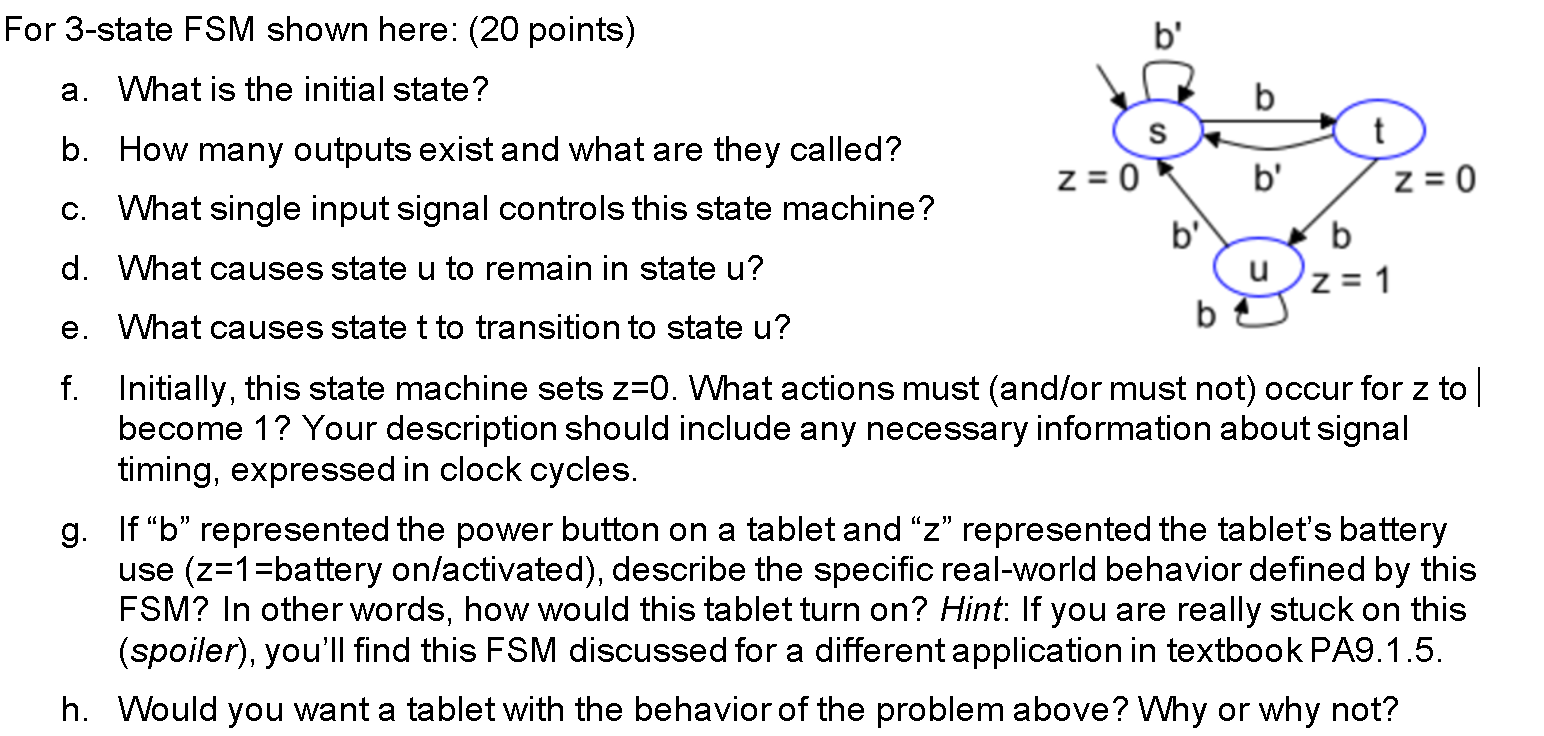
Question: For 3 - state FSM shown here: ( 2 0 points ) a . What is the initial state? b . How many outputs exist
For state FSM shown here: points
a What is the initial state?
b How many outputs exist and what are they called?
c What single input signal controls this state machine?
d What causes state u to remain in state u
e What causes state t to transition to state u
f Initially, this state machine sets z What actions must andor must not occur for z to become Your description should include any necessary information about signal timing, expressed in clock cycles.
g If b represented the power button on a tablet and z represented the tablet's battery use z battery onactivated describe the specific realworld behavior defined by this FSM In other words, how would this tablet turn on Hint: If you are really stuck on this spoiler you'll find this FSM discussed for a different application in textbook PA
h Would you want a tablet with the behavior of the problem above? Why or why not?
Step by Step Solution
There are 3 Steps involved in it
1 Expert Approved Answer
Step: 1 Unlock

Question Has Been Solved by an Expert!
Get step-by-step solutions from verified subject matter experts
Step: 2 Unlock
Step: 3 Unlock
 Study Help