







Question: for any >0 (1) define proof When 0, f has a limit in the meaning of the distribution (D(R)) and calculate the limit. (2) define
for any >0
(1)
define 
proof When 0, f has a limit in the meaning of the distribution (D(R)) and calculate the limit.
(2)
define
proof When 0, g has no limit in the definition of distribution
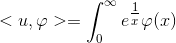
(3) define 
proof There is no u D(R), so that for any D((0, )),
(u: D()C
)
1((a,b))(x)=1 (x in (a,b))
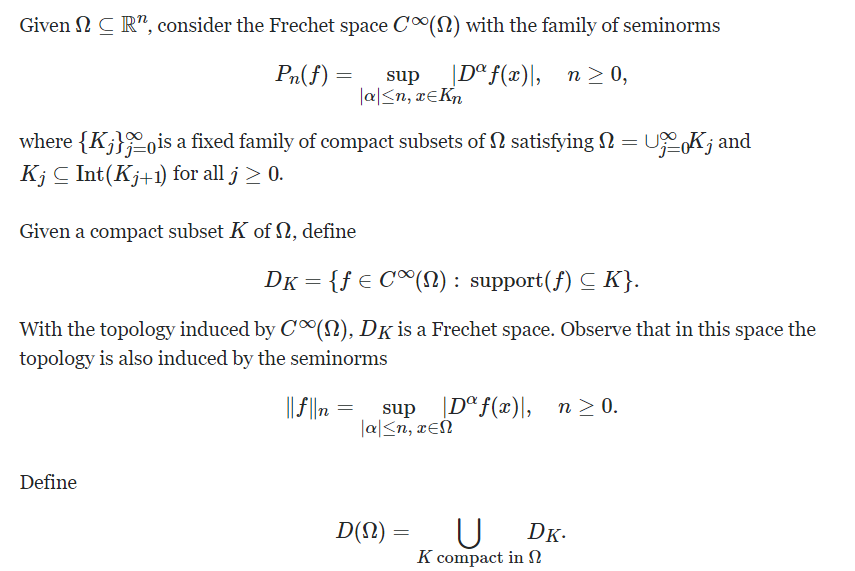
fe=-11-20,-)U(26, +00) (2) T 9 = 11-00,--)U(C2, +00) (2) T h() = e. 10,+) (2) = 1 (x) Given 2 CR, consider the Frechet space C(12) with the family of seminorms Pn(f) = sup]D f(x), n > 0, al
Step by Step Solution
There are 3 Steps involved in it

Get step-by-step solutions from verified subject matter experts
 Study Help