







Question: for beginner java The code of the following classes is given in the attached sre.rar (From Java 9 for Programmers, by Paul Deitel and Harvey
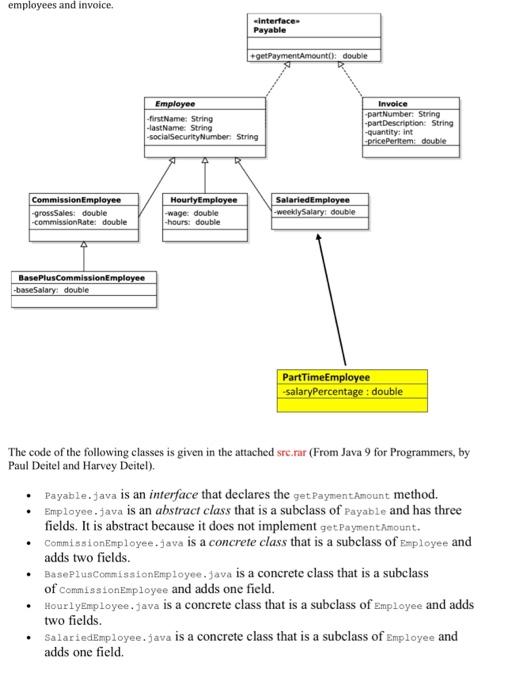
The code of the following classes is given in the attached sre.rar (From Java 9 for Programmers, by Paul Deitel and Harvey Deitel). - Payable.java is an interface that declares the getPaymentAmount method. - Employee java is an abstract class that is a subclass of Payable and has three fields. It is abstract because it does not implement getPayment.imount. - CommissionEmployee-java is a concrete class that is a subclass of Employee and adds two fields. - BaseplusComissionEmployee. Java is a concrete class that is a subclass of commissionEmployee and adds one field. - HourlyEmployee, java is a concrete class that is a subclass of Employee and adds two fields. - SalariedEmployee. java is a concrete class that is a subclass of Employee and adds one field. - Invoice. java is a concrete class that is a subclass of Payable and has four fields. - The main method in PayrollSystemTest.java uses the Employee class and its subclasses. It creates four objects, one for each subclass of Employee and then prints their payment amount. In this question, you are going to add a new class called PartTimeEmployee. java that extents from SalariedEmployee. java. The new class has an attribute, salaryPercentage, which gives the percentage of weekly salary paid to part-time employees. The new class should include the necessary constructors, getPaymentAmount and toString methods, setter and getter methods for the attribute salaryPercentage. Modify PayrollSystemTest.java to include the following two new part time employees with salary percentages 50 and 20 for testing: - new SalariedEmployee("Bill", "Gates", "222-22-2222", 2400.00, 50); - new SalariedEmployee("Tim", "Andersen", "888-88-8888", 1200.00, 20)
Step by Step Solution
There are 3 Steps involved in it

Get step-by-step solutions from verified subject matter experts
 Study Help