







Question: For each entry, choose an idea/issue from chapter 4 textbook A Very Short, Fairly Interesting and Reasonably Cheap Book about Management Theory and reflect thoughtfully
For each entry, choose an idea/issue from chapter 4 textbook A Very Short, Fairly Interesting and Reasonably Cheap Book about Management Theory and reflect thoughtfully on this. You might relate the idea/issue to an experience you've had, something you've read/watched online, an item from the news, etc. The aim of the assessment is to demonstrate how your thinking on the idea/issue has developed.
Only e the source that is provided.
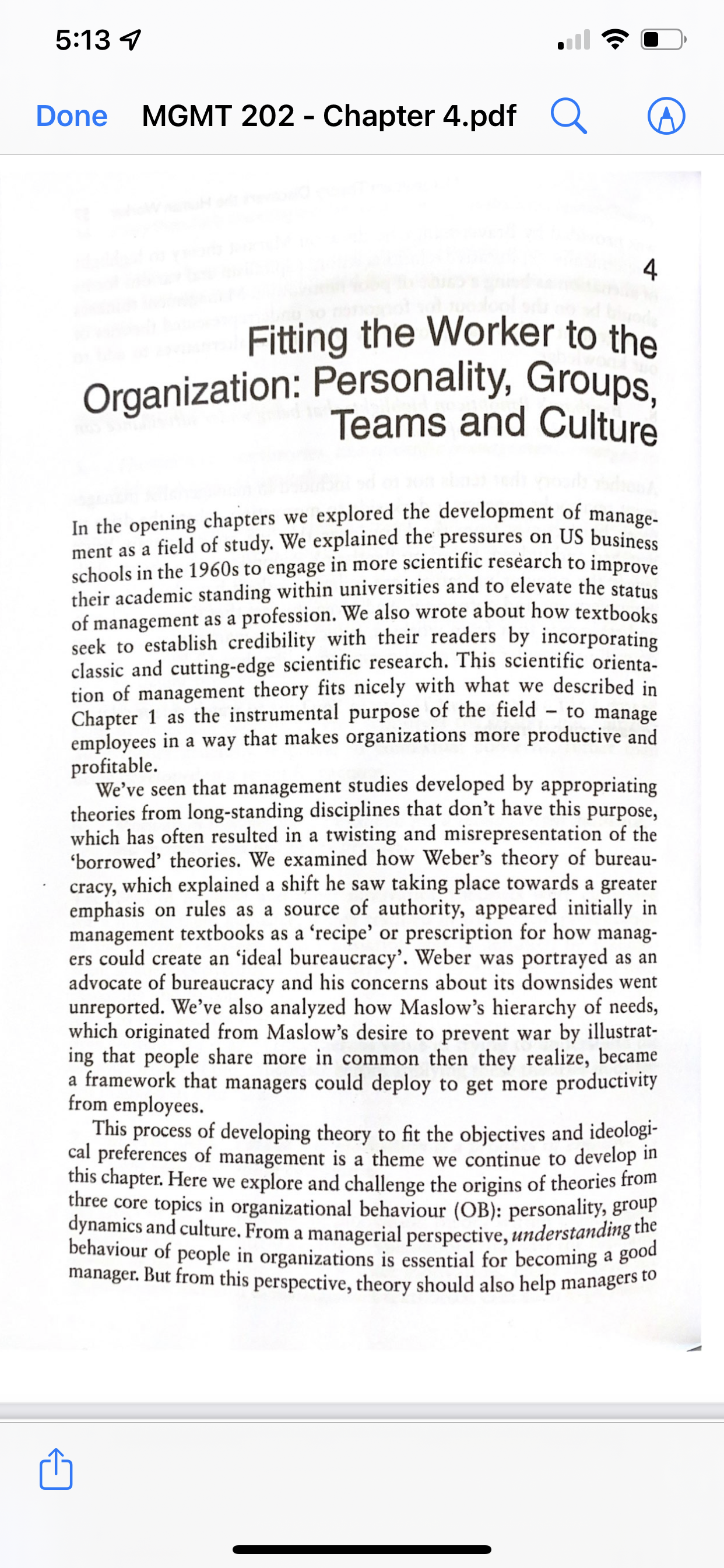
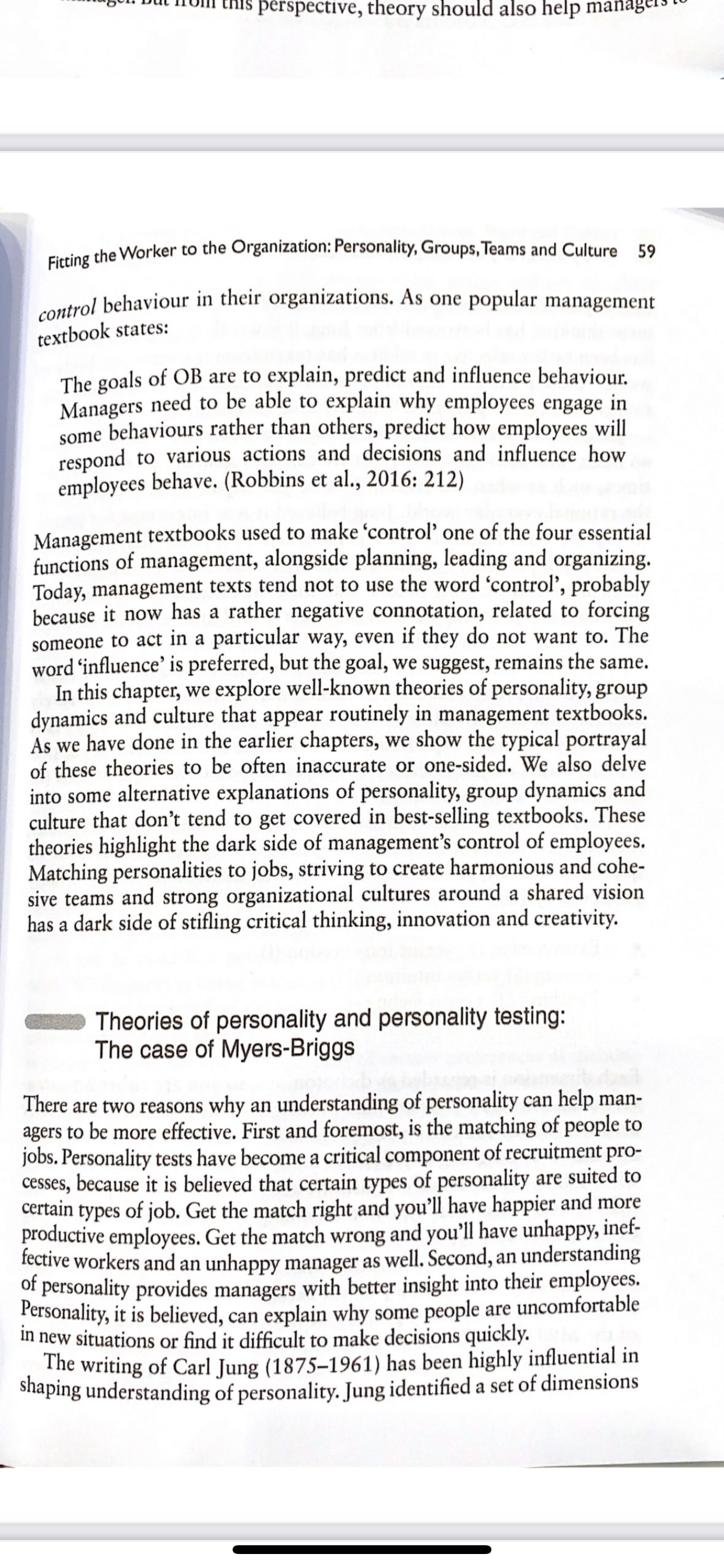
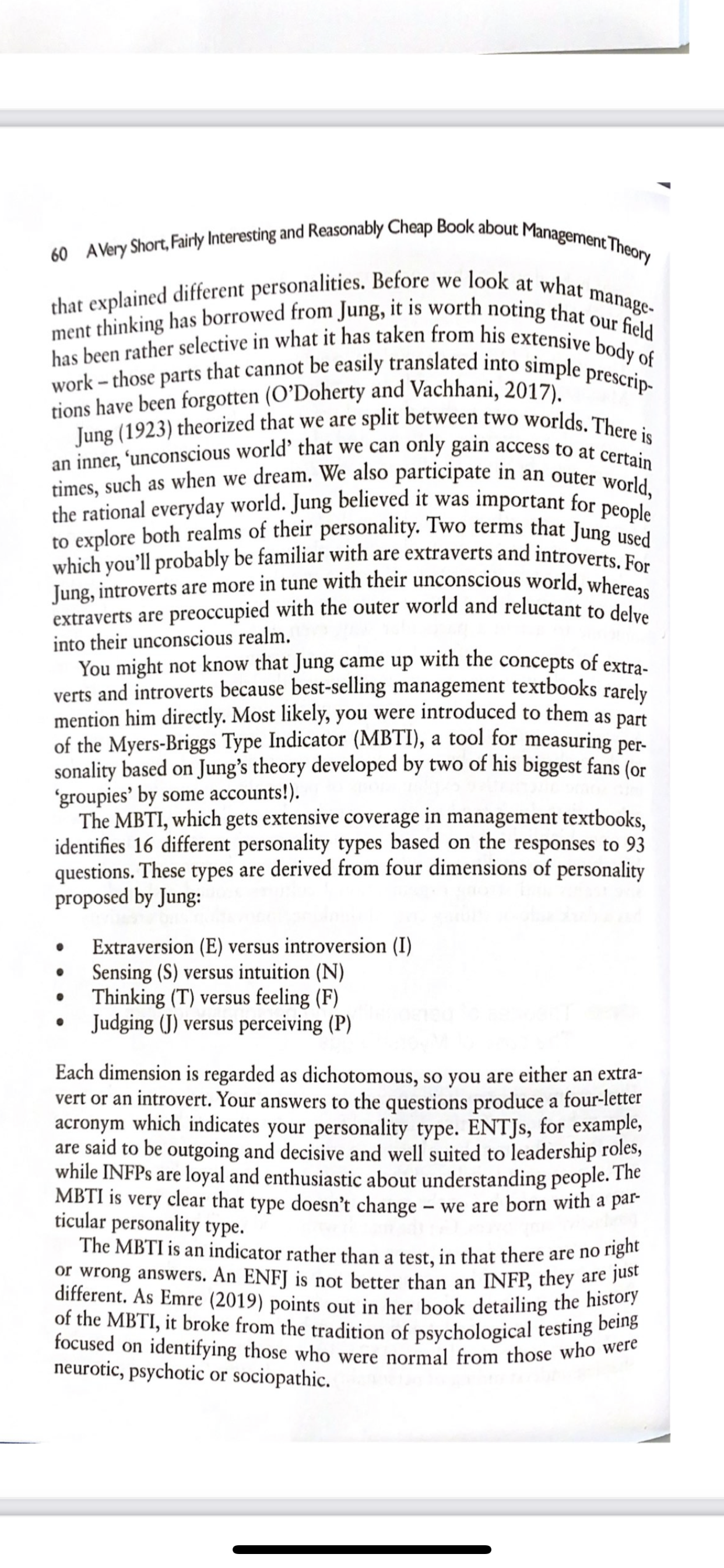
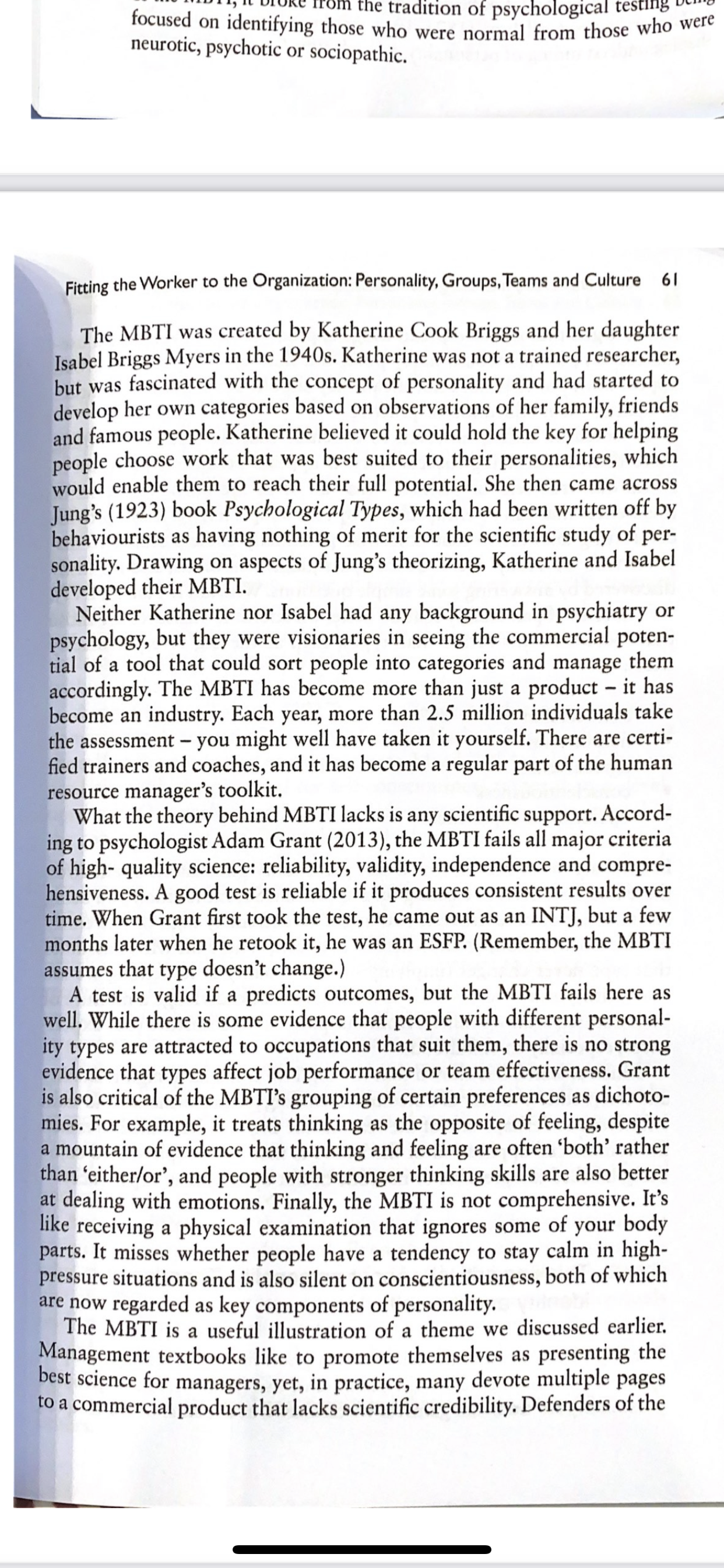
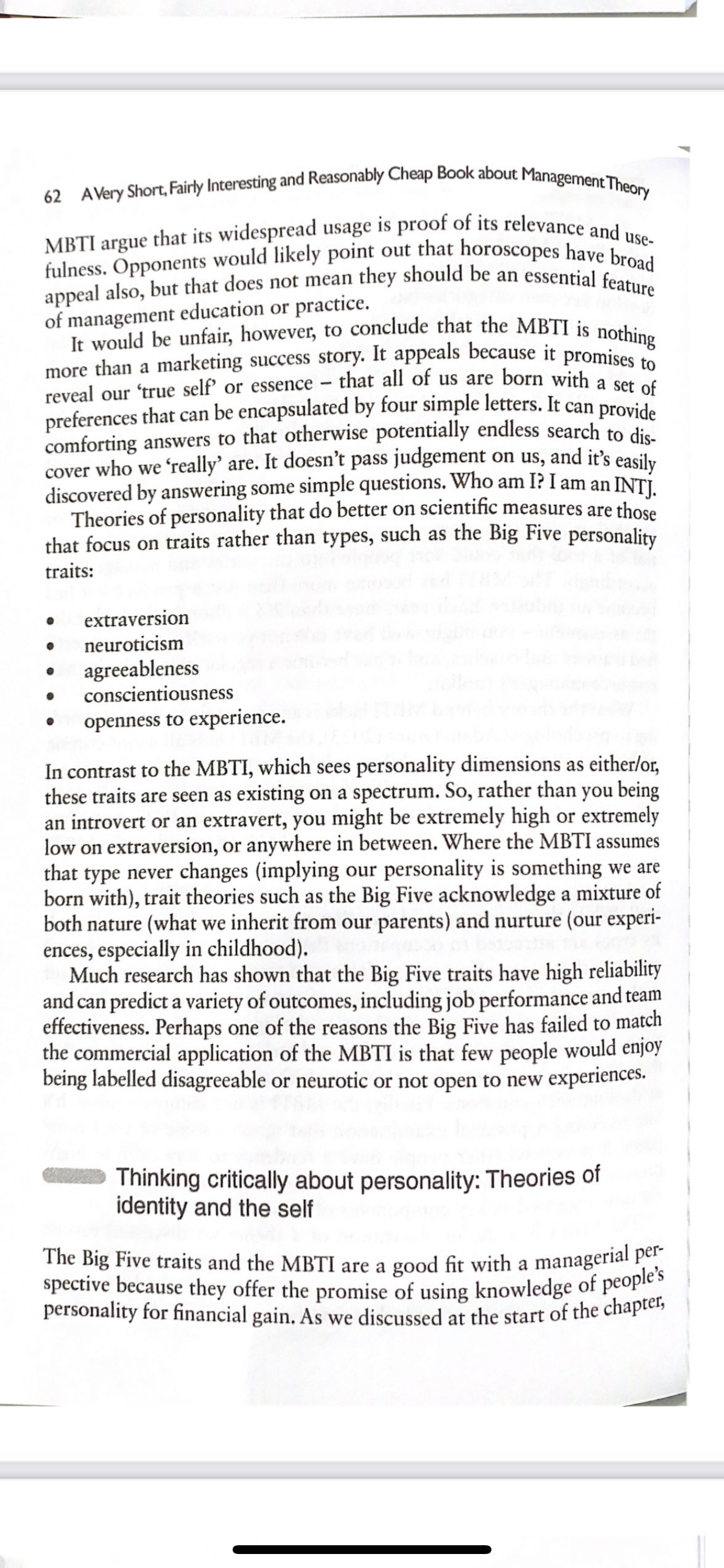
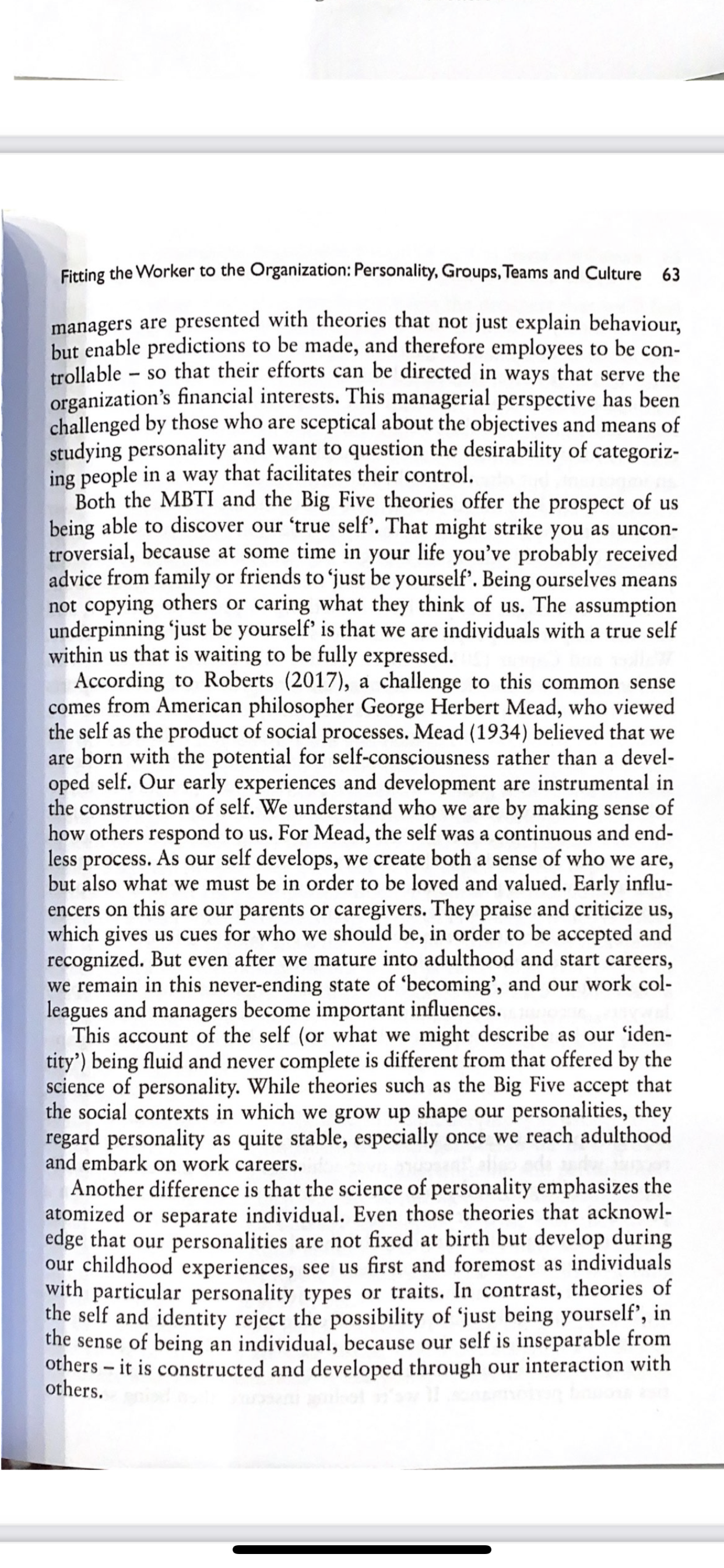
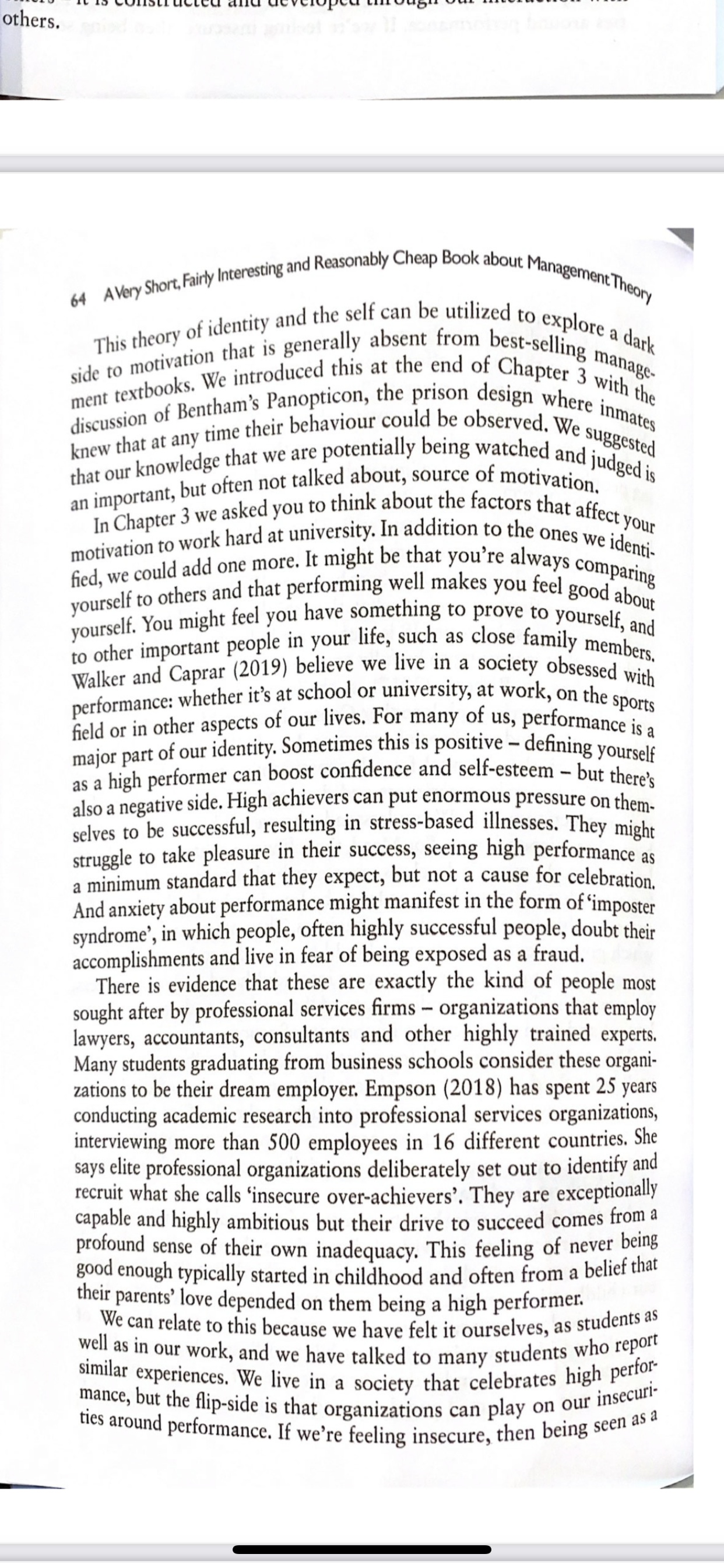
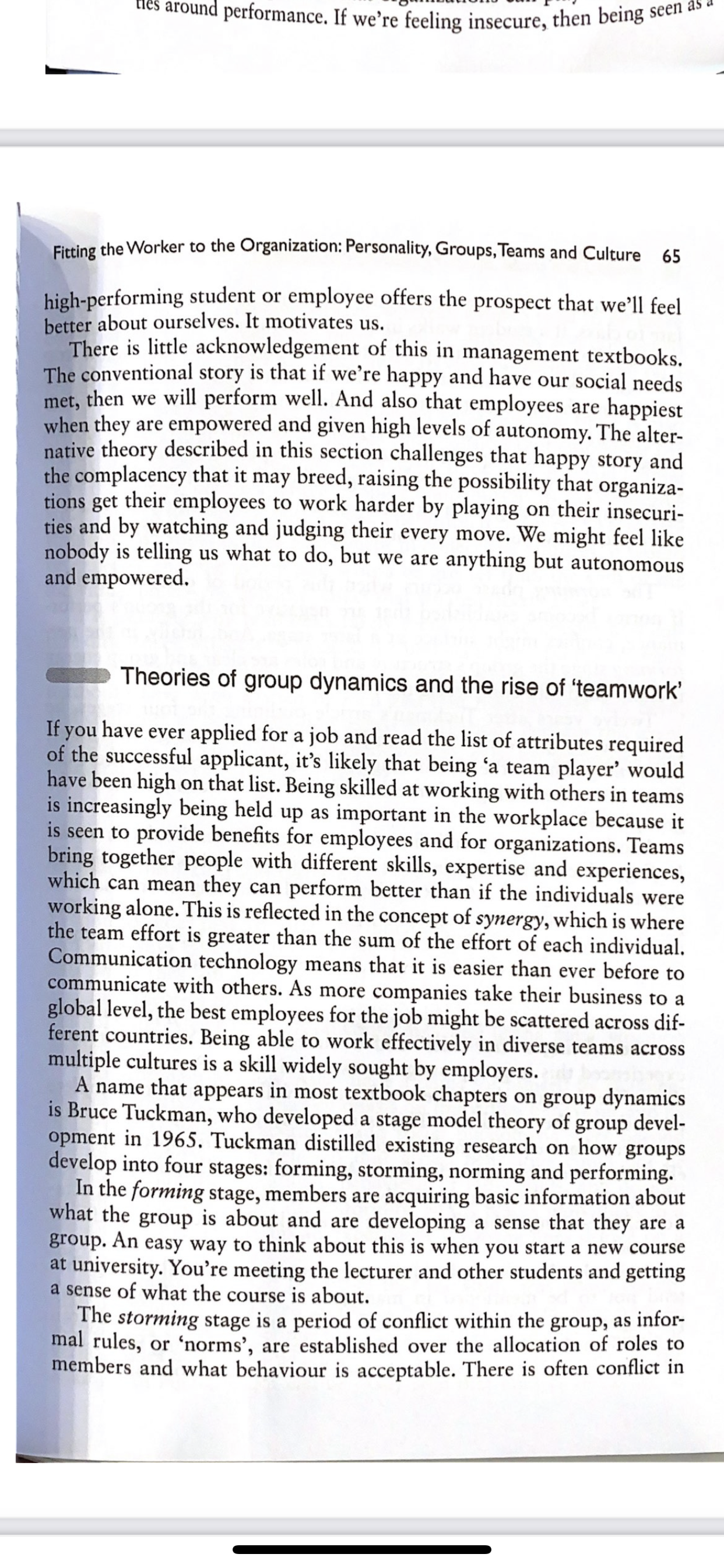
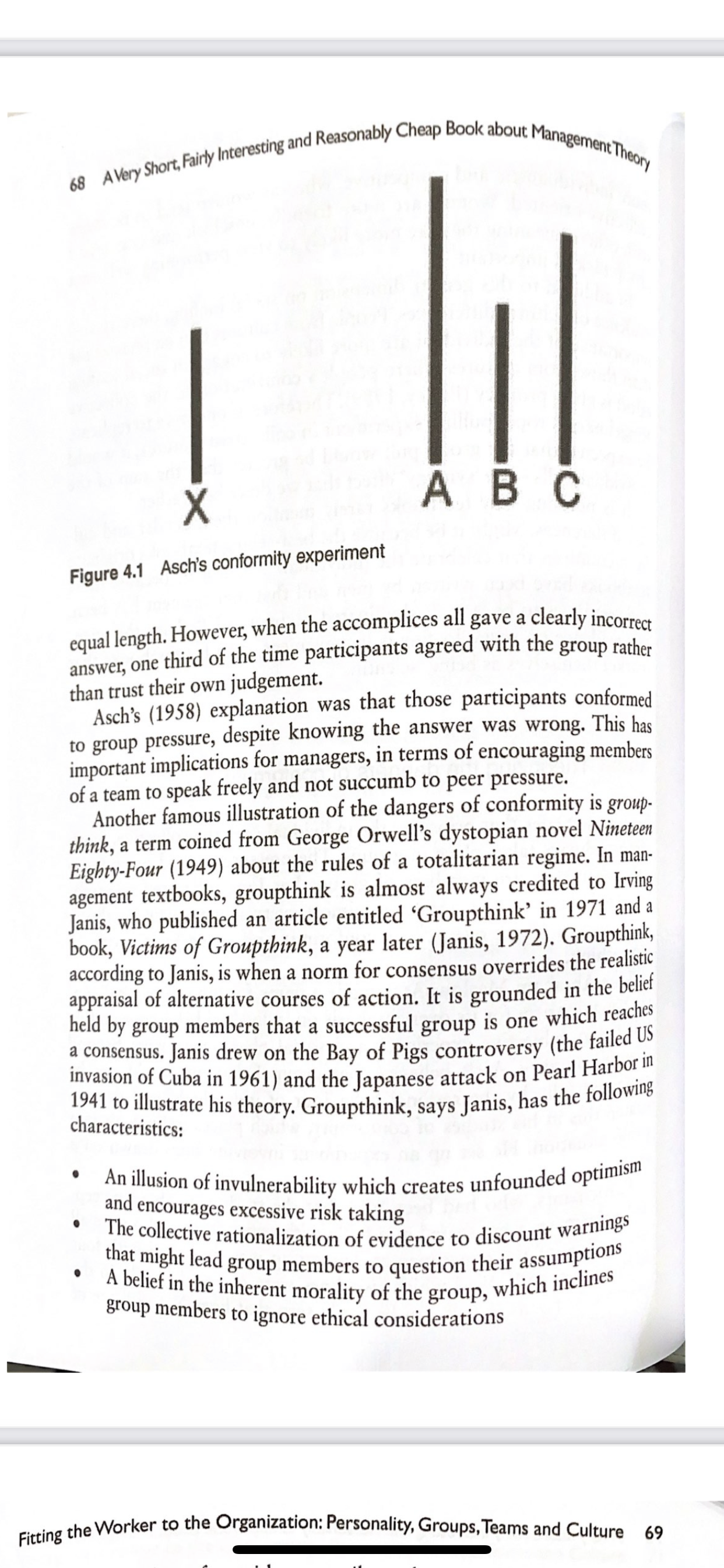
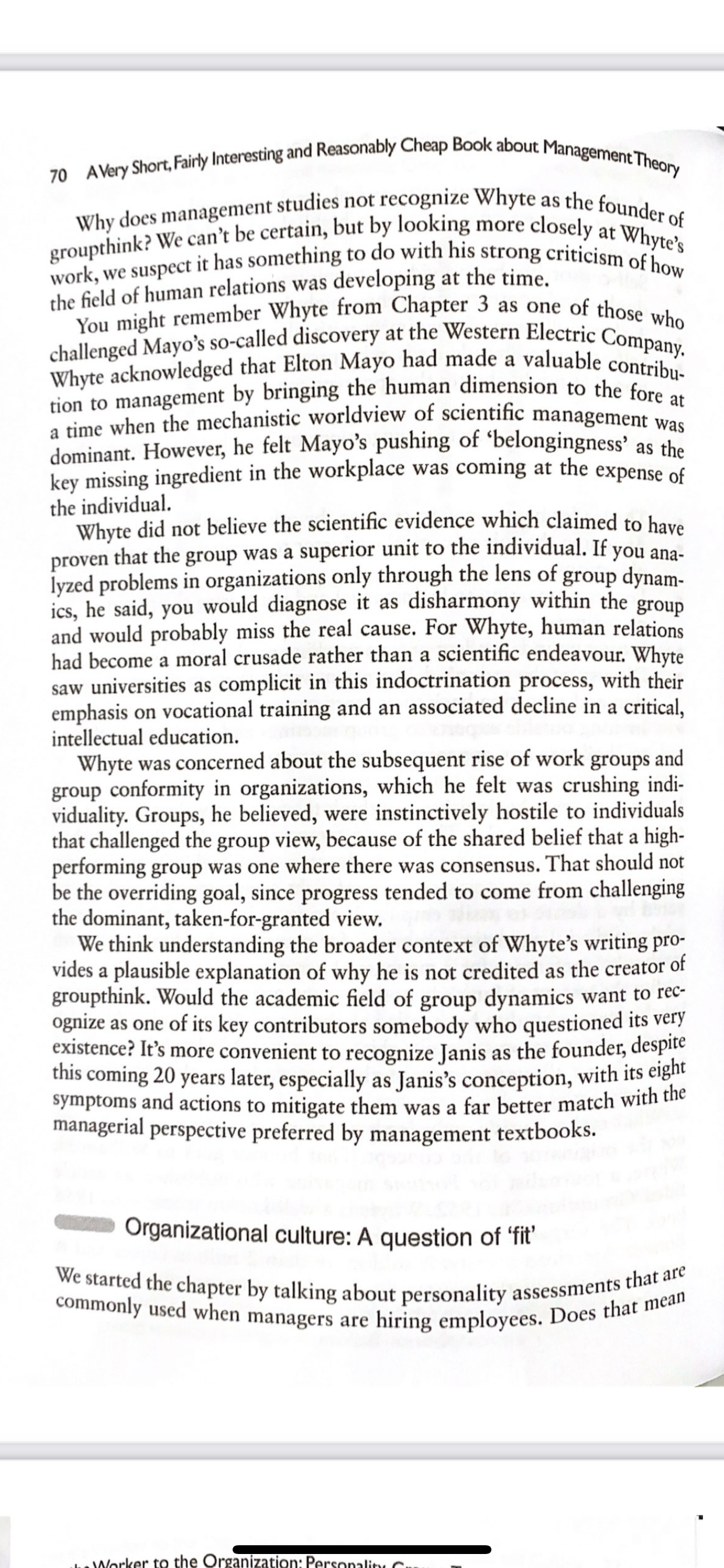
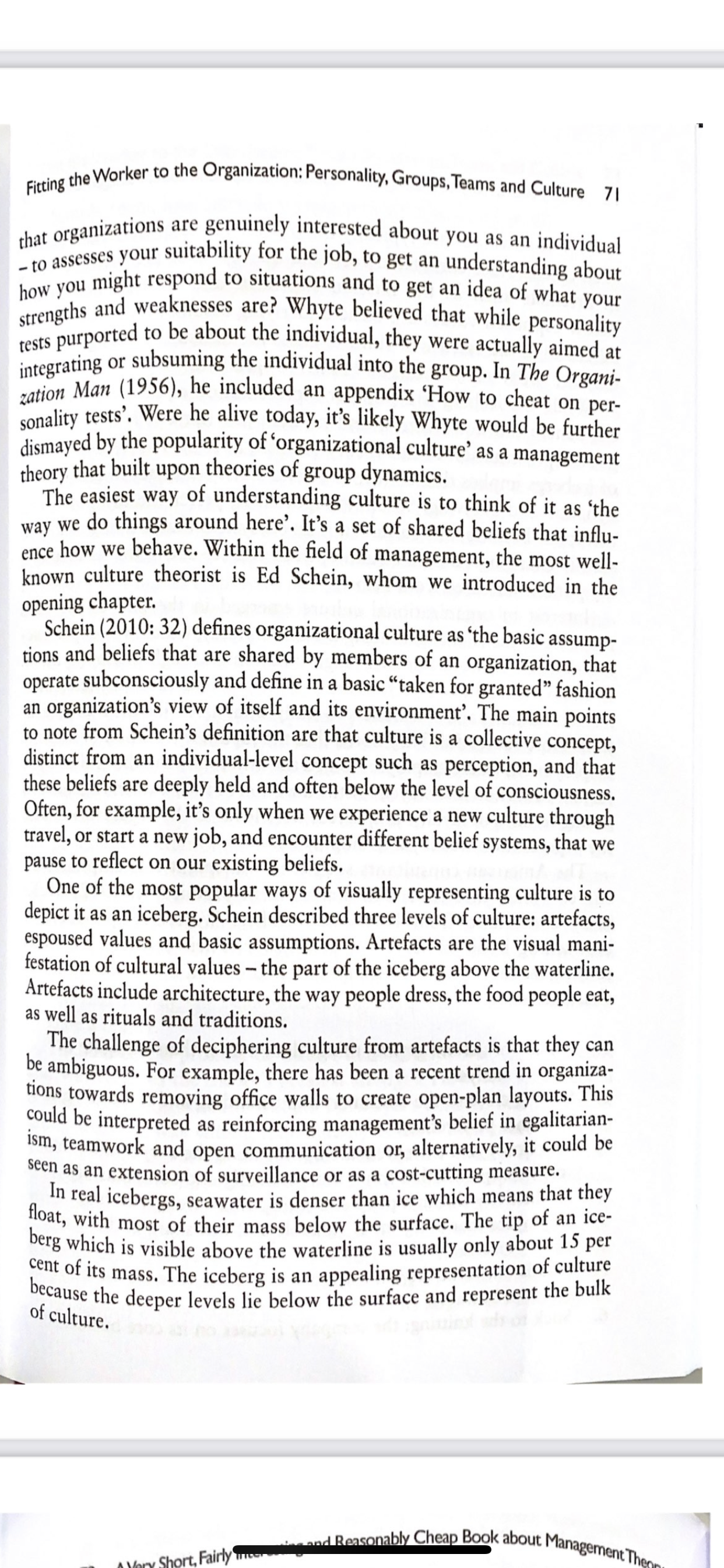
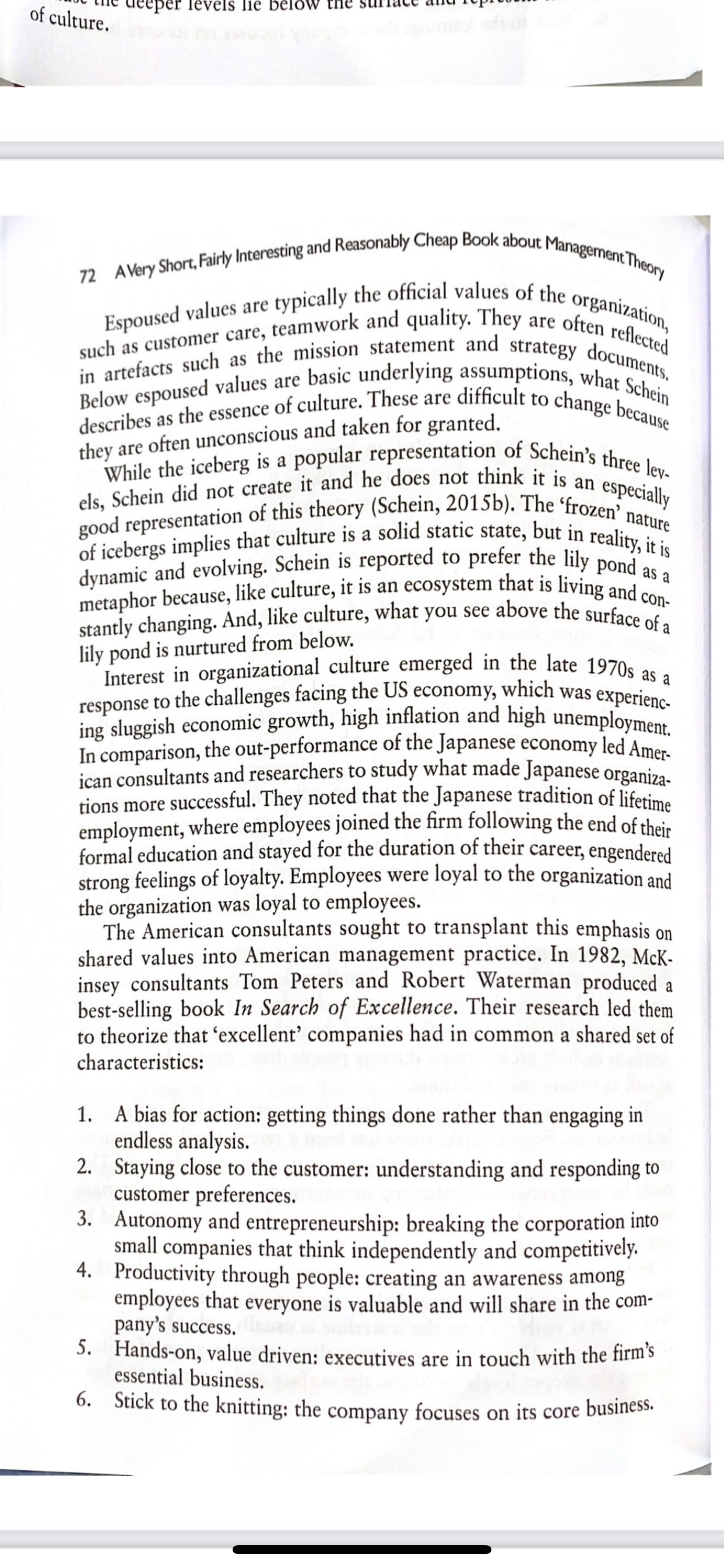
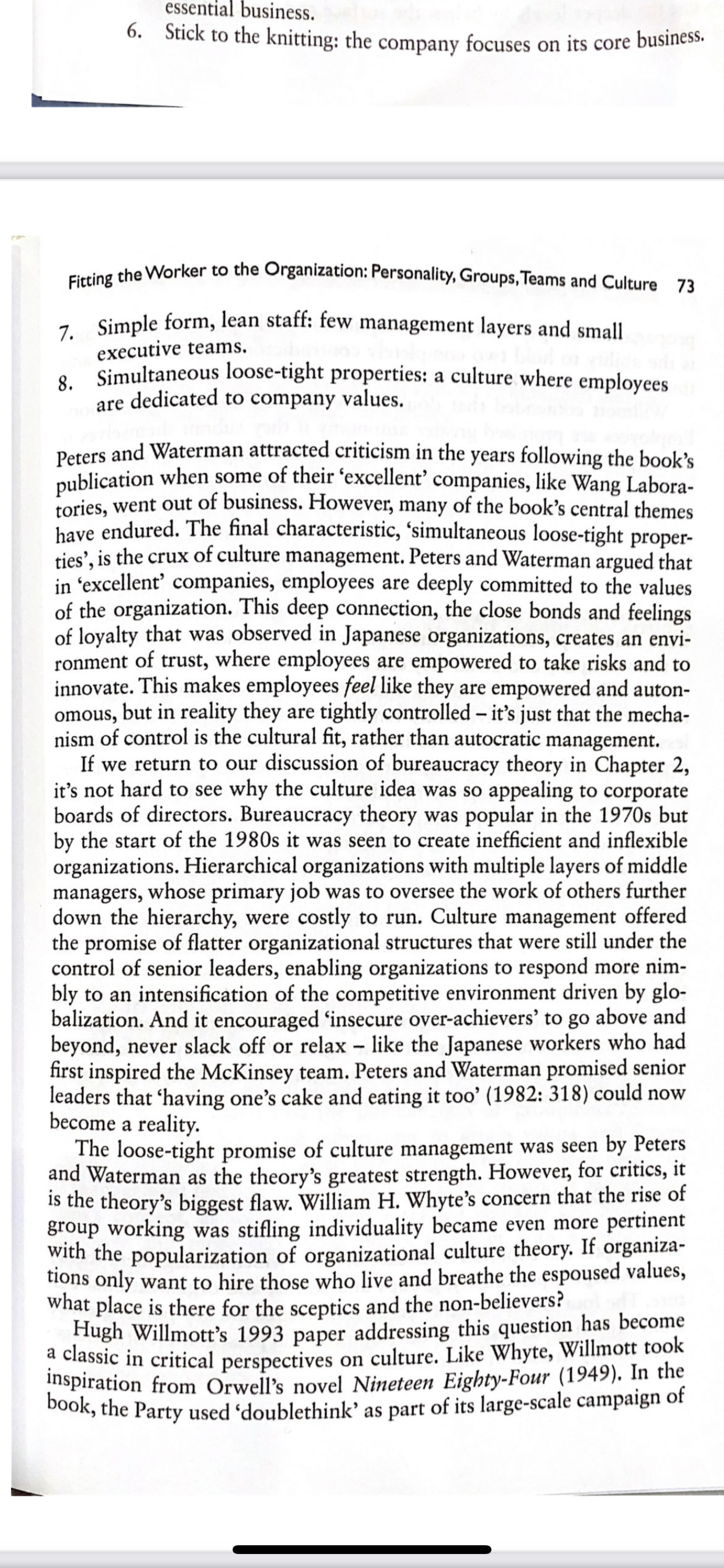
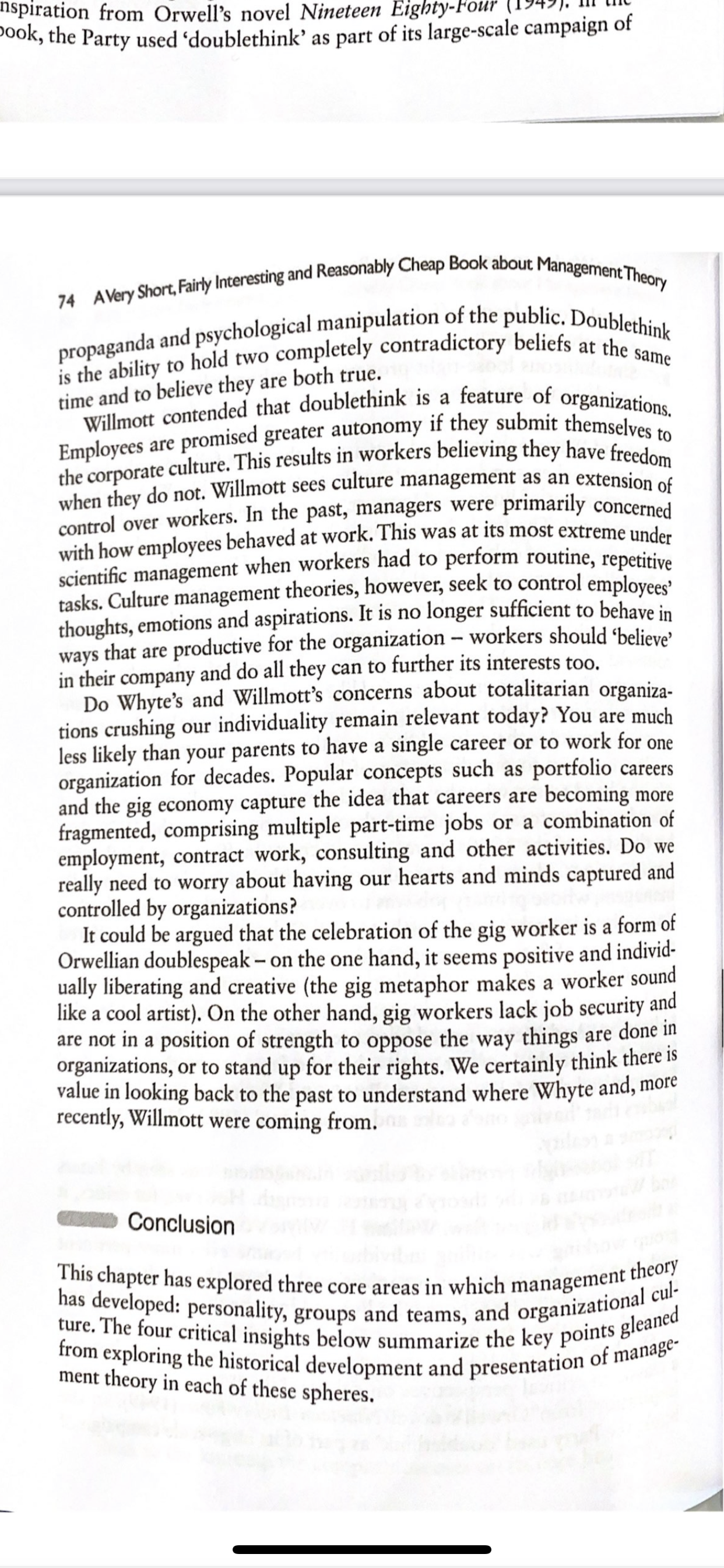
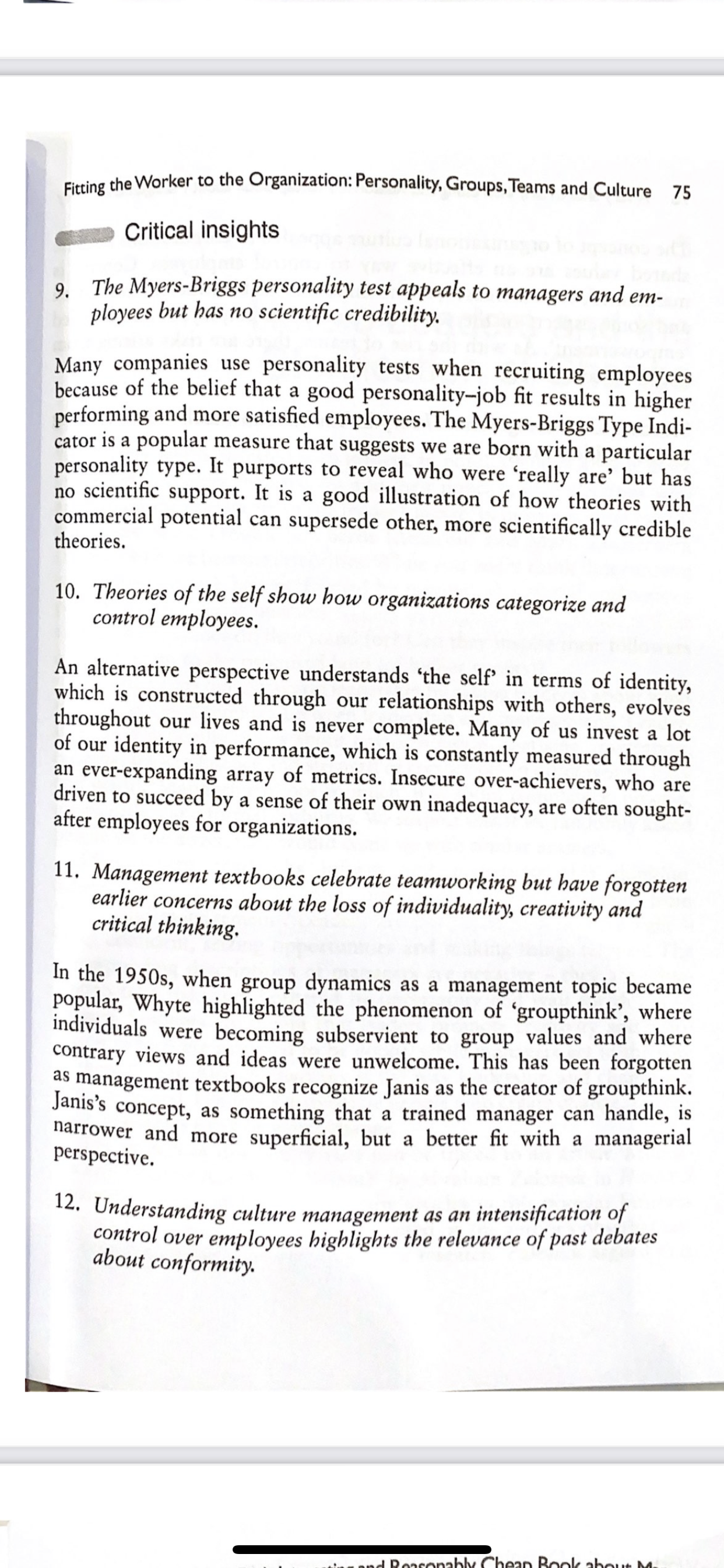
5:13 4 .rili ? [1' Done MGMT 202 - Chapter 4.pdf Q 4 Fitting the Worker to the r anization: Personality, GI'OUps, 0 9 Teams and Culture rs we explored the development of manage. th 0 ening chapte ' ' iihlcntCas: field of study. We explained the pressures on Us bUSiness schools in the 19605 to engage in more scientific research to lmprch their academic standing within universities and to elevate the status of management as a profession. We also wrote about how textbooks seek to establish credibility with their readers by incorporating classic and cutting-edge scientific research. ThlS scmntific orienta- tion of management theory fits nicely with what we described in Chapter 1 as the instrumental purpose of the eld to manage employees in a way that makes organizations more productive and protable. We've seen that management studies developed by appropriating theories from long-standing disciplines that don't have this purpose, which has often resulted in a twisting and misrepresentation of the 'borrowed' theories. We examined how Weber's theory of bureau- cracy, which explained a shift he saw taking place towards a greater emphasis on rules as a source of authority, appeared initially in management textbooks as a 'recipe' or prescription for how manag- ers could create an 'ideal bureaucracy'. Weber was portrayed as an advocate of bureaucracy and his concerns abOut its downsides went unreported. We've also analyzed how Maslow's hierarchy of needs, which originated from Maslow's desire to prevent war by illustrat- ing that people share more in common then they realize, became a framework that managers could deploy to get more productivitY from employees. This process of developing theory to t the objectives and ideologi- cal preferences of management is a theme we continue to develop in tins Chapter- Here we explore and challenge the origins of theories from all!\" \"9\" toPics in organizational behaviour (OB): personality, group bill-1123;513:113 \"hum: me a managerial Perspective, understanding the mana Bo peeple in organizations is essential for becoming a 300 get. m from \"\"5 PCI'SPCCUVE, theory should also help managers to ,v--"a"'- III-u. 110\"] [ms perSpCCthe, theory Should also help managcga Iv Ham thewgrker to the Organization: Personality. Groups.Teams and Culture 59 control behaviour in their organizations. As one popular management textbook states: The goals of OB are to explain, predict and inuence behaviour. Managers need to be able to explain why employees engage in some behaviours rather than others, predict how employees will respond to various actions and decisions and influence how employees behave. (Robbins et al., 2016: 212) Management textbooks used to make 'control' one of the four essential functions of management, alongside planning, leading and organizing. Today, management texts tend not to use the word 'control', probably because it now has a rather negative connotation, related to forcing someone to act in a particular way, even if they do not want to. The word 'inuence' is preferred, but the goal, we suggest, remains the same. In this chapter, we explore well-known theories of personality, group dynamics and culture that appear routinely in management textbooks. As we have done in the earlier chapters, we show the typical portrayal of these theories to he often inaccurate or one-sided. We also delve into some alternative explanations of personality, group dynamics and culture that don't tend to get covered in best-selling textbooks. These theories highlight the dark side of management's control of employees. Matching personalities to jobs, striving to create harmonious and cohe- sive teams and strong organizational cultures around a shared vision has a dark side of stiing critical thinking, innovation and creativity. _ Theories of personality and personality testing: The case of Myers-Briggs There are two reasons why an understanding of personality can help man- agers to be more effective. First and foremost, is the matching of people to lObS. Personality tests have become a critical component of recruitment pro- cesses, because it is believed that certain types of personality are suited to certain types of job. Get the match right and you'll have happier and more Productive employees. Get the match wrong and you'll have unhappy, inef- fctive workers and an unhappy manager as well. Second, an understanding 0f personality provides managers with better insight into their employees. l'ersonality, it is believed, can explain why some people are uncomfortable In new situations or find it difcult to make decisions quicldY- The writing of Carl Jung (1875-1961) has been highly inuential in Shaping understanding of personality. Jung identied a set of dimensions \f\f62 AVety Simrairiy Interesting and Reasonably Cheap Book m Managem'nmw that its widespread usage is proof of its feleVance an l'udlgsfrgpfaonents would likely pomt out tthaltdhlgomopes have dbl-2:; appeal also, but that does not mean they s on e an CSSential feature of management education or practice. It would be unfair, however, to conclude that the MB'I'I is \"tithing more than a marketing success story. It appeals because it P'Omises to reveal our 'true self' or essence - that all of. us are born With a set of preferences that can be encapsulated by four simple letters, It can P'OVide comforting answers to that otherw1se potentially endless search to dis. cover who we 'really' are. It doesn't pass judgement on us, and it's easily discovered by answering some simple questions. Who am I? I am an INT]. Theories of personality that do better on scientic measures are those that focus on traits rather than types, such as the Big Five personality traits: extraversion neuroticism agreeableness conscientiousness openness to experience. In contrast to the MBTI, which sees personality dimensions as either/or, these traits are seen as existing on a spectrum. 80, rather than you being an introvert or an extravert, you might be extremely high or extremely low on extraversion, or anywhere in between. Where the MBTI assumes that type never changes (implying our personality is something we are born with), trait theories such as the Big Five acknowledge a mixture of both nature (what we inherit from our parents) and nurture (our experi- ences, especially in childhood). Much research has shown that the Big Five traits have high reliability and can predict a variety of outcomes, including job performance and ream effectiveness. Perhaps one of the reasons the Big Five has failed to matCh the commercial application of the MBTI is that few people would eniOY being labelled disagreeable or neurotic or not open to new experiences. ill. Thinking critically about personality: Theories of identity and the self The Big Five traits and the MBTI are a good r with a mamastrial Pei: spectIVe because they offer the promise of using knowledge Of PC"ples Personality for nancial gain. As we discussed at the start of the chapter' . ng the Worker to the Organlzation: Personality. Groups.Teams and Culture 63 rt, ; agers are presented with theories that not just explain behaviour, 2'? t enable predictions to be made, and therefore employees to be con- :1: .llable - so that their efforts can be directed in ways that serve the ,1 ganization's nancial interests. This managerial perspective has been a. allenged by those who are sceptical about the objectives and means of .--: dying personality and want to question the desirability of categoriz- ...: people in a way that facilitates their control. ' Both the MBTI and the Big Five theories offer the prospect of us 3\"? ing able to discover our 'true self'. That might strike you as uncon- l,.,.versial, because at some time in your life you've probably received " vice from family or friends to 'iust be yourself'. Being ourselves means , t copying others or caring what they think of us. The assumption underpinning 'iust be yourself' is that we are individuals with a true self within us that is waiting to be fully expressed. _ ,1 According to Roberts (2017), a challenge to this common sense comes from American philosopher George Herbert Mead, who viewed the self as the product of social processes. Mead (1934) believed that we are born with the potential for self-consciousness rather than a devel- oped self. Our early experiences and development are instrumental in the construction of self. We understand who we are by making sense of row others respond to us. For Mead, the self was a continuous and end- less process. As our self develops, we create both a sense of who we are, but also what we must be in order to be loved and valued. Early inu- encers on this are our parents or caregivers. They praise and criticize us, which gives us cues for who we should be, in order to be accepted and recognized. But even after we mature into adulthood and start careers, we remain in this never-ending state of 'becoming', and our work col- leagues and managers become important influences. a This account of the self (or what we might describe as our 'iden- 'ty') being uid and never complete is different from that offered by the 'ence of personality. While theories such as the Big Five accept that . ' social contexts in which we grow up shape our personalities, they Jegard personality as quite stable, especially once we reach adulthood and embark on work careers. ~ Another difference is that the science of personality emphasizes the atomized or separate individual. Even those theories that acknowl- . edge that our personalities are not xed at birth but develop during Our childhood experiences, see us rst and foremost as individuals with particular personality types or traits. In contrast, theories of the self and identity reject the possibility of 'just being yourself', in ' the sense of being an individual, because our self is inseparable from Eotters - it is constructed and developed through our interaction with -0t ers. \f, __
Step by Step Solution
There are 3 Steps involved in it

Get step-by-step solutions from verified subject matter experts
 Study Help