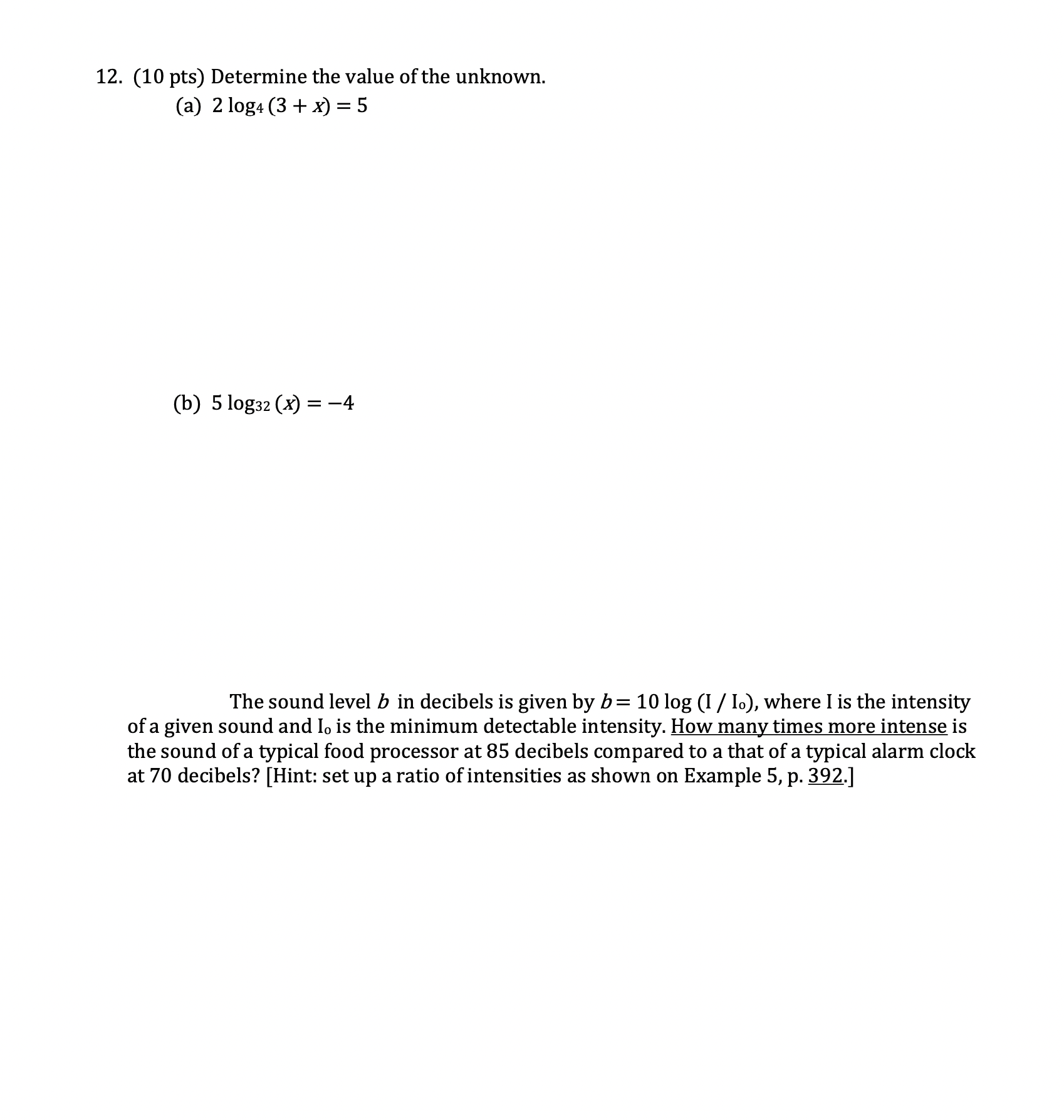
Question: For problems 1 through 6, simplify the given expressions. For those with exponents, express each result with positive exponents only. For those with radicals, rationalize
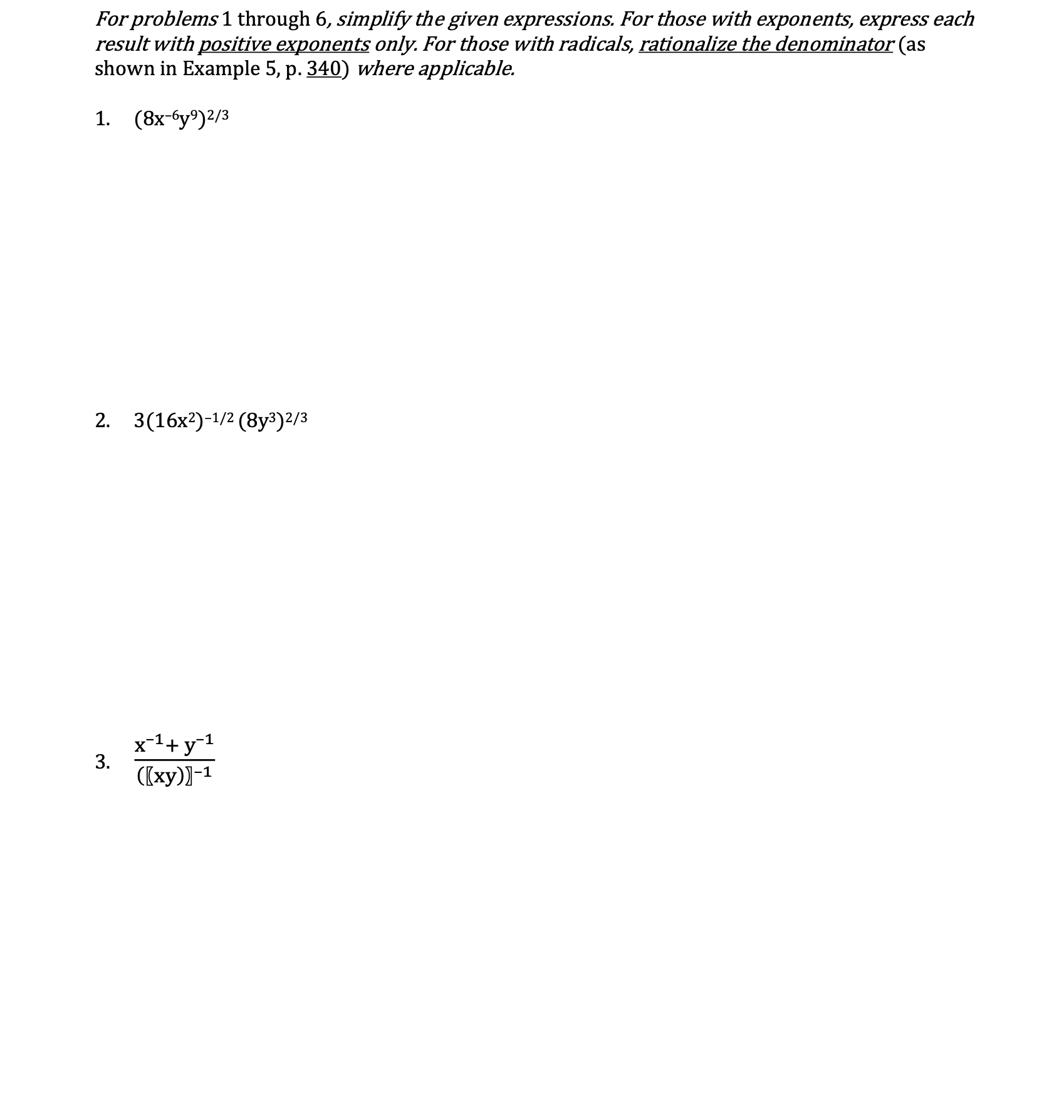
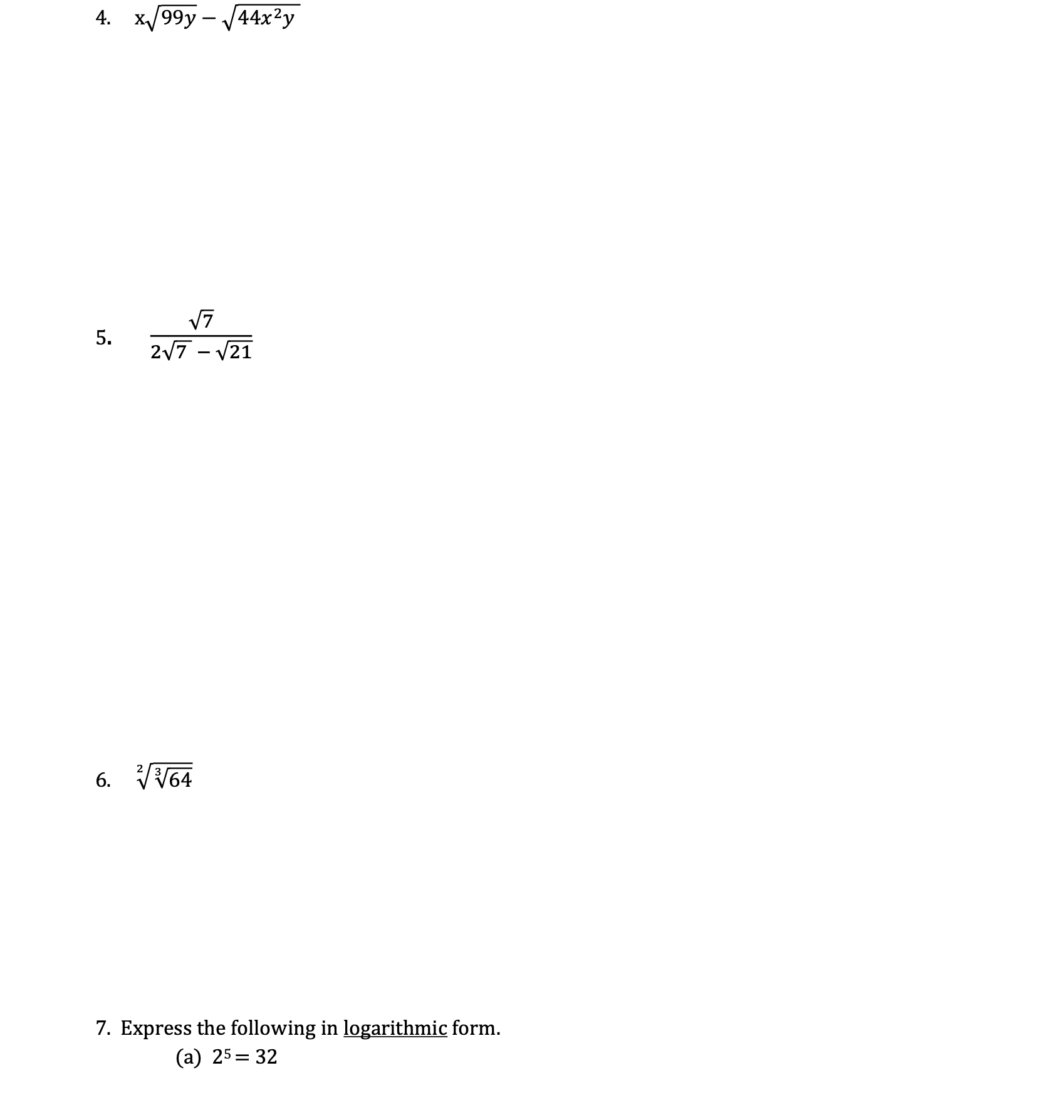
For problems 1 through 6, simplify the givenFor problems 1 through 6, simplify the givenFor problems 1 through 6, simplify the givenFor problems 1 through 6, simplify the given
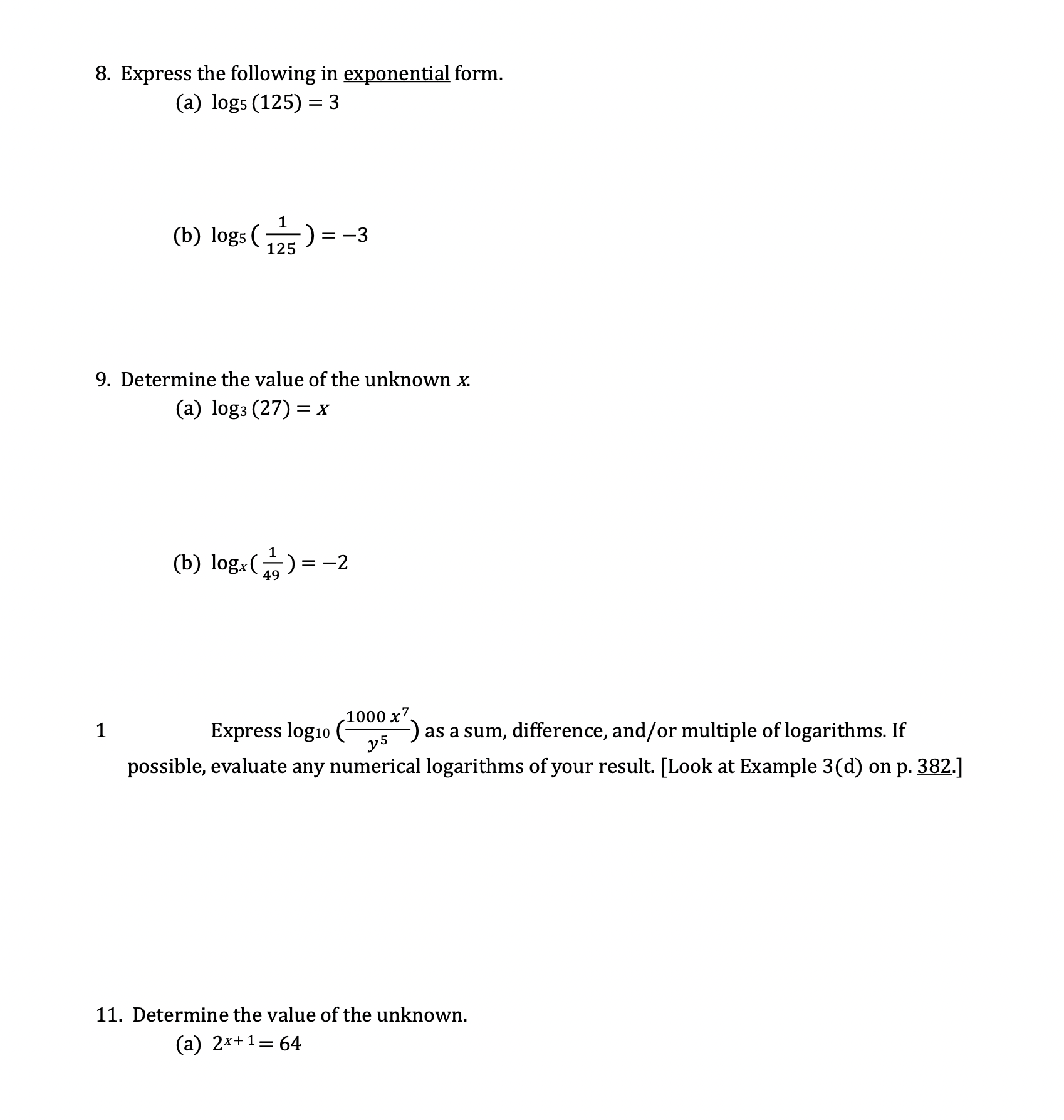
For problems 1 through 6, simplify the given expressions. For those with exponents, express each result with positive exponents only. For those with radicals, rationalize the denominator (as shown in Example 5, p. 340) where applicable. 1. (8x-6y9)2/3 2. 3(16x2)-1/2 (8y3) 2/3 xl ty1 3. ([xy)]-14. x 99y - V44x2y V7 5. 2V7 - V21 6. VV64 7. Express the following in logarithmic form. (a) 25= 328. Express the following in exponential form. (a) logs (125) = 3 (b) logs ( 75 125 ) = -3 9. Determine the value of the unknown x. (a) log3 (27) = X (b) logx ( 7 ) =-2 Express log10 ( y5 ) as a sum, difference, and/ or multiple of logarithms. If possible, evaluate any numerical logarithms of your result. [Look at Example 3(d) on p. 382.] 11. Determine the value of the unknown. (a) 2x+1= 6412. (10 pts) Determine the value of the unknown. (a) 2 log; (3 + X) = 5 (b) 510g32(X) = 4- The sound level I) in decibels is given by b = 10 log (I / [0), where I is the intensity of a given sound and [o is the minimum detectable intensity. How many times more intense is the scund of a typical food processor at 85 decibels compared to a that of a typical alarm clock at 70 decibels? [Hint set up a ratio of intensities as shown on Example 5, p. J
Step by Step Solution

There are 3 Steps involved in it

1 Expert Approved Answer
Step: 1 Unlock blur-text-image

Question Has Been Solved by an Expert!

Get step-by-step solutions from verified subject matter experts

Step: 2 Unlock
Step: 3 Unlock

Students Have Also Explored These Related Mathematics Questions!