







Question: For the following function: f(x) = (x3)ex , (a) nd the critical number of f(x) , (b) nd the open intervals on which f(x) is
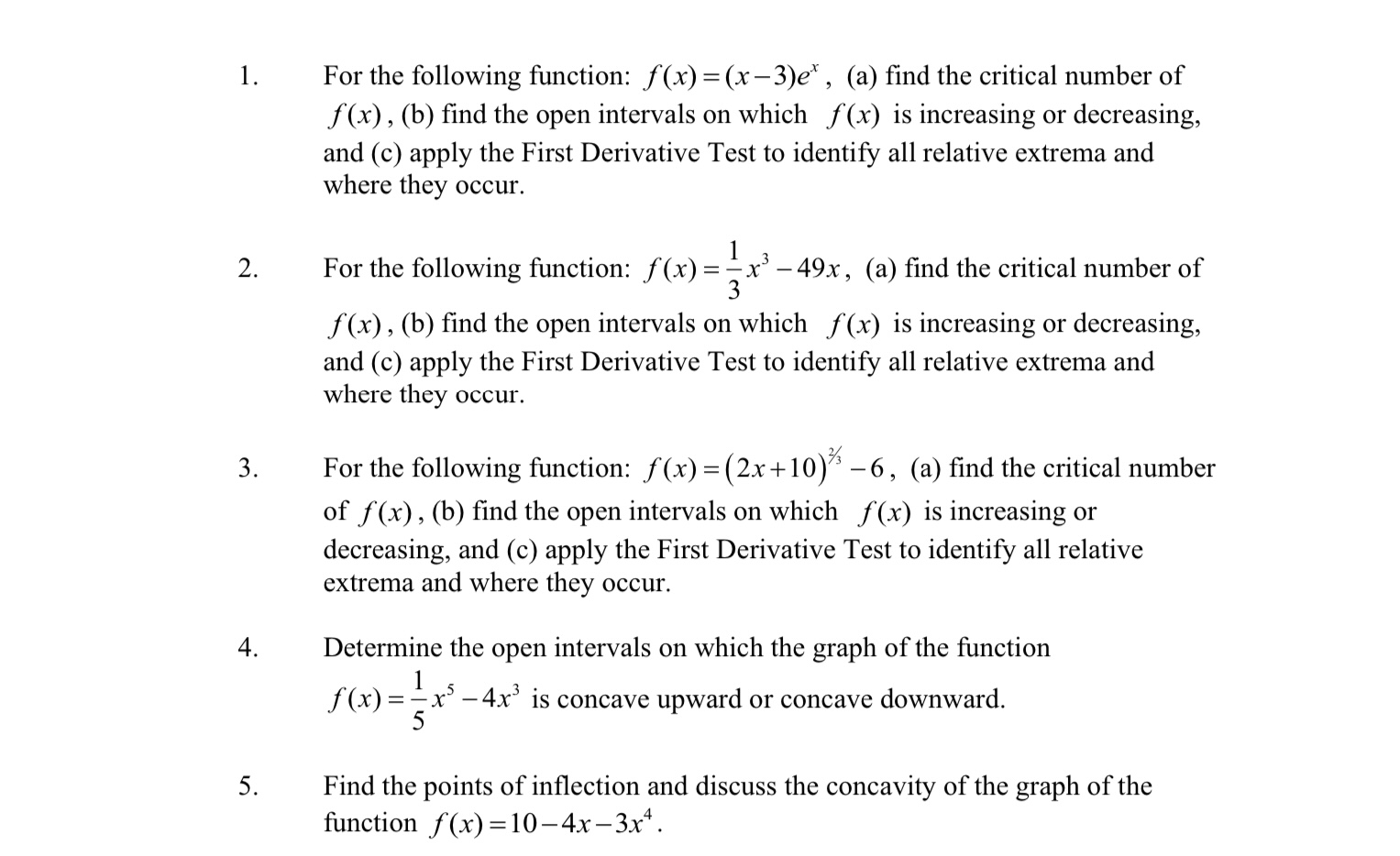
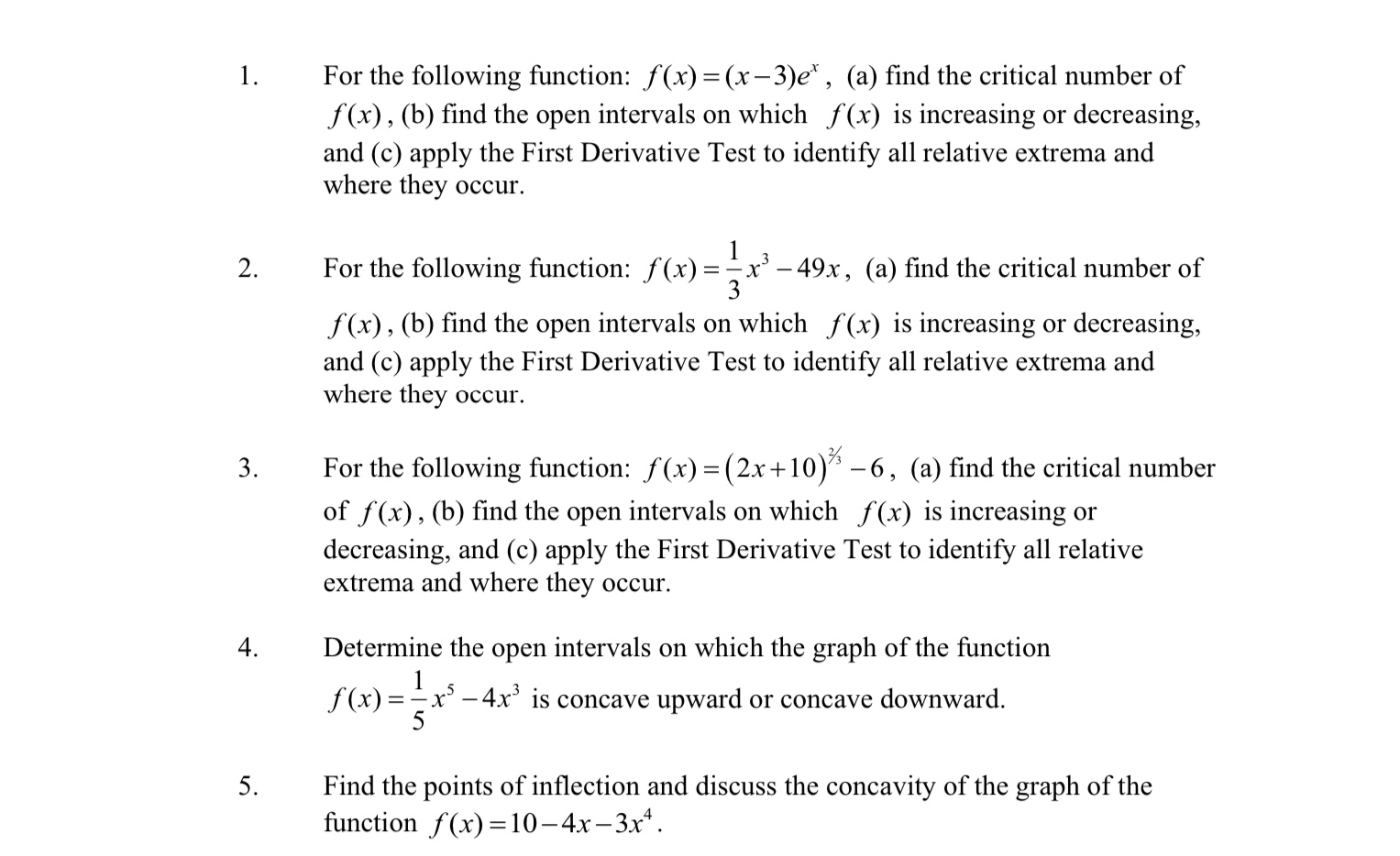
For the following function: f(x) = (x3)ex , (a) nd the critical number of f(x) , (b) nd the open intervals on which f(x) is increasing or decreasing, and (c) apply the First Derivative Test to identify all relative extrema and where they occur. For the following function: f(x) = 1x3 49x , (a) nd the critical number of 3 f(x) , (b) nd the open intervals on which f(x) is increasing or decreasing, and (c) apply the First Derivative Test to identify all relative extrema and where they occur. For the following function: f (x) :(2x+10)% 6 , (a) nd the critical number of f(x) , (b) nd the open intervals on which f(x) is increasing or decreasing, and (c) apply the First Derivative Test to identify all relative extrema and where they occur. Determine the open intervals on which the graph of the function . l . f (x) : gxs 43c3 is concave upward or concave downward. Find the points of inection and discuss the concavity of the graph of the function f (x) = 10 4x 3x4
Step by Step Solution
There are 3 Steps involved in it

Get step-by-step solutions from verified subject matter experts
 Study Help