Question: For this assignment, writ e a preliminary thesis and topic outline based on the proposal paper attached below (addressing food security in North Omaha) .
For this assignment, writ e a preliminary thesis and topic outline based on the proposal paper attached below (addressing food security in North Omaha).
Image attachments 1-2 are just for the topic (addressing food security in North Omaha).
Image attachments 3-4 are further instructions for this assignment.
Image attachments 5-7 are an example of how to write the preliminary thesis and topic outline. (Please answer in the same format as images 5-7).
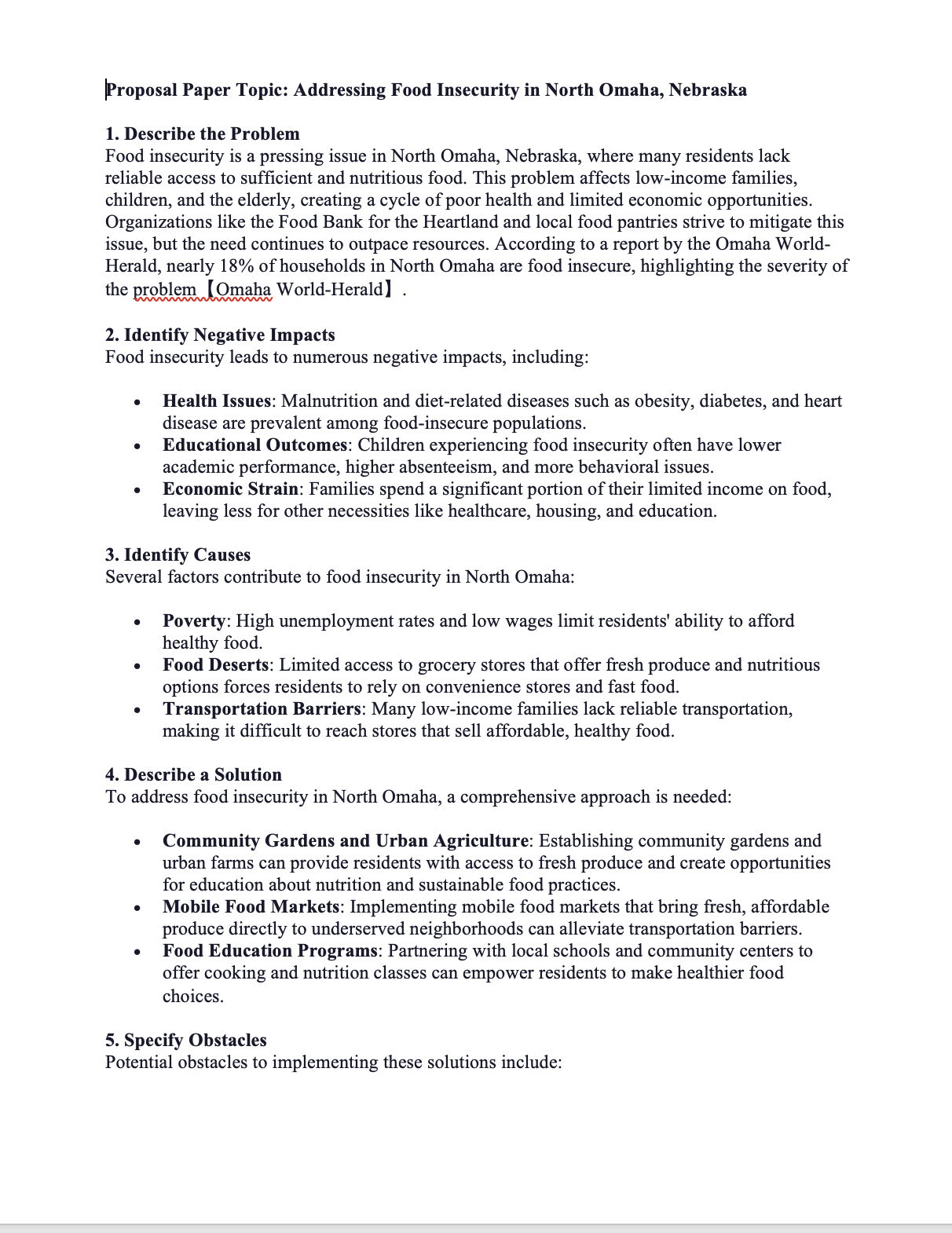
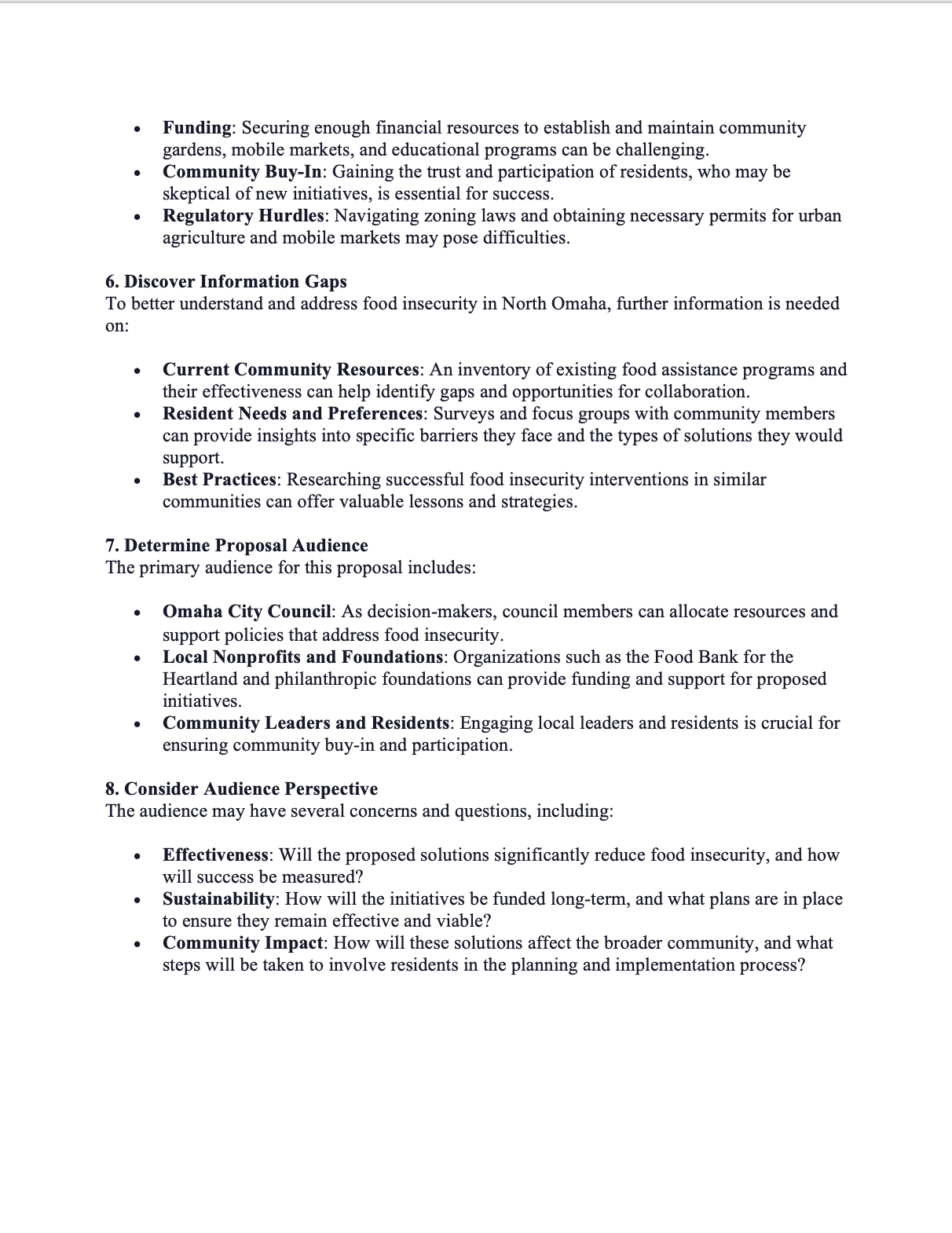
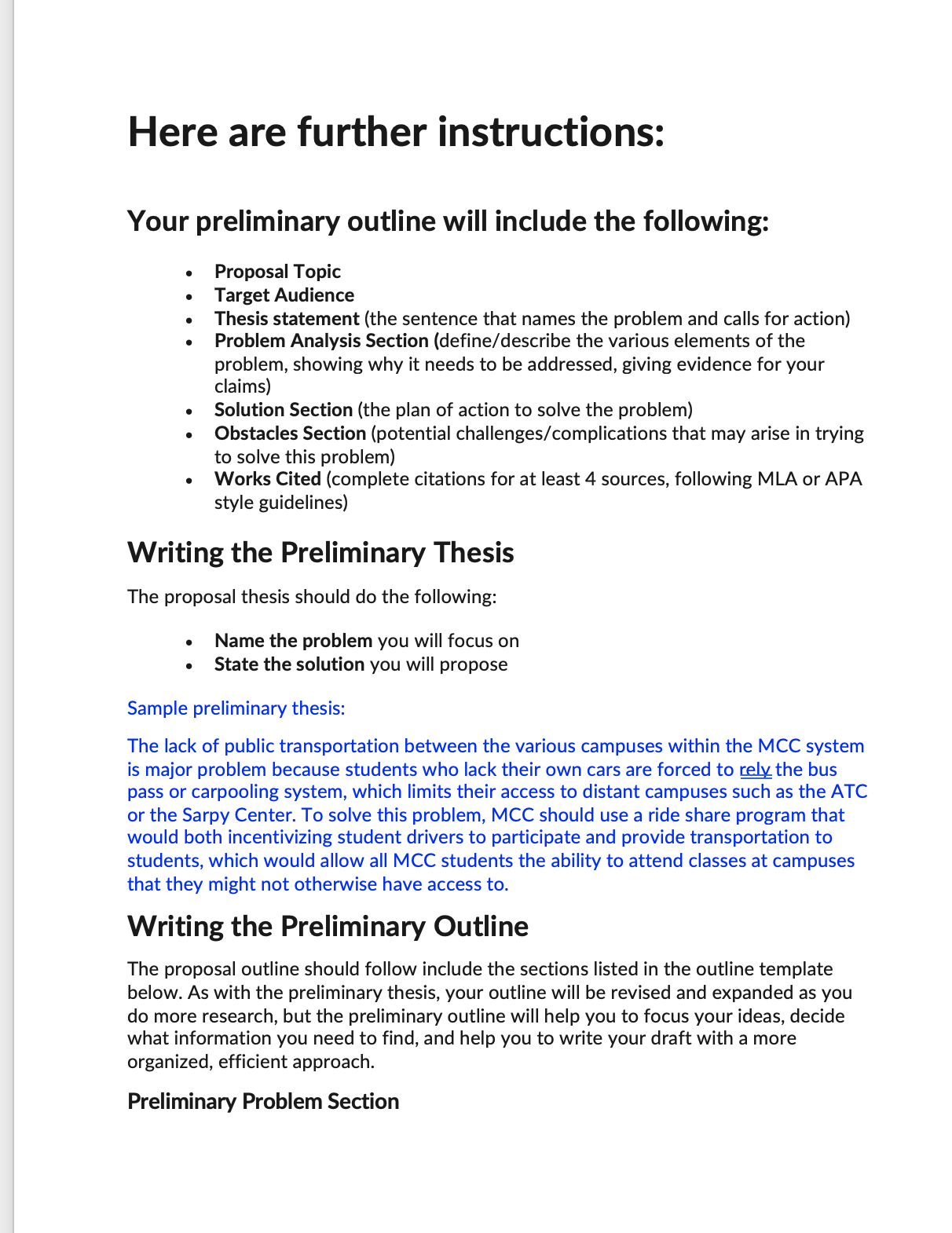
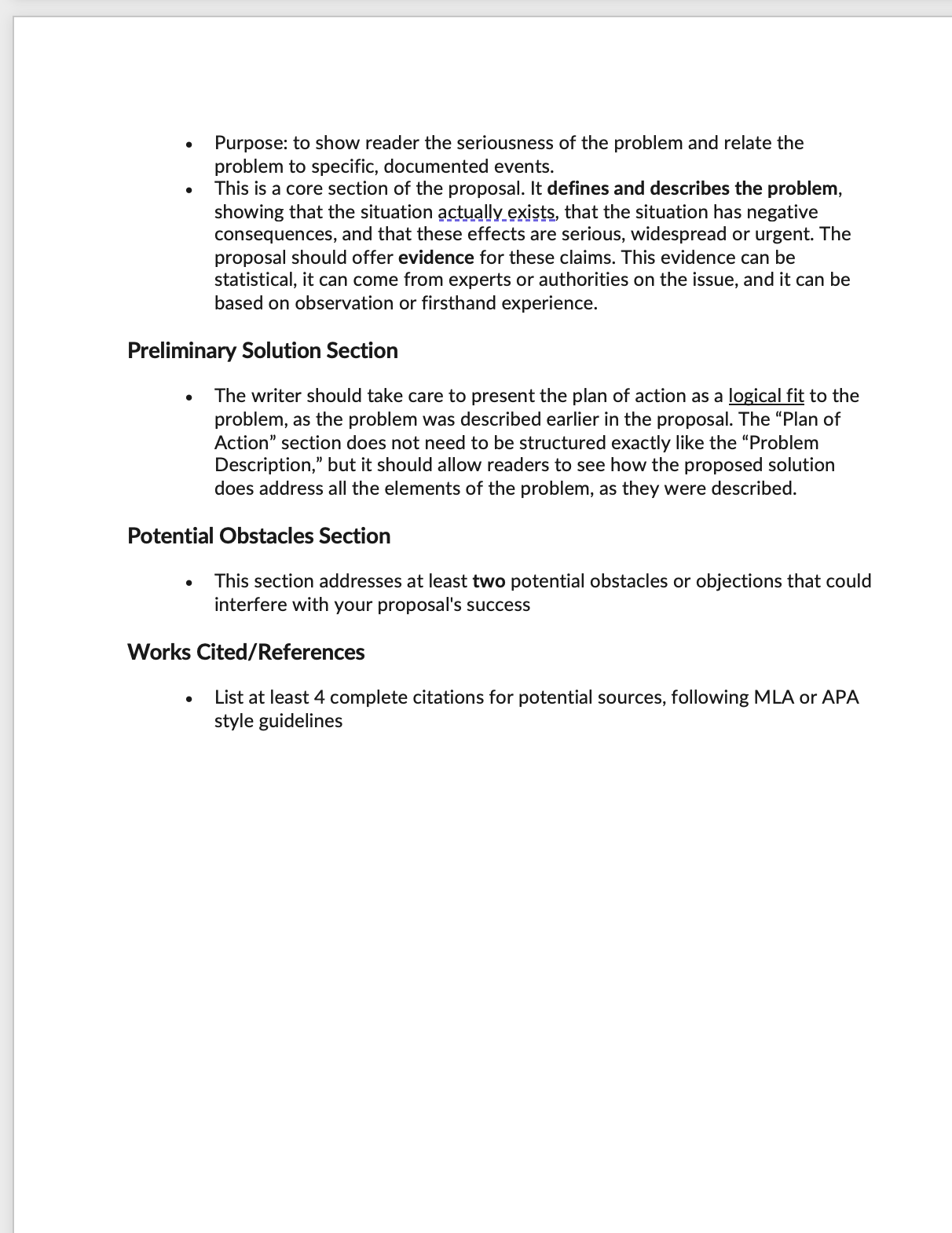
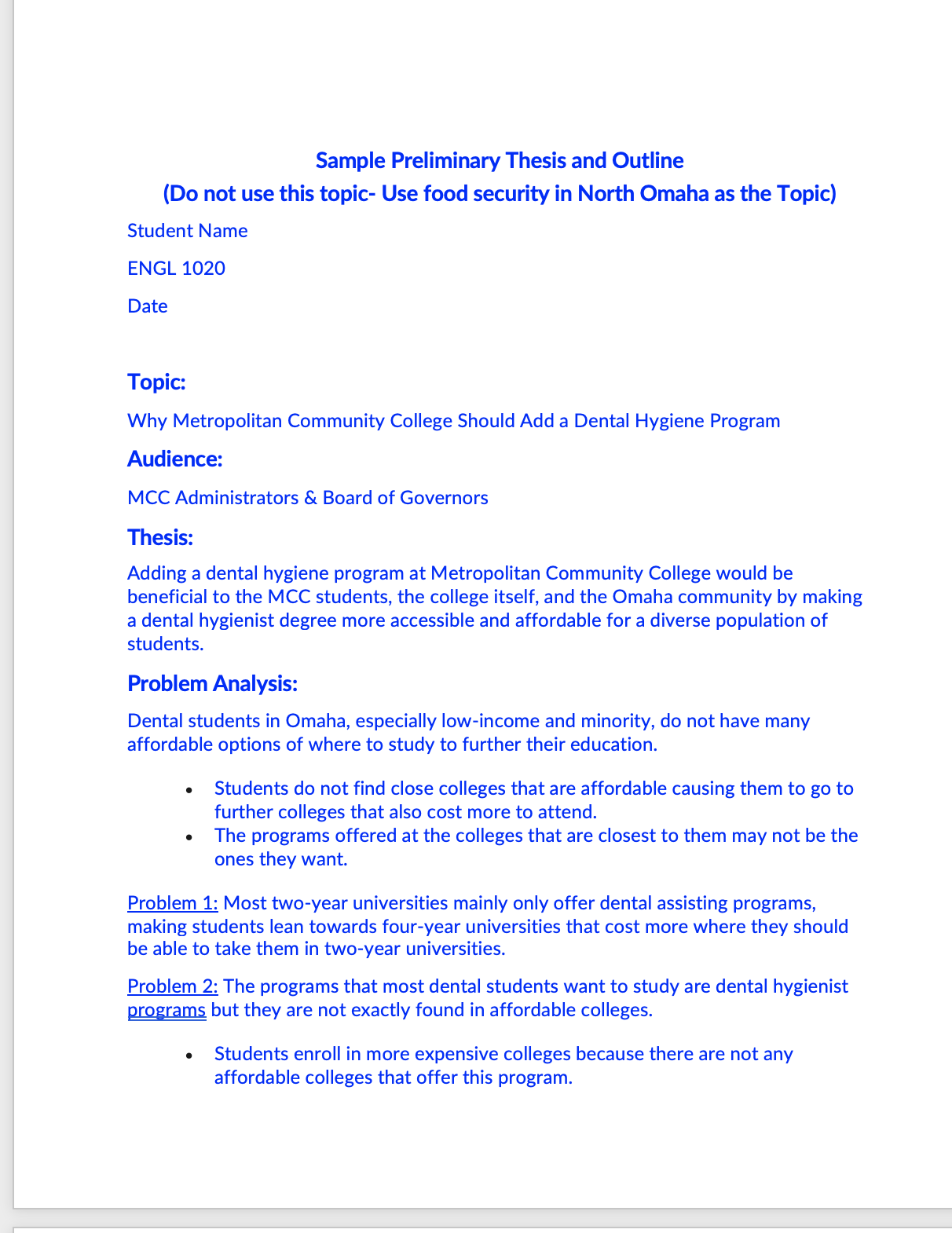
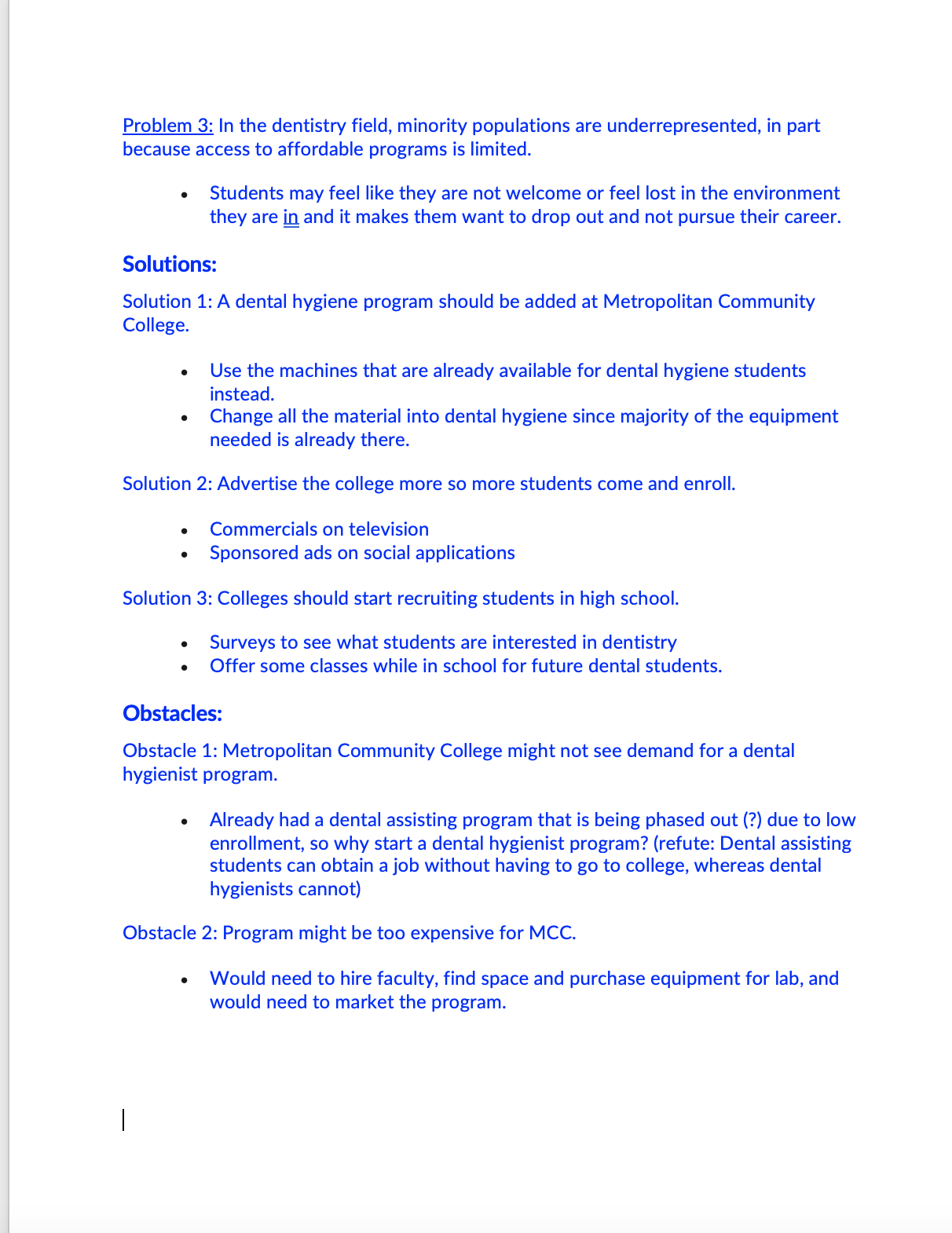
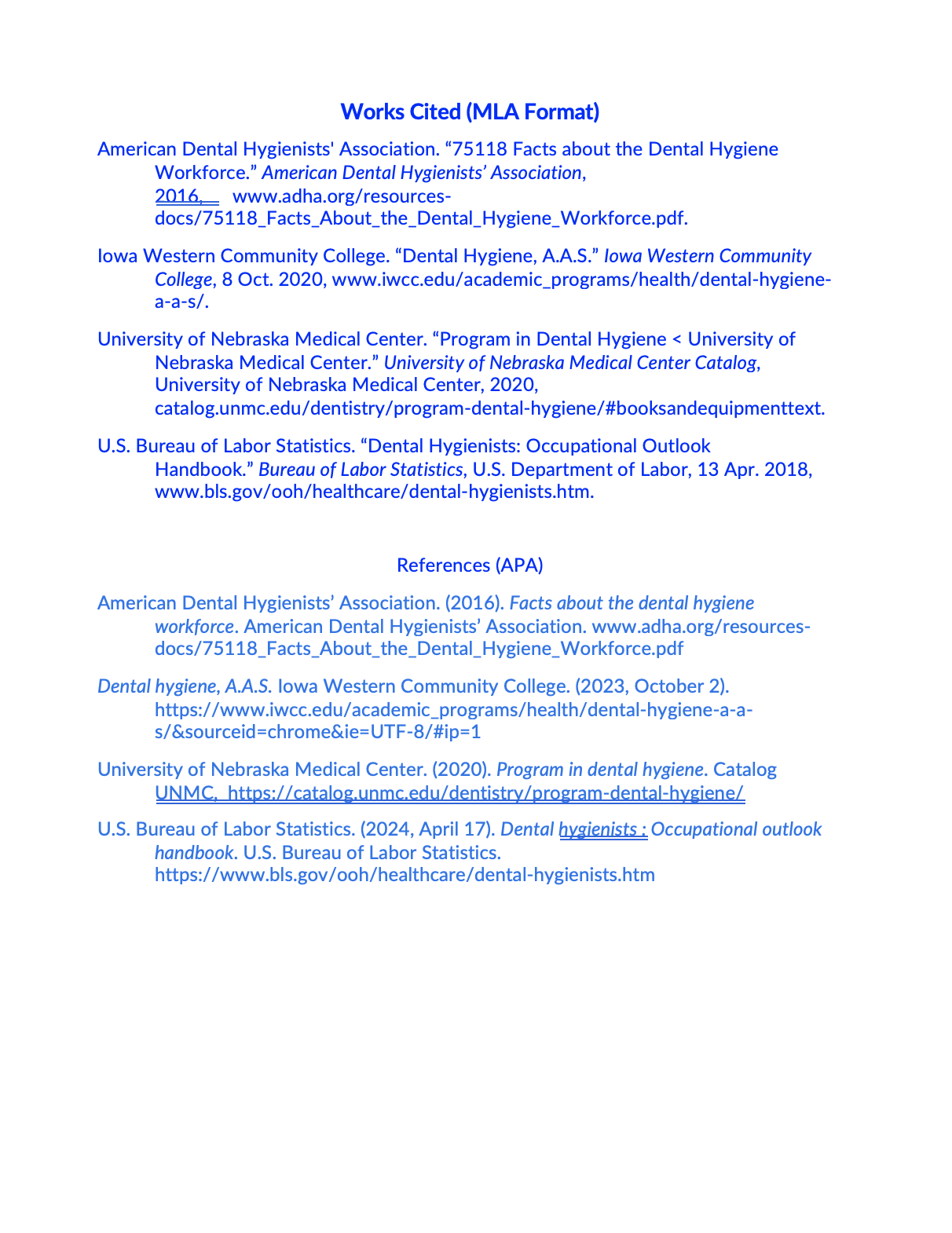
IProposal Paper Topic: Addressing Food Insecurity in North Omaha, Nebraska 1. Describe the Problem Food insecurity is a pressing issue in North Omaha, Nebraska, where many residents lack reliable access to sufficient and nutritious food. This problem affects low-income families, children, and the elderly, creating a cycle of poor health and limited economic opportunities. Organizations like the Food Bank for the Heartland and local food pantries strive to mitigate this issue, but the need continues to outpace resources. According to a report by the Omaha World- Herald, nearly 18% of households in North Omaha are food insecure, highlighting the severity of the problem IOmaha World-Herald] . 2. Identify Negative Impacts Food insecurity leads to numerous negative impacts, including: o Health Issues: Malnutrition and diet-related diseases such as obesity, diabetes, and heart disease are prevalent among food-insecure populations. e Educational Outcomes: Children experiencing food insecurity often have lower academic performance, higher absenteeism, and more behavioral issues. o Economic Strain: Families spend a significant portion of their limited income on food, leaving less for other necessities like healthcare, housing, and education. 3. Identify Causes Several factors contribute to food insecurity in North Omaha: o Poverty: High unemployment rates and low wages limit residents' ability to afford healthy food. o Food Deserts: Limited access to grocery stores that offer fresh produce and nutritious options forces residents to rely on convenience stores and fast food. o Transportation Barriers: Many low-income families lack reliable transportation, making it difficult to reach stores that sell affordable, healthy food. 4. Describe a Solution To address food insecurity in North Omaha, a comprehensive approach is needed: o Community Gardens and Urban Agriculture: Establishing community gardens and urban farms can provide residents with access to fresh produce and create opportunities for education about nutrition and sustainable food practices. o Mobile Food Markets: Implementing mobile food markets that bring fresh, affordable produce directly to underserved neighborhoods can alleviate transportation barriers. o Food Education Programs: Partnering with local schools and community centers to offer cooking and nutrition classes can empower residents to make healthier food choices. 5. Specify Obstacles Potential obstacles to implementing these solutions include: o Funding: Securing enough financial resources to establish and maintain community gardens, mobile markets, and educational programs can be challenging. Community Buy-In: Gaining the trust and participation of residents, who may be skeptical of new initiatives, is essential for success. o Regulatory Hurdles: Navigating zoning laws and obtaining necessary permits for urban agriculture and mobile markets may pose difficulties. 6. Discover Information Gaps To better understand and address food insecurity in North Omaha, further information is needed on: Current Community Resources: An inventory of existing food assistance programs and their effectiveness can help identify gaps and opportunities for collaboration. * Resident Needs and Preferences: Surveys and focus groups with community members can provide insights into specific barriers they face and the types of solutions they would support. Best Practices: Researching successful food insecurity interventions in similar communities can offer valuable lessons and strategies. 7. Determine Proposal Audience The primary audience for this proposal includes: Omabha City Council: As decision-makers, council members can allocate resources and support policies that address food insecurity. o Local Nonprofits and Foundations: Organizations such as the Food Bank for the Heartland and philanthropic foundations can provide funding and support for proposed initiatives. o Community Leaders and Residents: Engaging local leaders and residents is crucial for ensuring community buy-in and participation. 8. Consider Audience Perspective The audience may have several concerns and questions, including: o Effectiveness: Will the proposed solutions significantly reduce food insecurity, and how will success be measured? o Sustainability: How will the initiatives be funded long-term, and what plans are in place to ensure they remain effective and viable? e Community Impact: How will these solutions affect the broader community, and what steps will be taken to involve residents in the planning and implementation process? Here are further instructions: Your preliminary outline will include the following: e Proposal Topic o Target Audience Thesis statement (the sentence that names the problem and calls for action) Problem Analysis Section (define/describe the various elements of the problem, showing why it needs to be addressed, giving evidence for your claims) Solution Section (the plan of action to solve the problem) Obstacles Section (potential challenges/complications that may arise in trying to solve this problem) Works Cited (complete citations for at least 4 sources, following MLA or APA style guidelines) Writing the Preliminary Thesis The proposal thesis should do the following: Name the problem you will focus on o State the solution you will propose Sample preliminary thesis: The lack of public transportation between the various campuses within the MCC system is major problem because students who lack their own cars are forced to rely the bus pass or carpooling system, which limits their access to distant campuses such as the ATC or the Sarpy Center. To solve this problem, MCC should use a ride share program that would both incentivizing student drivers to participate and provide transportation to students, which would allow all MCC students the ability to attend classes at campuses that they might not otherwise have access to. Writing the Preliminary Outline The proposal outline should follow include the sections listed in the outline template below. As with the preliminary thesis, your outline will be revised and expanded as you do more research, but the preliminary outline will help you to focus your ideas, decide what information you need to find, and help you to write your draft with a more organized, efficient approach. Preliminary Problem Section Purpose: to show reader the seriousness of the problem and relate the problem to specific, documented events. This is a core section of the proposal. It defines and describes the problem, consequences, and that these effects are serious, widespread or urgent. The proposal should offer evidence for these claims. This evidence can be statistical, it can come from experts or authorities on the issue, and it can be based on observation or firsthand experience. Preliminary Solution Section The writer should take care to present the plan of action as a logical fit to the problem, as the problem was described earlier in the proposal. The \"Plan of Action\" section does not need to be structured exactly like the \"Problem Description,\" but it should allow readers to see how the proposed solution does address all the elements of the problem, as they were described. Potential Obstacles Section This section addresses at least two potential obstacles or objections that could interfere with your proposal's success Works Cited/References List at least 4 complete citations for potential sources, following MLA or APA style guidelines Sample Preliminary Thesis and Outline (Do not use this topic- Use food security in North Omaha as the Topic) Student Name ENGL 1020 Date Topic: Why Metropolitan Community College Should Add a Dental Hygiene Program Audience: MCC Administrators & Board of Governors Thesis: Adding a dental hygiene program at Metropolitan Community College would be beneficial to the MCC students, the college itself, and the Omaha community by making a dental hygienist degree more accessible and affordable for a diverse population of students. Problem Analysis: Dental students in Omaha, especially low-income and minority, do not have many affordable options of where to study to further their education. Students do not find close colleges that are affordable causing them to go to further colleges that also cost more to attend. The programs offered at the colleges that are closest to them may not be the ones they want. Problem 1: Most two-year universities mainly only offer dental assisting programs, making students lean towards four-year universities that cost more where they should be able to take them in two-year universities. Problem 2: The programs that most dental students want to study are dental hygienist programs but they are not exactly found in affordable colleges. Students enroll in more expensive colleges because there are not any affordable colleges that offer this program. Problem 3: In the dentistry field, minority populations are underrepresented, in part because access to affordable programs is limited. Students may feel like they are not welcome or feel lost in the environment they are in and it makes them want to drop out and not pursue their career. Solutions: Solution 1: A dental hygiene program should be added at Metropolitan Community College. Use the machines that are already available for dental hygiene students instead. Change all the material into dental hygiene since majority of the equipment needed is already there. Solution 2: Advertise the college more so more students come and enroll. Commercials on television Sponsored ads on social applications Solution 3: Colleges should start recruiting students in high school. Surveys to see what students are interested in dentistry o Offer some classes while in school for future dental students. Obstacles: Obstacle 1: Metropolitan Community College might not see demand for a dental hygienist program. Already had a dental assisting program that is being phased out (?) due to low enrollment, so why start a dental hygienist program? (refute: Dental assisting students can obtain a job without having to go to college, whereas dental hygienists cannot) Obstacle 2: Program might be too expensive for MCC. Would need to hire faculty, find space and purchase equipment for lab, and would need to market the program. Works Cited (MLA Format) American Dental Hygienists' Association. "75118 Facts about the Dental Hygiene Workforce." American Dental Hygienists' Association, 2016,_ www.adha.org/resources- docs/75118_Facts_About_the_Dental_Hygiene_Workforce.pdf. lowa Western Community College. "Dental Hygiene, A.A.S." lowa Western Community College, 8 Oct. 2020, www.iwcc.edu/academic_programs/health/dental-hygiene- a-a-s/. University of Nebraska Medical Center. "Program in Dental Hygiene
Step by Step Solution
There are 3 Steps involved in it
1 Expert Approved Answer
Step: 1 Unlock
Question Has Been Solved by an Expert!
Get step-by-step solutions from verified subject matter experts
Step: 2 Unlock
Step: 3 Unlock
Students Have Also Explored These Related Business Writing Questions!









 Study Help