







Question: FORMATIVE ASSESSMENT 1 Read the article below and answer ALL the questions that followLoad shedding: A chilling disruption of the cold chain 2 5 AUG
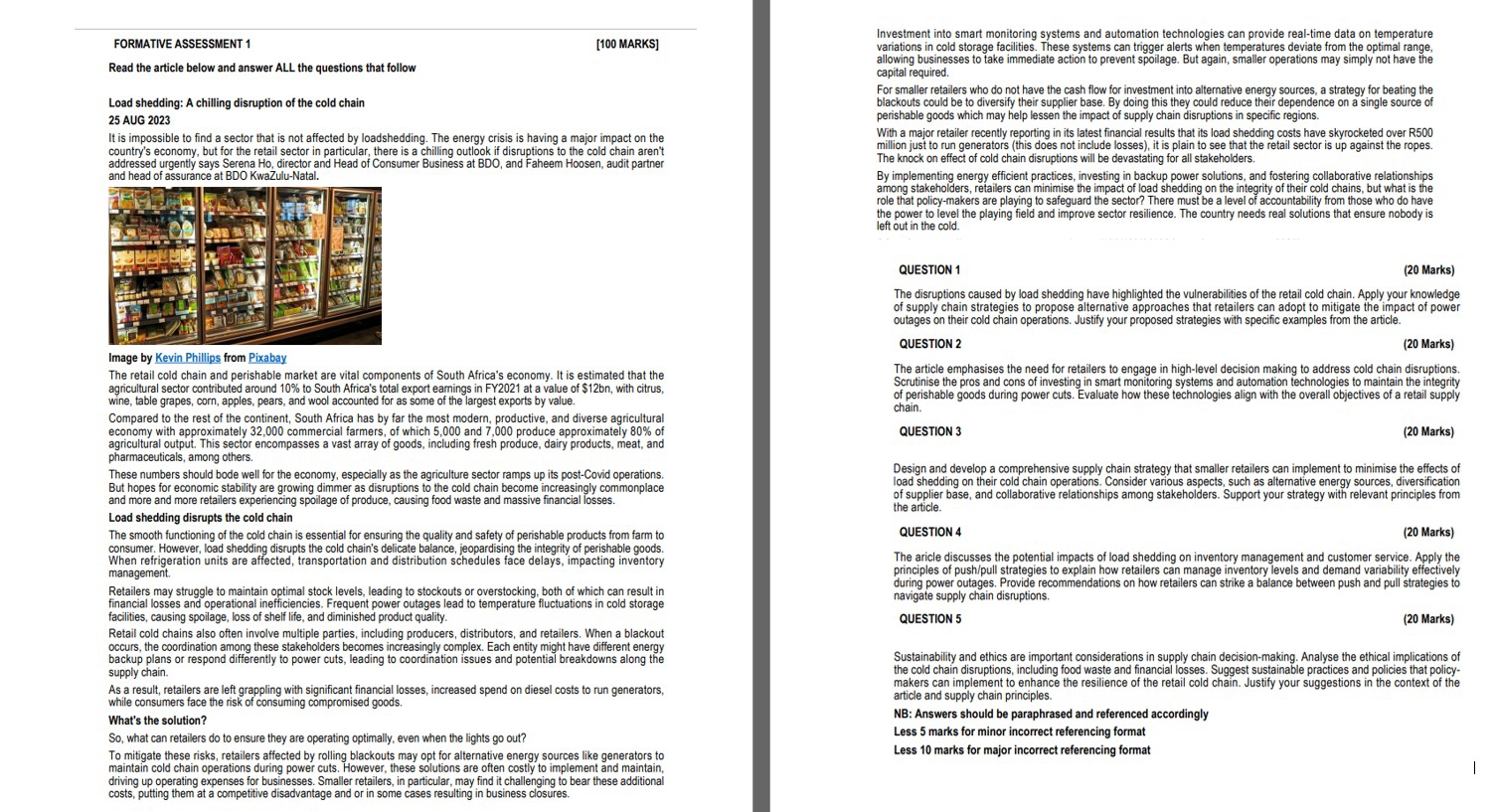
FORMATIVE ASSESSMENT Read the article below and answer ALL the questions that followLoad shedding: A chilling disruption of the cold chain AUG It is impossible to find a sector that is not affected by loadshedding. The energy crisis is having a major impact on thecountry's economy, but for the retail sector in particular, there is a chiling outlook if disruptions to the cold chain aren'taddressed urgently says Serena Ho director and Head of Consumer Business at BDO, and Faheem Hoosen, audit partnerand head of assurance at BDO KwaZuluNatal.Image by Kevin Phillips from PixabayThe retail cold chain and perishable market are vital components of South Africa's economy. It is estimated that theagricultural sector contibuted around to South Africa's total export earnings in FY at a value of $bn with citrus,wine, table grapes, corn, apples, pears, and wool accounted for as some of the largest exports by value.Compared to the rest of the continent, South Africa has by far the most modern, productive, and diverse agriculturaleconomy with approximately commercial Tarmers, of which b and T produce approximately bu ofvastduce, dairyY produpharmaceuticals, among others.These numbers should bode well for the economy, especially as the agriculture sector ramps up its postCovid operations.But hopes for economic stability are growing dimmer as disruptions to the cold chain become increasingly commonplaceand more and more retailers experiencing spoilage of produce, causing food waste and massive financial losses.Load shedding disrupts the cold chain MARKSencompasstThe smooth functioning of the cold chain is essential for ensuring the quality and safety of perishable products from farm toconsumer. However, load sheddingg disrupts the cold chain's delicate balance, jeopardising the integrity of perishable goods.When refrigeration units are affected, transportation and distribution schedules face delays, impacting inventorymanagement.Retailers may struggle to maintain optimal stock levels, leading to stockouts or overstocking. both of which can result instoragefacilities, causing spoilage, loss of shelf ife and diminished rnduta to temperature fluctuatioRetail cold chains also often involve multiple parties, including producers, distributors, and retailers. When a blackoutoccurs, the coordination among these stakeholders becomes increasingly complex. Each entity might have different energybackup plans or respond differently to power cuts, leading to coordination issues and potential breakdowns along thesupply chain.What's the solution?As a result, retailers are left grappling with significant financial losses, increased spend on diesel costs to run generators,while consumers face the risk of consuming compromised goods.So what can retailers do to ensure they are operating optimally, even when the lights go out?ing tTo mitigate these risks, retailers affected by rolling blackouts may opt for alternative energy sources like generators tomaintain cold chain operations during power cuts. However, these solutions are often costly to implement and maintain,dring up operating expenses for busineses. Smaller retailers, in paricular, may find it chalenging to bear these aditionalng in buallowing businesses to take immediate action to prevent spoilage. But again, smaller operations may simply not have thecapital required.For smaller retailers who do not have the cash flow for investment into alternative energy sources, a strategy for beating theblackouts could be to diversify their supplier base. By doing this they could reduce their dependence on a single source ofperishable goods which may help lessen the inmpact of supply chain disruptions in specific regions.With a major retailer recently reporting in its latest financial results that its load shedding costs have skyrocketed over R geetators unis does not inciude losses it is plain to see that the retail sector is up against the ropes.By imolementing energy efficient practices. investing in backup power solutions. and fostering collaborative relationstamong stakeholders, retailers can minimise the impact of load shedding on the itegrity of their cold chains, but what is therole that policymakers are playing to safeguard the sector? There must be a level of accountability from those who do havethe power to level the playing field and improve sector resilience. The country needs real solutions that ensure nobody isleft out in the cold.QUESTIONThe disruptions caused by load shedding have highlighted the vulnerabilities of the retail cold chain. Apply your knowledgeof supply chain strategies to propose alternative approaches that retailers can adopt to mitigate the impact of poweroutages on their cold chain operations. Justify your proposed strategies with specific examples from the article.QUESTION ne artcechain.of perishable goods during power cuts. Evaluate how these technologies align with the overall objectives of a retail supply chain
Step by Step Solution
There are 3 Steps involved in it
1 Expert Approved Answer
Step: 1 Unlock

Question Has Been Solved by an Expert!
Get step-by-step solutions from verified subject matter experts
Step: 2 Unlock
Step: 3 Unlock
 Study Help