







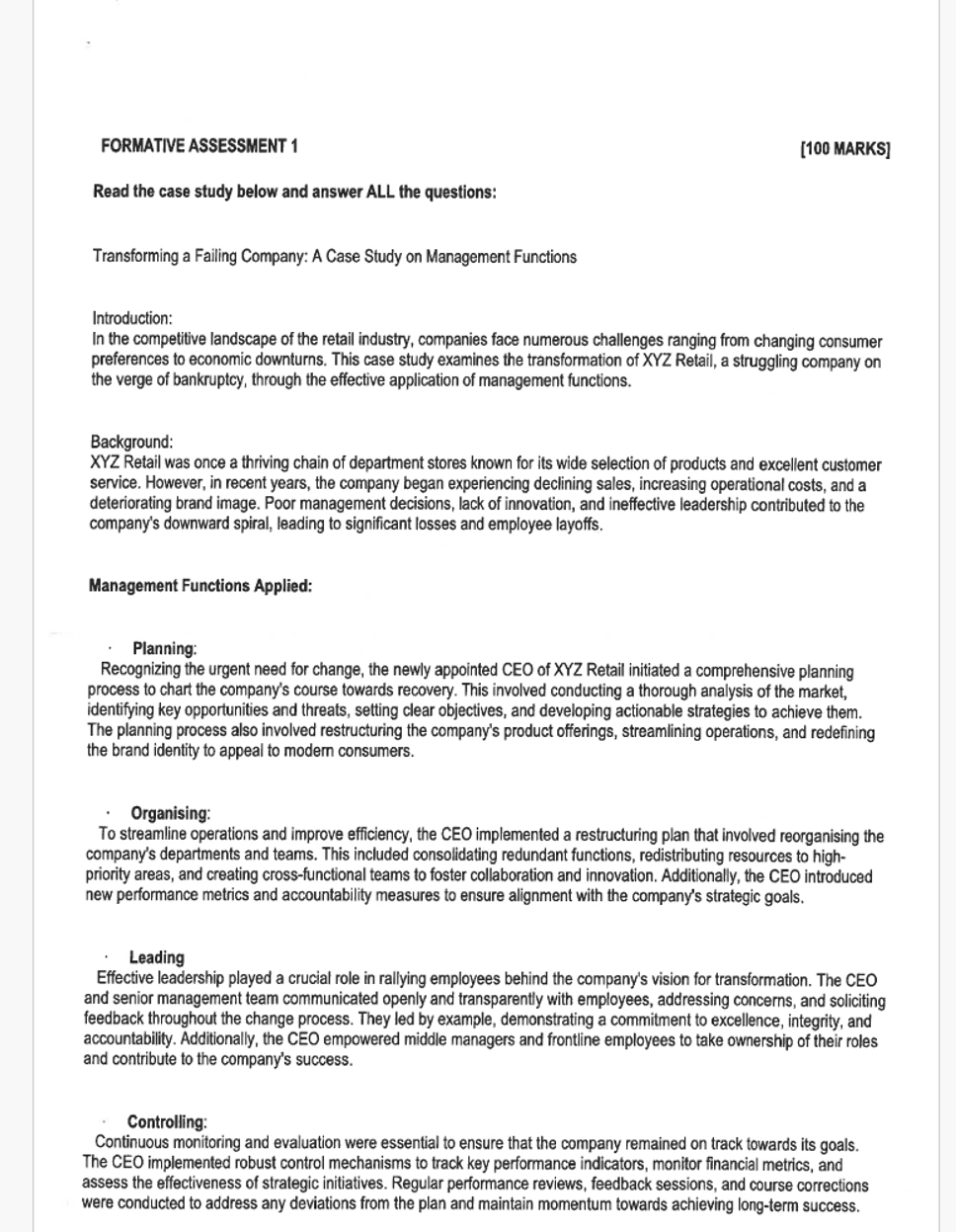
Question: FORMATIVE ASSESSMENT 1 Read the case study below and answer ALL the questions: Transforming a Failing Company: A Case Study on Management Functions Introduction: In
FORMATIVE ASSESSMENT
Read the case study below and answer ALL the questions:
Transforming a Failing Company: A Case Study on Management Functions
Introduction:
In the competitive landscape of the retail industry, companies face numerous challenges ranging from changing consumer
preferences to economic downturns. This case study examines the transformation of XYZ Retail, a struggling company on
the verge of bankruptcy, through the effective application of management functions.
Background:
XYZ Retail was once a thriving chain of department stores known for its wide selection of products and excellent customer
service. However, in recent years, the company began experiencing declining sales, increasing operational costs, and a
deteriorating brand image. Poor management decisions, lack of innovation, and ineffective leadership contributed to the
company's downward spiral, leading to significant losses and employee layoffs.
Management Functions Applied:
Planning:
Recognizing the urgent need for change, the newly appointed CEO of XYZ Retail initiated a comprehensive planning
process to chart the company's course towards recovery. This involved conducting a thorough analysis of the market,
identifying key opportunities and threats, setting clear objectives, and developing actionable strategies to achieve them.
The planning process also involved restructuring the company's product offerings, streamlining operations, and redefining
the brand identity to appeal to modern consumers.
Organising:
To streamline operations and improve efficiency, the CEO implemented a restructuring plan that involved reorganising the
company's departments and teams. This included consolidating redundant functions, redistributing resources to high
priority areas, and creating crossfunctional teams to foster collaboration and innovation. Additionally, the CEO introduced
new performance metrics and accountability measures to ensure alignment with the company's strategic goals.
Leading
Effective leadership played a crucial role in rallying employees behind the company's vision for transformation. The CEO
and senior management team communicated openly and transparently with employees, addressing concerns, and soliciting
feedback throughout the change process. They led by example, demonstrating a commitment to excellence, integrity, and
accountability. Additionally, the CEO empowered middle managers and frontline employees to take ownership of their roles
and contribute to the company's success.
Controlling:
Continuous monitoring and evaluation were essential to ensure that the company remained on track towards its goals.
The CEO implemented robust control mechanisms to track key performance indicators, monitor financial metrics, and
assess the effectiveness of strategic initiatives. Regular performance reviews, feedback sessions, and course corrections
were conducted to address any deviations from the plan and maintain momentum towards achieving longterm success.
Step by Step Solution
There are 3 Steps involved in it
1 Expert Approved Answer
Step: 1 Unlock

Question Has Been Solved by an Expert!
Get step-by-step solutions from verified subject matter experts
Step: 2 Unlock
Step: 3 Unlock
 Study Help