Question: Formulate an LP for the production planning problem for MacPherson Refrigeration Limited. I. What are the input data? II. Define the decision variables. III. Define
Formulate an LP for the production planning problem for MacPherson Refrigeration Limited.
I. What are the input data?
II. Define the decision variables.
III. Define the objective function.
IV. Define the constraints.
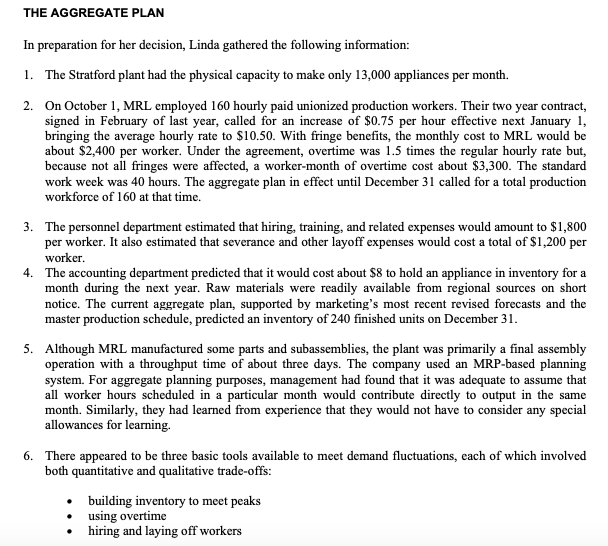
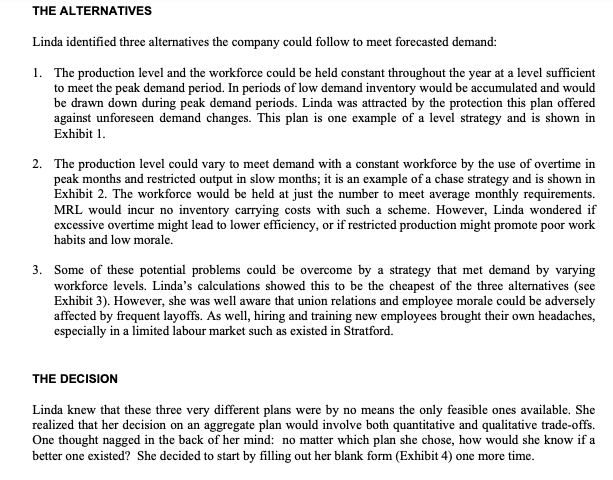
THE AGGREGATE PLAN In preparation for her decision, Linda gathered the following information: 1. The Stratford plant had the physical capacity to make only 13,000 appliances per month. 2. On October 1, MRL employed 160 hourly paid unionized production workers. Their two year contract, signed in February of last year, called for an increase of $0.75 per hour effective next January 1, bringing the average hourly rate to $10.50. With fringe benefits, the monthly cost to MRL would be about $2,400 per worker. Under the agreement, overtime was 1.5 times the regular hourly rate but, because not all fringes were affected, a worker-month of overtime cost about $3,300. The standard work week was 40 hours. The aggregate plan in effect until December 31 called for a total production workforce of 160 at that time. 3. The personnel department estimated that hiring, training, and related expenses would amount to $1,800 per worker. It also estimated that severance and other layoff expenses would cost a total of $1,200 per worker 4. The accounting department predicted that it would cost about $8 to hold an appliance in inventory for a month during the next year. Raw materials were readily available from regional sources on short notice. The current aggregate plan, supported by marketing's most recent revised forecasts and the master production schedule, predicted an inventory of 240 finished units on December 31. 5. Although MRL manufactured some parts and subassemblies, the plant was primarily a final assembly operation with a throughput time of about three days. The company used an MRP-based planning system. For aggregate planning purposes, management had found that it was adequate to assume that all worker hours scheduled in a particular month would contribute directly to output in the same month. Similarly, they had learned from experience that they would not have to consider any special allowances for learning. 6. There appeared to be three basic tools available to meet demand fluctuations, each of which involved both quantitative and qualitative trade-offs: building inventory to meet peaks using overtime hiring and laying off workers THE ALTERNATIVES Linda identified three alternatives the company could follow to meet forecasted demand: 1. The production level and the workforce could be held constant throughout the year at a level sufficient to meet the peak demand period. In periods of low demand inventory would be accumulated and would be drawn down during peak demand periods. Linda was attracted by the protection this plan offered against unforeseen demand changes. This plan is one example of a level strategy and is shown in Exhibit 1. 2. The production level could vary to meet demand with a constant workforce by the use of overtime in peak months and restricted output in slow months; it is an example of a chase strategy and is shown in Exhibit 2. The workforce would be held at just the number to meet average monthly requirements. MRL would incur no inventory carrying costs with such a scheme. However, Linda wondered if excessive overtime might lead to lower efficiency, or if restricted production might promote poor work habits and low morale. 3. Some of these potential problems could be overcome by a strategy that met demand by varying workforce levels. Linda's calculations showed this to be the cheapest of the three alternatives (see Exhibit 3). However, she was well aware that union relations and employee morale could be adversely affected by frequent layoffs. As well, hiring and training new employees brought their own headaches, especially in a limited labour market such as existed in Stratford. THE DECISION Linda knew that these three very different plans were by no means the only feasible ones available. She realized that her decision on an aggregate plan would involve both quantitative and qualitative trade-offs. One thought nagged in the back of her mind: no matter which plan she chose, how would she know if a better one existed? She decided to start by filling out her blank form (Exhibit 4) one more time









 Study Help