Question: Frich Turbo Engines: Using Cost Plus Analysis to Inform Purchasing Decisions You are the new purchasing manager for Erich Turbo Engine Company. Frich makes engines
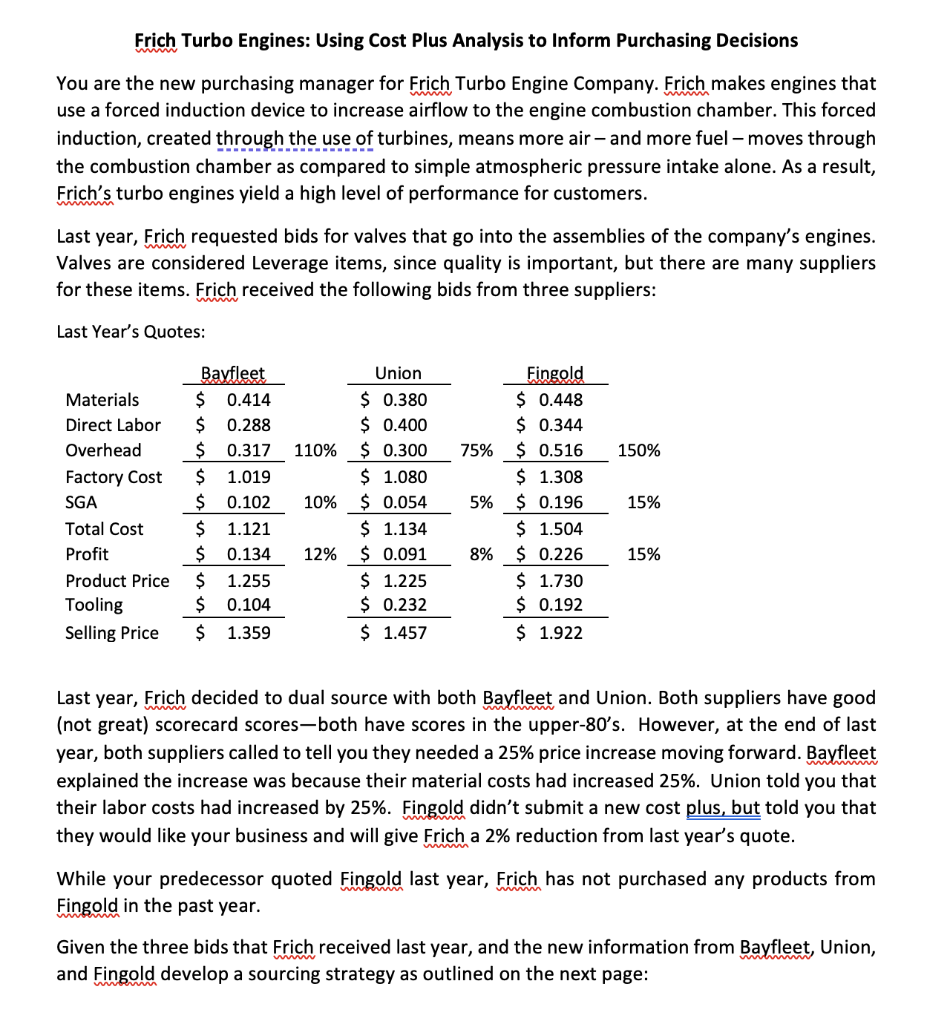
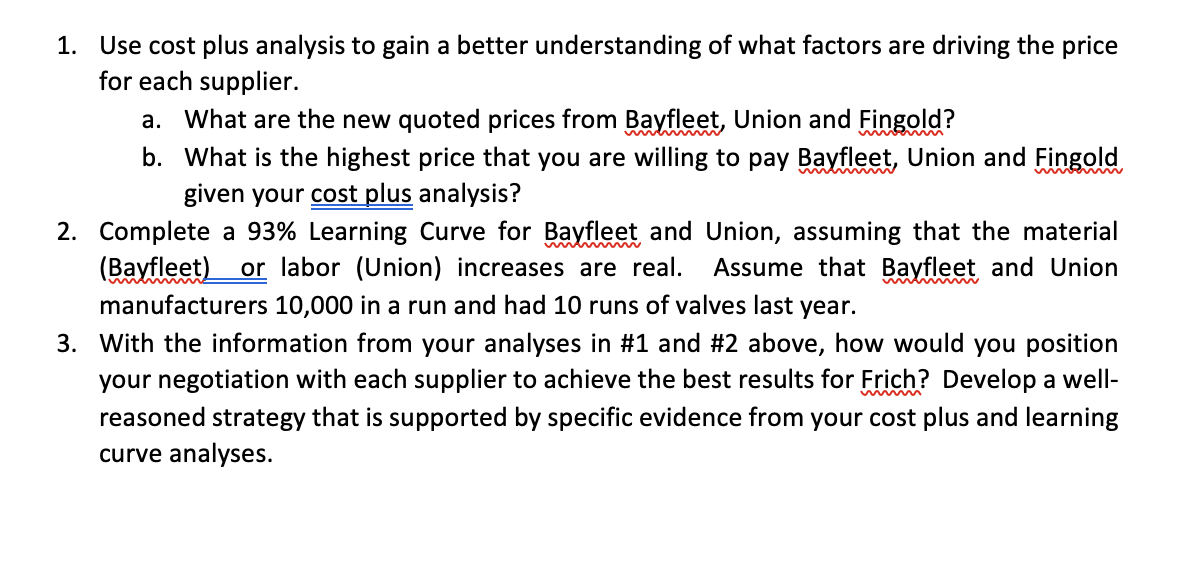
Frich Turbo Engines: Using Cost Plus Analysis to Inform Purchasing Decisions You are the new purchasing manager for Erich Turbo Engine Company. Frich makes engines that use a forced induction device to increase airflow to the engine combustion chamber. This forced induction, created through the use of turbines, means more air and more fuel - moves through the combustion chamber as compared to simple atmospheric pressure intake alone. As a result, Frich's turbo engines yield a high level of performance for customers. Last year, Frich requested bids for valves that go into the assemblies of the company's engines. Valves are considered Leverage items, since quality is important, but there are many suppliers for these items. Frich received the following bids from three suppliers: Last Year's Quotes: Union 110% 150% Bayfleet $ 0.414 $ 0.288 $ 0.317 $ 1.019 $ 0.102 $ 1.121 $ 0.134 $ 1.255 $ 0.104 $ 1.359 10% Materials Direct Labor Overhead Factory Cost SGA Total Cost Profit Product Price Tooling Selling Price 15% Fingold $ 0.448 $ 0.344 75% $ 0.516 $ 1.308 5% $ 0.196 $ 1.504 8% $ 0.226 $ 1.730 $ 0.192 $ 1.922 $ 0.380 $ 0.400 $ 0.300 $ 1.080 $ 0.054 $ 1.134 $ 0.091 $ 1.225 $ 0.232 $ 1.457 12% 15% Last year, Frich decided to dual source with both Bayfleet and Union. Both suppliers have good (not great) scorecard scores-both have scores in the upper-80's. However, at the end of last year, both suppliers called to tell you they needed a 25% price increase moving forward. Bayfleet explained the increase was because their material costs had increased 25%. Union told you that their labor costs had increased by 25%. Fingold didn't submit a new cost plus, but told you that they would like your business and will give Frich a 2% reduction from last year's quote. w While your predecessor quoted Fingold last year, Frich has not purchased any products from Fingold in the past year. Given the three bids that Frich received last year, and the new information from Bayfleet, Union, and Fingold develop a sourcing strategy as outlined on the next page: 1. Use cost plus analysis to gain a better understanding of what factors are driving the price for each supplier. a. What are the new quoted prices from Bayfleet, Union and Fingold? b. What is the highest price that you are willing to pay Bayfleet, Union and Fingold, given your cost plus analysis? 2. Complete a 93% Learning Curve for Bayfleet and Union, assuming that the material (Bayfleet) or labor (Union) increases are real. Assume that Bayfleet and Union manufacturers 10,000 in a run and had 10 runs of valves last year. 3. With the information from your analyses in #1 and #2 above, how would you position your negotiation with each supplier to achieve the best results for Frich? Develop a well- reasoned strategy that is supported by specific evidence from your cost plus and learning curve analyses









 Study Help