Question: from the topic below (question #3 in attachments) create a conclusion paragraph in 200-300 words. for any references used in the answer reference do Chicago
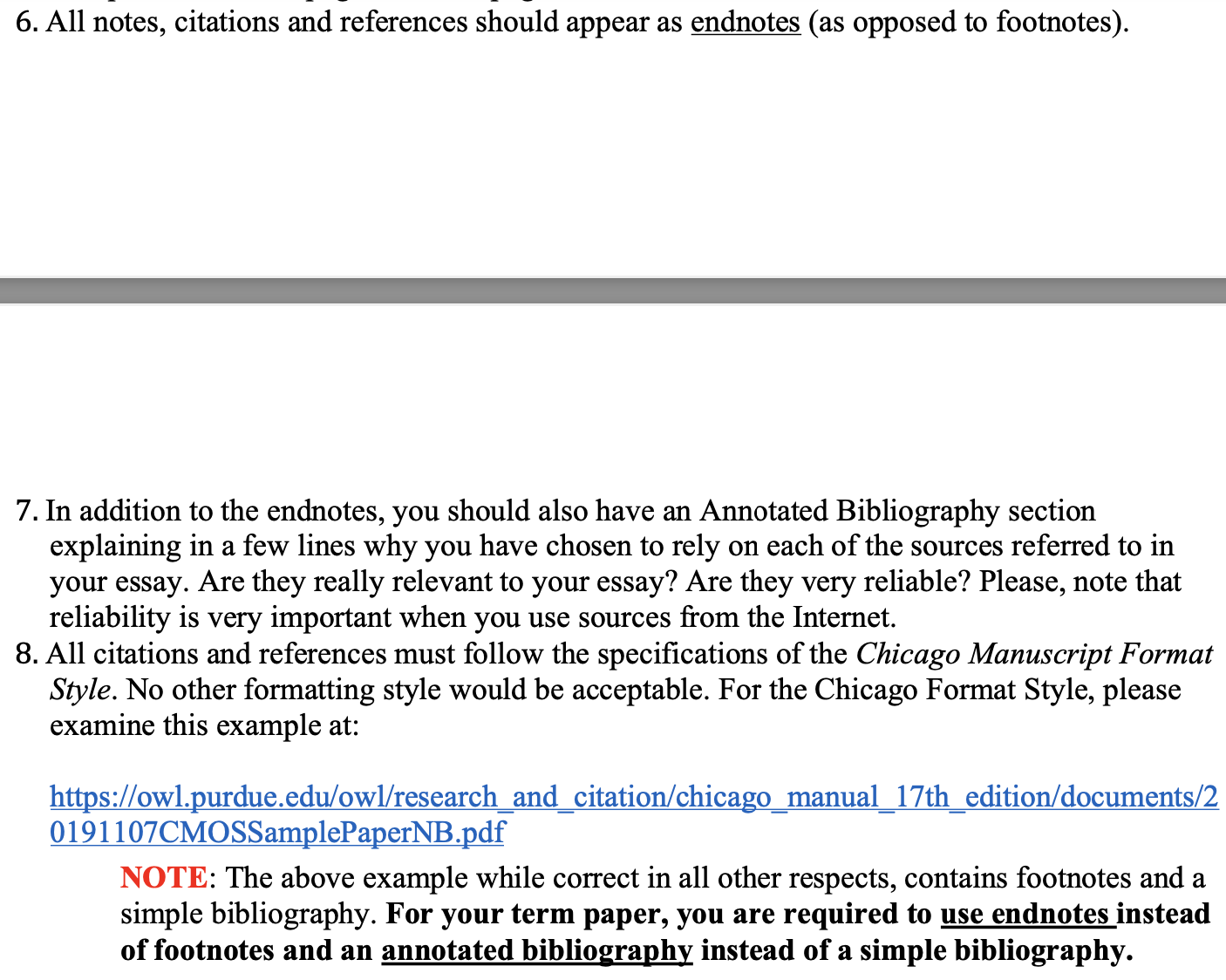
from the topic below (question #3 in attachments) create a conclusion paragraph in 200-300 words. for any references used in the answer reference do "Chicago Manuscript Format Style" format (attachments below explain how). use peer reviewed sources only.
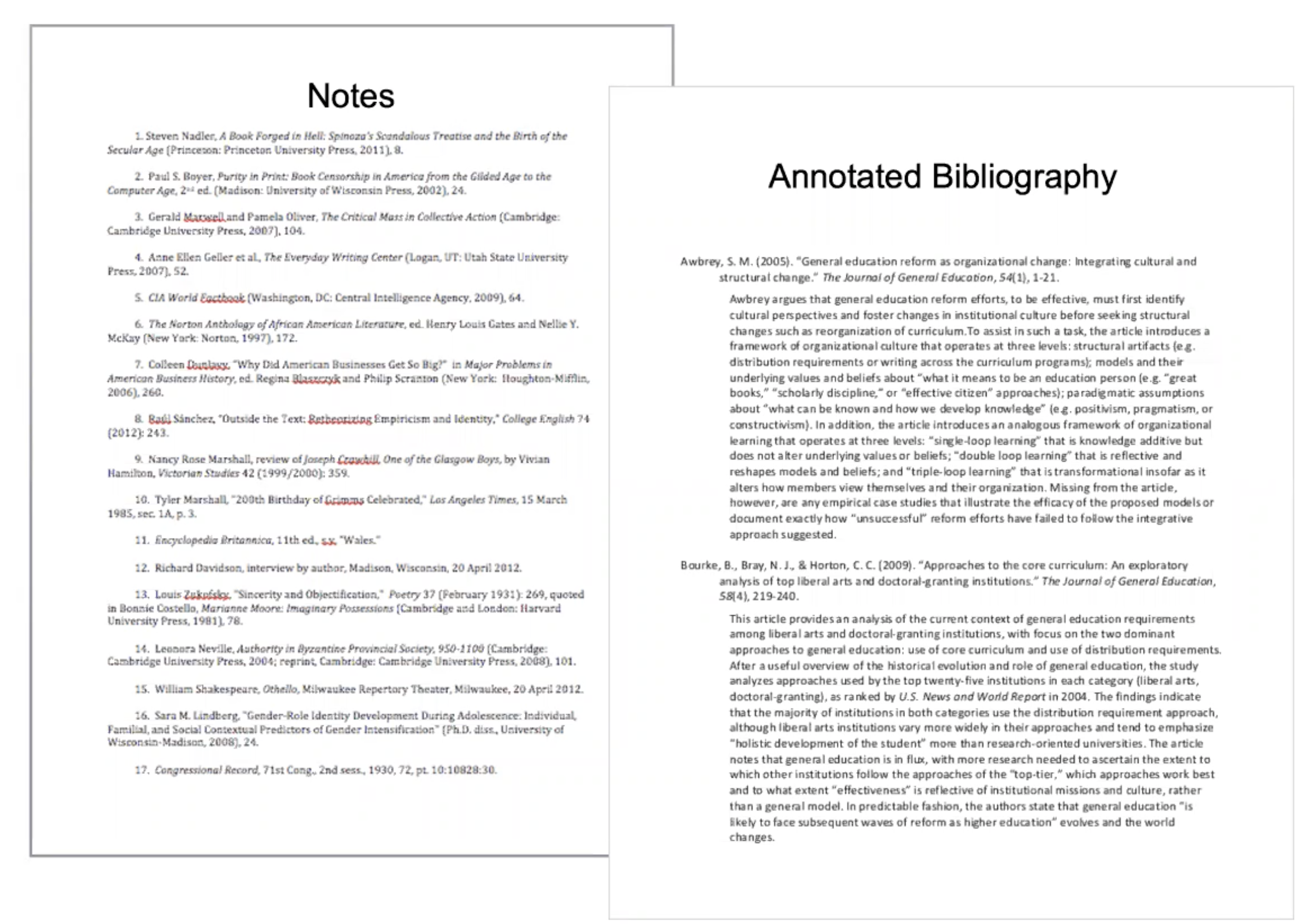
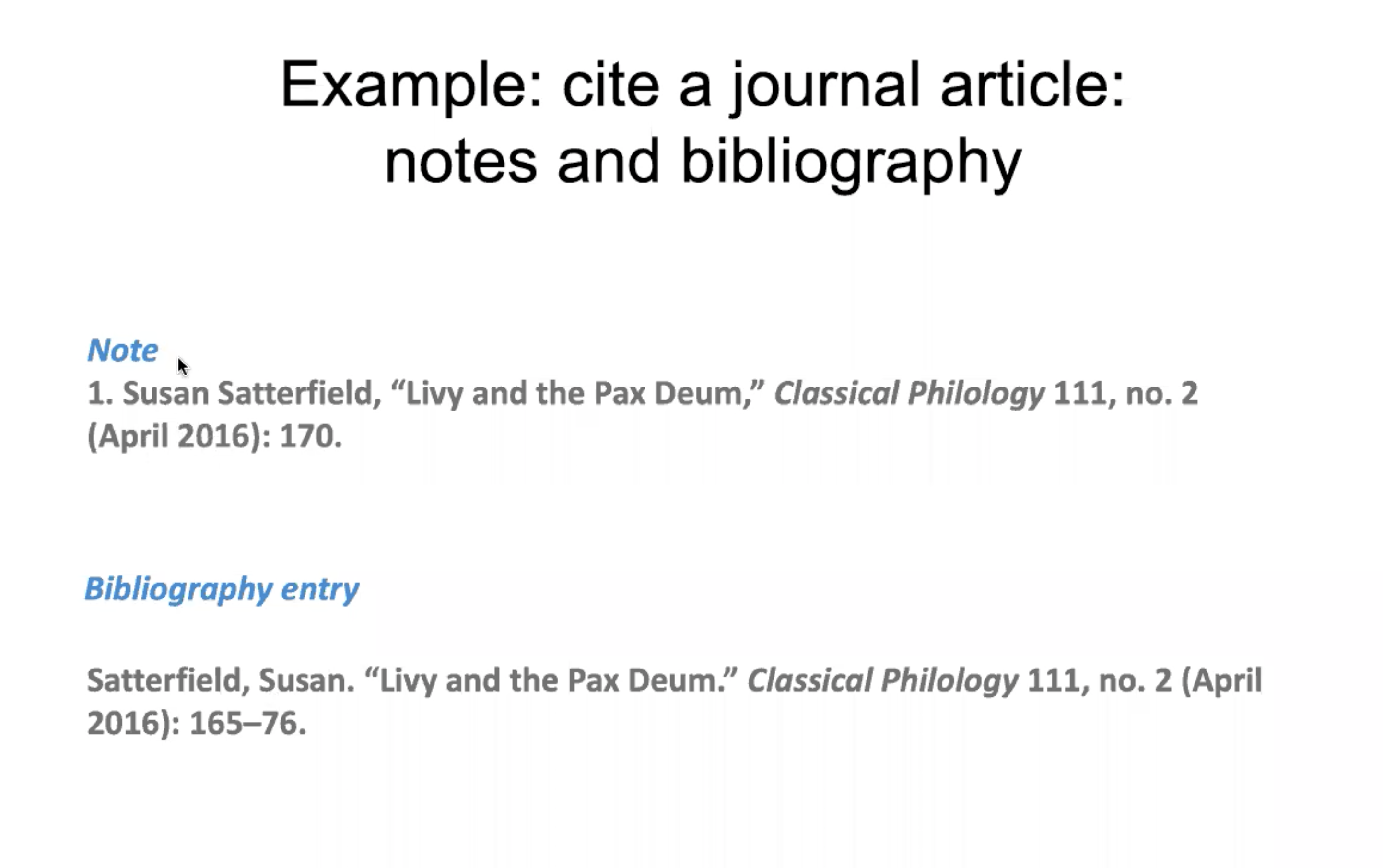
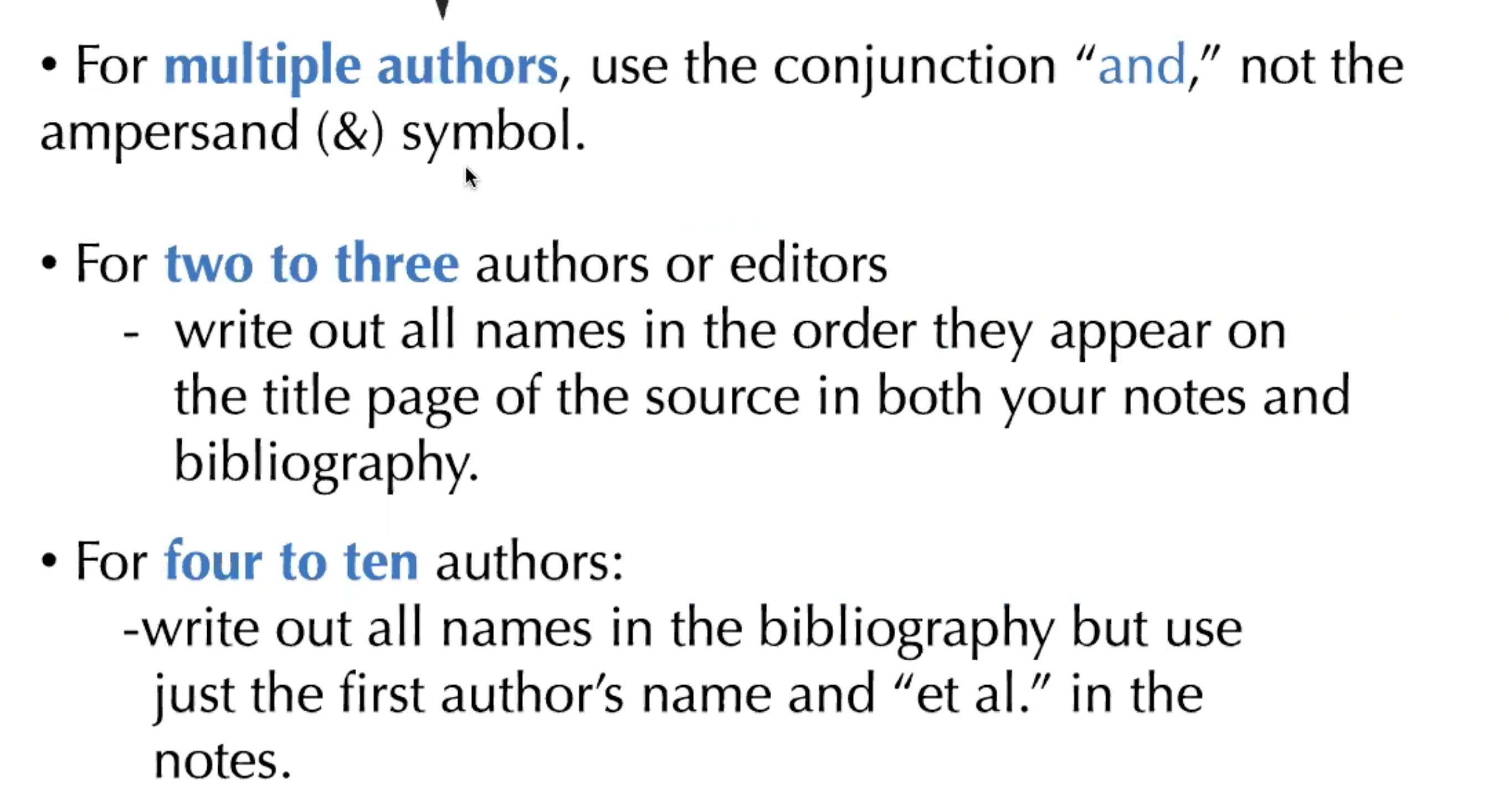
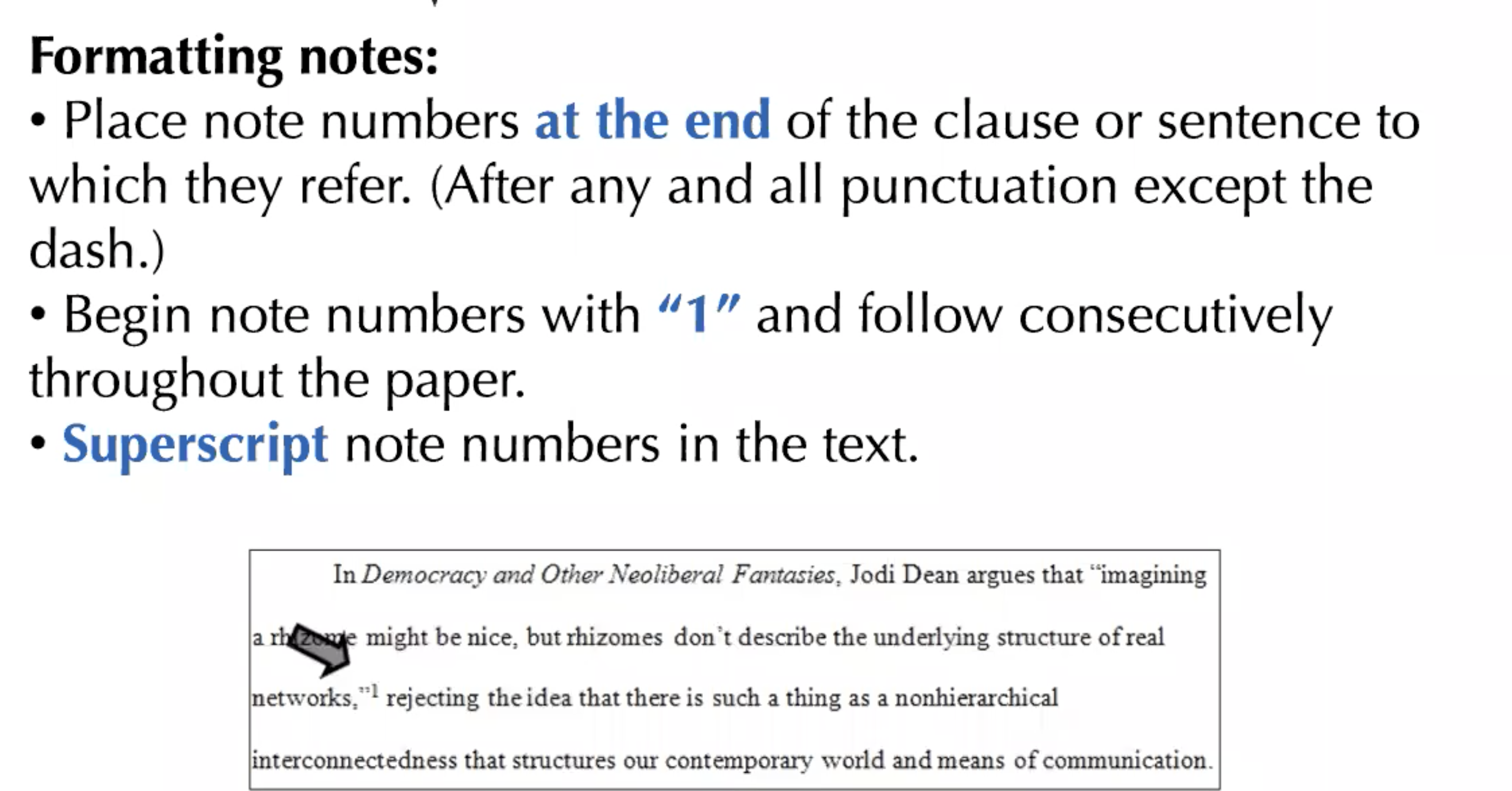
Notes 1. Steven Nadler, A Book Forged in Hell: Spinoza's Scandalous Treatise and the Birth of the Secular Age (Princeson: Princeton University Press, 2011). 8. 2. Paul S. Boyer, Purity in Print: Book Censorship in America from the Glided Age to the Computer Age, 2:4 ed. (Madison: University of Wisconsin Press, 2002), 24. Annotated Bibliography 3. Gerald Maxwell and Pamela Oliver, The Critical Mass in Collective Action (Cambridge: Cambridge University Press, 2007). 104. 4. Anne Ellen Geller et al, The Everyday Writing Center (Logan, UT: Utah State University Awbrey, S. M. (2005). "General education reform as organizational change: Integrating cultural and Press, 2007). 52. structural change." The Journal of General Education, 54(1), 1-21. S. CIA World Eactbook (Washington, DC: Central Intelligence Agency, 2009), 64. Awbrey argues that general education reform efforts, to be effective, must first identify 6. The Norton Anthology of African American Literature, ed. Henry Louis Gates and Nellie Y. cultural perspectives and foster changes in institutional culture before seeking structural Mckay (New York: Norton, 1997), 172. changes such as reorganization of curriculum. To assist in such a task, the article introduces a framework of organizational culture that operates at three levels: structural artifacts feg. 7. Colleen Doubuy. "Why Did American Businesses Get So Big?" in Major Problems in distribution requirements or writing across the curriculum programs); models and their American Business History, ed. Regina Blascozyk and Philip Scranton (New York: Houghton Mifflin, underlying values and beliefs about "what it means to be an education person (e.g. "great 2006), 260. books," "scholarly discipline," or "effective citizen" approaches); paradigmatic assumptions &. Ball Sanchez, "Outside the Text: Sutheorizing Empiricism and Identity." College English 74 about "what can be known and how we develop knowledge" (e g. positivism, pragmatism, or (2012): 243. constructivism). In addition, the article introduces an analogous framework of organizational learning that operates at three levels: "single-loop learning" that is knowledge additive but 9. Nancy Rose Marshall, review of Joseph Crowtill One of the Glasgow Boys, by Vivian does not alter underlying values or beliefs; "double loop learning" that is reflective and Hamilton, Victorian Studies 42 (1999/2000): 359. reshapes models and beliefs; and "triple-loop learning" that is transformational insofar as it alters how members view themselves and their organization. Missing from the article, 10. Tyler Marshall, "200th Birthday of Griguns Celebrated," Los Angeles Times, 15 March however, are any empirical case studies that illustrate the efficacy of the proposed models or 1985, sec. 1A, p. 3. document exactly how "unsuccessful" reform efforts have failed to follow the integrative 11. fincyclopedia Britannica, 11th ed, sx. "Wales." approach suggested. 12. Richard Davidson, interview by author, Madison, Wisconsin, 20 April 2012. Bourke, B., Bray, N. J., & Horton, C. C. (2009). "Approaches to the core curriculum: An exploratory analysis of top liberal arts and doctoral-granting institutions." The Journal of General Education, 13. Louis Zukpesky, "Sincerity and Objectification," Poetry 37 (February 1931): 269, quoted $8(4), 219-240. in Bonnie Costello, Marianne Moore: Imaginary Possessions (Cambridge and London: Harvard University Press, 1981), 78. This article provides an analysis of the current context of general education requirements among liberal arts and doctoral-granting institutions, with focus on the two dominant 14. Leonora Neville, Authority in Byzantine Provincial Society, 950-1106 (Cambridge: approaches to general education: use of core curriculum and use of distribution requirements. Cambridge University Press, 2004; reprint, Cambridge: Cambridge University Press, 2008), 101. After a useful overview of the historical evolution and role of general education, the study 15. William Shakespeare, Othello, Milwaukee Repertory Theater, Milwaukee, 20 April 2012. analyzes approaches used by the top twenty-five institutions in each category (liberal arts, doctoral-granting), as ranked by U.S. News and World Report in 2004. The findings indicate 16. Sara M. Lindberg, "Gender-Role Identity Development During Adolescence. Individual, that the majority of institutions in both categories use the distribution requirement approach, Familial, and Social Contextual Predictors of Gender Intensification" (Ph.D. diss, University of although liberal arts institutions vary more widely in their approaches and tend to emphasize Wisconsin.Madison, 2008), 24. "holistic development of the student" more than research-oriented universities. The article notes that general education is in flux, with more research needed to ascertain the extent to 17, Congressional Record, 71st Cong. 2nd sess, 1930, 72, pt. 10:10828:30. which other institutions follow the approaches of the "top-tier," which approaches work best and to what extent "effectiveness" is reflective of institutional missions and culture, rather than a general model. In predictable fashion, the authors state that general education "is likely to face subsequent waves of reform as higher education" evolves and the world changes.6. All nbtes, citations and references should appear as endnotes (as opposed to footnotes). 7.In addition to the endnotes, you should also have an Annotated Bibliography section explaining in a few lines why you have chosen to rely on each of the sources referred to in your essay. Are they really relevant to your essay? Are they very reliable? Please, note that reliability is very important when you use sources from the Internet. 8. All citations and references must follow the specifications of the Chicago Manuscript Format Style. No other formatting style would be acceptable. For the Chicago Format Style, please examine this example at: https://owl.purdue.edu/owl/research_and_citation/chicago_manual 17th _edition/documents/2 0191107CMOSSamplePaperNB.pdf NOTE: The above example while correct in all other respects, contains footnotes and a simple bibliography. For your term paper, you are required to use endnotes instead of footnotes and an annotated bibliography instead of a simple bibliography. Example: cite a journal article: notes and bibliography Note 1. Susan Satterfield, "Livy and the Pax Deum," Classical Philology 111, no. 2 (April 2016): 170. Bibliography entry Satterfield, Susan. "Livy and the Pax Deum." Classical Philology 111, no. 2 (April 2016): 165-76.v * For multiple authors, use the conjunction \"and,\" not the ampersand (&) symbol. X * For two to three authors or editors - write out all names in the order they appear on the title page of the source in both your notes and bibliography. * For four to ten authors: -write out all names in the bibliography but use just the first author's name and \"et al.\" in the notes. Formatting notes: * Place note numbers at the end of the clause or sentence to which they refer. (After any and all punctuation except the dash.) * Begin note numbers with \"1\" and follow consecutively throughout the paper. * Superscript note numbers in the text. In Democracy and Other Neoliberal Fantasies, Jodi Dean argues that \"imagining a r* might be nice, but rhizomes don't describe the underlying structure of real networks, ! rejecting the idea that there is such a thing as a nonhierarchical interconnectedness that structures our contemporary world and means of communication. 3. The present and future of the self-driving car. Several big companies are trying to build the first reliable self-driving car. In pursuing this goal, they are adopting, with variable degrees of success, different strategies. At the same time, many people are very critical of those initiatives because of their possible social impacts. Does the self- driving car have a future
Step by Step Solution
There are 3 Steps involved in it
1 Expert Approved Answer
Step: 1 Unlock
Question Has Been Solved by an Expert!
Get step-by-step solutions from verified subject matter experts
Step: 2 Unlock
Step: 3 Unlock
Students Have Also Explored These Related Business Writing Questions!










 Study Help