







Question: Function DECISION-TREE-LEARNING(examples, attributes, parent_examples) returns a tree if examples is empty then return Plurality-VALUE(parent-examples) else if all examples have the same classification then return the
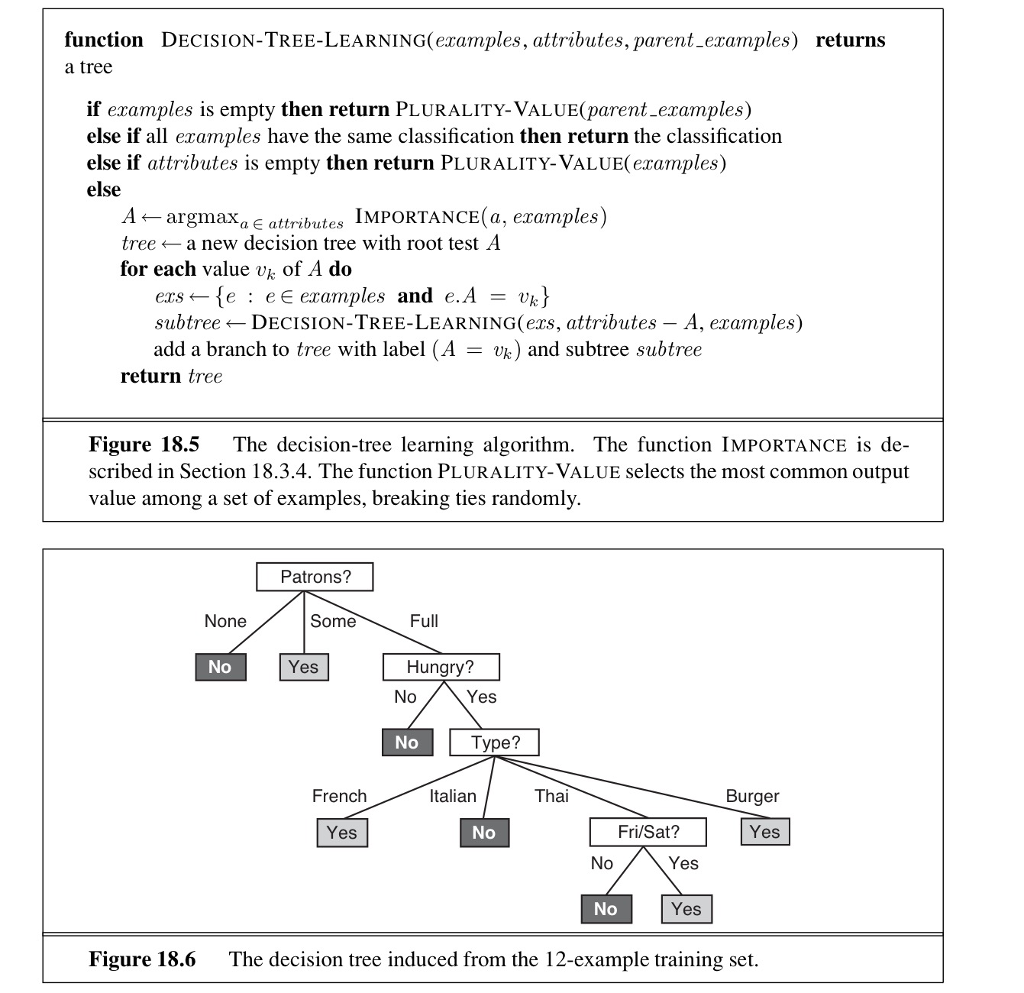
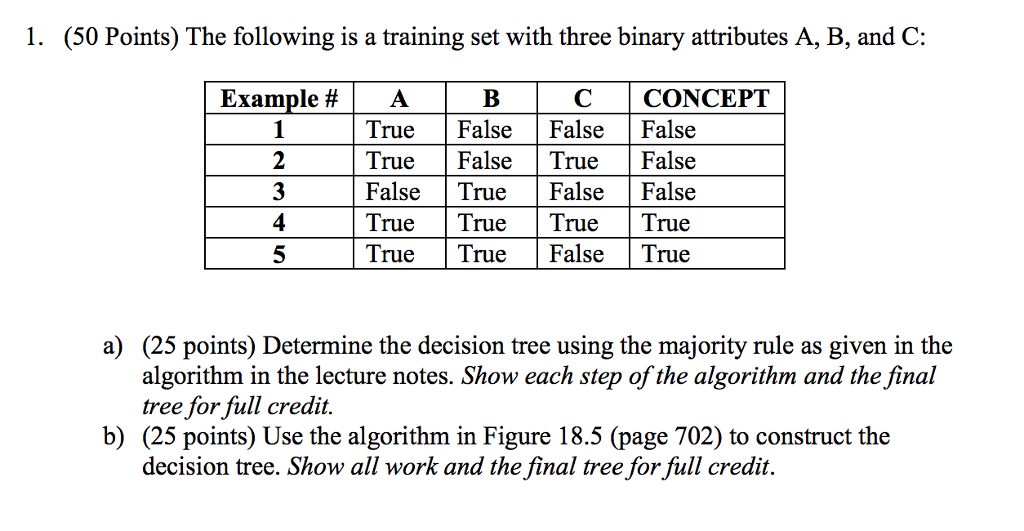
Function DECISION-TREE-LEARNING(examples, attributes, parent_examples) returns a tree if examples is empty then return Plurality-VALUE(parent-examples) else if all examples have the same classification then return the classification else if attributes is empty then return PLURALITY-VALUE(examples) else A leftarrow argmax_a elementof attributes Importance (a, examples) tree leftarrow a new decision tree with root test A for each value v_k of A do exs leftarrow {e: e elementof examples and e.A = v_k} subtree leftarrow DECISION-TREE-LEARNING(exs, attributes - A, examples) add a branch to tree with label (A = V_k) and subtree subtree return tree The following is a training set with three binary attributes A, B, and C: Determine the decision tree using the majority rule as given in the algorithm in the lecture notes. Show each step of the algorithm and the final tree for full credit. Use the algorithm in Figure 18.5 (page 702) to construct the decision tree. and the final tree for full credit
Step by Step Solution
There are 3 Steps involved in it

Get step-by-step solutions from verified subject matter experts
 Study Help