







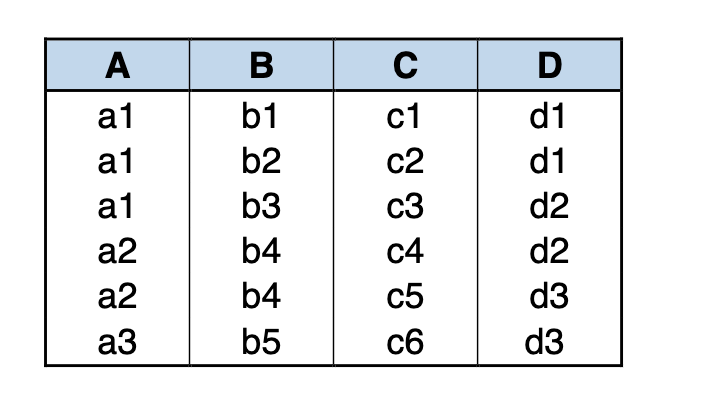
Question: Functional Dependencies and Keys. Consider the following relation and the data within it to answer the following parts of the question. Recall, any attribute can
Functional Dependencies and Keys. Consider the following relation and the data within it to answer the following parts of the question. Recall, any attribute can determine itself trivially, eg A A BB CC DD Also, any composition of attributes can determine its composed attributes; ie ABAB and ABA and ABB trivially. Include the trivial dependencies as well.
tableABCDabcdabcdabcdabcdabcdabcd
a Which of the following can A determine? AB AC AD
b Which of the following can B determine? BA BC BD
c Which of the following can C determine? CA CB CD
d Which of the following can D determine? DA DB DC
e What can AB determine?
f What can AC determine?
g What can AD determine?
h What can BC determine?
i What can BD determine?
j What can CA determine?
k What are the super keys
l What are the candidate keys
m How many primary keys can a table have?
Step by Step Solution
There are 3 Steps involved in it
1 Expert Approved Answer
Step: 1 Unlock

Question Has Been Solved by an Expert!
Get step-by-step solutions from verified subject matter experts
Step: 2 Unlock
Step: 3 Unlock
 Study Help