







Question: Functional requirements ( features / services ) . C . Non - functional requirements ( constraints ) . D . Represent
Functional requirements featuresservices
C Nonfunctional requirements constraints
D Represent a highlevel diagrammatic description of the system, showing how the different functions provided by the system interact with each other. use case diagram and class diagram
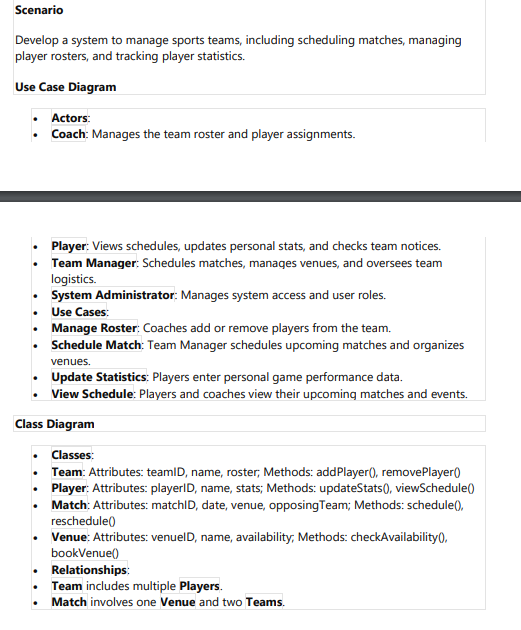
Scenario
Develop a system to manage sports teams, including scheduling matches, managing player rosters, and tracking player statistics.
Use Case Diagram
Actors:
Coach: Manages the team roster and player assignments.
Player: Views schedules, updates personal stats, and checks team notices.
Team Manager: Schedules matches, manages venues, and oversees team logistics
System Administrator: Manages system access and user roles.
Use Cases:
Manage Roster: Coaches add or remove players from the team.
Schedule Match: Team Manager schedules upcoming matches and organizes venues.
Update Statistics: Players enter personal game performance data.
View Schedule: Players and coaches view their upcoming matches and events.
Class Diagram
Classes:
Team: Attributes: teamID, name, roster, Methods: addPlayer removePlayer
Player: Attributes: playerID, name, stats; Methods: updateStats viewSchedule
Match: Attributes: matchID, date, venue, opposingTeam; Methods: schedule reschedule
Venue: Attributes: venuelD, name, availability, Methods: checkAvailability bookVenue
Relationships:
Team includes multiple Players.
Match involves one Venue and two Teams. i have to the drawing of use case diagrams and class diagrams
Step by Step Solution
There are 3 Steps involved in it
1 Expert Approved Answer
Step: 1 Unlock

Question Has Been Solved by an Expert!
Get step-by-step solutions from verified subject matter experts
Step: 2 Unlock
Step: 3 Unlock
 Study Help