







Question: fUse the given polynomial function to identify the zeros of the function and the multiplicity of each zero. Leave any remaining answer boxes empty. If
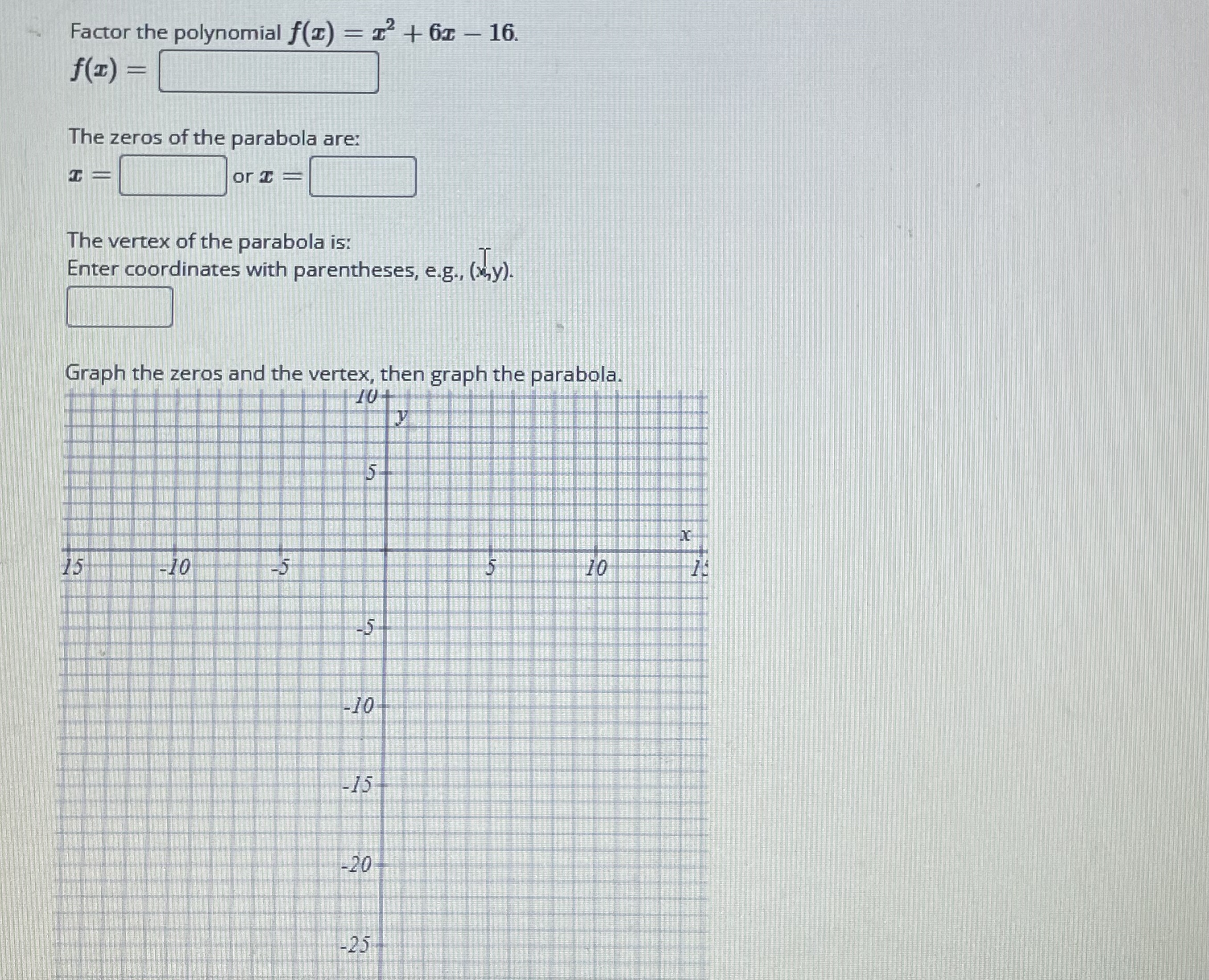
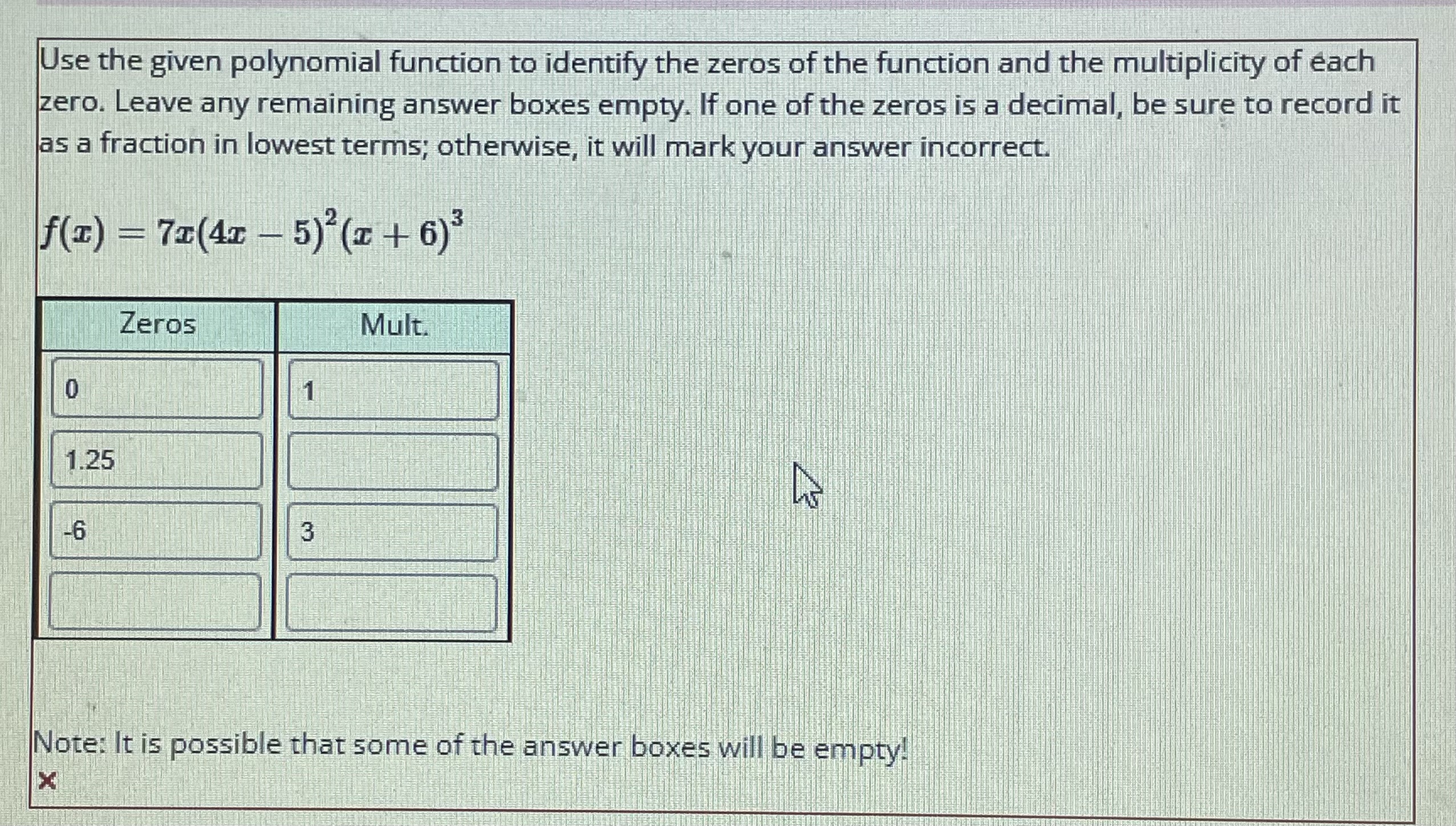
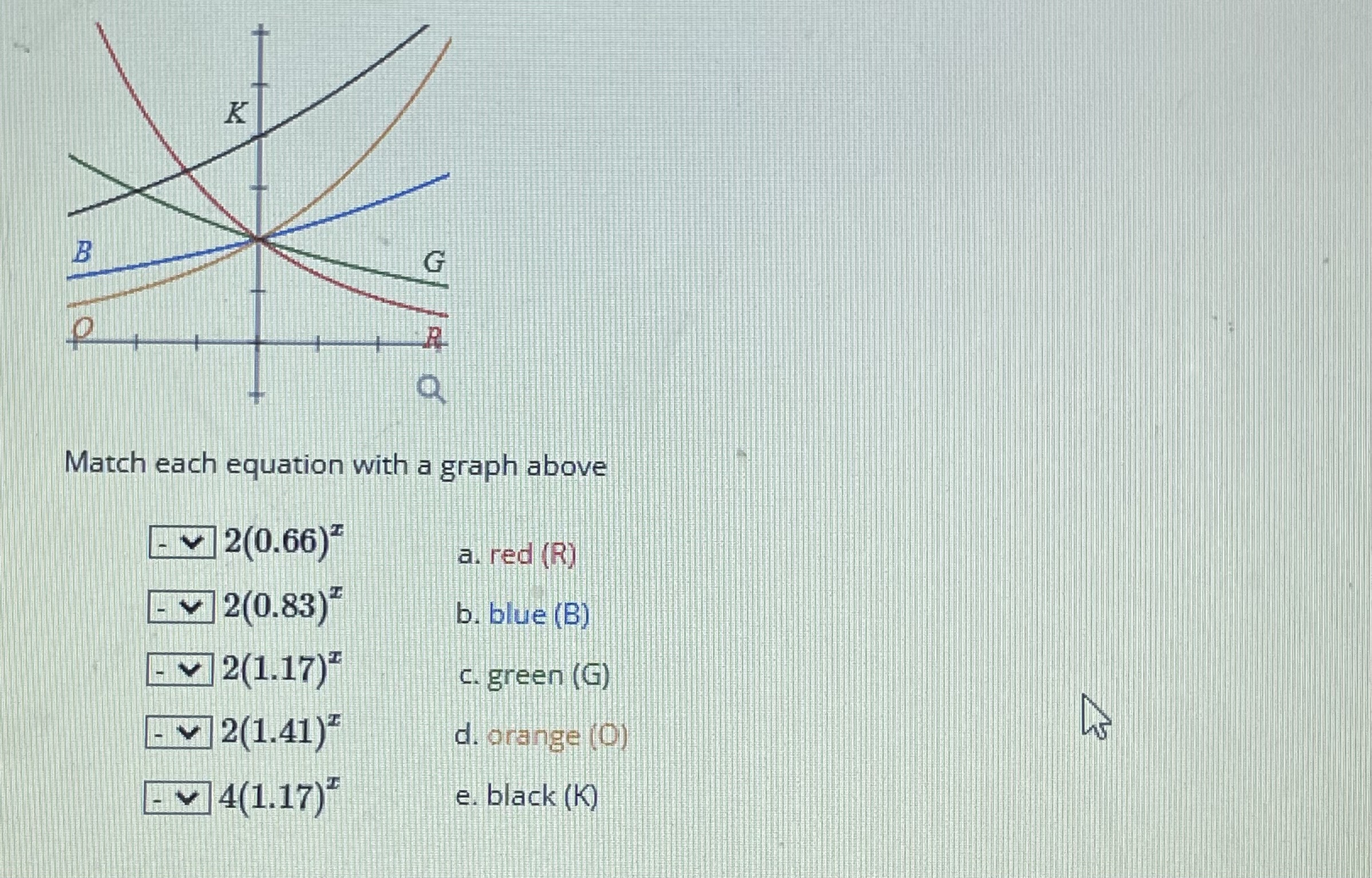

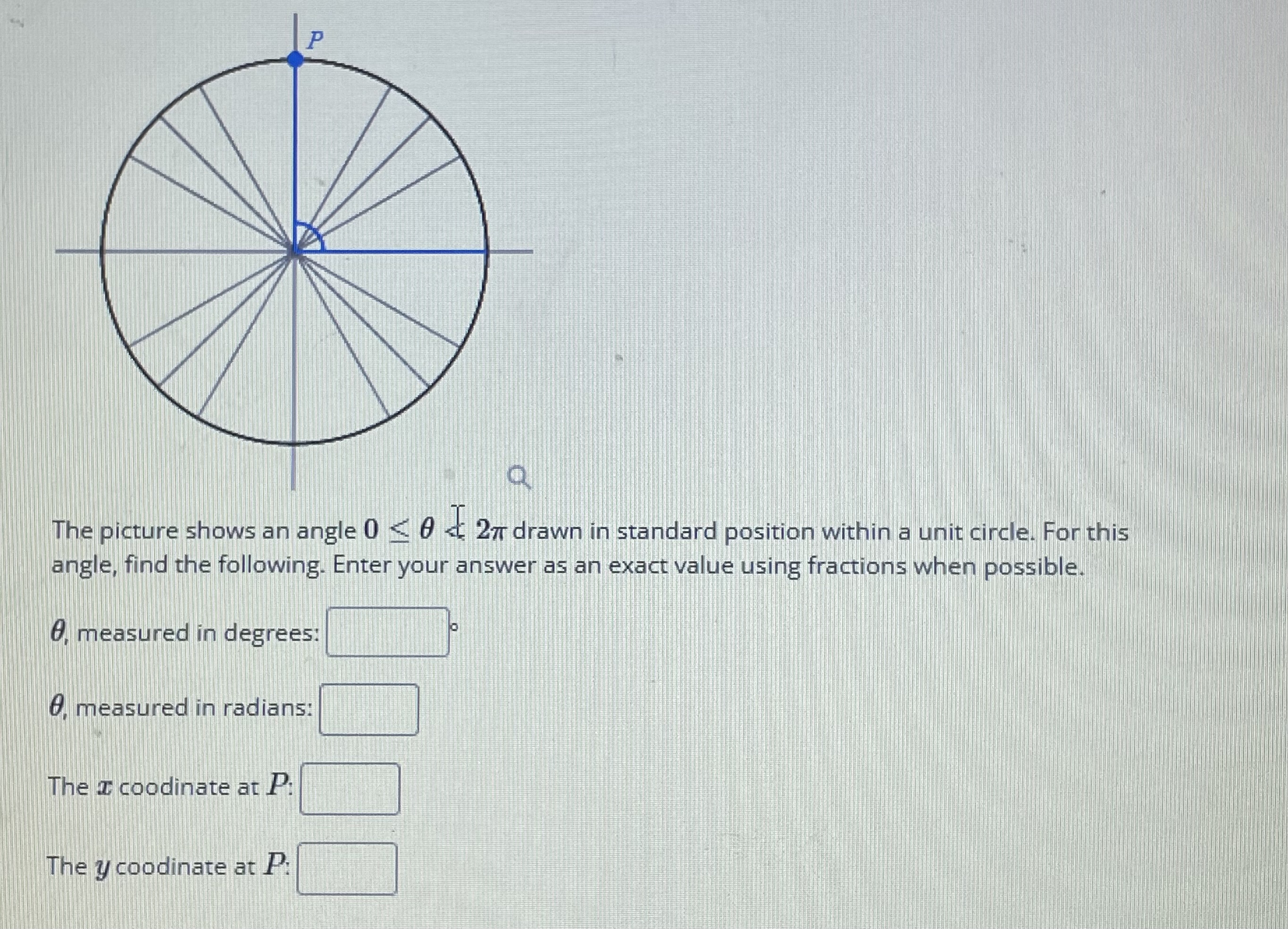
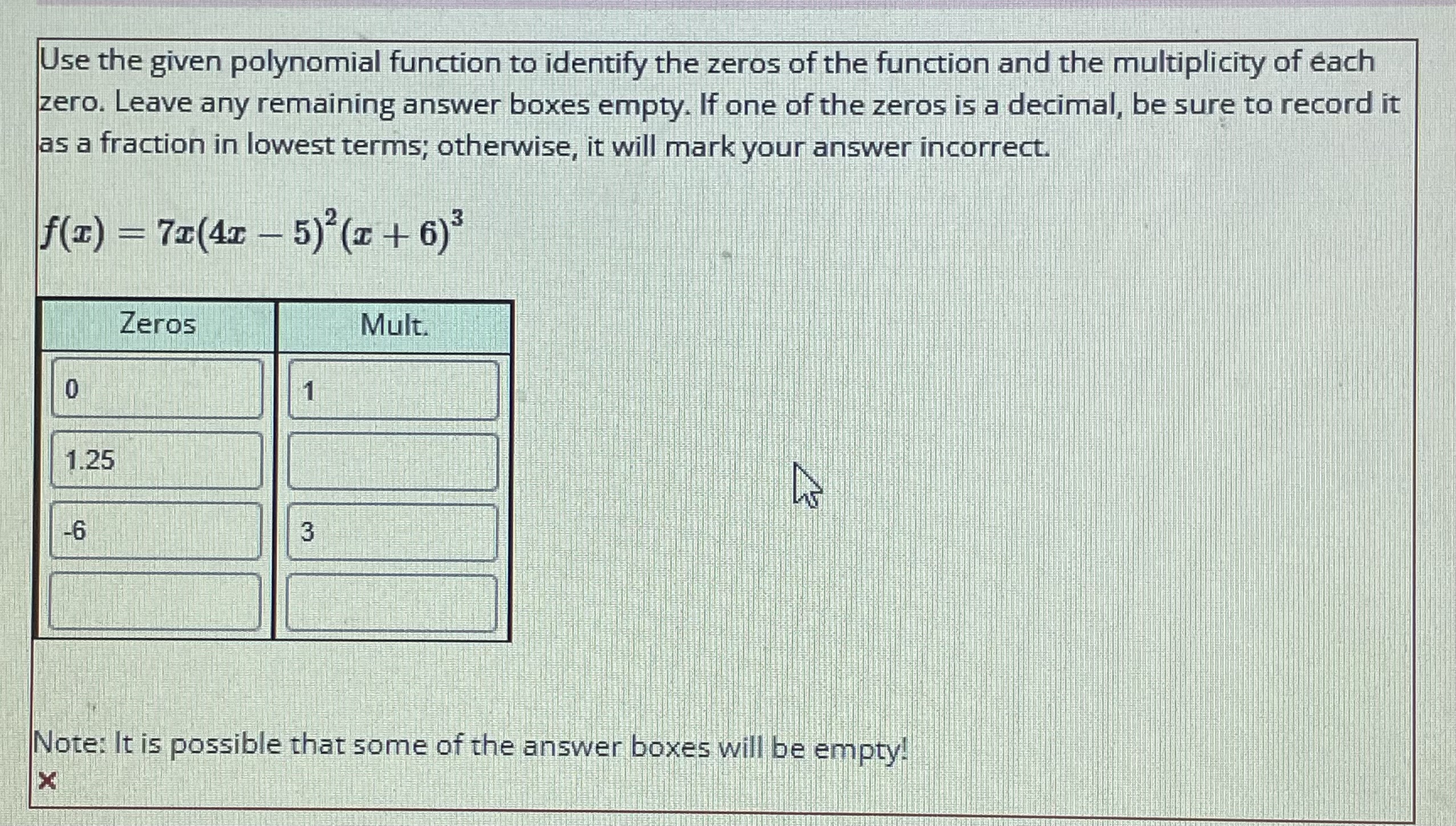
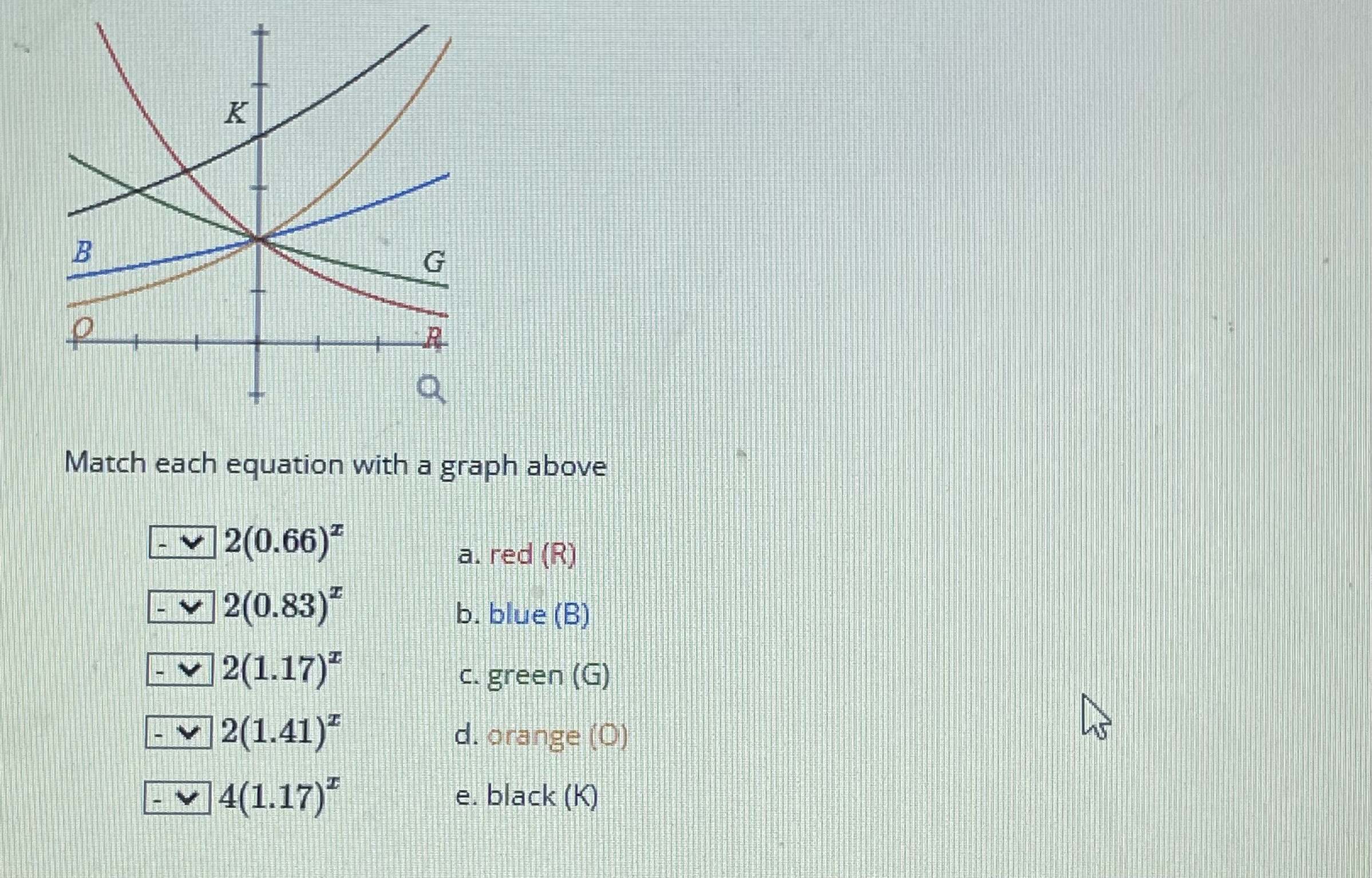

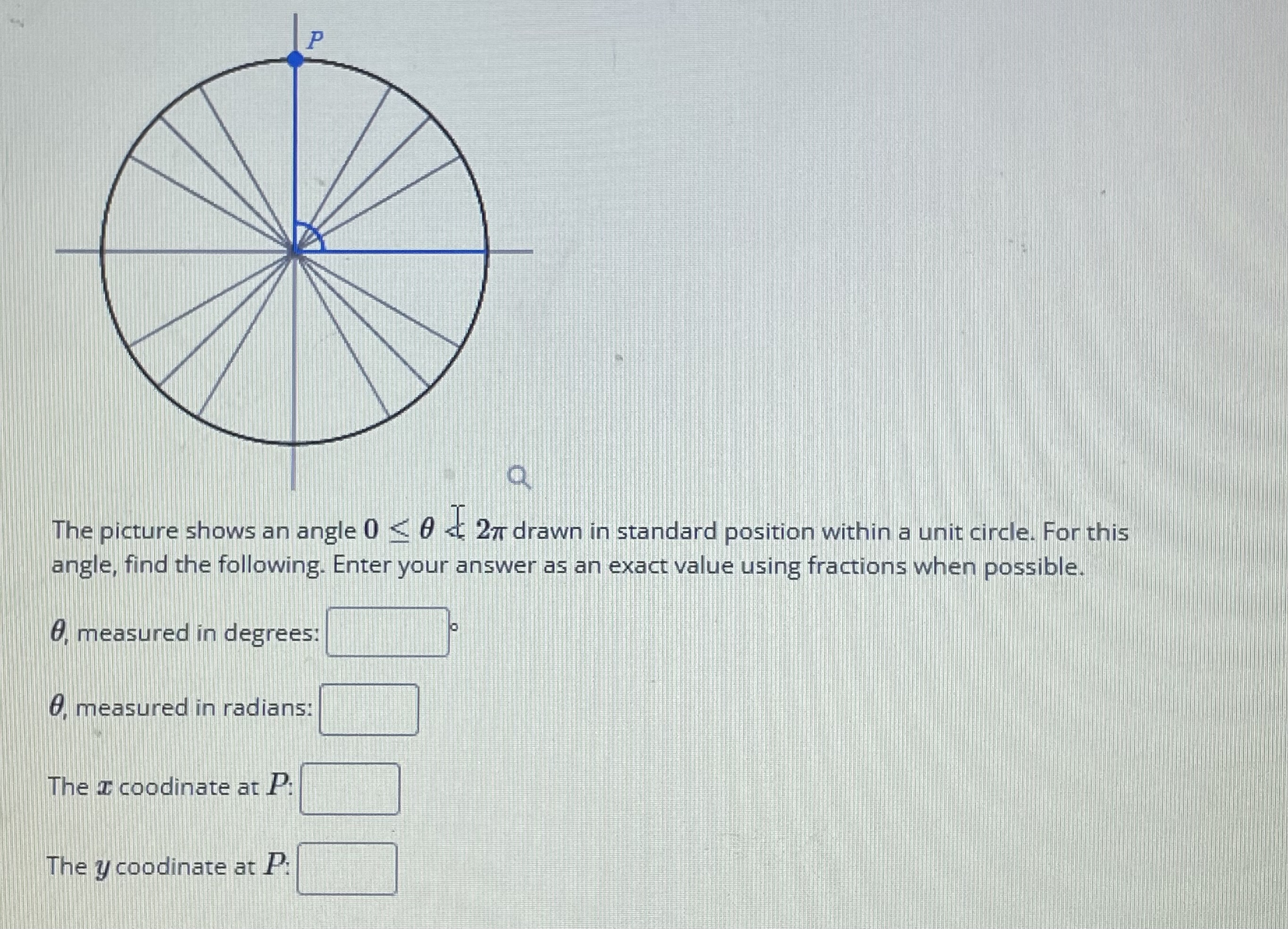
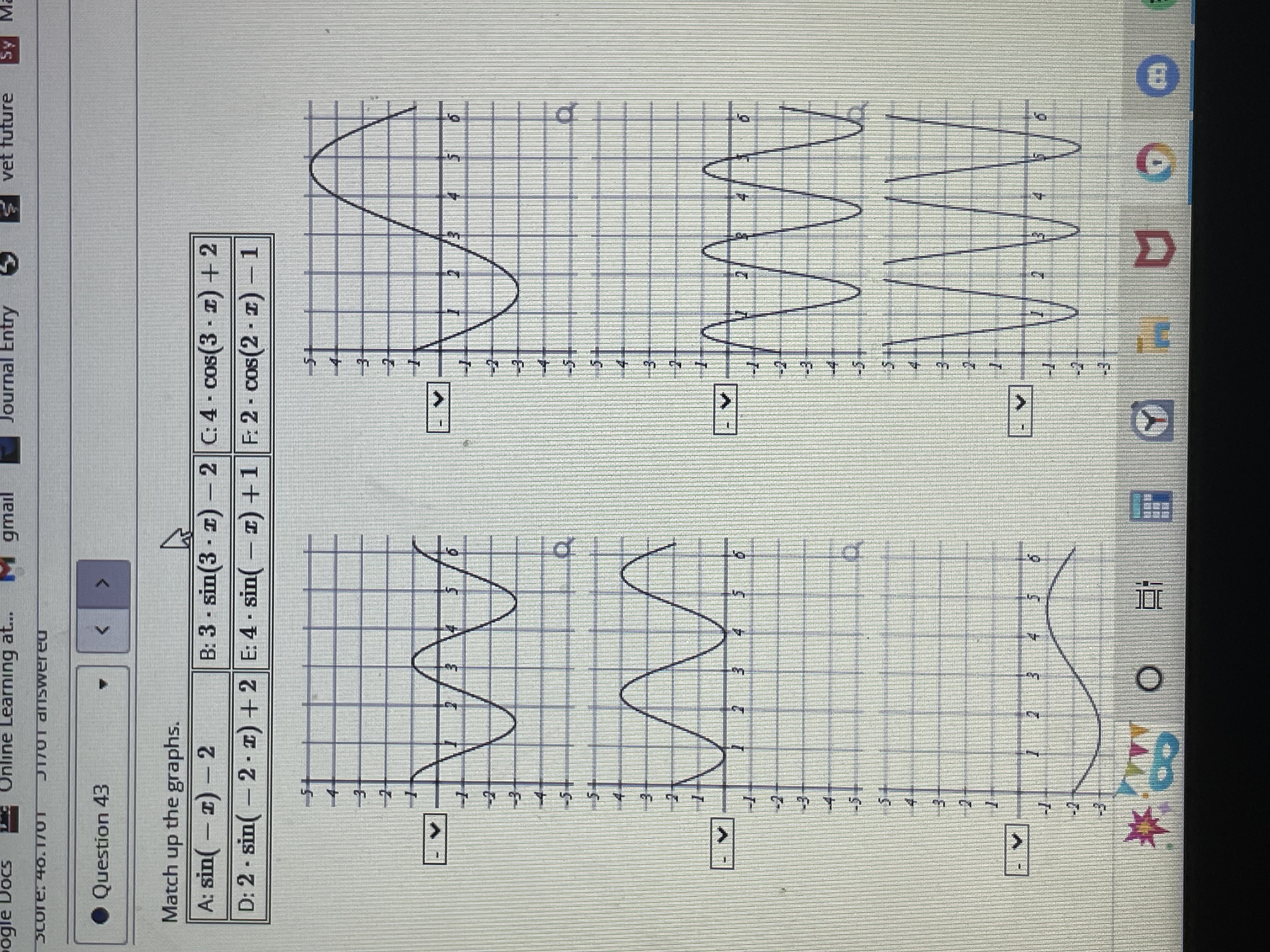
\fUse the given polynomial function to identify the zeros of the function and the multiplicity of each zero. Leave any remaining answer boxes empty. If one of the zeros is a decimal, be sure to record it as a fraction in lowest terms; otherwise, it will mark your answer incorrect. f(x) = 71(4x - 5)'(1 + 6)3 Zeros Mult. 0 1.25 -6 3 Note: It is possible that some of the answer boxes will be empty! XB Match each equation with a graph above - 2(0.66) a. red (R) 2(0.83) b. blue (B) 2(1.17) C. green (G) - 2(1.41)7 d. orange (0) - 4(1.17) e. black (K)The half-life of Radium-226 is 1590 years. If a sample contains 300 mg, how many mg will remain after 4000 years?| 38.7 XP The picture shows an angle 0
Step by Step Solution
There are 3 Steps involved in it

Get step-by-step solutions from verified subject matter experts
 Study Help