







Question: g. Make some other changes in the portfolio, making sure that the percentages sum to 100 percent. For example, enter 25 percent for Stock A,
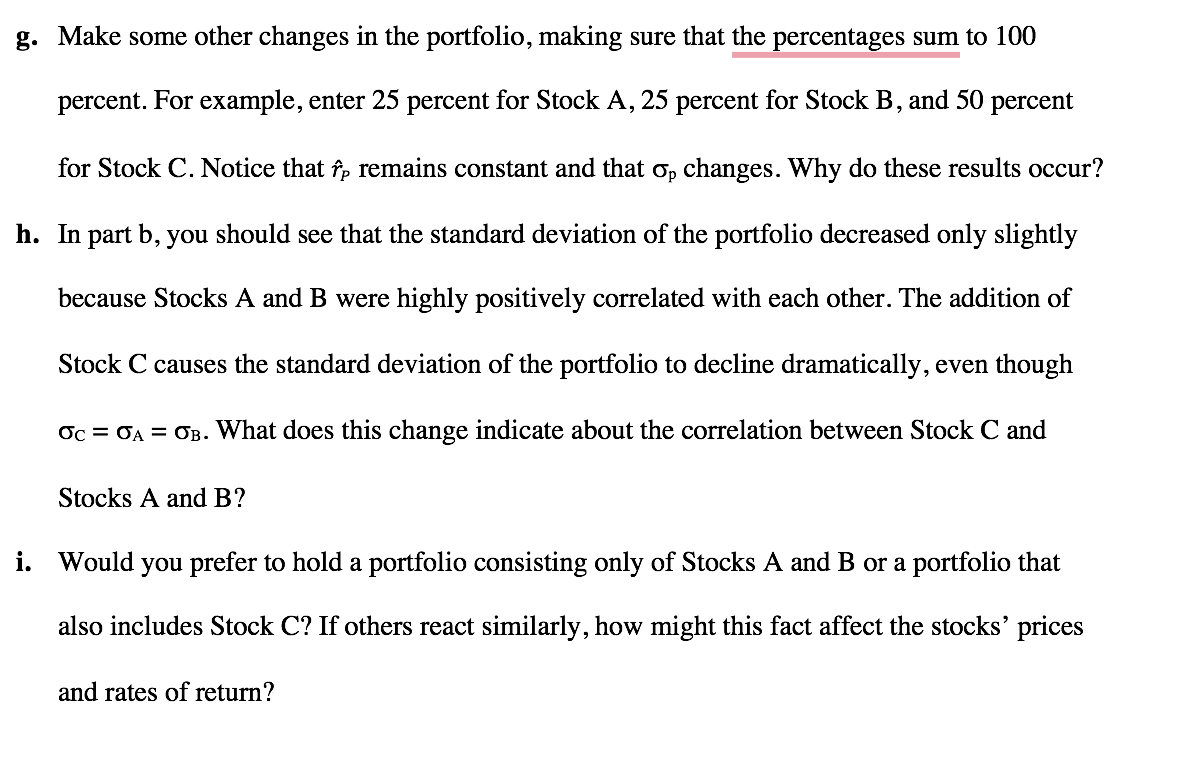
g. Make some other changes in the portfolio, making sure that the percentages sum to 100 percent. For example, enter 25 percent for Stock A, 25 percent for Stock B, and 50 percent for Stock C. Notice that r^P remains constant and that p changes. Why do these results occur? h. In part b, you should see that the standard deviation of the portfolio decreased only slightly because Stocks A and B were highly positively correlated with each other. The addition of Stock C causes the standard deviation of the portfolio to decline dramatically, even though C=A=B. What does this change indicate about the correlation between Stock C and Stocks A and B? i. Would you prefer to hold a portfolio consisting only of Stocks A and B or a portfolio that also includes Stock C? If others react similarly, how might this fact affect the stocks' prices and rates of return? g. Make some other changes in the portfolio, making sure that the percentages sum to 100 percent. For example, enter 25 percent for Stock A, 25 percent for Stock B, and 50 percent for Stock C. Notice that r^P remains constant and that p changes. Why do these results occur? h. In part b, you should see that the standard deviation of the portfolio decreased only slightly because Stocks A and B were highly positively correlated with each other. The addition of Stock C causes the standard deviation of the portfolio to decline dramatically, even though C=A=B. What does this change indicate about the correlation between Stock C and Stocks A and B? i. Would you prefer to hold a portfolio consisting only of Stocks A and B or a portfolio that also includes Stock C? If others react similarly, how might this fact affect the stocks' prices and rates of return
Step by Step Solution
There are 3 Steps involved in it

Get step-by-step solutions from verified subject matter experts
 Study Help