







Question: Gene Pools and Evolution The diagram below illustrates the dynamic nature of gene pools. the phenotype: black, dark, and pale. Mutations may create other It
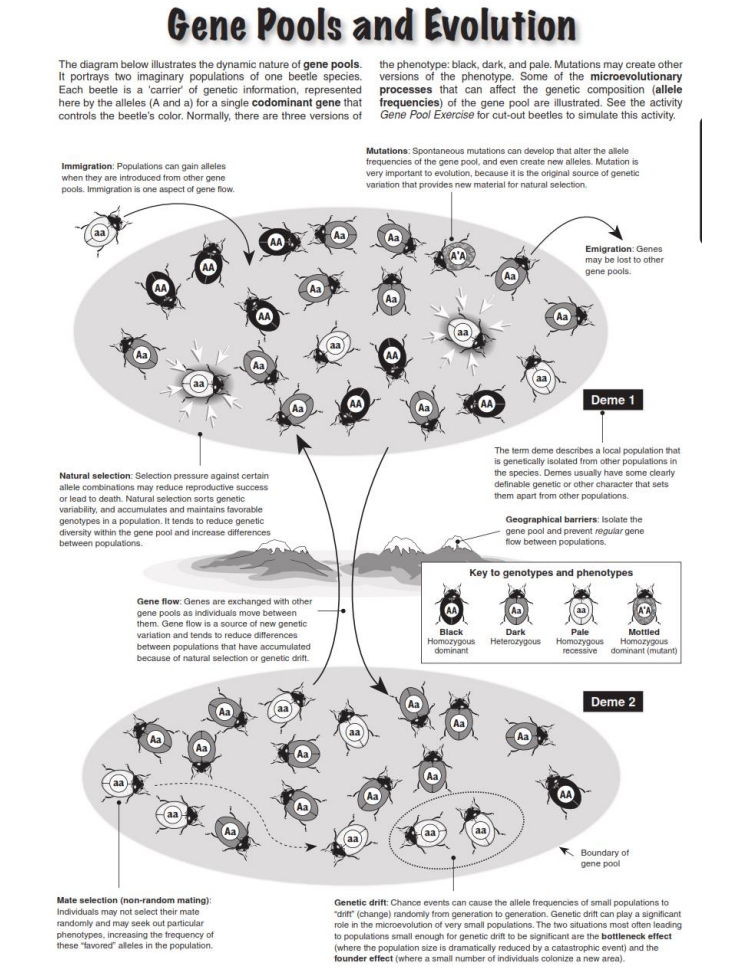
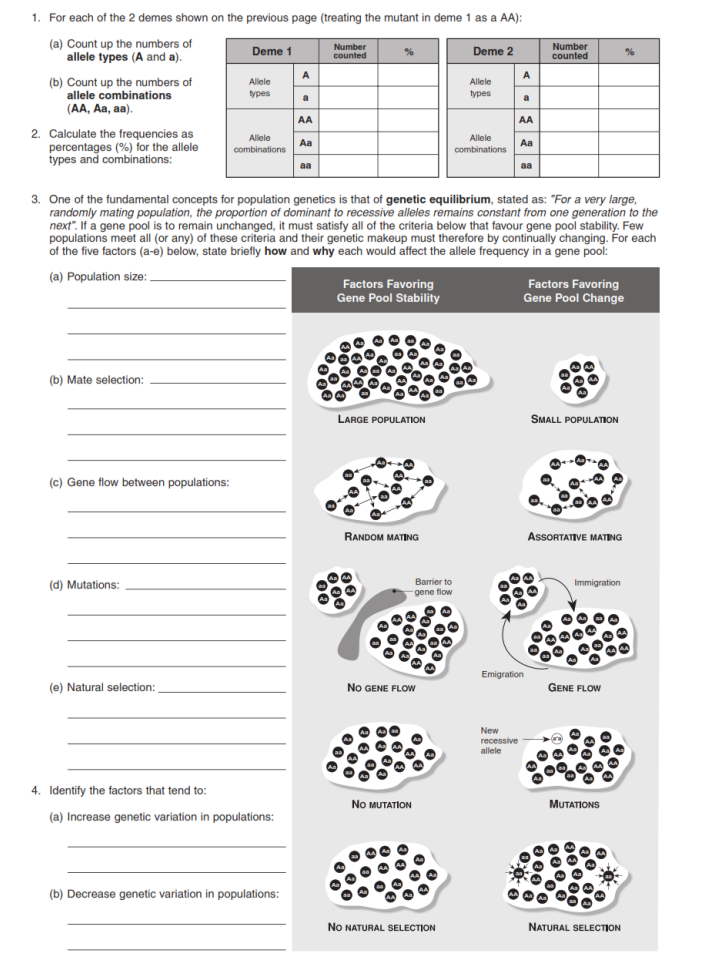
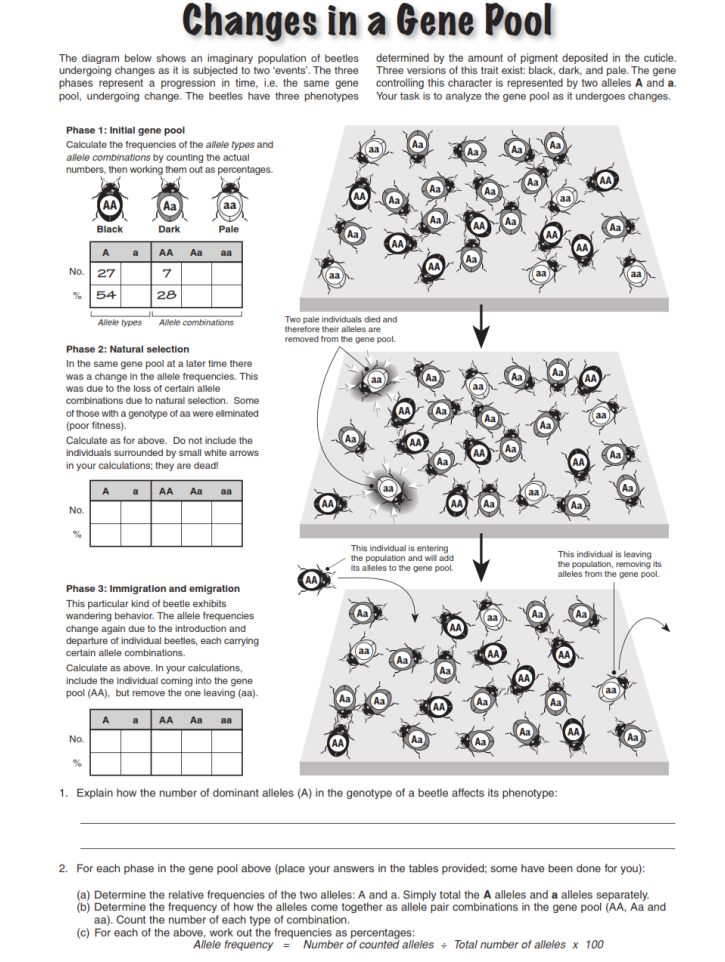
Gene Pools and Evolution The diagram below illustrates the dynamic nature of gene pools. the phenotype: black, dark, and pale. Mutations may create other It portrays two imaginary populations of one beetle species. versions of the phenotype. Some of the microevolutionary Each beetle is a 'carrier' of genetic information, represented processes that can affect the genetic composition (allele here by the alleles (A and a) for a single codominant gene that frequencies) of the gene pool are illustrated. See the activity controls the beetle's color. Normally, there are three versions of Gene Pool Exercise for cut-out beetles to simulate this activity. Mutations: Spontaneous mutations can develop that alter the allele Immigration: Populations can gain alleles frequencies of the gene pool, and even create new alleles. Mutation is when they are introduced from other gene very important to evolution, because it is the original source of genetic pools. Immigration is one aspect of gene flow. variation that provides new material for natural selection. AA Emigration: Genes may be lost to other Aal gene pools. AA Aa AA Aa [aa AA Aa AA AA Deme 1 The term deme describes a local population that is genetically isolated from other populations in Natural selection: Selection pressure against certain the species. Demes usually have some clearly allele combinations may reduce reproductive success definable genetic or other character that sets or lead to death. Natural selection sorts genetic them apart from other populations. variability, and accumulates and maintains favorable genotypes in a population. It tends to reduce genetic Geographical barriers: Isolate the diversity within the gene pool and increase differences gene pool and prevent regular gene between populations. flow between populations. Key to genotypes and phenotypes Gene flow: Genes are exchanged with other gene pools as individuals move between AA A'A them. Gene flow is a source of new genetic variation and tends to reduce differences Black Dark Pale Mottled between populations that have accumulated Homozygous Heterozygous Homozygous Homozygous dominant recessive dominant (mutant) because of natural selection or genetic drift. Deme 2 Aa Aa AA Aa F Boundary of gene pool Mate selection (non-random mating): Genetic drift: Chance events can cause the allele frequencies of small populations to Individuals may not select their mate "drift" (change) randomly from generation to generation. Genetic drift can play a significant randomly and may seek out particular role in the microevolution of very small populations. The two situations most often leading phenotypes, increasing the frequency of to populations small enough for genetic drift to be significant are the bottleneck effect these "favored"alleles in the population. (where the population size is dramatically reduced by a catastrophic event) and the ounder effect (where a small number of individuals colonize a new area).1. For each of the 2 demes shown on the previous page (treating the mutant in deme 1 as a AA): (a) Count up the numbers of Deme 1 Number allele types (A and a). counted Deme 2 Number counted (b) Count up the numbers of Allele Allele allele combinations types types (AA, Aa, aa). AA AA 2. Calculate the frequencies as Allale Allele Aa Aa percentages (%) for the allele combinations combinations types and combinations: aa 3. One of the fundamental concepts for population genetics is that of genetic equilibrium, stated as: "For a very large, randomly mating population, the proportion of dominant to recessive alleles remains constant from one generation to the next". If a gene pool is to remain unchanged, it must satisfy all of the criteria below that favour gene pool stability. Few populations meet all (or any) of these criteria and their genetic makeup must therefore by continually changing. For each of the five factors (a-e) below, state briefly how and why each would affect the allele frequency in a gene pool: (a) Population size: Factors Favoring Factors Favoring Gene Pool Stability Gene Pool Change O (b) Mate selection: LARGE POPULATION SMALL POPULATION (c) Gene flow between populations: RANDOM MATING ASSORTATIVE MATING (d) Mutations: Barrier to Immigration gene flow Emigration (e) Natural selection: NO GENE FLOW GENE FLOW New recessive allele 4. Identify the factors that tend to: NO MUTATION MUTATIONS (a) Increase genetic variation in populations: (b) Decrease genetic variation in populations: NO NATURAL SELECTION NATURAL SELECTIONChanges in a Gene Pool The diagram below shows an imaginary population of beetles determined by the amount of pigment deposited in the cuticle. undergoing changes as it is subjected to two 'events'. The three Three versions of this trait exist: black, dark, and pale. The gene phases represent a progression in time, i.e. the same gene controlling this character is represented by two alleles A and a. pool, undergoing change. The beetles have three phenotypes Your task is to analyze the gene pool as it undergoes changes. Phase 1: Initial gene pool Calculate the frequencies of the allele types and allele combinations by counting the actual numbers, then working them out as percentages Black Dark Pale AA AA AA AA Aa aa NO 27 54 28 Allele types Allele combinations Two pale individuals died and therefore their alleles are removed from the gene pool. Phase 2: Natural selection In the same gene pool at a later time there was a change in the allele frequencies. This was due to the loss of certain allele combinations due to natural selection. Some of those with a genotype of aa were eliminated (poor fitness). Calculate as for above. Do not include the AA individuals surrounded by small white arrows Aa in your calculations; they are dead! AA A AA Aa aa aa No AA AA This individual is entering the population and will add This individual is leaving is alleles to the gene pool. the population, removing its AA alleles from the gene pool. Phase 3: Immigration and emigration This particular kind of beetle exhibits wandering behavior. The allele frequencies change again due to the introduction and departure of individual beetles, each carrying certain allele combinations Calculate as above. In your calculations, include the individual coming into the gene AA pool (AA), but remove the one leaving (aa). AA Aa A AA AB aa No 1. Explain how the number of dominant alleles (A) in the genotype of a beetle affects its phenotype: 2. For each phase in the gene pool above (place your answers in the tables provided; some have been done for you): (a) Determine the relative frequencies of the two alleles: A and a. Simply total the A alleles and a alleles separately. b) Determine the frequency of how the alleles come together as allele pair combinations in the gene pool (AA, Aa and aa). Count the number of each type of combination. (c) For each of the above, work out the frequencies as percentages: Allele frequency = Number of counted alleles + Total number of alleles x 100
Step by Step Solution
There are 3 Steps involved in it

Get step-by-step solutions from verified subject matter experts
 Study Help