







Question: General instructions: Please follow the instructions for each question carefully. Distinguish in your drawing homologous chromosomes from non homologous chromosomes either by giving non-homologs a
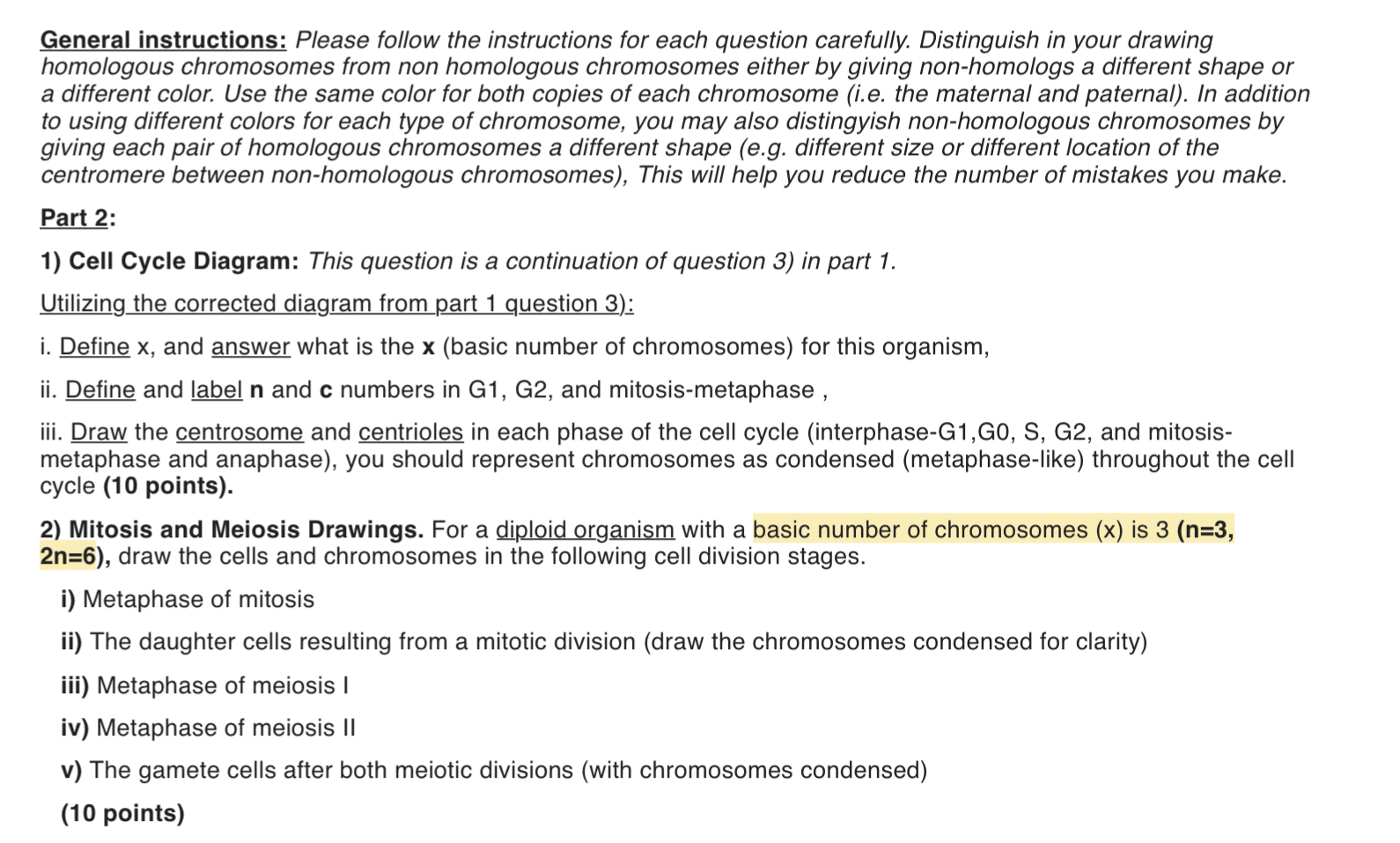
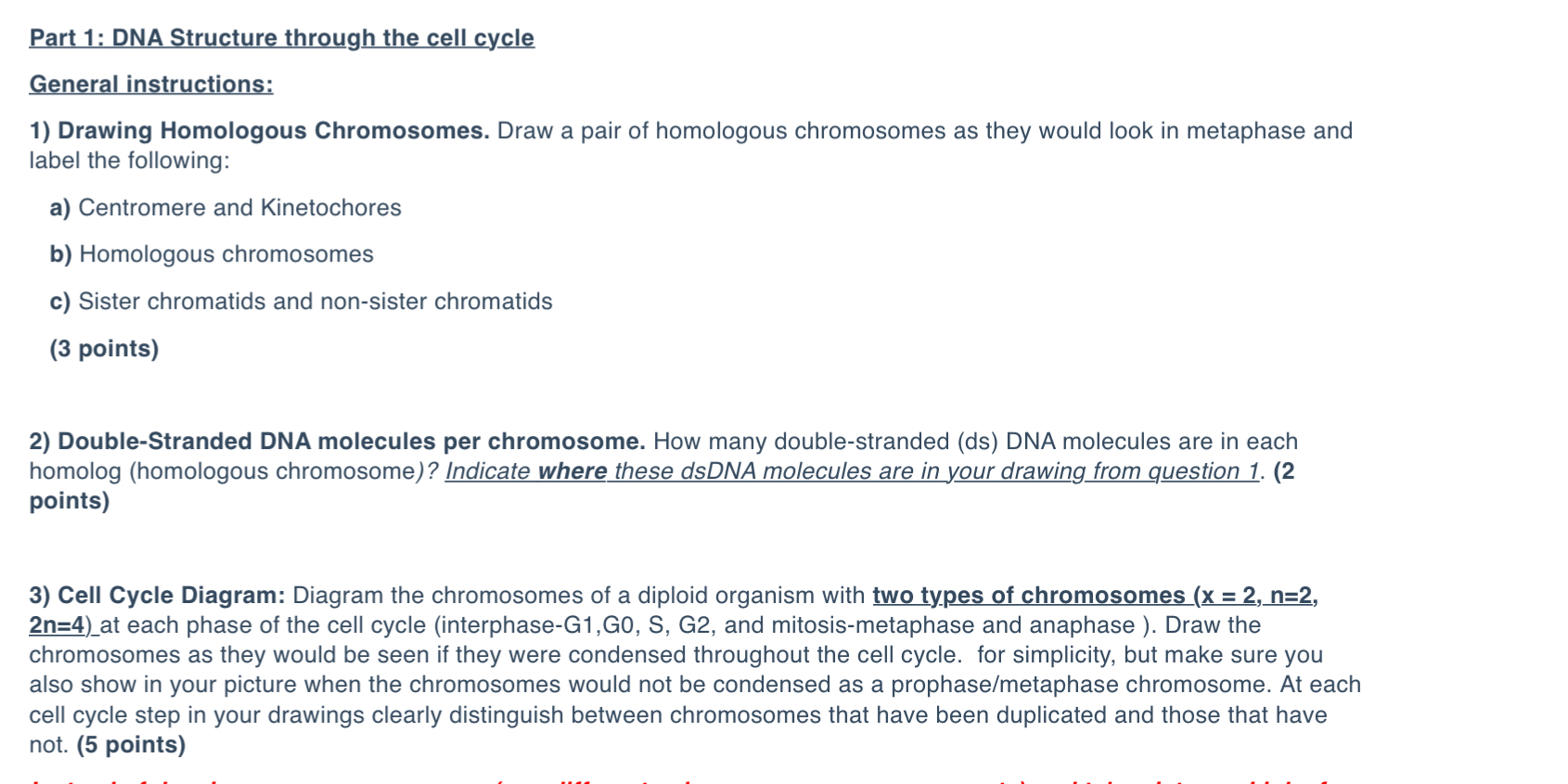 General instructions: Please follow the instructions for each question carefully. Distinguish in your drawing homologous chromosomes from non homologous chromosomes either by giving non-homologs a different shape or a different color. Use the same color for both copies of each chromosome (i.e. the maternal and paternal). In addition to using different colors for each type of chromosome, you may also distingyish non-homologous chromosomes by giving each pair of homologous chromosomes a different shape (e.g. different size or different location of the centromere between non-homologous chromosomes), This will help you reduce the number of mistakes you make. Part 2: 1) Cell Cycle Diagram: This question is a continuation of question 3) in part 1. Utilizing the corrected diagram from part 1 question 3) i. Define x, and answer what is the x (basic number of chromosomes) for this organism, ii. Define and label n and c numbers in G1, G2, and mitosis-metaphase , iii. Draw the centrosome and centrioles in each phase of the cell cycle (interphase-G1,GO, S, G2, and mitosis- metaphase and anaphase), you should represent chromosomes as condensed (metaphase-like) throughout the cell cycle (10 points). 2) Mitosis and Meiosis Drawings. For a diploid organism with a basic number of chromosomes (x) is 3 (n=3, 2n=6), draw the cells and chromosomes in the following cell division stages. i) Metaphase of mitosis ii) The daughter cells resulting from a mitotic division (draw the chromosomes condensed for clarity) iii) Metaphase of meiosis | iv) Metaphase of meiosis || v) The gamete cells after both meiotic divisions (with chromosomes condensed) (10 points) Part 1: DNA Structure through the cell cycle General instructions: 1) Drawing Homologous Chromosomes. Draw a pair of homologous chromosomes as they would look in metaphase and label the following: a) Centromere and Kinetochores b) Homologous chromosomes c) Sister chromatids and non-sister chromatids (3 points) 2) Double-Stranded DNA molecules per chromosome. How many double-stranded (ds) DNA molecules are in each homolog (homologous chromosome)? Indicate where these dsDNA molecules are in your drawing from question 1. (2 points) 3) Cell Cycle Diagram: Diagram the chromosomes of a diploid organism with two types of chromosomes (x = 2, n=2, 2n=4)_at each phase of the cell cycle (interphase-G1, GO, S, G2, and mitosis-metaphase and anaphase ). Draw the chromosomes as they would be seen if they were condensed throughout the cell cycle. for simplicity, but make sure you also show in your picture when the chromosomes would not be condensed as a prophase/metaphase chromosome. At each cell cycle step in your drawings clearly distinguish between chromosomes that have been duplicated and those that have not. (5 points)
Step by Step Solution
There are 3 Steps involved in it

Get step-by-step solutions from verified subject matter experts
 Study Help