







Question: General Requirements Inheritance Background Assignment Instructions General Submit all files to elearn. Make sure to name file(s) EXACTLY as specified - including capitalization. Do not
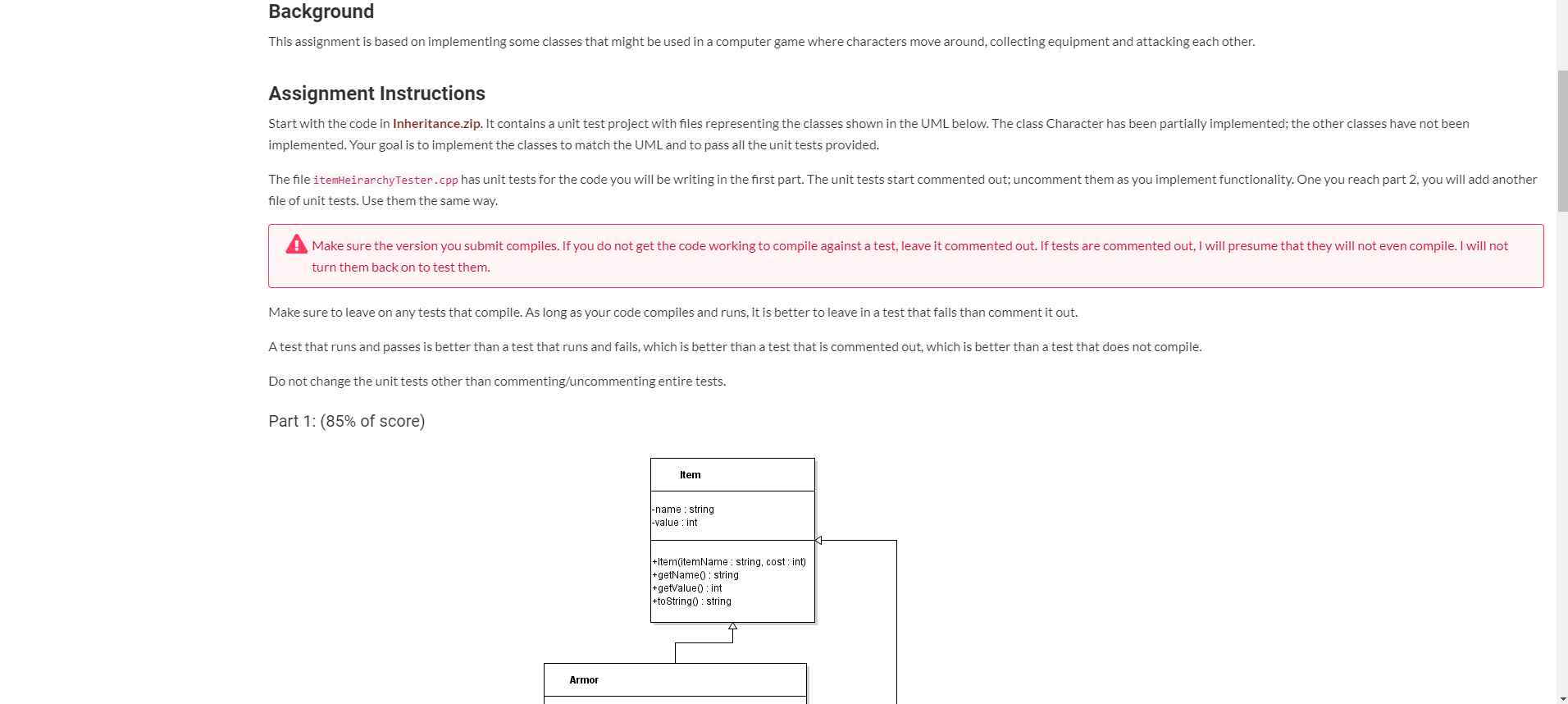
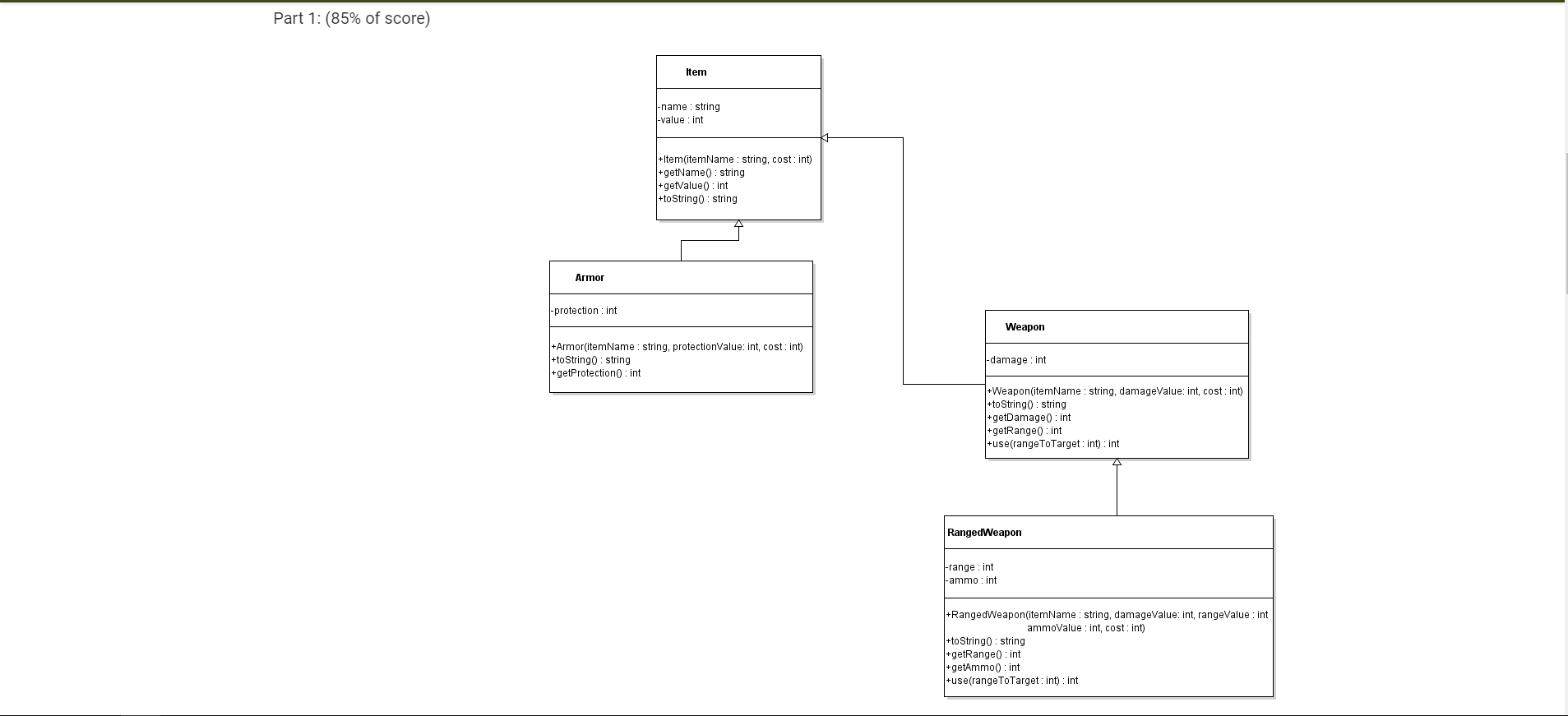
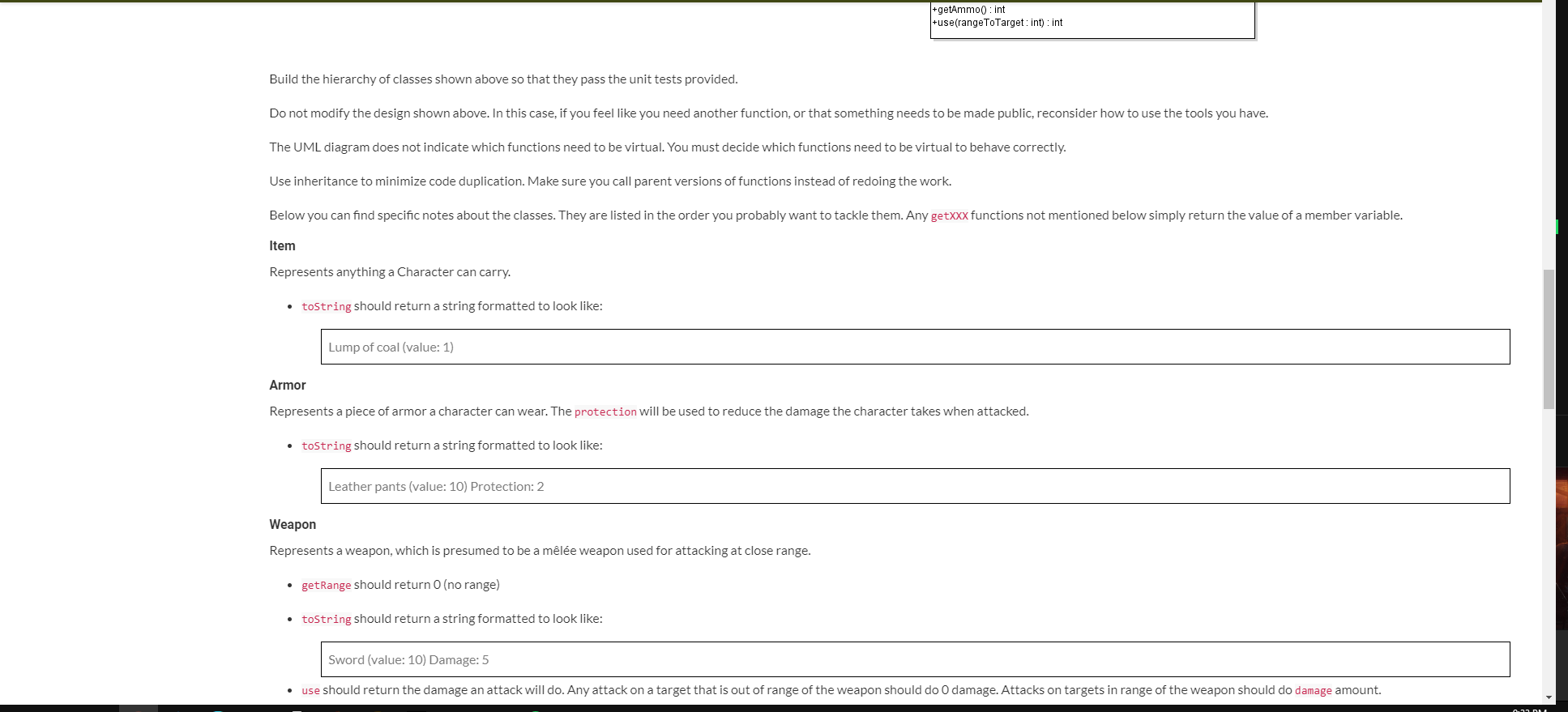
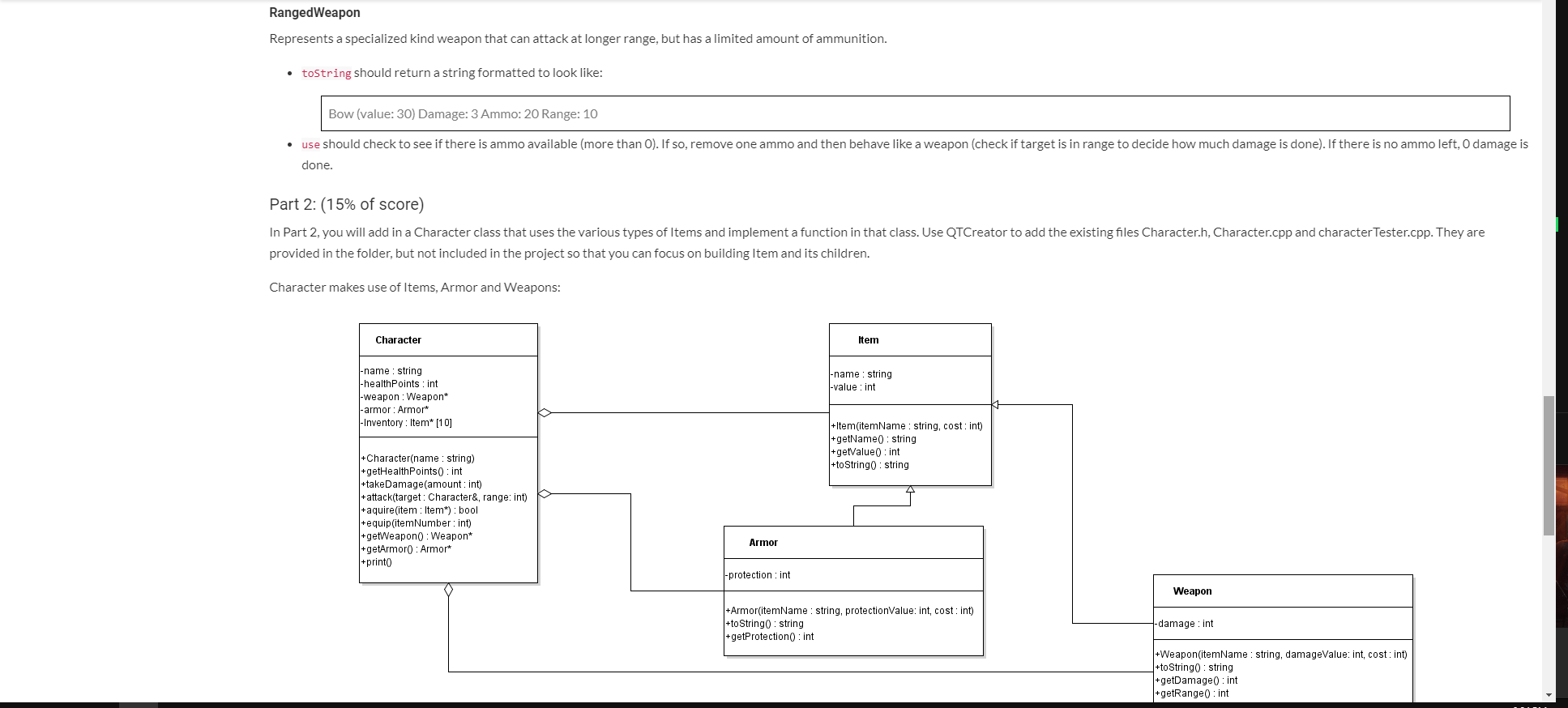
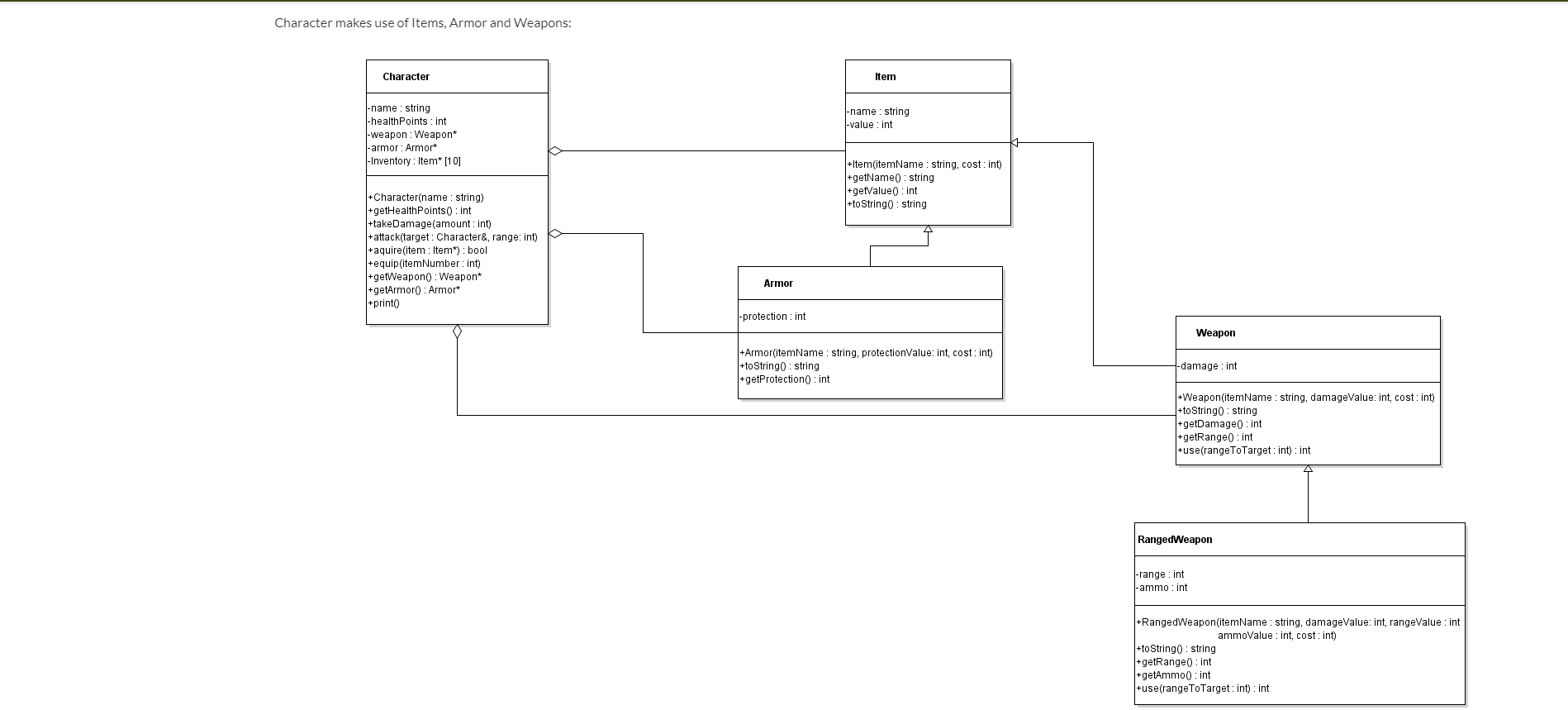
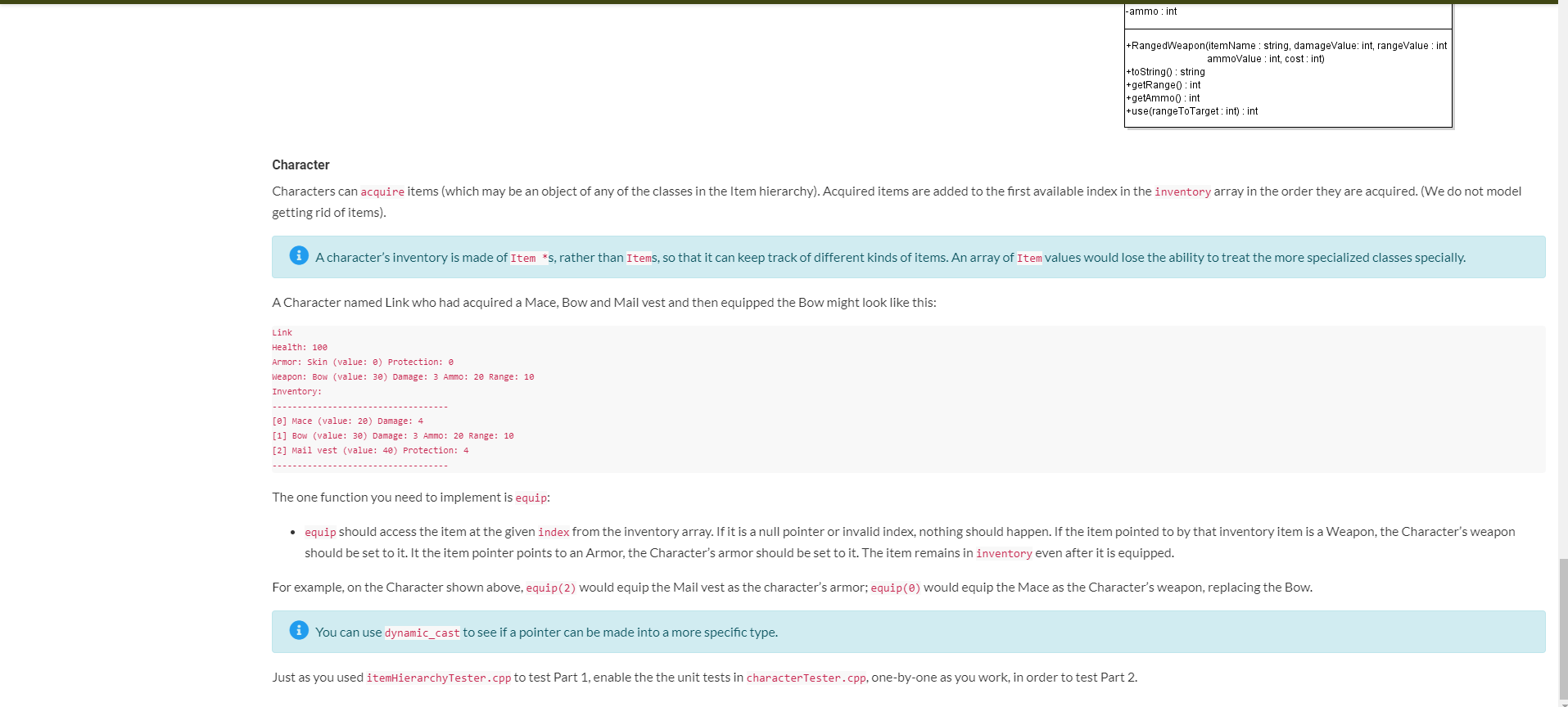
General Requirements Inheritance Background Assignment Instructions General Submit all files to elearn. Make sure to name file(s) EXACTLY as specified - including capitalization. Do not zip or otherwise package/compress files unless told to. Make sure your program accepts input in EXACTLY the order and format given. Do not ask for extra input or change the order of inputs. If you want to make an expanded version of a program that and get feedback on it, email it to me or show me in class. Slight variations in output wording/formatting are usually fine (as long as formatting isn't part of the assignment). If you do not get the right final output, print out some evidence of the work your program did to demonstrate your progress. Readability and maintainability of your code counts. Poor formatting, confusing variable names, unnecessarily complex code, etc... will all result in deductions to your score. Every file you submit should have a comment like this at the top: /** * @brief Assignment 1 * @name YOUR NAME */ Requirements Submit files: Inheritance.zip Before submitting, delete any Makefiles in your directory, as well as any subfolders (like "debug" or "release). Then zip up your final version of the Inheritance folder. Use zip, not 7z, rar, etc. For example, on windows, you can right click the Inheritance folder, then chose Send To Compressed (zipped) folder. Send to # Bluetooth device Compressed (zipped) folder Cut After zipping, verify that inside the.zip is your Inheritance directory, which contains your files. Submit your Inheritance.zip file to elearn. Background This assignment is based on implementing some classes that might be used in a computer game where characters move around, collecting equipment and attacking each other. Background This assignment is based on implementing some classes that might be used in a computer game where characters move around, collecting equipment and attacking each other. Assignment Instructions Start with the code in Inheritance.zip. It contains a unit test project with files representing the classes shown in the UML below. The class Character has been partially implemented; the other classes have not been implemented. Your goal is to implement the classes to match the UML and to pass all the unit tests provided. The file itemHeirarchy Tester.cpp has unit tests for the code you will be writing in the first part. The unit tests start commented out; uncomment them as you implement functionality. One you reach part 2, you will add another file of unit tests. Use them the same way. Make sure the version you submit compiles. If you do not get the code working to compile against a test, leave it commented out. If tests are commented out, I will presume that they will not even compile. I will not turn them back on to test them. Make sure to leave on any tests that compile. As long as your code compiles and runs, it is better to leave in a test that fails than comment it out. A test that runs and passes is better than a test that runs and fails, which is better than a test that is commented out, which is better than a test that does not compile. Do not change the unit tests other than commenting/uncommenting entire tests. Part 1: (85% of score) Item -name: string |-value: int |+Item(itemName : string, cost: int) +getName(: string + getValue(): int +toString: string Armor Part 1: (85% of score) Item -name: string -value: int +Item(itemName: string, cost: int) +getName: string +getValue: int +to String: string Armor -protection : int Weapon +Armor(itemName: string, protectionValue: int, cost: int) +toStringo: string +getProtection: int -damage: int 1+Weapon(itemName: string, damageValue: int, cost: int) +toString: string +getDamage: int +getRange: int +use(rangeToTarget: int): int RangedWeapon -range: int |-ammoint +RangedWeapon(itemName : string, damageValue: int, rangeValue: int ammoValue: int, cost: int) +toString: string +getRange(): int +getAmmo: int +use(rangeToTarget : int): int +getAmmo: int +use(rangeToTarget: int): int Build the hierarchy of classes shown above so that they pass the unit tests provided. Do not modify the design shown above. In this case, if you feel like you need another function, or that something needs to be made public, reconsider how to use the tools you have. The UML diagram does not indicate which functions need to be virtual. You must decide which functions need to be virtual to behave correctly. Use inheritance to minimize code duplication. Make sure you call parent versions of functions instead of redoing the work. Below you can find specific notes about the classes. They are listed in the order you probably want to tackle them. Any getxxx functions not mentioned below simply return the value of a member variable. Item Represents anything a Character can carry. .toString should return a string formatted to look like: Lump of coal (value: 1) Armor Represents a piece of armor a character can wear. The protection will be used to reduce the damage the character takes when attacked. .toString should return a string formatted to look like: Leather pants (value: 10) Protection: 2 Weapon Represents a weapon, which is presumed to be a mle weapon used for attacking at close range. getRange should return 0 (no range) toString should return a string formatted to look like: Sword (value: 10) Damage: 5 use should return the damage an attack will do. Any attack on a target that is out of range of the weapon should do O damage. Attacks on targets in range of the weapon should do damage amount. RangedWeapon Represents a specialized kind weapon that can attack at longer range, but has a limited amount of ammunition. .toString should return a string formatted to look like: Bow (value: 30) Damage: 3 Ammo: 20 Range: 10 no ammo left, O damage is use should check to see if there is ammo available (more than 0). If so, remove one ammo and then behave like a weapon (check if target is in range to decide how much damage is done). If there done. Part 2: (15% of score) In Part 2, you will add in a Character class that uses the various types of Items and implement a function in that class. Use QTCreator to add the existing files Character.h, Character.cpp and character Tester.cpp. They are provided in the folder, but not included in the project so that you can focus on building Item and its children. Character makes use of Items, Armor and Weapons: Character Item -name |-value: int -name: string -healthPoints: int -weapon: Weapon* -armor: Armor* -Inventory: Item* [10] +Item(itemName: string, cost: int) +getName(): string +getValue(): int +to String0: string +Character name: string) +getHealthPoints(): int +takeDamage(amount: int) +attack(target: Character&, range: int) +aquire(item : Item"): bool +equip(itemNumber: int) +getWeapon: Weapon +getArmoro: Armor Armor +printo -protection : int Weapon +Armor(itemName: string, protectionValue: int, cost: int) +toStringo: string +getProtection(): int -damage: int +Weapon(itemName: string, damageValue: int, cost: int) +toStringo: string + getDamage: int +getRange: int Character makes use of items, Armor and Weapons: Character Item -name: string -value: int -name: string -healthPoints: int -weapon: Weapon* -armor : Armor* -Inventory: Item* [10] |+Item(itemName: string, cost: int) + getName(): string +getValue(): int +toStringo: string +Character(name : string) +getHealthPoints(): int +takeDamage(amount: int) + attack(target: Character&, range: int) +aquire(item : Item"): bool +equip(itemNumber: int) + getWeapon: Weapon* +getArmoro : Armor* +printo Armor l-protection : int Weapon +Armor(itemName: string, protectionValue: int, cost: int) +toString: string +getProtection: int -damage: int +Weapon(itemName : string, damageValue: int, cost: int) +toStringo: string +getDamage: int +getRange: int +use(rangeToTarget: int): int RangedWeapon -range: int -ammo : int +RangedWeapon(itemName: string, damageValue: int, rangeValue: int ammoValue: int, cost: int) +to Stringo: string +getRange: int +getAmmoo: int +use(rangeToTarget: int): int -ammo : int +RangedWeapon(itemName : string, damageValue: int, rangeValue: int ammoValue: int, cost: int) +to String: string +getRange(): int + getAmmo: int +use(rangeToTarget: int) : int Character Characters can acquire items (which may be an object of any of the classes in the Item hierarchy). Acquired items are added to the first available index in the inventory array in the order they are acquired. (We do not model getting rid of items). A character's inventory is made of Item *s, rather than Items, so that it can keep track of different kinds of items. An array of Item values would lose the ability to treat the more specialized classes specially. A Character named Link who had acquired a Mace, Bow and Mail vest and then equipped the Bow might look like this: Link Health: 100 Armor: Skin (value: a) Protection: 6 Weapon: Bow (value: 30) Damage: 3 Ammo: 20 Range: 10 Inventory: [@] Mace (value: 20) Damage: 4 [1] Bow (value: 30) Damage: 3 Ammo: 20 Range: 10 [2] Mail vest (value: 40) Protection: 4 The one function you need to implement is equip: equip should access the item at the given index from the inventory array. If it is a null pointer or invalid index, nothing should happen. If the item pointed to by that inventory item is a Weapon, the Character's weapon should be set to it. It the item pointer points to an Armor, the Character's armor should be set to it. The item remains in inventory even after it is equipped. For example, on the Character shown above, equip(2) would equip the Mail vest as the character's armor; equip() would equip the Mace as the Character's weapon, replacing the Bow. i You can use dynamic_cast to see if a pointer can be made into a more specific type. Just as you used itemHierarchyTester.cpp to test Part 1, enable the the unit tests in character Tester.cpp, one-by-one as you work, in order to test Part 2
Step by Step Solution
There are 3 Steps involved in it

Get step-by-step solutions from verified subject matter experts
 Study Help