







Question: Give the output from this program. #include void fun1 (int, int): void fun2 (int *, int *): int main () { int x, y: x
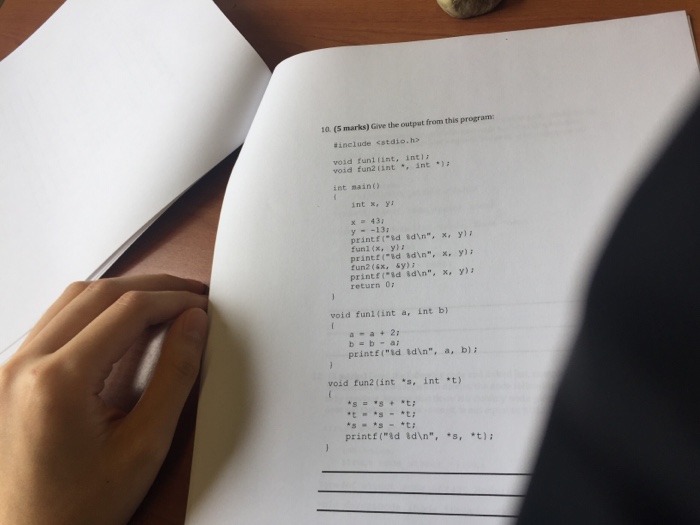
Give the output from this program. #include void fun1 (int, int): void fun2 (int *, int *): int main () { int x, y: x = 43: y = -13: print f("%d %d", x, y): fun1 (x, y): print f("%d %d ", x, y): fun2 (&x, &y): print f("%d %d ", x, y): return 0: } void fun1 (int a, int b) { a = a + 2: b = b - a: printf ("%d %d ", a, b): } void fun2 (int *s, int *t) (*s = *s + *t: *t = *s - *t: printf("%d %d ", *s, *t) }
Step by Step Solution
There are 3 Steps involved in it
1 Expert Approved Answer
Step: 1 Unlock

Question Has Been Solved by an Expert!
Get step-by-step solutions from verified subject matter experts
Step: 2 Unlock
Step: 3 Unlock
 Study Help