







Question: Given an array containing the sequence 1, 5, 29, 45, 67, 76, 92, 104, 187, 234 (in that order) state each comparison made in finding
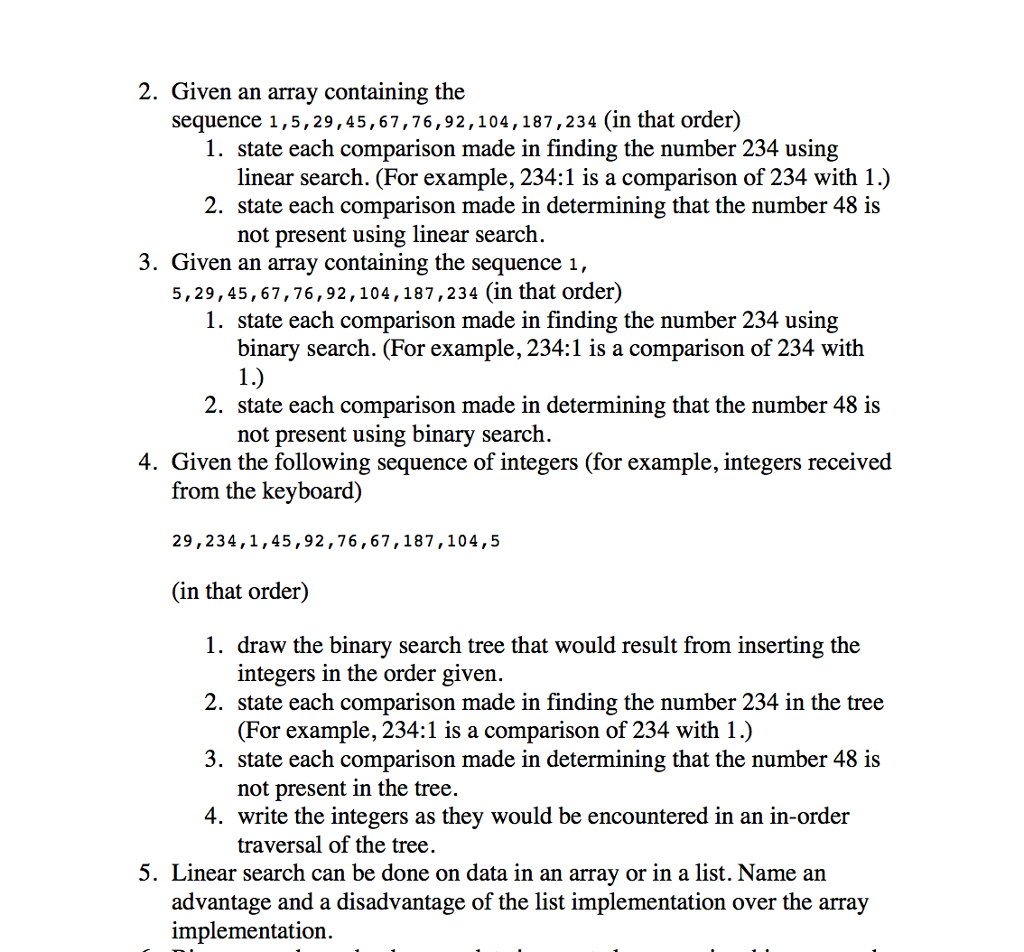
Given an array containing the sequence 1, 5, 29, 45, 67, 76, 92, 104, 187, 234 (in that order) state each comparison made in finding the number 234 using linear search. (For example, 234: 1 is a comparison of 234 with 1.) state each comparison made in determining that the number 48 is not present using linear search. Given an array containing the sequence 1, 5, 29, 45, 67, 76, 92, 104, 187, 234 (in that order) state each comparison made in finding the number 234 using binary search. (For example, 234: 1 is a comparison of 234 with 1.) state each comparison made in determining that the number 48 is not present using binary search. Given the following sequence of integers (for example, integers received from the keyboard) 29, 234, 1, 45, 92, 76, 67, 187, 104, 5 (in that order) draw the binary search tree that would result from inserting the integers in the order given. state each comparison made in finding the number 234 in the tree (For example, 234: 1 is a comparison of 234 with 1.) state each comparison made in determining that the number 48 is not present in the tree. write the integers as they would be encountered in an in-order traversal of the tree. Linear search can be done on data in an array or in a list. Name an advantage and a disadvantage of the list implementation over the array implementation
Step by Step Solution
There are 3 Steps involved in it

Get step-by-step solutions from verified subject matter experts
 Study Help