







Question: given codes in comments Feel free to add any additional functions you might need to queue.c and stack.c. In addition, you may modify the dynamic
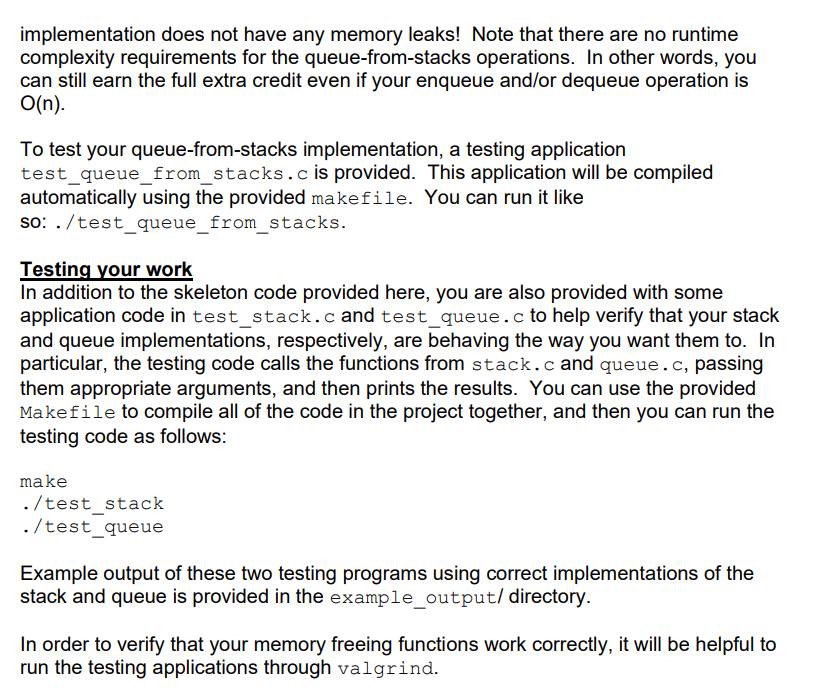
given codes in comments
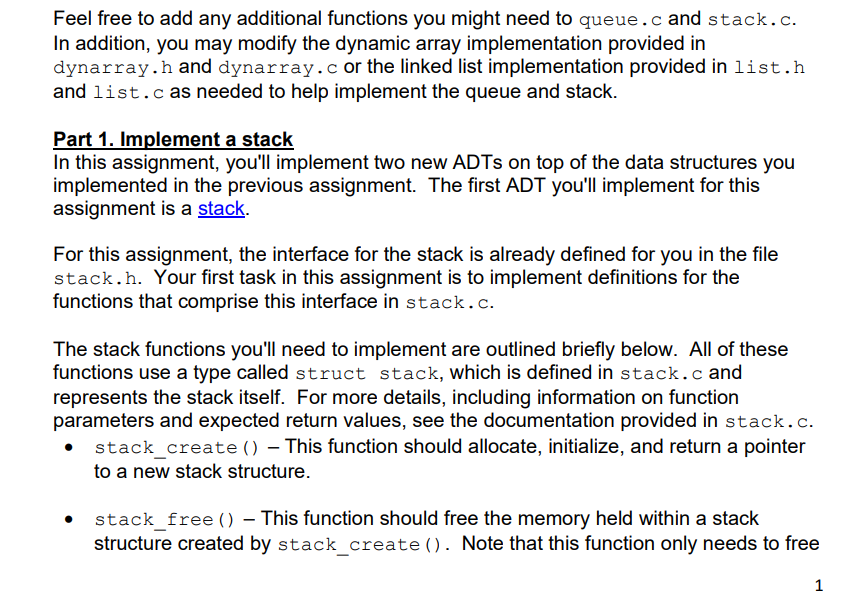
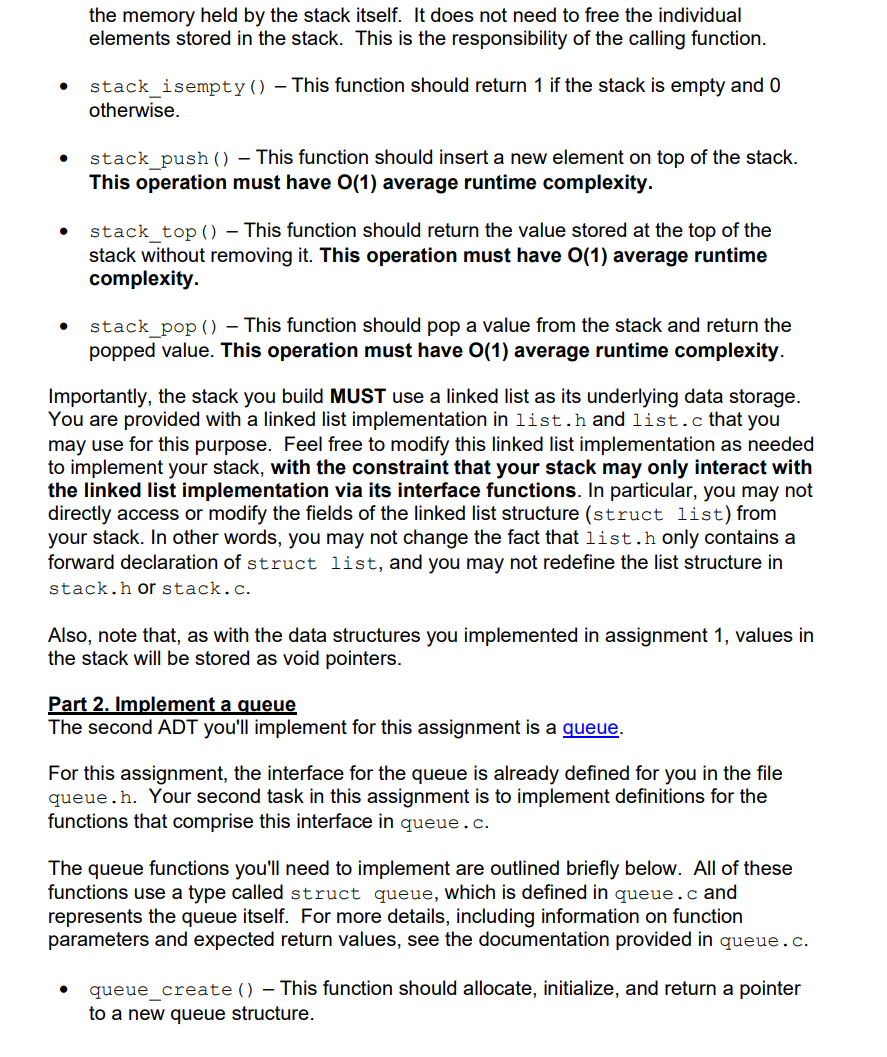
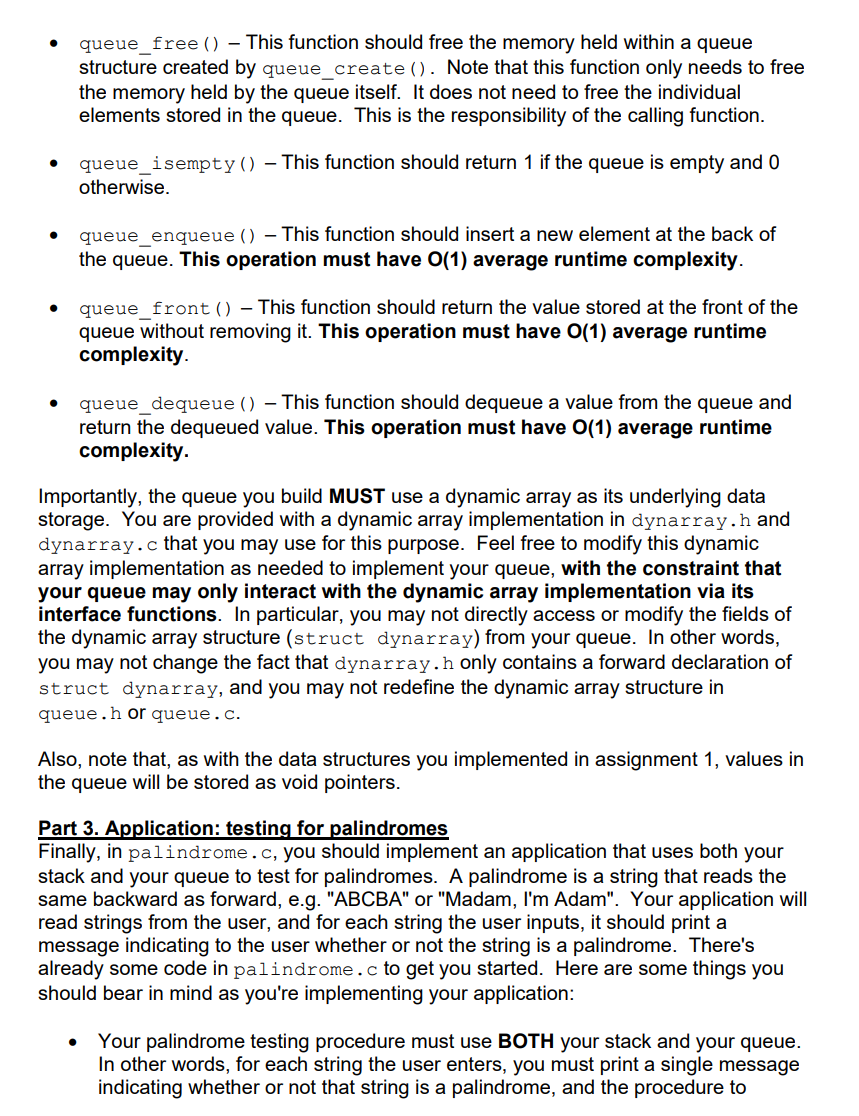
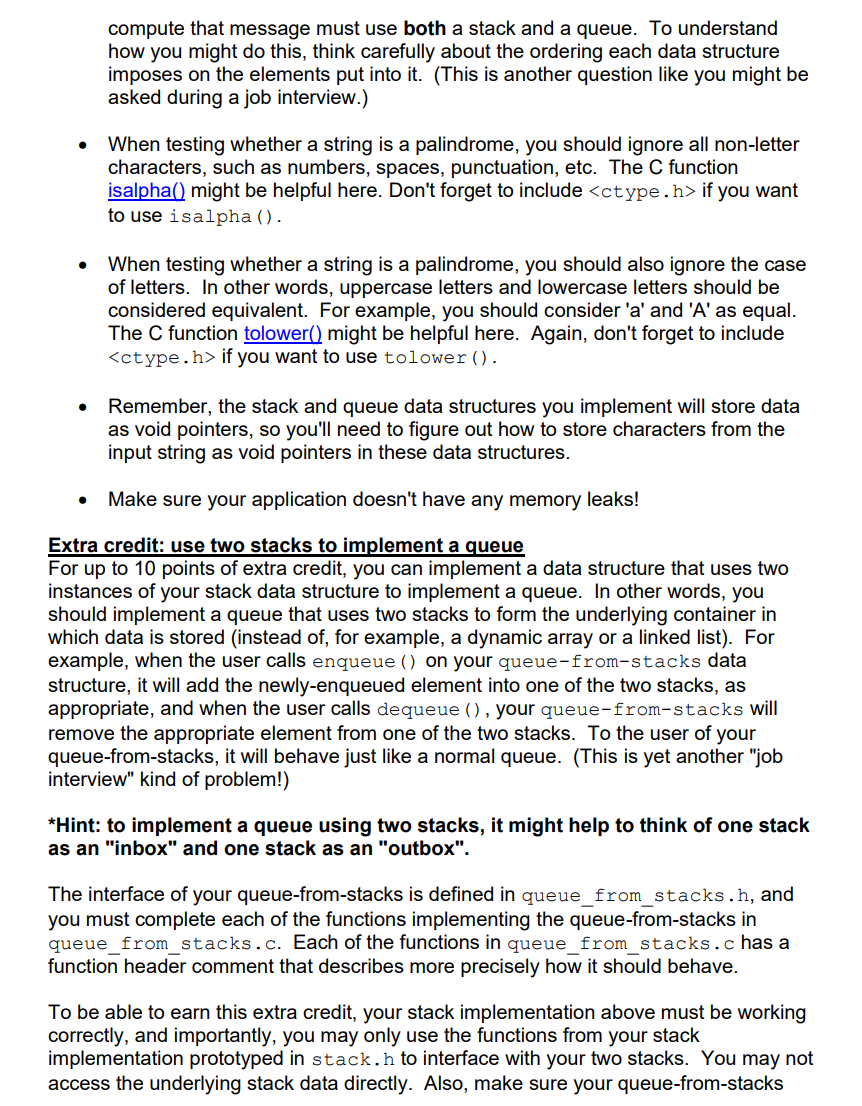
Feel free to add any additional functions you might need to queue.c and stack.c. In addition, you may modify the dynamic array implementation provided in dynarray.h and dynarray.c or the linked list implementation provided in list.h and list.c as needed to help implement the queue and stack. Part 1. Implement a stack In this assignment, you'll implement two new ADTs on top of the data structures you implemented in the previous assignment. The first ADT you'll implement for this assignment is a stack. For this assignment, the interface for the stack is already defined for you in the file stack.h. Your first task in this assignment is to implement definitions for the functions that comprise this interface in stack.c. The stack functions you'll need to implement are outlined briefly below. All of these functions use a type called struct stack, which is defined in stack.c and represents the stack itself. For more details, including information on function parameters and expected return values, see the documentation provided in stack.c. stack_create () This function should allocate, initialize, and return a pointer to a new stack structure. stack_free () This function should free the memory held within a stack structure created by stack_create(). Note that this function only needs to free 1 the memory held by the stack itself. It does not need to free the individual elements stored in the stack. This is the responsibility of the calling function. . stack_isempty() This function should return 1 if the stack is empty and 0 otherwise. . stack_push() - This function should insert a new element on top of the stack. This operation must have 0(1) average runtime complexity. . stack_top () - This function should return the value stored at the top of the stack without removing it. This operation must have O(1) average runtime complexity. stack_pop () - This function should pop a value from the stack and return the popped value. This operation must have O(1) average runtime complexity. Importantly, the stack you build MUST use a linked list as its underlying data storage. You are provided with a linked list implementation in list.h and list.c that you may use for this purpose. Feel free to modify this linked list implementation as needed to implement your stack, with the constraint that your stack may only interact with the linked list implementation via its interface functions. In particular, you may not directly access or modify the fields of the linked list structure (struct list) from your stack. In other words, you may not change the fact that list.h only contains a forward declaration of struct list, and you may not redefine the list structure in stack.h or stack.c. Also, note that, as with the data structures you implemented in assignment 1, values in the stack will be stored as void pointers. Part 2. Implement a queue The second ADT you'll implement for this assignment is a queue. For this assignment, the interface for the queue is already defined for you in the file queue.h. Your second task in this assignment is to implement definitions for the functions that comprise this interface in queue.c. The queue functions you'll need to implement are outlined briefly below. All of these functions use a type called struct queue, which is defined in queue.c and represents the queue itself. For more details, including information on function parameters and expected return values, see the documentation provided in queue.c. . queue_create () This function should allocate, initialize, and return a pointer to a new queue structure. . queue_free () - This function should free the memory held within a queue structure created by queue_create(). Note that this function only needs to free the memory held by the queue itself. It does not need to free the individual elements stored in the queue. This is the responsibility of the calling function. queue_isempty() - This function should return 1 if the queue is empty and 0 otherwise. . queue_enqueue () This function should insert a new element at the back of the queue. This operation must have O(1) average runtime complexity. . queue_front () - This function should return the value stored at the front of the queue without removing it. This operation must have 0(1) average runtime complexity. queue_dequeue () - This function should dequeue a value from the queue and return the dequeued value. This operation must have O(1) average runtime complexity. Importantly, the queue you build MUST use a dynamic array as its underlying data storage. You are provided with a dynamic array implementation in dynarray.h and dynarray.c that you may use for this purpose. Feel free to modify this dynamic array implementation as needed to implement your queue, with the constraint that your queue may only interact with the dynamic array implementation via its interface functions. In particular, you may not directly access or modify the fields of the dynamic array structure (struct dynarray) from your queue. In other words, you may not change the fact that dynarray.h only contains a forward declaration of struct dynarray, and you may not redefine the dynamic array structure in queue.h or queue.c. Also, note that, as with the data structures you implemented in assignment 1, values in the queue will be stored as void pointers. Part 3. Application: testing for palindromes Finally, in palindrome.c, you should implement an application that uses both your stack and your queue to test for palindromes. A palindrome is a string that reads the same backward as forward, e.g. "ABCBA" or "Madam, I'm Adam". Your application will read strings from the user, and for each string the user inputs, it should print a message indicating to the user whether or not the string is a palindrome. There's already some code in palindrome.c to get you started. Here are some things you should bear in mind as you're implementing your application: Your palindrome testing procedure must use BOTH your stack and your queue. In other words, for each string the user enters, you must print a single message indicating whether or not that string is a palindrome, and the procedure to compute that message must use both a stack and a queue. To understand how you might do this, think carefully about the ordering each data structure imposes on the elements put into it. (This is another question like you might be asked during a job interview.) . When testing whether a string is a palindrome, you should ignore all non-letter characters, such as numbers, spaces, punctuation, etc. The C function isalpha) might be helpful here. Don't forget to include
Step by Step Solution
There are 3 Steps involved in it

Get step-by-step solutions from verified subject matter experts
 Study Help