







Question: Given that lim f(x) = 8, lim g(x) = -4, lim h(x) = -4, find the following limits 20 - + 00 20- + 00
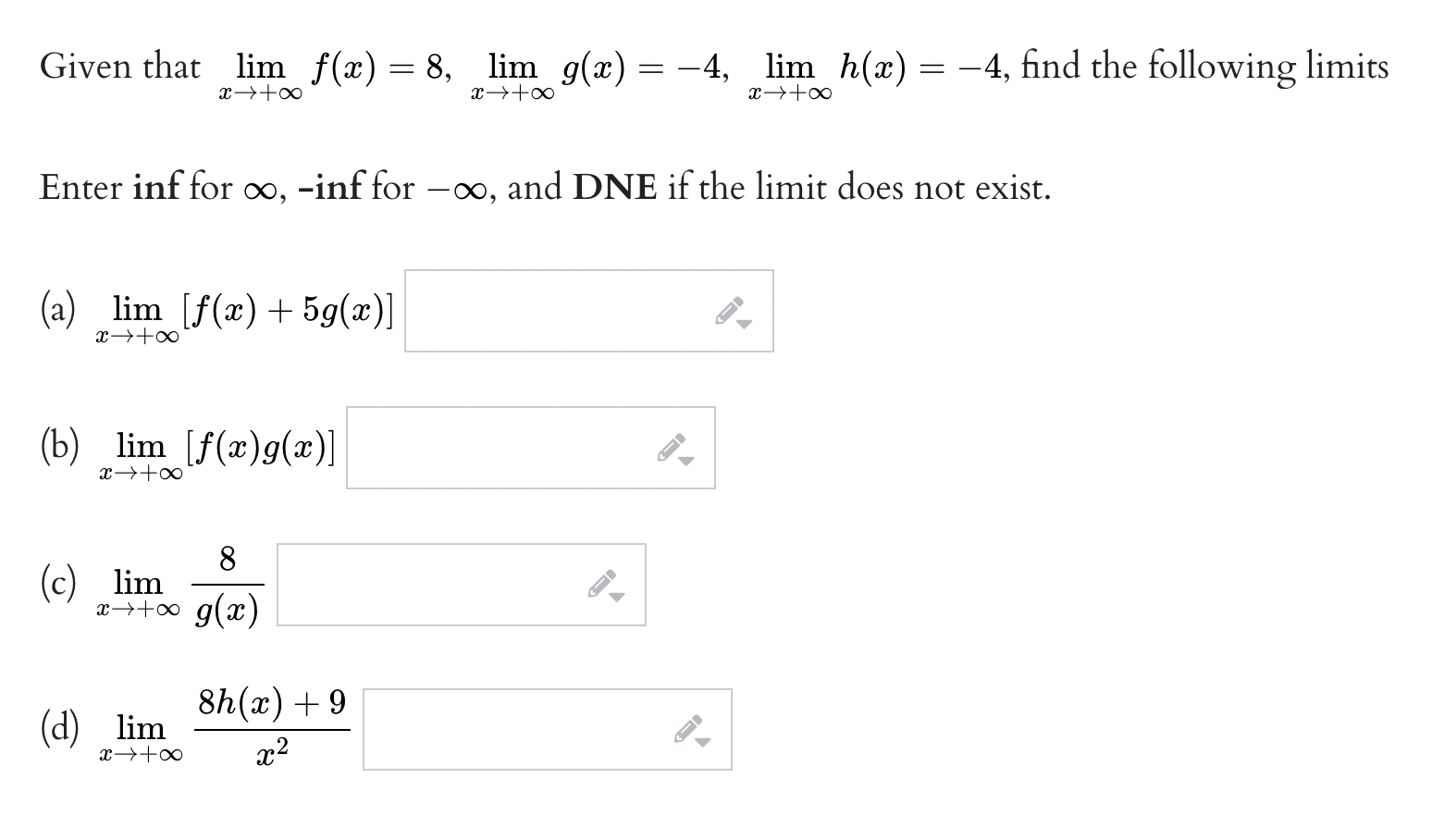
![the limit does not exist. (a) lim [f(x) + 59(x) ] x-](https://s3.amazonaws.com/si.experts.images/answers/2024/06/66748c64aaf67_14866748c647afbe.jpg)
![+ 00 (b) lim [f(x) g(x) ] 20- + 00 8 (c](https://s3.amazonaws.com/si.experts.images/answers/2024/06/66748c6588642_14966748c65531aa.jpg)
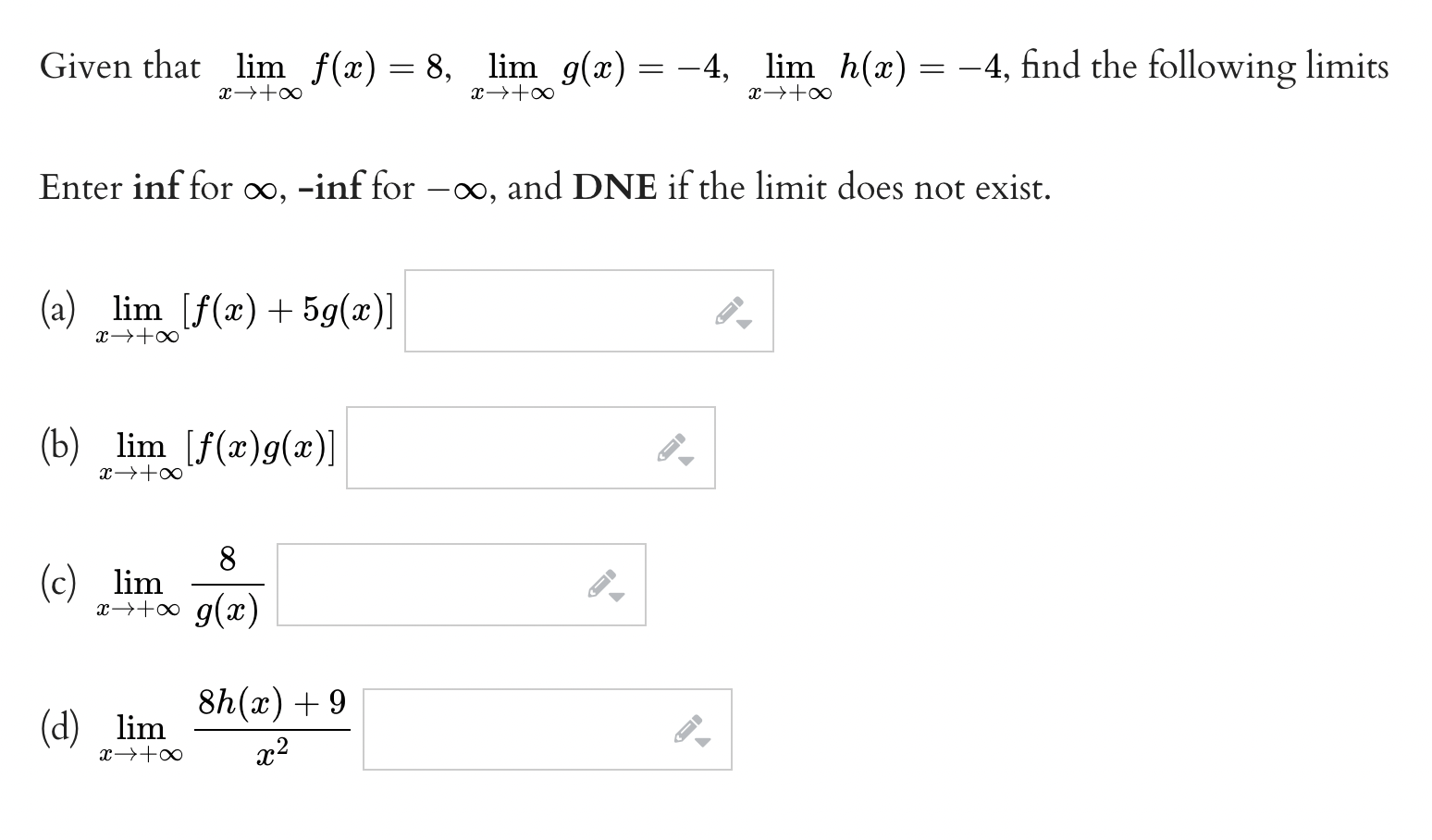
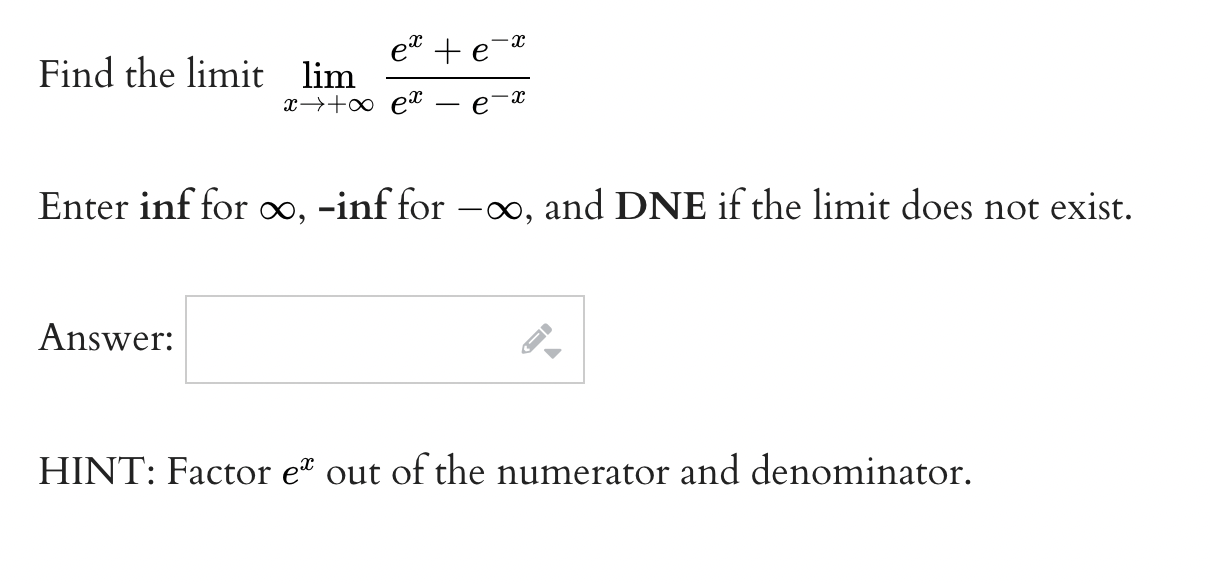
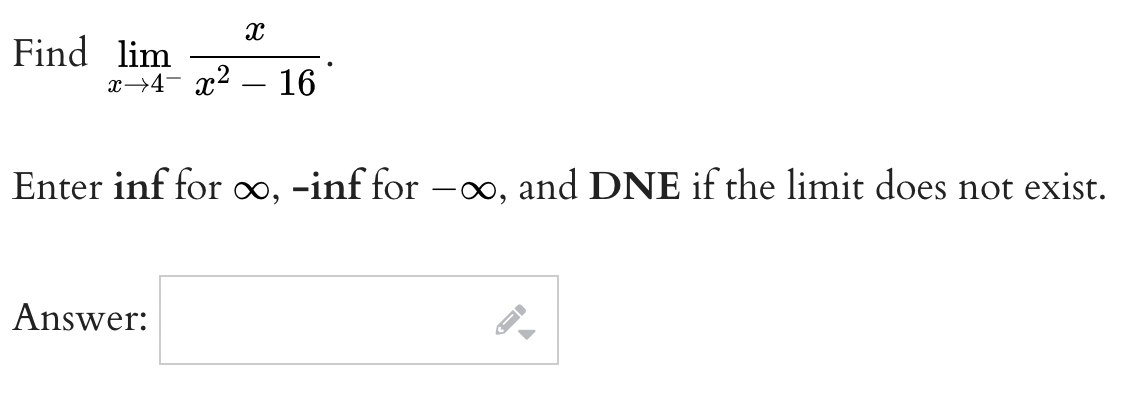
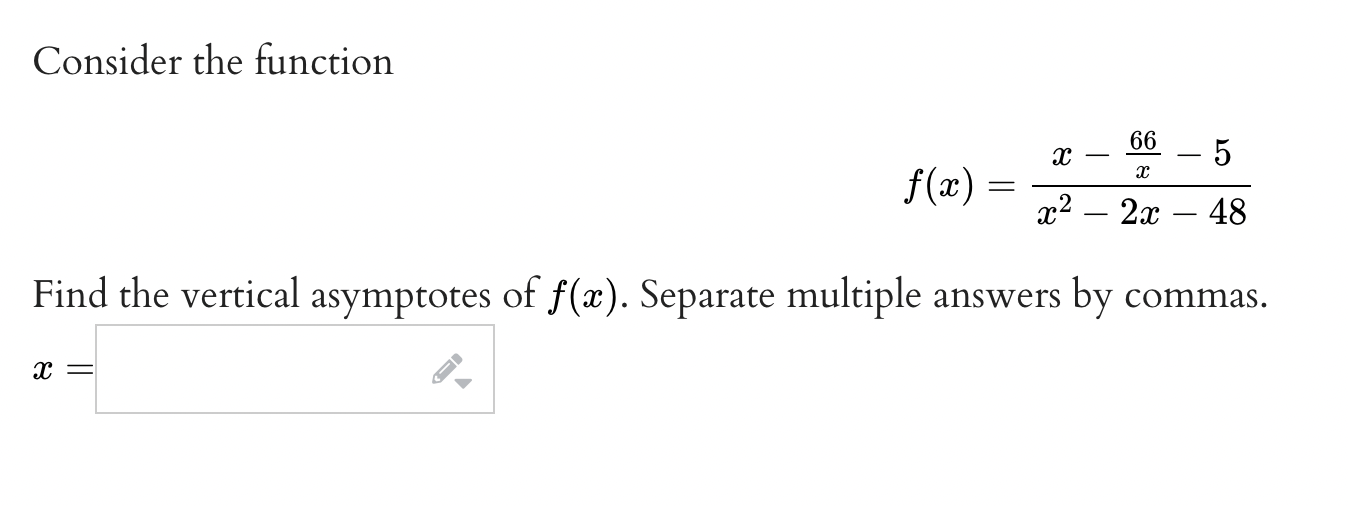
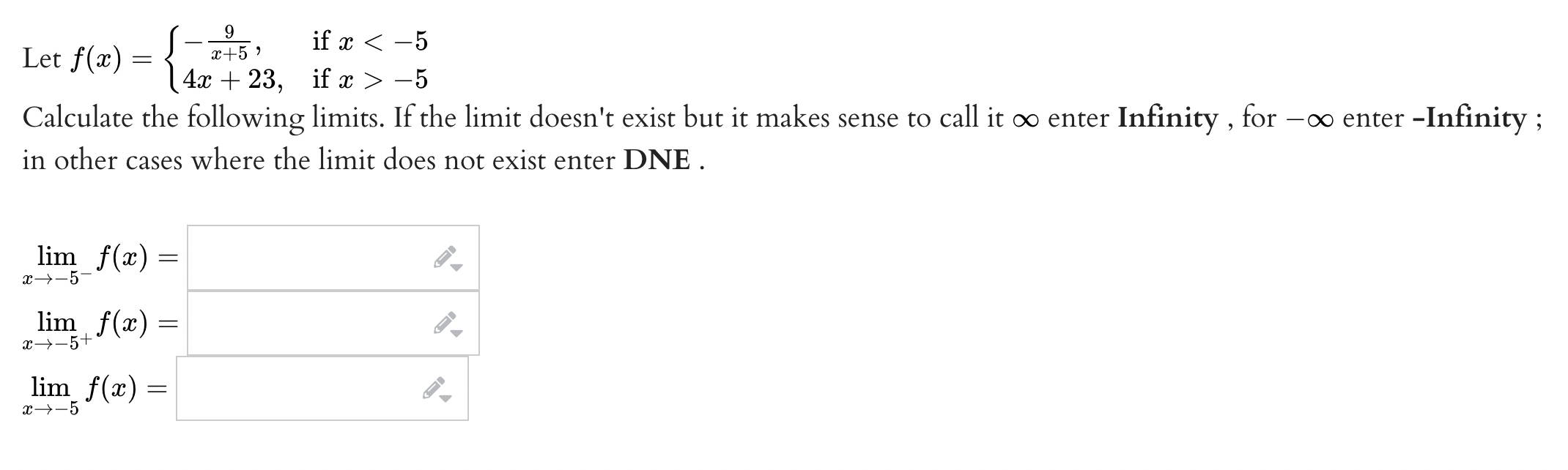
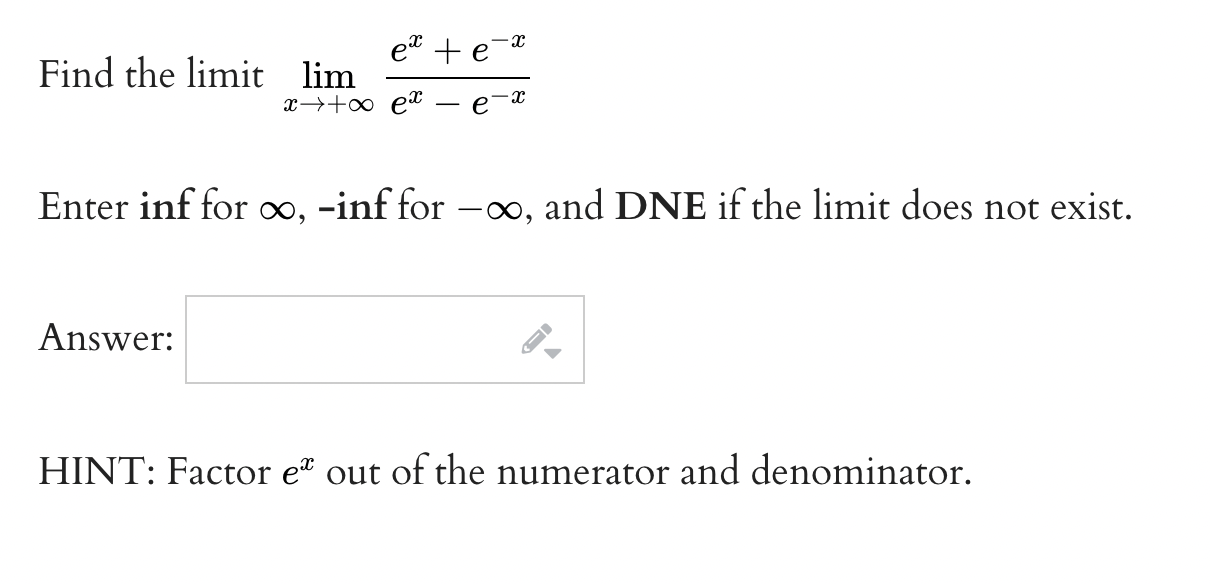
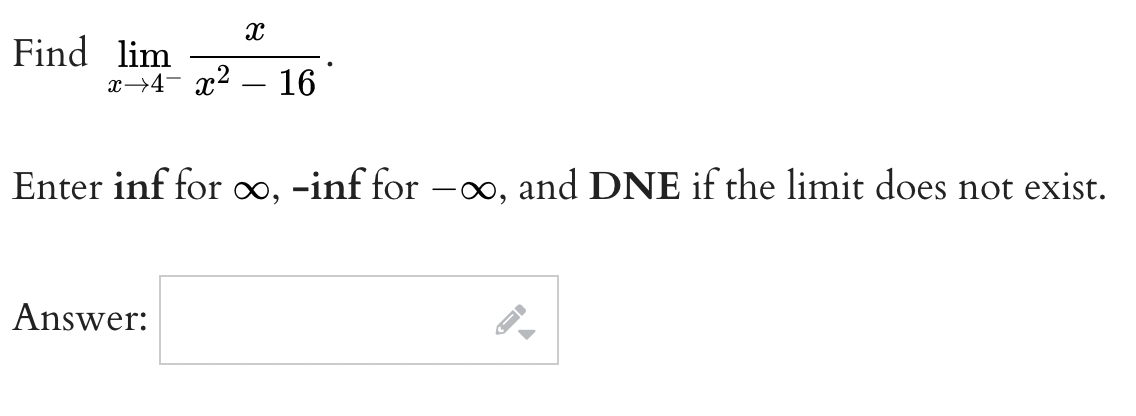
Given that lim f(x) = 8, lim g(x) = -4, lim h(x) = -4, find the following limits 20 - + 00 20- + 00 Enter inf for co, -inf for -oo, and DNE if the limit does not exist. (a) lim [f(x) + 59(x) ] x- + 00 (b) lim [f(x) g(x) ] 20- + 00 8 (c ) lim (d) lim 8h(x) + 9 2 2Find the limit lim Enter inf for co, -inf for -co, and DNE if the limit does not exist. Answer: HINT: Factor ed out of the numerator and denominator.a Find lim x-4- x2 - 16 Enter inf for co, -inf for -co, and DNE if the limit does not exist. Answer:Consider the function )m_%_ a: 3:225648 Find the vertical asymptotes of x). Separate multiple answers by commas. 51:: f, 9 if a -5 Calculate the following limits. If the limit doesn't exist but it makes sense to call it co enter Infinity , for -co enter -Infinity ; in other cases where the limit does not exist enter DNE . lim f(x) = lim f(x) = lim f(x) = x- -5
Step by Step Solution
There are 3 Steps involved in it

Get step-by-step solutions from verified subject matter experts
 Study Help