







Question: Given the information provided in Table 1: 1. What is the annual rate of interest being charged to the hospital? The total interest paid over
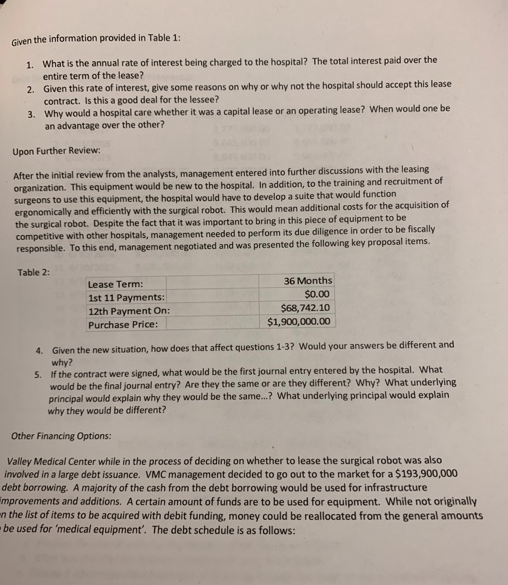
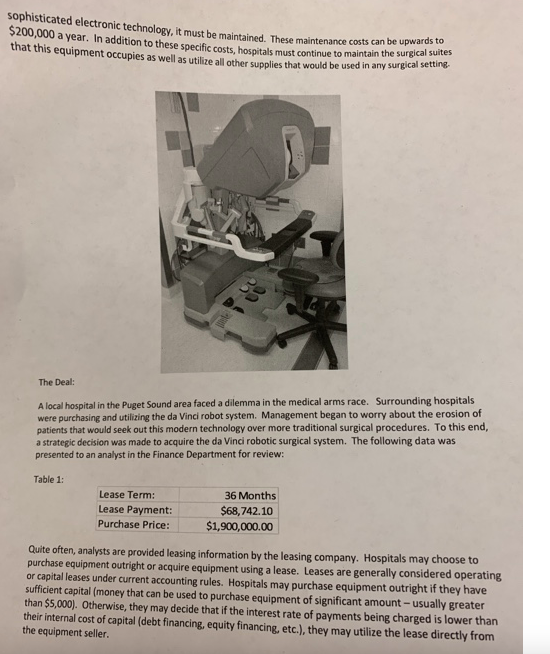
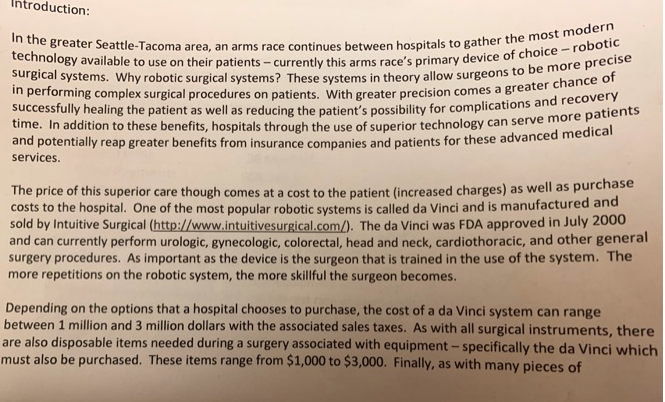
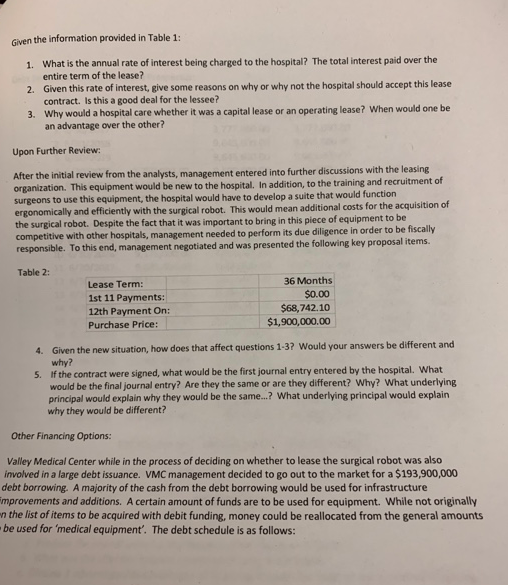
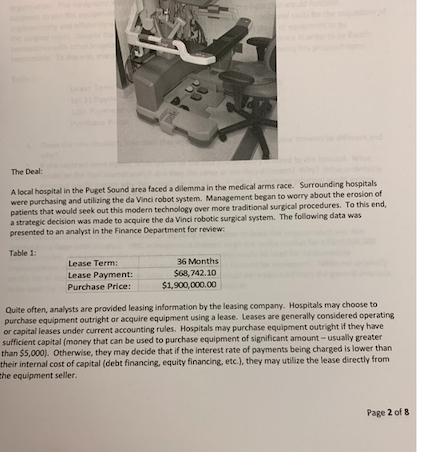
Given the information provided in Table 1: 1. What is the annual rate of interest being charged to the hospital? The total interest paid over the entire term of the lease? 2. Given this rate of interest, give some reasons on why or why not the hospital should accept this lease contract. Is this a good deal for the lessee? 3. Why would a hospital care whether it was a capital lease or an operating lease? When would one be an advantage over the other? Upon Further Review: After the initial review from the analysts, management entered into further discussions with the leasing organization. This equipment would be new to the hospital. In addition, to the training and recruitment of surgeons to use this equipment, the hospital would have to develop a suite that would function ergonomically and efficiently with the surgical robot. This would mean additional costs for the acquisition of the surgical robot. Despite the fact that it was important to bring in this piece of equipment to be competitive with other hospitals, management needed to perform its due diligence in order to be fiscally responsible. To this end, management negotiated and was presented the following key proposal items. Table 2: Lease Term: 1st 11 Payments: 12th Payment On: Purchase Price: 36 Months $0.00 $68,742.10 $1,900,000.00 4. Given the new situation, how does that affect questions 1-3? Would your answers be different and why? 5. If the contract were signed, what would be the first journal entry entered by the hospital. What would be the final journal entry? Are they the same or are they different? Why? What underlying principal would explain why they would be the same..? What underlying principal would explain why they would be different? Other Financing Options: Valley Medical Center while in the process of deciding on whether to lease the surgical robot was also involved in a large debt issuance. VMC management decided to go out to the market for a $193,900,000 debt borrowing. A majority of the cash from the debt borrowing would be used for infrastructure improvements and additions. A certain amount of funds are to be used for equipment. While not originally n the list of items to be acquired with debit funding, money could be reallocated from the general amounts - be used for 'medical equipment'. The debt schedule is as follows: sophisticated electronic technology, it must be maintained. These maintenance costs can be upwardsuite $200,000 a year. In addition to these specific costs, hospitals must continue to maintain the surgical suites that this equipment occupies as well as utilize all other supplies that would be used in any surgical setting- The Deal: A local hospital in the Puget Sound area faced a dilemma in the medical arms race. Surrounding hospitals were purchasing and utilizing the da Vinci robot system. Management began to worry about the erosion of patients that would seek out this modern technology over more traditional surgical procedures. To this end, a strategic decision was made to acquire the da Vinci robotic surgical system. The following data was presented to an analyst in the Finance Department for review: Table 1: Lease Term: Lease Payment: Purchase Price: 36 Months $68,742.10 $1,900,000.00 Quite often, analysts are provided leasing information by the leasing company. Hospitals may choose to purchase equipment outright or acquire equipment using a lease. Leases are generally considered operating or capital leases under current accounting rules. Hospitals may purchase equipment outright if they have sufficient capital (money that can be used to purchase equipment of significant amount - usually greater than $5,000). Otherwise, they may decide that if the interest rate of payments being charged is lower than their internal cost of capital (debt financing, equity financing, etc.), they may utilize the lease directly from the equipment seller. In the greater Seattle-Tacoma area, an arms race continues between hospitals to gather the most modern technology available to use on their patients - currently this arms race's primary device of choice - robotic surgical systems. Why robotic surgical systems? These systems in theory allow surgeons to be more precise in performing complex surgical procedures on patients. With greater precision comes a greater chance of oduction: time. In addition to these benefits, hospitals through the use of superior technology can serve more patients and potentially reap greater benefits from insurance companies and patients for these advanced medical services. The price of this superior care though comes at a cost to the patient (increased charges) as well as purchase costs to the hospital. One of the most popular robotic systems is called da Vinci and is manufactured and sold by Intuitive Surgical (http://www.intuitivesurgical.com/). The da Vinci was FDA approved in July 2000 and can currently perform urologic, gynecologic, colorectal, head and neck, cardiothoracic, and other general surgery procedures. As important as the device is the surgeon that is trained in the use of the system. The more repetitions on the robotic system, the more skillful the surgeon becomes. Depending on the options that a hospital chooses to purchase, the cost of a da Vinci system can range between 1 million and 3 million dollars with the associated sales taxes. As with all surgical instruments, there are also disposable items needed during a surgery associated with equipment - specifically the da Vinci which must also be purchased. These items range from $1,000 to $3,000. Finally, as with many pieces of Given the information provided in Table 1: 1. What is the annual rate of interest being charged to the hospital? The total interest paid over the entire term of the lease? 2. Given this rate of interest, give some reasons on why or why not the hospital should accept this lease contract. Is this a good deal for the lessee? 3. Why would a hospital care whether it was a capital lease or an operating lease? When would one be an advantage over the other? Upon Further Review: After the initial review from the analysts, management entered into further discussions with the leasing organization. This equipment would be new to the hospital. In addition, to the training and recruitment of surgeons to use this equipment, the hospital would have to develop a suite that would function ergonomically and efficiently with the surgical robot. This would mean additional costs for the acquisition of the surgical robot. Despite the fact that it was important to bring in this piece of equipment to be competitive with other hospitals, management needed to perform its due diligence in order to be fiscally responsible. To this end, management negotiated and was presented the following key proposal items. Table 2: Lease Term: 1st 11 Payments: 12th Payment On: Purchase Price: 36 Months $0.00 $68,742.10 $1,900,000.00 4. Given the new situation, how does that affect questions 1-3? Would your answers be different and why? 5. If the contract were signed, what would be the first journal entry entered by the hospital. What would be the final journal entry? Are they the same or are they different? Why? What underlying principal would explain why they would be the same..? What underlying principal would explain why they would be different? Other Financing Options: Valley Medical Center while in the process of deciding on whether to lease the surgical robot was also involved in a large debt issuance. VMC management decided to go out to the market for a $193,900,000 debt borrowing. A majority of the cash from the debt borrowing would be used for infrastructure improvements and additions. A certain amount of funds are to be used for equipment. While not originally n the list of items to be acquired with debit funding, money could be reallocated from the general amounts - be used for 'medical equipment'. The debt schedule is as follows: The Deal: A local hospital in the Puget Sound area faced a dilemma in the medical arms race. Surrounding hospitals were purchasing and utilizing the da Vinci robot system. Management began to worry about the erosion of patients that would seek out this modern technology over more traditional surgical procedures. To this end, a strategic decision was made to acquire the da Vinci robotic surgical system. The following data was presented to an analyst in the Finance Department for review: Table 1: Lease Term: Lease Payment: Purchase Price: 36 Months $68,742.10 $1,900,000.00 Quite often, analysts are provided leasing information by the leasing company. Hospitals may choose to purchase equipment outright or acquire equipment using a lease. Leases are generally considered operating or capital leases under current accounting rules. Hospitals may purchase equipment outright if they have sufficient capital (money that can be used to purchase equipment of significant amount - usually greater than $5,000). Otherwise, they may decide that if the interest rate of payments being charged is lower than their internal cost of capital (debt financing, equity financing, etc.), they may utilize the lease directly from the equipment seller. Page 2 of 8 Given the information provided in Table 1: 1. What is the annual rate of interest being charged to the hospital? The total interest paid over the entire term of the lease? 2. Given this rate of interest, give some reasons on why or why not the hospital should accept this lease contract. Is this a good deal for the lessee? 3. Why would a hospital care whether it was a capital lease or an operating lease? When would one be an advantage over the other? Upon Further Review: After the initial review from the analysts, management entered into further discussions with the leasing organization. This equipment would be new to the hospital. In addition, to the training and recruitment of surgeons to use this equipment, the hospital would have to develop a suite that would function ergonomically and efficiently with the surgical robot. This would mean additional costs for the acquisition of the surgical robot. Despite the fact that it was important to bring in this piece of equipment to be competitive with other hospitals, management needed to perform its due diligence in order to be fiscally responsible. To this end, management negotiated and was presented the following key proposal items. Table 2: Lease Term: 1st 11 Payments: 12th Payment On: Purchase Price: 36 Months $0.00 $68,742.10 $1,900,000.00 4. Given the new situation, how does that affect questions 1-3? Would your answers be different and why? 5. If the contract were signed, what would be the first journal entry entered by the hospital. What would be the final journal entry? Are they the same or are they different? Why? What underlying principal would explain why they would be the same..? What underlying principal would explain why they would be different? Other Financing Options: Valley Medical Center while in the process of deciding on whether to lease the surgical robot was also involved in a large debt issuance. VMC management decided to go out to the market for a $193,900,000 debt borrowing. A majority of the cash from the debt borrowing would be used for infrastructure improvements and additions. A certain amount of funds are to be used for equipment. While not originally n the list of items to be acquired with debit funding, money could be reallocated from the general amounts - be used for 'medical equipment'. The debt schedule is as follows: sophisticated electronic technology, it must be maintained. These maintenance costs can be upwardsuite $200,000 a year. In addition to these specific costs, hospitals must continue to maintain the surgical suites that this equipment occupies as well as utilize all other supplies that would be used in any surgical setting- The Deal: A local hospital in the Puget Sound area faced a dilemma in the medical arms race. Surrounding hospitals were purchasing and utilizing the da Vinci robot system. Management began to worry about the erosion of patients that would seek out this modern technology over more traditional surgical procedures. To this end, a strategic decision was made to acquire the da Vinci robotic surgical system. The following data was presented to an analyst in the Finance Department for review: Table 1: Lease Term: Lease Payment: Purchase Price: 36 Months $68,742.10 $1,900,000.00 Quite often, analysts are provided leasing information by the leasing company. Hospitals may choose to purchase equipment outright or acquire equipment using a lease. Leases are generally considered operating or capital leases under current accounting rules. Hospitals may purchase equipment outright if they have sufficient capital (money that can be used to purchase equipment of significant amount - usually greater than $5,000). Otherwise, they may decide that if the interest rate of payments being charged is lower than their internal cost of capital (debt financing, equity financing, etc.), they may utilize the lease directly from the equipment seller. In the greater Seattle-Tacoma area, an arms race continues between hospitals to gather the most modern technology available to use on their patients - currently this arms race's primary device of choice - robotic surgical systems. Why robotic surgical systems? These systems in theory allow surgeons to be more precise in performing complex surgical procedures on patients. With greater precision comes a greater chance of oduction: time. In addition to these benefits, hospitals through the use of superior technology can serve more patients and potentially reap greater benefits from insurance companies and patients for these advanced medical services. The price of this superior care though comes at a cost to the patient (increased charges) as well as purchase costs to the hospital. One of the most popular robotic systems is called da Vinci and is manufactured and sold by Intuitive Surgical (http://www.intuitivesurgical.com/). The da Vinci was FDA approved in July 2000 and can currently perform urologic, gynecologic, colorectal, head and neck, cardiothoracic, and other general surgery procedures. As important as the device is the surgeon that is trained in the use of the system. The more repetitions on the robotic system, the more skillful the surgeon becomes. Depending on the options that a hospital chooses to purchase, the cost of a da Vinci system can range between 1 million and 3 million dollars with the associated sales taxes. As with all surgical instruments, there are also disposable items needed during a surgery associated with equipment - specifically the da Vinci which must also be purchased. These items range from $1,000 to $3,000. Finally, as with many pieces of Given the information provided in Table 1: 1. What is the annual rate of interest being charged to the hospital? The total interest paid over the entire term of the lease? 2. Given this rate of interest, give some reasons on why or why not the hospital should accept this lease contract. Is this a good deal for the lessee? 3. Why would a hospital care whether it was a capital lease or an operating lease? When would one be an advantage over the other? Upon Further Review: After the initial review from the analysts, management entered into further discussions with the leasing organization. This equipment would be new to the hospital. In addition, to the training and recruitment of surgeons to use this equipment, the hospital would have to develop a suite that would function ergonomically and efficiently with the surgical robot. This would mean additional costs for the acquisition of the surgical robot. Despite the fact that it was important to bring in this piece of equipment to be competitive with other hospitals, management needed to perform its due diligence in order to be fiscally responsible. To this end, management negotiated and was presented the following key proposal items. Table 2: Lease Term: 1st 11 Payments: 12th Payment On: Purchase Price: 36 Months $0.00 $68,742.10 $1,900,000.00 4. Given the new situation, how does that affect questions 1-3? Would your answers be different and why? 5. If the contract were signed, what would be the first journal entry entered by the hospital. What would be the final journal entry? Are they the same or are they different? Why? What underlying principal would explain why they would be the same..? What underlying principal would explain why they would be different? Other Financing Options: Valley Medical Center while in the process of deciding on whether to lease the surgical robot was also involved in a large debt issuance. VMC management decided to go out to the market for a $193,900,000 debt borrowing. A majority of the cash from the debt borrowing would be used for infrastructure improvements and additions. A certain amount of funds are to be used for equipment. While not originally n the list of items to be acquired with debit funding, money could be reallocated from the general amounts - be used for 'medical equipment'. The debt schedule is as follows: The Deal: A local hospital in the Puget Sound area faced a dilemma in the medical arms race. Surrounding hospitals were purchasing and utilizing the da Vinci robot system. Management began to worry about the erosion of patients that would seek out this modern technology over more traditional surgical procedures. To this end, a strategic decision was made to acquire the da Vinci robotic surgical system. The following data was presented to an analyst in the Finance Department for review: Table 1: Lease Term: Lease Payment: Purchase Price: 36 Months $68,742.10 $1,900,000.00 Quite often, analysts are provided leasing information by the leasing company. Hospitals may choose to purchase equipment outright or acquire equipment using a lease. Leases are generally considered operating or capital leases under current accounting rules. Hospitals may purchase equipment outright if they have sufficient capital (money that can be used to purchase equipment of significant amount - usually greater than $5,000). Otherwise, they may decide that if the interest rate of payments being charged is lower than their internal cost of capital (debt financing, equity financing, etc.), they may utilize the lease directly from the equipment seller. Page 2 of 8
Step by Step Solution
There are 3 Steps involved in it

Get step-by-step solutions from verified subject matter experts
 Study Help